Over 200 Economists Warn AI Economic Impact Could Eclipse Industrial Revolution in Just Years


22 Sources
[1]
Over 200 experts call for urgent action to tackle AI's economic impact
July 13 (Reuters) - More than 200 researchers and economists, including 15 Nobel laureates and researchers at OpenAI, Anthropic and Google, have called for governments and technology leaders to urgently create policies and institutions to address the economic impact of AI. They issued the jointly
[2]
Economists Warn of A.I. Threat
Nearly 200 economists signed a letter calling for policymakers to do more to understand and respond to potential A.I. disruptions. Artificial intelligence could transform the economy faster than any previous technology, and policymakers must move equally quickly to figure out how to respond, a
[3]
'We Must Act Now': 16 Nobel laureates warn on AI
More than 200 economists, including 16 Nobel laureates and the chief economists of OpenAI and Anthropic, have signed a statement called We Must Act Now. The remarkable part is not the warning about AI and jobs. It is that a profession famous for its scepticism is admitting it is driving in the
[4]
Economists on AI-infused future: "We must act now"
That part, everybody can agree on. Less settled is how society should grapple with that fact. Driving the news: The statement, titled "We Must Act Now," was organized by Stanford's Erik Brynjolfsson and other leading economists studying AI. It was published earlier this week with more than 200
[5]

More than 200 economists warn that more AI job losses are coming
Job losses spurred by the AI boom are growing, and a group of economists is now sounding the alarm that it's going to get worse. A new group called We Must Act Now released an open letter on Monday, warning about "AI's transformation of the economy." The open letter is signed by more than 200
[6]

Sixteen Nobel-Winning Economists Warn That Major AI Job Losses Are Coming
Can't-miss innovations from the bleeding edge of science and tech Over 200 economists, researchers and industry executives, including sixteen Nobel Prize winners, signed an urgent letter warning that AI could radically transform the economy at an unprecedented pace and scale -- and that
[7]

'We are driving in the fog': Hundreds of economists admit they're flying blind on AI | Fortune
"We are driving in the fog, and it is extraordinarily difficult to anticipate what will happen next." That alarmed voice is coming straight from the top of the economics profession. That's Anton Korinek, a University of Virginia economics professor and one of the organizers of a statement signed
[8]

Economists warn AI could drive mass job displacement
More than 200 economists and researchers, including 16 Nobel laureates, released a joint statement on Monday warning that artificial intelligence could reshape the economy at a speed and scale exceeding the Industrial Revolution, and calling on policymakers and technology leaders to begin building
[9]

Hundreds of economists say 'we must act now' on AI's economic impact and job displacement risks
Hundreds of economists say in an open letter that institutions "must act now" to address how artificial intelligence could transform the economy and could put many people out of work. The statement released Monday was signed by top economists, along with computer scientists and some executives at
[10]

Economists and tech leaders sign statement warning of AI threats
The open statement says that leaders in this space must act now to understand the economics of transformative AI and steer the tech in the right direction. Almost 200 economists and technology leaders have signed a statement warning of the risks posed by AI if it is to be left 'unchecked' in the
[11]

Prominent economists, tech executives call for new regulatory approach to AI
Prominent economists, tech executives call for new regulatory approach to AI A group of economists and tech industry figures has called on policymakers to address the risks posed by artificial intelligence more directly. The signatories outlined their concerns in a public letter published
[12]

Why 200 Experts -- From Nobel Laureates to Google Execs -- Just Issued a Serious AI Warning to Business Leaders
If you think you can just sit back and watch how the market reacts before making any major changes to your business, you are completely miscalculating the speed of this technological shift. A coalition of the most brilliant economic minds and top tech executives in the world just issued a blunt
[13]

AI could lead to large-scale job displacement, say Nobel laureates
Hundreds of economics and artificial intelligence researchers warned Monday that institutions must begin preparing for the potential economic upheaval AI could unleash, while putting many jobs at risk. The open letter, signed by Nobel laureates, top computer scientists and technology executives,
[14]

Nobel Laureates, Economists Warn About AI's Potential Job Risks
* Anthropic's Jack Clark is among the key signatories * Signatories also highlight the opportunities AI offers * Economists have signed the letter titled "We Must Act Now" Tech firms globally are either in the process of integrating AI technologies and automation into their workflows. This,
[15]

Hundreds Of Economists Say 'We Must Act Now' On AI's Economic Impact And Job Displacement Risks
Hundreds of economists urge immediate action to address AI's potential impact on the economy. SAN FRANCISCO (AP) -- Hundreds of economists say in an open letter that institutions "must act now" to address how artificial intelligence could transform the economy and could put many people out of
[16]

AI economic impact: Nobel laureates among more than 200 experts urging action on AI's economic impact
They issued the jointly signed statement on Monday, warning that AI could drive a larger economic transformation than the Industrial Revolution but one that is "vastly shorter" in time frame, raising questions for workers, companies and public institutions. More than 200 researchers and
[17]

Justin Wolfers, Ex-Google CEO Among Nearly 200 Experts Issuing Stark Warning Over AI 'Tsunami': 'We Must
Top economists and tech chiefs warned that AI could become dramatically more powerful over the next decade, bringing significant risks, widespread job displacement, and opportunities, such as higher living standards. The statement warned that the transformation driven by this development could
[18]

Tech Leaders and Economists Call for AI Guardrails to Protect Workers | PYMNTS.com
Among the signers of the statement are 16 Nobel Laureates, the Stanford Digital Economy Lab, which is hosting the online statement, said in a Monday (July 13) press release. Other signers, according to the page on which the statement is posted, include former Google CEO Eric Schmidt; Greylock
[19]

'We Must Act Now': 16 Nobel Laureates Sign a Stanford Campaign for AI Regulation
The academics have joined a growing chorus of industry leaders questioning the unbridled growth of AI and its negative impact A group of leading economists and AI researchers that boasts of 16 Nobel Laureates, have joined the growing chorus of voices seeking joint efforts to organise, prepare and
[20]

Over 200 experts call for urgent action to tackle AI's economic impact
More than 200 researchers and economists, including 15 Nobel laureates and researchers at OpenAI, Anthropic and Google, have called for governments and technology leaders to urgently create policies and institutions to address the economic impact of AI. They issued the jointly signed statement on
[21]

Nobel laureates among more than 200 experts urging action on AI's economic impact
July 13 (Reuters) - More than 200 researchers and economists, including 15 Nobel laureates and researchers at OpenAI, Anthropic and Google, have called for governments and technology leaders to urgently create policies and institutions to address the economic impact of AI. They issued the jointly
[22]

200 economists say AI threatens jobs but no one has a plan to fix it
A letter penned by close to 200 economists, academics, and tech executives this week has warned that artificial intelligence has the power to disrupt the world economy faster than any previous technology. Unfortunately, it did not come with a solution. The letter, entitled "We Must Act Now," was
Share
Copy Link
More than 200 economists, including 16 Nobel laureates and chief economists from OpenAI and Anthropic, have signed a statement urging immediate action on AI's economic impact. The group warns that artificial intelligence could drive an unprecedented economic transformation larger than the Industrial Revolution but unfolding in just a few years rather than decades, raising urgent concerns about large-scale job displacement and the need for regulatory guardrails.
Economists Warn of Unprecedented Economic Transformation
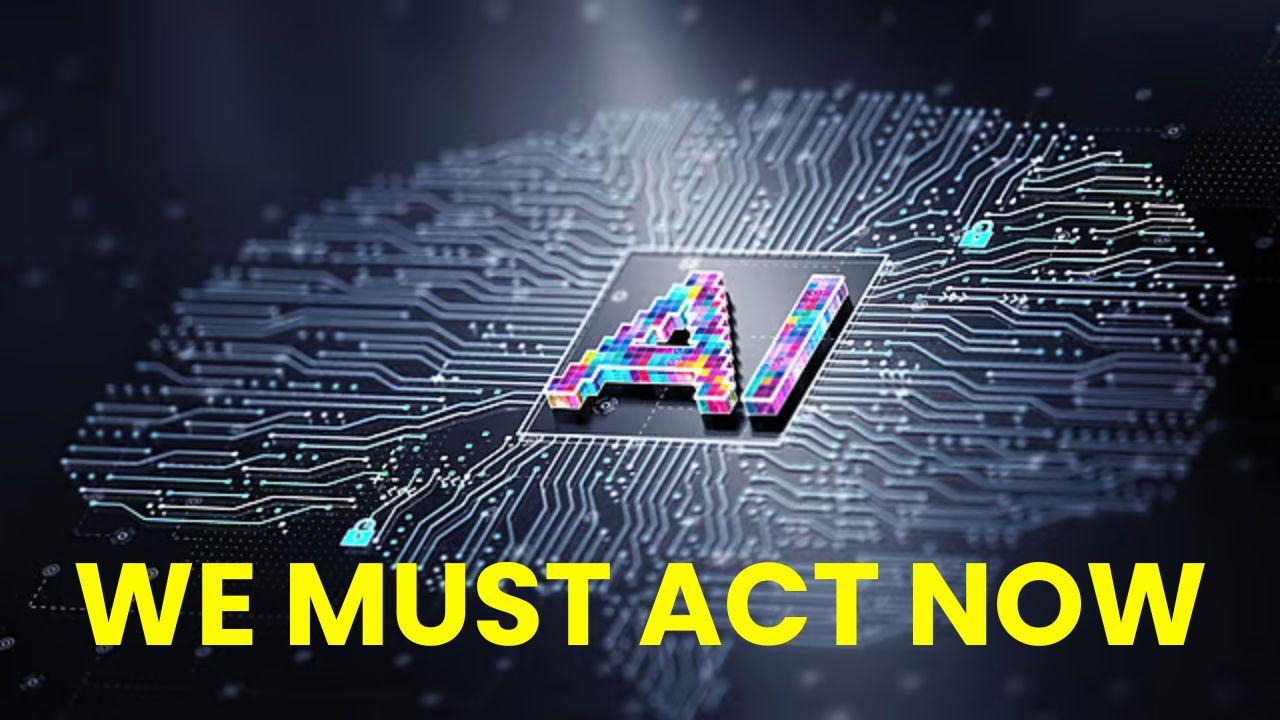
More than 200 researchers and economists have issued an urgent call for action on AI economic impact, warning that artificial intelligence could reshape the global economy faster and more dramatically than any technology in history. The statement, titled "We Must Act Now," was released on Monday with signatures from 16 Nobel laureates, including Daron Acemoglu and Simon Johnson, alongside chief economists from OpenAI and Anthropic
1
. The initiative, organized by Stanford economist Erik Brynjolfsson along with Ajay Agrawal, Tom Cunningham, and Anton Korinek, has now attracted nearly 2,000 signatories4
.
Source: Digit
The 88-word statement warns that AI's economic disruptions could be "larger than the Industrial Revolution, but unfolding over a vastly shorter time frame"
2
. Notable signatories include OpenAI finance chief Sarah Friar, Google DeepMind Chief Scientist Jeff Dean, Anthropic co-founder Jack Clark, former Google CEO Eric Schmidt, and venture capitalist Vinod Khosla2
3
.AI Job Displacement Concerns Mount as Technology Accelerates
The statement highlights growing concerns about AI job displacement and the compressed timeline for societal adaptation. "Steam, electricity, and computers each gave societies decades to adapt. AI may give us only a few years," said Anton Korinek, professor at the University of Virginia who joined Anthropic's economic research team in March
1
. He emphasized that "we cannot improvise our strategy and institutions in the middle of the transformation; waiting for certainty means arriving too late"1
.
Source: Silicon Republic
Data already shows troubling signs. Erik Brynjolfsson's Canaries dashboard, built with ADP and tracking 4.6 million workers, reveals that employment for 22 to 25-year-olds in AI-exposed jobs is shrinking more than 4 percent annually, even as the wider job market appears stable
3
. A report from late 2025 found 50,000 AI job losses that year, with major companies including Amazon, Meta, Pinterest, and Snap announcing AI-related job cuts in 20265
. A May 2026 survey of 12,000 executives found that 99 percent expect AI to lead to at least some headcount reduction within two years5
.Profession's Skeptics Now Acknowledge AI-Infused Future Risks
What makes this statement particularly striking is the shift among economists who previously downplayed AI's disruptive potential. Economists warn that their profession has been "driving in the fog" and can no longer dismiss Silicon Valley's warnings as mere hype
3
. "There's been a notable change in the profession," Brynjolfsson told the New York Times3
.Daron Acemoglu and Simon Johnson, MIT professors who shared the 2024 Nobel Prize and long played down AI job concerns, both signed the statement. While Acemoglu remains cautious about the speed of change, recent breakthroughs have shifted his perspective. If AI affects white-collar work at the pace some predict, "that would be really disruptive, really costly for people's livelihoods," he told the Times
3
.Related Stories

Call for Proactive Policy Responses and Regulatory Guardrails
The statement calls for deeper research on artificial intelligence and urges leaders to build regulatory guardrails now rather than waiting for the unprecedented economic transformation to unfold. "AI capabilities are advancing far faster than our understanding of the economic implications," said Brynjolfsson. "In that gap lie the greatest opportunities of our era. We must act now to guide AI to complement humans rather than simply imitate them -- and to generate prosperity for the many, not just the few".
Source: PYMNTS
The We Must Act Now statement concludes by urging "economists, policymakers and technology leaders" to "understand the economics of transformative AI and to build the incentives, guardrails, and institutions needed to steer AI in a direction that complements humans and benefits society"
5
. The signatories span the political spectrum, including figures like Paul Krugman on the left and Tyler Cowen on the right, alongside former policymakers Jason Furman, Gita Gopinath, and Gina Raimondo4
.Some economists argue the statement's vagueness masks crucial disagreements. John Cochrane at Stanford's Hoover Institution criticized preemptive policy intervention, noting that "preemptive dirigisme is killing tech in Europe"
4
. However, Acemoglu countered that "good AI needs to complement humans" and requires redirection from the current focus on artificial general intelligence, which he views as "an agenda for displacing humans from meaningful work"4
. California Governor Gavin Newsom has already launched an AI-Unemployment Tracker following Meta's 8,000-employee layoff5
. The central question remains whether society can capture AI's benefits to living standards while preventing its societal side effects on human labor.References
Summarized by

Navi
[3]
Related Stories
Dario Amodei warns AI risks are 'almost here' in 19,000-word essay calling out AI companies
26 Jan 2026•Policy and Regulation

Block's 4,000-person layoff sparks debate: AI revolution or corporate cost-cutting in disguise?
05 Mar 2026•Business and Economy
AI Pioneers Warn of Potential Risks and Call for Global Regulations
17 Sept 2024

Recent Highlights
1
Microsoft and Nvidia Launch Surface Laptop Ultra: A $2,599 AI-Ready PC With RTX Spark Chip
Technology

2
OpenAI Releases 722 AI-Generated Math Papers on GitHub, Igniting Fury Among Mathematicians
Science and Research
3
Trump Consulted Grok AI Before Ordering Venezuela Invasion and Capture of Nicolás Maduro
Policy and Regulation

Recent Highlights
Today's Top Stories










Don’t drown in AI news. We cut through the noise - filtering, ranking and summarizing the most important AI news, breakthroughs and research daily. Follow topics that matter to you and stay ahead.


