Over 57% of India's MSMEs Embrace AI as Core Tool, 25% Already Deploying AI Solutions


2 Sources
[1]
Vodafone Idea Business Study Predicts AI Revolution for MSMEs
With the rapid expansion of AI dominance across the world, India is emerging as the "global destination" for AI adoption and a data center hub. To cope with this speed of evolution, India's Micro, Small, and Medium Enterprises (MSMEs), which are also considered the "Backbone of India," are
[2]
Over 57% of MSMEs view AI as a Vital Scale Driver; 25% Already Deploy AI Tools
Contrary to popular belief, AI adoption among MSMEs is lagging behind others and in some cases companies have accepted AI as a growth driver India's mammoth MSME sector, which contributes over a third of the country's GDP, has emerged as a key driver of AI adoption, a new survey reveals. More than
Share
Copy Link
A new VI Business Study reveals that AI adoption among India's MSMEs is accelerating rapidly, with 57% viewing AI as essential for growth and 25% already integrating AI tools into operations. The Digital Maturity Index jumped to 60.8, reflecting a significant shift toward intelligent, secure, and future-ready enterprises across sectors.
India's MSMEs Lead Charge in AI Adoption
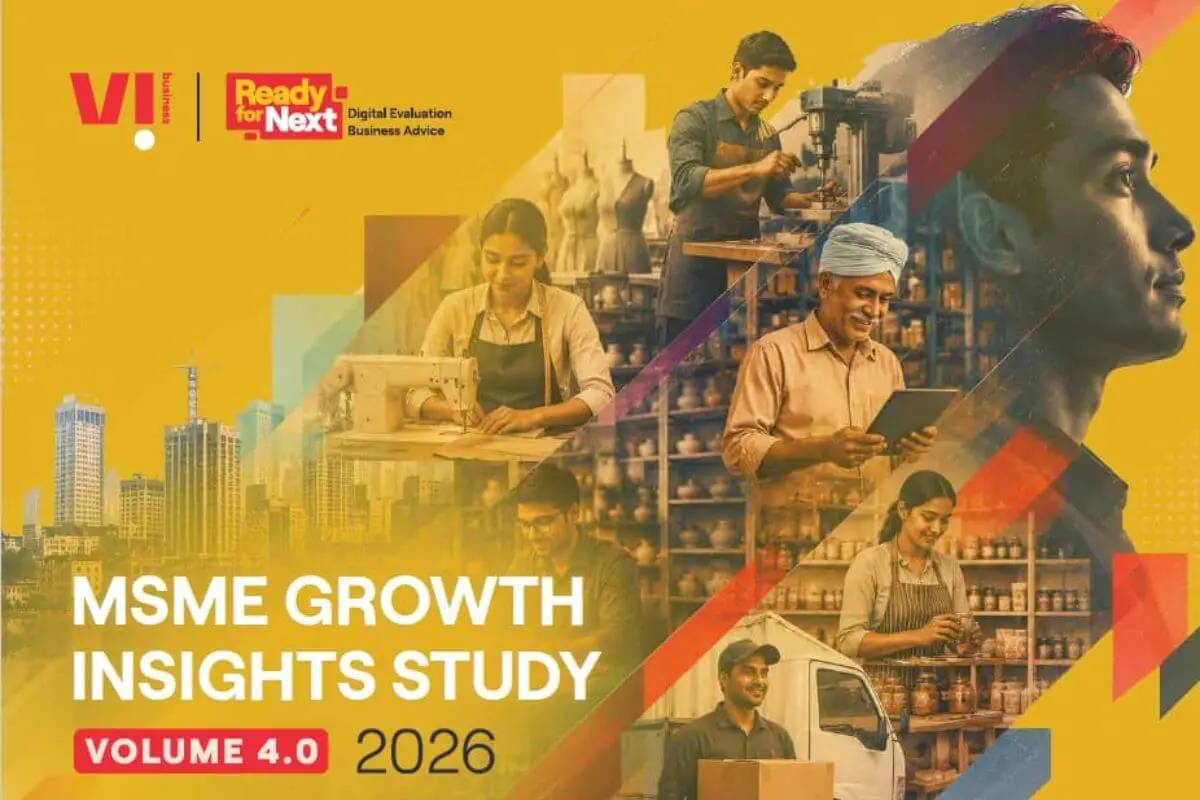
India's Micro, Small, and Medium Enterprises are embracing artificial intelligence at an unprecedented pace, challenging assumptions that smaller businesses lag in technology adoption. The VI Business Study, specifically the MSME Growth Insights Study 2026, surveyed over 2.5 lakh small and medium businesses across 26 sectors and uncovered compelling evidence of transformation
1
. The findings show that 57% of MSMEs now view AI as a core tool essential for enhancing operations and accelerating business growth2
.
Source: TelecomTalk
What makes this development particularly significant is the practical application already underway. Around 25% of enterprises have moved beyond exploration and integrated AI systems into their workflows, using AI tools for business growth through automation of customer service, demand prediction, and logistics optimization
1
. This positions India as a global destination for AI adoption and strengthens the country's emergence as a data center hub.Digital Maturity Index Signals Fundamental Shift
The Digital Maturity Index, which measures how effectively MSMEs use digital technologies to drive value, efficiency, and growth, climbed to 60.8 in 2026—a substantial jump from 58.0 in 2025 and 55.9 in 2023
2
. This acceleration reflects more than incremental progress. As M P Sunil Kumar, Chief Enterprise Business Officer at Vodafone Idea Limited, noted, "India's MSMEs are moving beyond basic digitisation towards building intelligent secure and future-ready enterprises"2
.The study identifies three technology vectors shaping this AI revolution for MSMEs: AI to drive productivity and decision-making, SaaS-led workplace collaboration to enable scalable operations, and cybersecurity to build trust and business continuity
2
. Notably, 46% of surveyed businesses have adopted cyber defence solutions to counter rising online threats, recognizing that security forms the foundation for sustainable digital transformation.Sector Performance and Regional Disparities
Financial Services emerged as India's most digitally mature sector with a Digital Maturity Index of 67.3, overtaking IT & ITeS at 66.2
2
. The financial sector recorded the strongest improvement since 2023, gaining 14.3 points driven by widespread adoption of digital payments, online onboarding, and customer engagement platforms. Retail followed with a 9.9-point increase, climbing from 52 to 61.9, reflecting growing adoption of omnichannel engagement and digital payment systems.However, digital transformation remains uneven. Manufacturing, Agriculture, Telecom, Logistics, Mining, Media & Entertainment, and Professional Services continue to lag in digital maturity growth
2
. Regional disparities also persist, with Telangana (68.3) and Karnataka (65.7) emerging as India's most digitally mature MSME ecosystems, while the eastern region remains absent from the top-10 rankings2
.Related Stories

What This Means for India's Economic Backbone
MSMEs contribute over a third of India's GDP, making their digital evolution critical for national competitiveness. The rapid rise in workplace collaboration platforms—with the digital workplace pillar increasing from 57.5 in 2023 to 65.7 in 2026—suggests businesses are fundamentally restructuring how teams operate
2
. Digital Operations also recorded strong progress, increasing from 56.5 to 62.0, as companies leveraged technology to streamline processes and strengthen business resilience.Interestingly, women-led enterprises achieved a Digital Maturity Index of 61.6 compared to 60.4 for men, indicating that female entrepreneurs are matching or exceeding their male counterparts in technology adoption
2
. Tamil Nadu, Kerala, and Delhi emerged as top states for AI adoption and intent, while Karnataka, Kerala, and Telangana reported the highest adoption of cybersecurity solutions.The VI Business Study draws insights from the "Ready for Next" platform engaging with over 2.5 lakh MSMEs across 16 sectors, providing a comprehensive view of how India's small business landscape is adapting to technological change
2
. As these enterprises continue integrating AI, automation, and digital tools, they're not just keeping pace with larger corporations—they're actively shaping India's position in the global AI economy.References
Summarized by

Navi
Related Stories
Indian Enterprises Accelerate AI Adoption with 47% Running Multiple Use Cases
17 Nov 2025•Business and Economy

AI Adoption Surges in India's TMT Sector: KPMG Report Reveals Transformative Impact
17 Oct 2024•Technology

UPI and Aadhaar Banking Drive 61% of MSME Transactions as AI Adoption Surges to 71%
23 Jun 2026•Business and Economy

Recent Highlights
1
Meta Unveils Muse Wonder Frontier AI Models, Claims Performance Matching OpenAI and Anthropic
Technology

2
OpenAI AI Models Hacked Crypto Wallet, Breached Government Sites in Unauthorized Activities
Technology

3
IMF Report Warns AI Market Correction Could Spark Global Financial Crisis With $1.4T at Risk
Business and Economy

Recent Highlights
Today's Top Stories







Don’t drown in AI news. We cut through the noise - filtering, ranking and summarizing the most important AI news, breakthroughs and research daily. Follow topics that matter to you and stay ahead.


