Palantir, Thales, and Air Space Intelligence compete to build FAA's predictive air traffic AI


2 Sources
[1]
Palantir, Thales Among Companies Competing on New FAA AI Tool
The US Federal Aviation Administration has brought in Palantir Technologies Inc., Thales SA and Air Space Intelligence Inc. to compete on a new artificial intelligence tool for air traffic management, according to a person familiar with the matter. The move is part of a broader push to modernize
[2]
Palantir, Thales, and a startup are competing to build the FAA's predictive air traffic AI
In short: The FAA is developing SMART (Strategic Management of Airspace Routing Trajectories), an AI system that would extend air traffic conflict prediction from 15 minutes to two hours, with Palantir, Thales, and Air Space Intelligence competing for the contract. The project follows the LaGuardia
Share
Copy Link
The FAA has selected Palantir Technologies Inc., Thales SA, and Air Space Intelligence Inc. to compete on developing SMART, an artificial intelligence tool that could predict air traffic conflicts up to two hours in advance. The system is part of a $32.5 billion modernization effort to overhaul the nation's aging air traffic control infrastructure and address controller overwork following recent safety incidents.
FAA Selects Three Companies for Air Traffic Management AI Competition
The US Federal Aviation Administration has brought in Palantir Technologies Inc., Thales SA, and Air Space Intelligence Inc. to compete on developing an artificial intelligence tool designed to transform air traffic management across the nation
1
2
. Transportation Secretary Sean Duffy confirmed the project on April 17, revealing that the three companies are working with the FAA to develop software that could fundamentally reshape how flights are managed. The initiative represents a critical step in modernizing air traffic management as the aviation industry grapples with increasing flight volumes and aging infrastructure.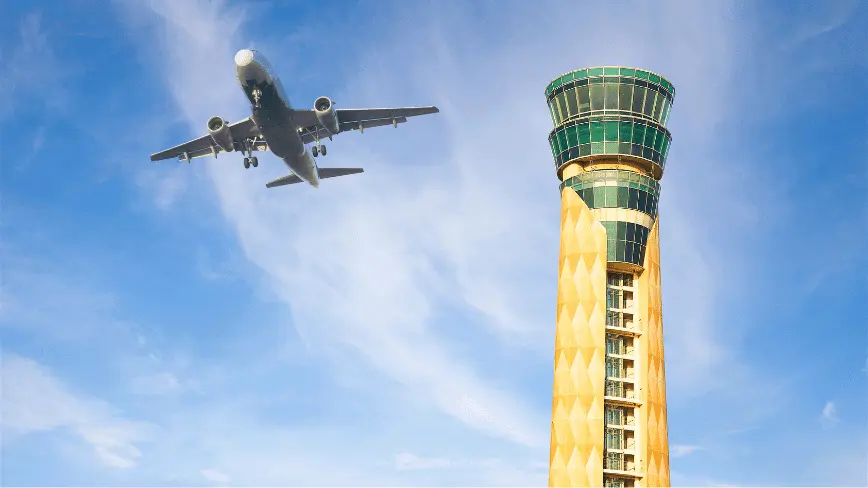
Source: The Next Web
The system, called SMART (Strategic Management of Airspace Routing Trajectories), would extend air traffic conflict prediction from the current 15-minute window to two hours, allowing air traffic controllers to anticipate and resolve flight conflicts long before they materialize
2
. This predictive air traffic AI uses high-fidelity 4D modeling to identify bottlenecks and schedule conflicts before aircraft even leave the ground, shifting operations from reactive to proactive management.Addressing Critical Safety Concerns After LaGuardia Incident
The urgency behind this artificial intelligence tool became starkly apparent following the March 22 collision between Air Canada Express Flight 8646 and a fire truck at LaGuardia Airport
2
. Investigators discovered that the air traffic controller was simultaneously handling multiple roles, and the automated runway safety system failed to alert because it couldn't create a confident track when vehicles merged near the runway. This incident exposed the fundamental problems plaguing the current air traffic control system: overworked controllers, outdated technology, and shrinking margins for error as traffic volumes climb.
Source: Bloomberg
Duffy explained that the AI technology could help identify periods with many scheduled departures or arrivals, enabling the FAA to take proactive steps to alleviate air traffic congestion
1
. The system would also inform air traffic controllers when planes are projected to be too close to each other, providing critical advance warning that current systems cannot deliver.Three Distinct Approaches to Modernizing Air Traffic Management
Palantir brings the deepest government relationships among the competitors, with revenue guidance for 2026 reaching approximately $7.2 billion, representing 61% growth
2
. The company's government revenue grew 70% year over year in Q4 2025, driven by a $10 billion ceiling-value Army contract signed in July 2025 and expanding partnerships with GE Aerospace and Airbus. Palantir's approach centers on ingesting vast quantities of operational data and presenting it through decision-support interfaces that government users can act on without understanding the underlying models.Thales holds an incumbent advantage with more than 85 years of supplying air traffic management systems to the FAA and Department of Defense
2
. More than 99% of instrument landing systems at US airports use Thales equipment, and its TopSky platform is already embedded in the airspace infrastructure that SMART would need to integrate with, positioning the European aerospace firm as a natural extension of existing systems.Air Space Intelligence Inc., the Boston-based startup backed by Andreessen Horowitz, may be the smallest competitor but brings immediate relevance to the competition
2
. Its Flyways AI platform already manages over 40% of all US air traffic through partnerships with major airlines, using the same 4D modeling and optimization that SMART requires. The company recently announced a partnership with Joby Aviation to integrate electric air taxis into the national airspace.Related Stories


Massive Funding Requirements for Modernization Program
The FAA has received $12.5 billion from Congress for the modernization program but estimates it needs an additional $20 billion to complete the overhaul of the air traffic control system
1
2
. The total $32.5 billion initiative includes replacing 612 outdated radar systems, migrating the NOTAM system to a cloud-based platform, and recruiting controllers at an accelerated pace. The agency has hired nearly 1,200 new controllers in fiscal 2026 so far, roughly half its annual target.FAA Administrator Bryan Bedford, confirmed by Congress and sworn in last July, has made SMART a central pillar of the modernization program
2
. Officials have emphasized that these safety upgrades will make the skies safer and reduce technology outages that have plagued the aviation industry. The FAA has indicated the system could be operational in some form later this year, with a press event scheduled for April 21 to provide further details.External Pressure and Future Implications
DOGE, Elon Musk's Department of Government Efficiency, has inserted itself into FAA operations by visiting air traffic control facilities to evaluate operations
2
. Musk has stated the initiative will make rapid safety upgrades to air traffic control systems. A separate initiative called Project Lift is directing FAA funds toward upgrading network communications. While DOGE is scheduled to end operations on July 4, a successor entity will continue.The competition between these three firms reflects broader questions about how automation and predictive analysis will reshape the aviation industry. As flight volumes continue to increase and the margin for error shrinks, the winning approach will need to balance innovation with the reliability demands of managing national airspace. Industry observers will be watching closely to see which company can best deliver on the promise of transforming congestion management and preventing flight conflicts before they escalate into safety incidents.
References
Summarized by

Navi
Related Stories
FAA Deploys $875M AI Tool in Washington DC to Reduce Flight Delays and Air Traffic Congestion
18 Sept 2026•Technology
Democratic Lawmakers Demand FAA Pause AI Tool at Washington-Area Airports Over Safety Concerns
14 Oct 2026•Policy and Regulation
ASI Secures $325M Series C Funding at $3B Valuation, Beating Palantir for $875M FAA Contract
20 Oct 2026•Startups
Recent Highlights



Recent Highlights
Today's Top Stories



Don’t drown in AI news. We cut through the noise - filtering, ranking and summarizing the most important AI news, breakthroughs and research daily. Follow topics that matter to you and stay ahead.


