Rivian explores in-house lidar manufacturing to complete its autonomous driving stack


2 Sources
[1]
Exclusive: Rivian mulls making its own lidar sensors, possibly in partnership with Chinese firms
SAN FRANCISCO, May 5 (Reuters) - Rivian Automotive (RIVN.O), opens new tab is considering making its own lidar sensors and could do so in partnership with a Chinese firm, CEO RJ Scaringe said in an interview with Reuters on Tuesday. The Irvine, California-based electric automaker last year
[2]
Rivian (RIVN) mulls making its own lidar as it builds full autonomous driving stack
Rivian is considering manufacturing its own lidar sensors in the United States, potentially through a partnership with Chinese firms, as the EV maker aggressively vertically integrates its entire autonomous driving stack. The move would add in-house lidar production to an autonomy strategy that
Share
Copy Link
Rivian is considering manufacturing its own lidar sensors in the United States, potentially through a partnership with Chinese firms, as CEO RJ Scaringe revealed in a Reuters interview. The move would complete the EV maker's vertical integration strategy, adding in-house sensor production to its existing custom chip program and proprietary AI software for autonomous driving.
Rivian Considers In-House Lidar Manufacturing to Navigate Supply Chain Challenges
Rivian is exploring the production of its own lidar sensors in the United States, potentially through a partnership with Chinese firms, CEO RJ Scaringe revealed in an interview with Reuters . The Irvine, California-based electric automaker is in "active discussions" with lidar firms about manufacturing sensors domestically rather than purchasing directly from Chinese suppliers, addressing growing security concerns among U.S. lawmakers while accessing advanced technology.
The decision reflects a practical reality: Chinese companies like Hesai Group and RoboSense dominate the market for affordable, compact lidar sensors at the "low hundreds of dollars price point" that automakers require . Scaringe acknowledged that "all the real choices are coming out of China" for this critical technology, explaining that advancements in solid-state lidar "didn't happen in the United States. Those advancements happened in China." Rather than abandon lidar entirely or accept supply chain risks, Rivian is exploring what Scaringe described as "finding a way to structurally ingest the technology," possibly through a joint venture that would enable domestic production using Chinese expertise.
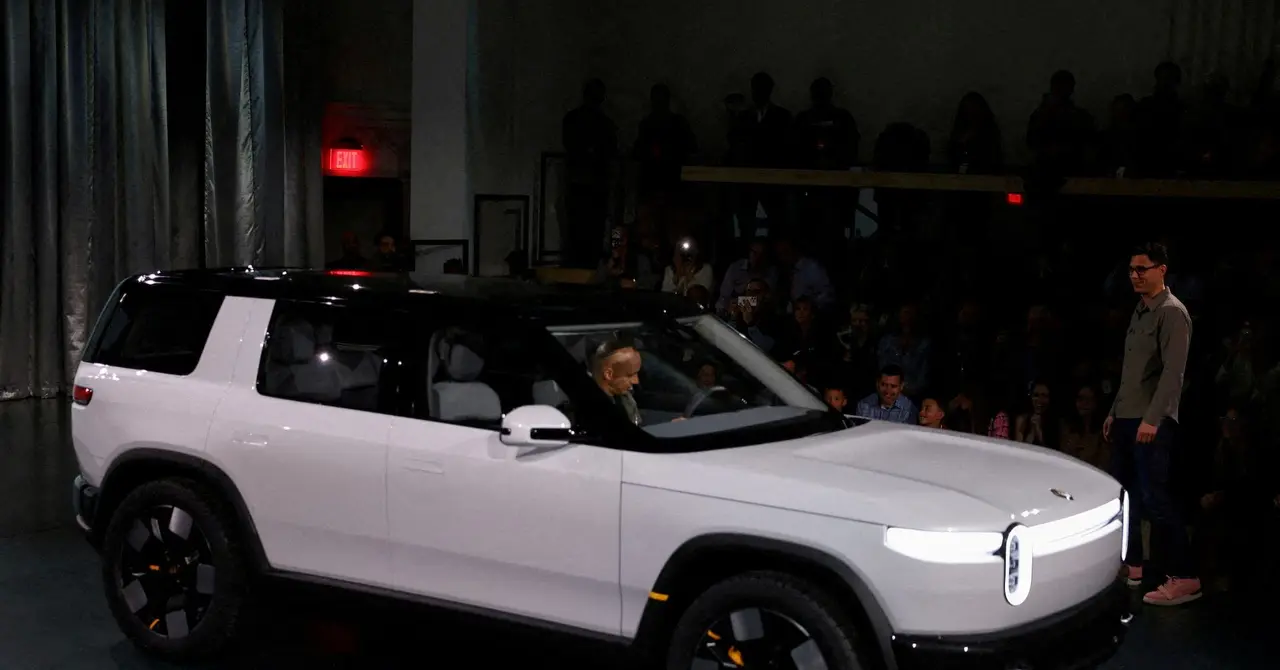
Source: Reuters
Building a Full Autonomous Driving Stack Through Vertical Integration
The in-house lidar manufacturing plan represents the latest piece in Rivian's aggressive vertical integration strategy for autonomous driving. The company launched a plan last year to develop proprietary self-driving technology that would compete with products from Tesla and Waymo . At its inaugural AI & Autonomy Day in December 2025, Rivian unveiled the Rivian Autonomy Processor, or RAP-1, a custom 5-nanometer chip delivering 1,600 trillion operations per second of AI compute
2
.Scaringe confirmed that Rivian is committing "many hundreds of millions of dollars" to its custom AI chips program, with the first chip arriving this year . The automaker intends to release a new chip "every couple of years," with RAP-2 and RAP-3 successors built on "more powerful" chip technology than the 5-nanometer process from Taiwan Semiconductor Manufacturing Company used for RAP-1. "It's not like you invest a few hundred million dollars and it's done," Scaringe explained, emphasizing the ongoing nature of the investment.
Comprehensive Sensor Array Targets Level 4 Autonomy
Rivian's Gen 3 Autonomy platform integrates 11 cameras totaling 65 megapixels, five radars, and one lidar sensor, creating one of the most comprehensive sensor arrays of any consumer vehicle in North America
2
. The company said that a version of its R2 vehicles coming later this year would include lidar sensors, which are much smaller than the large, spinning units found on robotaxis designed by Waymo .The company's Large Driving Model is trained similarly to large language models, aiming for Level 4 autonomy capabilities
2
. Adding in-house sensor manufacturing would give Rivian control over virtually every hardware and software component of its autonomy system, positioning it as one of the most vertically integrated players in autonomous driving outside of Tesla and Waymo.Related Stories

Uber Partnership Validates R2 Robotaxis Ambitions
The most significant validation of Rivian's autonomous driving strategy came in March 2026, when Uber announced a partnership to deploy up to 50,000 R2 robotaxis across 25 cities in the U.S., Canada, and Europe, backed by up to $1.25 billion in investment
2
. The milestone-based deal includes an initial $300 million commitment from Uber, with remaining investment contingent on Rivian achieving specific autonomous performance benchmarks through 2031. The first robotaxis are expected in San Francisco and Miami by 2028.What distinguishes this partnership is that no third-party autonomy software is involved—Rivian handles everything from chips and sensors to software and vehicle platform
2
. Uber CEO Dara Khosrowshahi recently praised Rivian for "putting together a first-class AI team" and expressed confidence in their ability to deliver on the robotaxi deployment.Industry Collaboration Could Reshape Domestic Lidar Production
Scaringe indicated that the lidar manufacturing effort might extend beyond Rivian alone, with "a number of different car manufacturers" considering how they could develop production capacity together or through shared alignment outside China . This consortium approach could address the geopolitical tension around Chinese sensors while maintaining access to leading technology, creating a pathway for other automakers facing similar regulatory risk from relying on Chinese lidar suppliers.
References
Summarized by

Navi
[1]
Related Stories
Rivian unveils custom AI chip and autonomous driving tech with lidar, hinting at robotaxi future
10 Dec 2025•Technology
Rivian R2 Lidar and RAP1 Autonomy Computer Delayed to 2027 for Customers, Employees Get It First
30 Sept 2026•Technology
Rivian Spins Off Mind Robotics with $115M to Bring Industrial AI to Manufacturing
04 Nov 2025•Business and Economy

Recent Highlights
1
Microsoft and Nvidia Launch Surface Laptop Ultra: A $2,599 AI-Ready PC With RTX Spark Chip
Technology

2
Google Unveils Gemini 4 Argon AI Model, Restricts Access to Trusted Cyber Defenders
Technology

3
Trump Consulted Grok AI Before Ordering Venezuela Invasion and Capture of Nicolás Maduro
Policy and Regulation

Recent Highlights
Today's Top Stories






Don’t drown in AI news. We cut through the noise - filtering, ranking and summarizing the most important AI news, breakthroughs and research daily. Follow topics that matter to you and stay ahead.


