3 Sources
[1]
Rivian R2 First Drive: The Rivian for the Masses
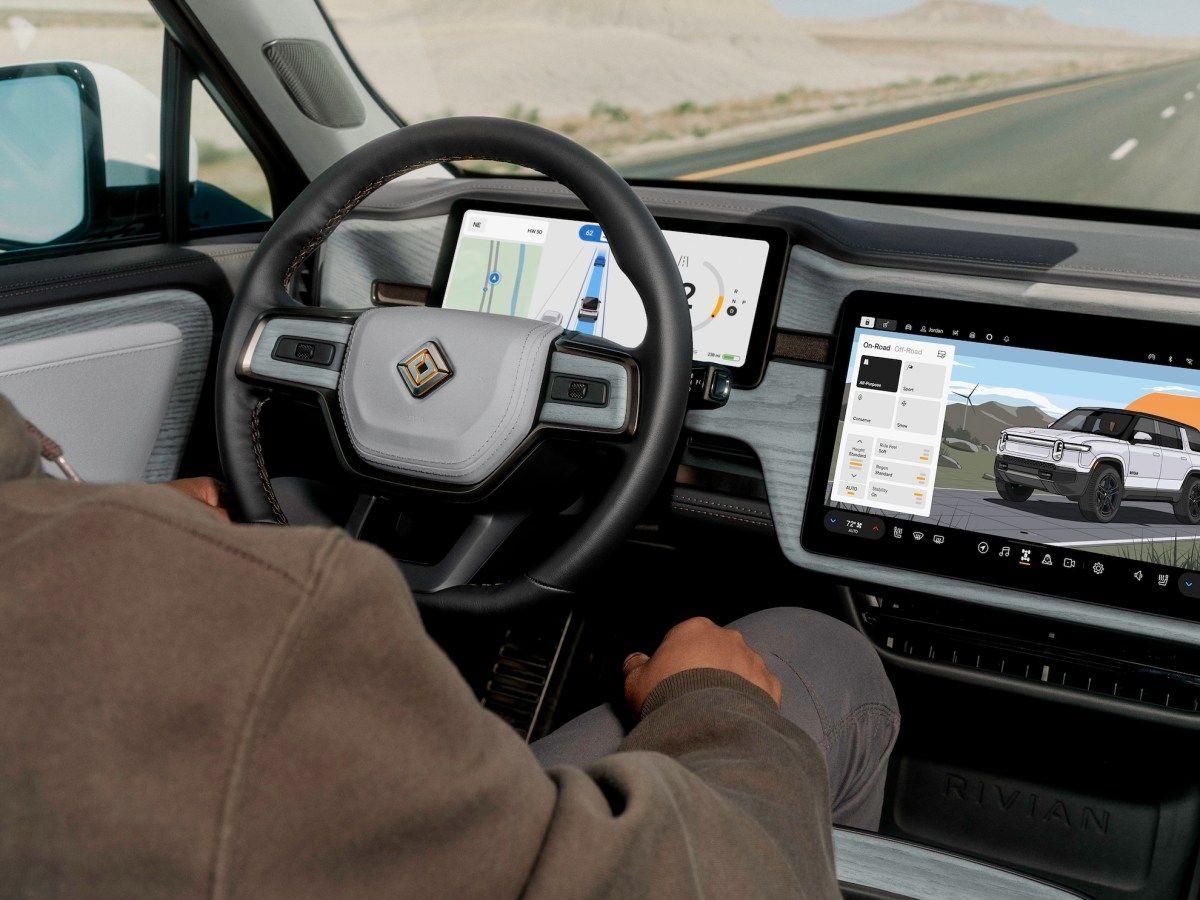
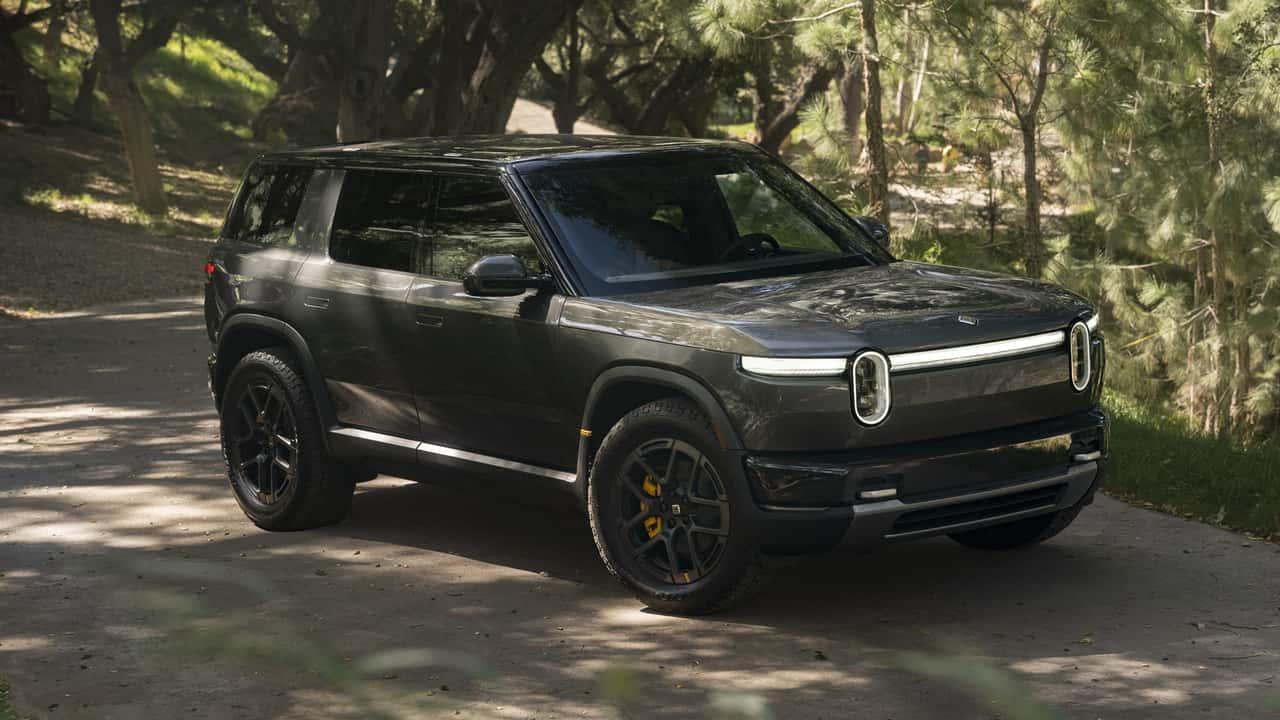
With a competitive price, winning design, and better performance than the R1, Rivian could be set to break into the big leagues. Just make sure you get the right model with the right tech. For years, Rivian made one argument: Serious all-electric adventure vehicles had to cost serious money. The R1S, still one of the more capable off-roaders on any surface, starts at $75,900. The Tri Max configuration tips well past $105,000. A great SUV. Not a mass-market product. The R2 is Rivian's answer to its own problem. This midsize, five-seat electric SUV, built on an entirely new platform, is not merely a stripped-down R1S. No, the R2 is a ground-up rethink of what a Rivian can be with one crucial target in mind: volume sales. Starting at a competitive $45,000, this is the make-or-break budget EV for the car company that initially began life as Mainstream Motors in 2009. In the past eight years, Rivian has burned through nearly $25 billion in cash. Its historic free cash flow compared to other automakers is "bracing," shall we say, as it has essentially spent more money over the same amount of time versus almost every pure EV maker. The company's stock price has dropped from $130 to around $16. The R1 went on sale in 2021; since then, Rivian has sold 175,000 cars. In the same period, Tesla sold 8 million. Yes, that's an unfair comparison, but it gives some impression of the mountain Rivian's new off-roading SUV has to climb. Despite billion-dollar deals with VW Group and Uber, to survive in its current form, Rivian has to start selling cars in larger numbers. Just in the nick of time, it seems, this is precisely what the R2 has been built to do. Does This R2 Unit Have a Bad Motivator? No doubt burned by the serious headaches induced by launching three products at once last time, Rivian is cautiously rolling out the new R2 in four trims from now through late 2027. The only R2 available at launch is the Performance model at $57,990, or in reality $59,485 with the mandatory $1,495 destination charge. However, it makes 656 horsepower and 609 pound-foot of torque from a dual-motor all-wheel drive setup. Zero to 60 mph is a rapid 3.6 seconds, and the EPA-estimated range is 330 miles. The launch edition adds lifetime Autonomy+ (Rivian's L2+ hands-free, eyes-on driving system), which usually sets you back a hefty $50 per month, or a one-off outlay of $2,500, and a tow package rated at 4,400 pounds. Yes, it's not what many would describe as cheap, but the entry R1S costs $18,000 more and makes 123 fewer horsepower in base form. The Premium model follows in late 2026 at $53,990. Same 87.9-kilo-watt-hour battery, same 330-mile range, but with 450 hp, 537 pound-foot of torque, and a 4.6-second zero-to-60 time. Still dual-motor AWD. Then the Standard Long Range model lands in early 2027 at $48,490 with a single-motor rear-wheel drive, 350 hp, and zero-to-60 in 5.9 seconds. Rivian estimates up to 345 miles on a single charge, which indeed makes it the farthest in the lineup, but only by 15 miles. That all-important Standard model with the attractive $45,000 price ($10,000 less than a base Volvo EX40, and $5,000 less than Tesla Model Y Premium AWD) comes last, in late 2027, with a drop in range to about 275 miles. All four trims have a native North American Charging Standard (NACS) connector with access to Tesla's Supercharger network and a claimed 10-to-80-percent charge time of 29 minutes. But here's the trouble: The initial R2s will not be technically as good as the models coming six months later or so. Why? Rivian's new, fancy RAP1 processor, a custom 5-nanometer chip delivering 1,600 TOPS (trillions of operations per second) that powers its coming Gen 3 autonomy, won't ship on R2 models until late 2026. The EVs also won't have lidar initially. So this crucially means early R2 adopters get Gen 2 hardware, not Gen 3. L2+ autonomy, not L3. Now, Rivian is at pains to underline here that the Gen 2 Performance R2 will supposedly be capable of point-to-point driving later this year -- but would you want that or rather wait a few months for the Level 3 Gen 3s packing "the most powerful combination of sensors and inference compute in consumer vehicles in North America," according to Rivian's senior vice president of electrical hardware? I know what I'd do. I also know what Rivian wants you to do: Ignore this bothersome fact and just hand over the much-needed cash, please. Those sales targets aren't going to hit themselves. Better Than Big Brother Delays in Gen 3 hardware aside, Rivian has sprinkled more than a little magic dust over its R2. The Performance version actually bests the base R1S on power and range, despite that significantly lower price. Yes, the R1S has more space (three rows), and its air suspension can lift it to nearly 15 inches of clearance, as well as level the EV on sloped ground (the R2's 9.6 inches is fixed), but in almost every other area, the R2 makes a harder argument for the R1S to answer. Over a couple of days outside Salt Lake City, Utah, I joined a brand-hosted media drive (Rivian paid for WIRED's travel expenses) and tried out the R2 on highways, mountain roads, and over some moderate off-road terrain. The very good news is that much of what made the R1 such a hit with critics has been either retained, modified, or adapted here on the R2. The exterior design, for example, immediately mirrors its bigger brother but is cleverly not merely a shrunken version of that EV. The team has managed to reduce size to a length of 185.9 inches while keeping key proportions, so you get a five-seat SUV that is unmistakably Rivian but in no way feels diminutive or austere compared to the seven-seater. The headlights remain determinedly cheerful, the boxy profile pleasingly rugged. The rear windscreen goes all the way down (but not on the base model), disappearing into the bodywork, which required no small amount of jiggery-pokery with the rear wiper so that it doesn't need to sit on the glass and kill the feature. Speaking of which, reminiscent of the ill-fated Fisker Ocean, one button drops all five windows at once. The frunk is eminently useable, capable of stowing a suitcase and backpack, or six grocery bags. Inside, you still get the flashlight in the door and the large responsive central screen, but look closer and you can see where some cost-cutting has taken place. Below the SUV's cabin beltline is where the materials, which would have remained premium in the R1S, are less plush. But this is done tastefully, and, unlike in the Range Rover Velar, never makes you feel as if Rivian is punishing you for going down the price list. For example, the R1's wood surround on the dash has been swapped for something far less costly, but it doesn't feel cheap. Headroom and legroom are exceptional, so no one in the rear seats will feel short-changed. Storage is good too, with not one but two glove compartments, and now space for big water bottles in the doors. The 40/20/40 split-folding second row lets you fold down the center section for skis, or you can drop that rear windscreen and have them dangle out the back. Hello Halo Considering Rivian has gotten flak for an almost complete absence of switchgear in the cabin, despite practically all other car makers reversing this ill-advised decision to remove buttons, those who know the interface from the R1S will be aware of how intuitive the brand's onscreen controls are. It's this usability that just about allows Rivian to get away with shunning CarPlay and Android Auto. Just about. Setting up driver profiles is a breeze with the onscreen tutorials, which are of a caliber Apple would be happy with. This said, there are still functions that most will want physical buttons for, such as the air-con. But the one feature here I predict many competitors will try to copy is Rivian's excellent new haptic Halo wheels on the steering wheel. Created seemingly as an answer to those criticizing the car's lack of buttons, Halo places the most-used controls at your fingertips. These two notched wheels scroll up and down, or toggle left and right, to manage climate, music, drive modes, and more. The six-direction haptic wheels let you pull them sideways in either direction from behind or in front of the steering wheel; the resistance of the scroll also changes depending on what function you're trying to alter, yet it doesn't feel digital at all, but entirely analog. Rivian has created an entirely new, naturally intuitive and tactile control system that breaks the mold of traditional steering controls. Many have tried to rework or reimagine steering wheel buttons, and many have failed. This Halo wheel system, however, is remarkable and instantly has you questioning why we haven't seen this solution before. What's more, because it's entirely digital, new controls can be mapped to the wheels. I'd like to see regenerative braking levels controlled by the Halo system, for example, and not via the screen. On (and Off) the Road The Performance model I drove is as rapid as the specs above suggest, but we have come to expect this from nearly all EVs, really. The throttle mapping is predictable, but the default regen braking is far too savage. Just as with acceleration, handling for electric vehicles these days is quickly becoming homogenous, with only occasional welcome surprises, like BMW's iX3, which managed to disguise its considerable heft in an almost magical manner. The R2 can't quite conjure a similar disappearing act, sadly. Although feeling planted on the highway and fast country roads, there is no denying the physics of that battery pack, and you can feel the vehicle's weight in tighter corners. This isn't to say the R2 handles badly at all. It's a nice ride. But having now experienced what's possible in the BMW, manipulating suspension in real time so successfully, there's no getting away from the fact that this is now the yardstick all should be shooting for. Take the R2 off-road, and just like with the R1, it's more than capable of getting you out of trouble. Rivian claims that 40 percent of its owners take their cars off-road, and that's a high proportion -- much higher than you'd find with Range Rover, for example. Rivian's off-road architect sat with me as I took the EV up a craggy mountain pass to a lookout point with deep ruts and sizable rocks in our path. The R2 took the ascent and descent in its stride, though such a jaunt would only be advisable in the AWD version. The SUV, I'm assured, won't tip until it goes well past 35 degrees. The vast majority of people won't want to get anywhere near that figure. Ready for Some Power, R2? Rivian hasn't supplied official figures, but despite its less aerodynamic frame, the R2 supposedly has an energy consumption sitting between 3.7 and 3.9 miles per kWh, depending on the model. Real-world efficiency will vary with speed, temperature, and load and will likely depart greatly from these figures. For example, my test-drive model, which has likely been gunned on the highway, had an efficiency of just 1.6 miles per kWh over a 19-hour, 360-mile drive period. But, considering a low average speed, it's fair to say the car had been put through its paces on multiple off-road scrambles, too. As for charging, while the R2 features an acceptable 29-minute charge time from 10 to 80 percent, the now five-year-old Hyundai Ioniq 5 with its 800V infrastructure beats this by 10 whole minutes when using an ultrafast charger. Another minus is that there's a reason this isn't a full review and instead a first drive: Rivian's much-talked-about new AI driving assistant isn't active yet. Apparently, it will roll out later this summer. On top of this, its Level 3 autonomous driving system -- tech that Rivian boasts about and will not share with Volkswagen -- is not yet available for testing, and the existing Universal Hands-Free L2+ autonomy merely sees Rivian keep pace with rivals rather than pull ahead. All this means we'll have to revisit the R2 to see whether this Rivian for the masses really lives up to the hype. For now, the R2 succeeds in the neat trick of balancing ability, offering a plush experience despite the price, and good handling. If the next-gen tech does turn out to match the winning design and capability of this midsize SUV, the R2 may well be the much-needed revenue driver the company needs.
[2]
Rivian R2 First Drive: This is everything I need to upgrade my Model Y except...
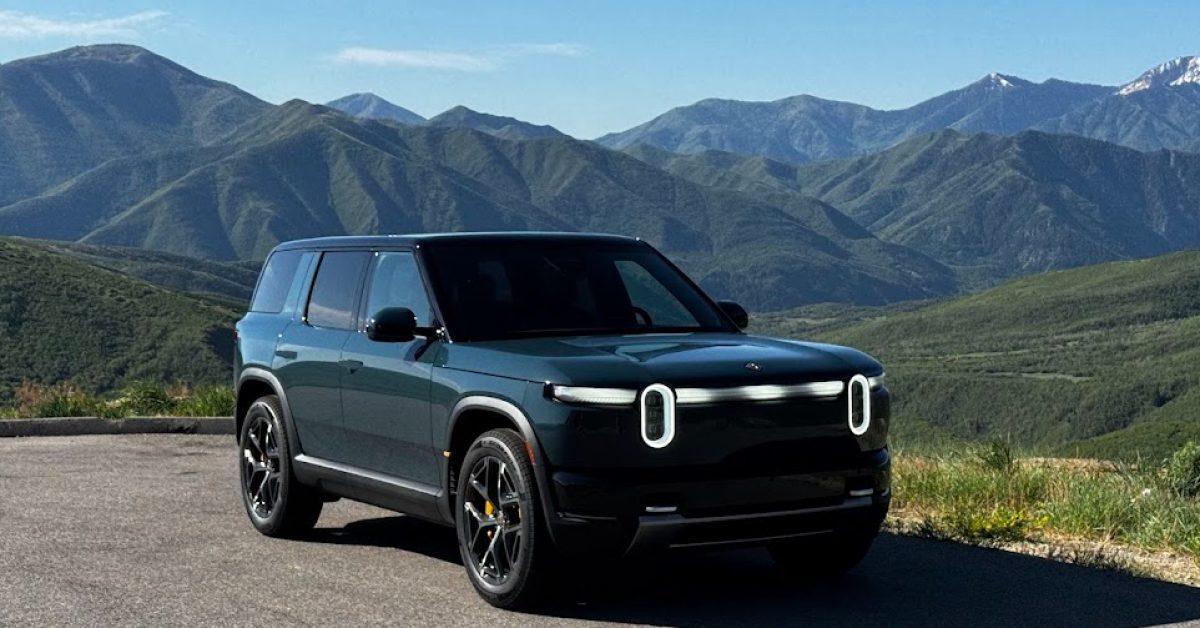
Rivian flew us out to beautiful Park City, Utah, to get a first test of the R2, its $45,000 "bet-the-company" mass market SUV that it has promised for years. Today it begins delivering these vehicles, and I can say unequivocally after driving a performance variant for 5 hours, that these early customers are going to be very happy, though with some notable caveats... The R2 looks a lot like its bigger, heavier 3-row sibling, the R1S. Same oval lights, same boxy adventure SUV stance, same unmistakable Rivian fun ethos. Just scaled down to 5000lbs, 40cm more compact, 16 cm shorter with a 15cm smaller wheelbase. The battery scales down to 88kWh instead of the 92-141kWh on the R1S. And there are only...gasp...two rows of seats. You get the picture, this thing looks like a smaller Rivian R1S. It doesn't have the dorsal fin antenna (radios are now integrated into the rear), its front is cleaner, there are small visual optimizations everywhere. But that is just skin deep. Better than R1 To sell a mass market number of these vehicles, the R2 has to be better than the bigger R1. The most obvious difference is the price. The R2 will eventually start at $45,000 for an RWD, smaller-battery variant that the company doesn't think many people will want over the better-specced versions. The company often points toward Tesla's demographics for its decisions, and Tesla's Average Sale Price (ASP) is way over $50,000, and that's with the discontinued Model S and X. Tesla's base car price is close to its $35K Model 3 promise, but after destination and fees, is closer to $39,000. Just the same, Rivian think the sweet spot in terms of sales is probably an AWD Premium version that will cost over $55K after destination and other fees. Rivian's prices break out as such: The price isn't the only R2 differentiator, however. The R2 drives much more like a sports car. Sport mode actually feels firm. All-purpose feels great. Even the off road mode feels much tighter. The lighter battery and lighter vehicle feel much more nimble. Acceleration in the Performance version feels much faster than the 3.6-second 0-60, and the acceleration from 40-75mph is even better. Mountain roads are much more fun and much less harrowing. The vehicle feels far more refined. Sized up (and we love any spec sheet with a wading depth): * Height 66.9 in * Width (without side mirrors) 75.0 in * Width (side mirrors folded) 78.1 in * Overall Width 84.7 in * Length 185.9 in * Wheelbase 115.6 in * Ground clearance 9.6 in * Wading depth 19.7 in * Approach angle 25° * Departure angle 26° * Breakover 20.6° * Total enclosed storage 90.1 cu-ft * Rear cargo area with seats folded 79.4 cu-ft * Rear cargo area 28.7 cu-ft * First row headroom 40.9 in * Second row headroom 40.4 in * First row legroom 41.4 in * Second row legroom 40.4 in * Couple distance, first-second row offset 37.2 in Probably the most striking claim, and in being in the mountains we weren't able to accurately test this, about the R2 is its miserly electricity consumption. It, with its bigger, more off-road-capable tires and more boxy, higher-drag aerodynamics than the Tesla Model Y, uses about the same amount of energy to go the same distance. And we know that Tesla is already extremely 'optimistic' in its range estimates. Charging will be faster, not necessarily because the car charges more quickly, but because the battery is smaller and it takes less time to fill. It will pull down up to 240kW at peak charging, and we even saw north of 170kW at over 50% state of charge on a NACS RAN charger a few miles from the hotel. Rivian says it will take less than 30 minutes to go from 10% to 80% charge, adding around 230 miles. While that is respectable, especially with a 400V system, it isn't in the same league as 800V systems like Porsche or Hyundai, which can do the same 10-80% in under 20 minutes, let alone the Chinese, which are flirting with 5-minute charging times. Bottom line: Road trips in the R2 will take less time than the R1. But stops will be about 10 minutes longer than 800V competitors. Rivian lays out the next generation of technology: ● Designed for the Road Ahead: Rivian Autonomy+7 ($49.99/month or $2,500/one-time) hardware is built into all R2 trims and service is optional across the lineup (lifetime access to Autonomy+ included5 with Launch Package), bringing L2+ hands-free assisted driving to 3.5 million miles of roads across the U.S. and Canada with Universal Hands-Free6. Every Rivian comes standard with a system that continuously evolves with each software update, getting smarter right from your driveway, and foundational active safety and driver assistance features. All new R2 deliveries include a 60-day trial of Autonomy+. ● AI Powerhouse: R2 is outfitted with 200 sparse TOPS of edge AI compute dedicated to the in-cabin experience. This includes enabling the forthcoming Rivian Assistant -- our in-vehicle voice assistant that understands you, your vehicle and your context -- to smoothly run complex tasks locally on the edge, even if the vehicle is offline. ● Haptic Halo Wheels: At the center of the R2 driving experience is a redesigned steering wheel featuring haptic 'halo' dials. These dynamic and context-aware controls -- capable of scrolling, pushing, pulling and tilting -- provide distinct physical responses for multiple functions, bridging the gap between digital software and tactile hardware to keep the driver's focus on the horizon. Both the physical wheels and underlying haptic technology were designed in-house. ● Dual Digital Displays: R2 offers flexibility and control with two displays -- a driver display in front of the steering wheel for more utility on the road, and the center display for a deeper dive into features. ● Software Updates: Rivian builds vertically-integrated hardware and software, enabling your vehicle to gain meaningful updates via software right from your driveway. R2 evolves this vertically integrated approach with a new, streamlined electrical architecture that delivers more capability with less complexity, providing ample headroom for the future. Overall, however, the R2 is a major step up from the R1 in a lot of ways. In fact, I said the same thing to Rivian CEO RJ Scaringe that I said to Tesla after driving the Model 3. The R2 is going to cannibalize the sales of the more expensive R1 models. Tesla's Model S and X turned into niche vehicles after the launch of the Model 3 and Y, which were recently discontinued to make way for robots. Scaringe points to upgrades coming to the Gen 3 R1 lineup that will close most of the feature gaps, but I also wonder how many people will pay up to double the price for a 3rd row, a few extra cubic feet, and perks. I think the R2 will become Rivian's best-selling vehicle the minute they can make enough of them. There are still things the R1S does better. Obviously, being bigger, it holds more stuff and still has a faster 0-60 time. It also does off-roading better, especially the quad motor variant with Kick Turn capability. But the R2 is no slouch, and we did get a 20 PSI, 20-inch wheel version to play with on the trails. As RJ put it, the Model Y (and most crossovers, electric and otherwise) wouldn't have made it back from this trip. Updates galore: Rivian's V2 software is a significant upgrade. In my limited testing, the UI was fast and efficient, though there was at least one incident where the GPS was off on a parallel road. Lots of little tweaks show that Wassym Bensaid and his team are really engaged in user feedback and making the Rivian driver and passenger's experience better. Here's an overview of what's new: Open questions: Autonomy and V2X Today's Rivians can do traffic-aware cruise control, which is helpful on highways. But it is far from Tesla's FSD feature set. Rivian promises that at some point in the future, it will be able to do point-to-point navigation with the hardware in the R2 sold this year. However, for those who want Level 3 autonomy, where you can read a book or play with your phone while driving, you'll have to wait for a Lidar version of these vehicles set to be released at the end of the year. That's a big early adopter pill to swallow. Interestingly, Rivian will build a special Autonomous Robotaxi version of the R2 for Uber with additional hardware on the vehicle. Also, Rivian has really been dragging its feet on Vehicle to Grid/Home/X and they didn't have a product to show us this week. They did promise that the vehicle could put out 11KW of AC power (think 48A at 240V) though the charge port and still offers an internal 110V AC outlet. But they've been promising V2X since the R1S launched and we're still waiting. And talking to Rivian leadership about this is mind-numbing. Do they not know that LEGACY Automakers like Ford's F-150 Lightning had 240V out 5 years ago? Do they not understand how valuable this is to a homeowner? Heck, I can power my home with my $28,000 Chevy Bolt today!? Do they think no one wants this? I'm officially done giving Rivian a free pass on this. Show us the goods! Catch up to Ford and Chevy technology! Electrek's take: The R2 is a 'bet the company' vehicle for Rivian. If it fails, Rivian is done. But the R2 is also a relatively safe bet in this form. It is the best vehicle Rivian has ever produced by a long shot. It is way more efficient, handles way better, and comes at a much more palatable price tag. It retains Rivian's adventure ethos and, with features like drop-down rear glass, huge steering scroll wheels, and double gloveboxes, takes it a step further. However, just because Rivian can make and show off a few R2s to journalists doesn't mean they've reached a safe space. They still need to ramp this vehicle up through what Elon Musk called "production hell" - making the transition from a niche vehicle maker to a mass market vehicle maker, and just like it almost killed Tesla, it could also cause big problems for Rivian. Also, there is the autonomy question: Rivian is far behind Tesla and others. Will they be able to catch up in a reasonable amount of time? Will the lack of Lidar on 2026 vehicles keep early adopters away? I'm not so sure I want to give up my 2020 Model Y with FSD for promises to be made at some uncertain point in the future. I also don't want to buy a car with already outdated hardware. Give me the Uber Edition! All of that said, if Rivian can make hundreds of thousands of the vehicles we drove last week and sell them at a profit, the company will thrive.
[3]
Rivian CEO RJ Scaringe Bets on R2 As an A.I.-First EV for the Masses
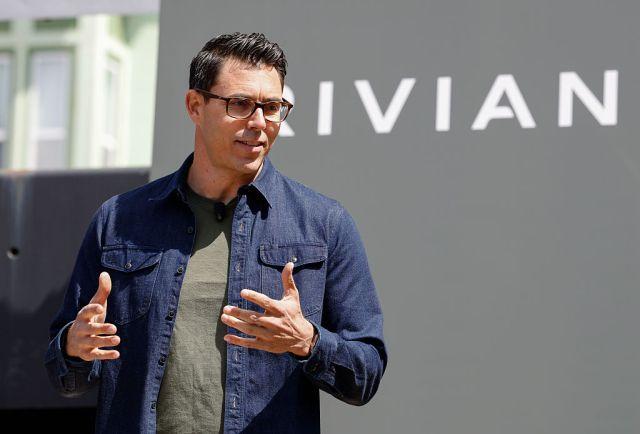
The Rivian R2 is designed to bring new buyers into EVs as CEO RJ Scaringe argues the market lacks meaningful consumer choice. Rivian has officially launched its long-awaited R2 SUV after years of development and mounting market anticipation. Smaller and more affordable than its flagship R1, the R2 is positioned as a mass-market vehicle, with projected annual sales exceeding 50,000 units. But CEO RJ Scaringe is aiming beyond volume, emphasizing that the technology powering the vehicle matters as much as the vehicle itself. "We want people looking to say it's the best car I can buy in that price range, and by virtue of that, it'll draw new non-EV customers who have historically been on the sidelines, because the product that spoke to them," Scaringe told a selected group of press, including Observer, at a test-drive event in Park City, Utah, last week. Sign Up For Our Daily Newsletter Sign Up Thank you for signing up! By clicking submit, you agree to our <a href="http://observermedia.com/terms">terms of service</a> and acknowledge we may use your information to send you emails, product samples, and promotions on this website and other properties. You can opt out anytime. See all of our newsletters Part of that appeal comes from Rivian's A.I.-first approach, which the company believes will resonate with customers. Rivian has been building and training its own A.I., powering everything from its self-driving system, called Universal Hands Free (UHF), to proprietary datasets that help owners locate reliable chargers on road trips. Like Tesla, Rivian's system learns from real-world driving data collected from customer vehicles, meaning every R2 on the road improves the company's A.I., and each improvement enhances the system's autonomous capabilities. During the roundtable, Scaringe said Rivian is targeting Level 4 self-driving by 2028, a timeline more aggressive than most of the industry considers achievable. He argued this is possible because A.I. models are improving rapidly. "I think the world is conditioned to say, yeah, sure, autonomy is a few years away," Scaringe said. "But I think it's actually finally true." While hands-free driving on divided highways is now common in modern vehicles, most systems do not extend to local roads (with the exception of Tesla). Rivian's UHF system uses a multimodal sensor suite, including 10 external cameras and five radars, to provide a 360-degree view for safer hands-free driving. By contrast, Tesla relies on eight cameras and no radar or ultrasonic sensors for its FSD system. Rivian's system is smooth and confidence-inspiring on the road. It integrates with GPS to anticipate upcoming curves, helping keep the smaller SUV stable at speed. On highways, automated lane changes allow the vehicle to pass slower traffic, though that feature is not yet available on smaller roads. On two-lane roads, the driver-assistance system handles curves well. Rivian says that with the rollout of UHF version 2 later this year, the R2 will be able to handle stop signs, traffic lights and off-highway lane changes. By the end of 2026, executives said point-to-point hands-free driving, where the car navigates a full route after a destination is entered, will be available to customers enrolled in Rivian's Autonomy Plus program, which costs $2,500 for a lifetime membership. Volume is critical to training Rivian's A.I. Yet Rivian's autonomy ambitions depend on scale. Scaringe noted that fewer than five Western companies are building large A.I. foundation models trained on extensive real-world driving data -- and Rivian is one of them. Every R2 and R1 Gen 2 on the road contributes to that dataset. Both vehicles will receive the same self-driving updates simultaneously, meaning existing owners are also part of the company's training infrastructure. Rivian said UHF has already been used nearly 4 million times across more than 14 million miles since its rollout. Rivian's production plans reflect the scale needed to sustain this data flywheel. Its plant in Normal, Ill., which already builds the R1 and commercial vans, has added a third production line for the R2, bringing total capacity to roughly 160,000 units. A second plant under construction in Georgia will add another 300,000 units of capacity across the R2, R3 and additional vehicles built on the same platform. The backdrop of a softening U.S. EV market EV adoption in the U.S. has slowed since Trump regained the presidency due to a mix of cultural, political and economic factors. According to Cox Automotive, electric vehicle sales fell 27 percent year over year in the first quarter to 216,399 units. That's also down 7.8 percent from the previous quarter, though an improvement over Q4 2025, suggesting the post-incentive drop is beginning to stabilize. Scaringe argued the numbers reflect limited choice rather than weak demand. "More than half of the total EV market share is Tesla, across two products, one of which launched in 2016 and the other in 2019," he said at the roundtable. "That does not reflect a market that's being served in a healthy way. It reflects a market that has far too little choice." He added that U.S. EV adoption trails Europe by three to four times and China by nearly tenfold, where a broader range of options has driven mainstream uptake. The R2 is designed to close that gap, targeting buyers cross-shopping vehicles like the Toyota RAV4 and Subaru Forester -- consumers who are not opposed to EVs but have yet to find a product that resonates. If Scaringe is right, the R2 will serve as a critical test case. The company is betting that a high-tech, A.I.-first vehicle at a more accessible price point can bring genuinely mainstream buyers into the EV market. The next few quarters will show whether that bet pays off.
Share
Copy Link
Rivian has officially launched its R2, a mass-market electric SUV starting at $45,000 that CEO RJ Scaringe calls a make-or-break moment for the company. With AI-powered hands-free driving, competitive pricing against the Tesla Model Y, and production targets exceeding 50,000 units annually, the R2 represents Rivian's ambitious push beyond luxury EVs. But early buyers face a critical trade-off: Gen 2 hardware now or wait for advanced Gen 3 autonomy later.
Rivian has begun deliveries of its R2, a five-seat electric SUV that represents the company's most critical product launch to date
1
3
. Starting at $45,000 for the base Standard model arriving in late 2027, the Rivian R2 positions itself as an affordable electric SUV designed to compete directly with the Tesla Model Y, which starts at $50,000 for the Premium AWD variant1
. This pricing strategy marks a significant departure for a company that has historically focused on premium vehicles, with its R1S SUV starting at $75,9001
.
Source: Electrek
CEO RJ Scaringe positions the R2 as Rivian for the Masses, targeting annual sales exceeding 50,000 units at a company that has sold only 175,000 vehicles total since 2021
1
3
. The stakes are high: Rivian has burned through nearly $25 billion in cash over eight years, and its stock price has plummeted from $130 to around $161
. "We want people looking to say it's the best car I can buy in that price range, and by virtue of that, it'll draw new non-EV customers who have historically been on the sidelines," Scaringe told press at a test-drive event in Park City, Utah3
.
Source: Observer
The launch Performance model, priced at $57,990 plus a mandatory $1,495 destination charge, delivers 656 horsepower and 609 pound-feet of torque from its dual-motor all-wheel drive setup
1
. Zero-to-60 mph takes just 3.6 seconds, with EPA-estimated range of 330 miles from an 87.9-kilowatt-hour battery1
. Remarkably, this mass-market EV actually outperforms the base R1S on both power and range despite costing $18,000 less1
.Test drivers reported the R2 handles mountain roads with sports car-like nimbleness, feeling "much more refined" than its larger sibling
2
. At 5,000 pounds, the vehicle is significantly lighter than the three-row R1S, contributing to tighter handling even in off-road mode2
. The R2 measures 185.9 inches in length with a 115.6-inch wheelbase, offering 9.6 inches of ground clearance and 19.7 inches of wading depth2
.
Source: Wired
Rivian's approach positions the R2 as an AI Powerhouse equipped with 200 sparse TOPS of edge AI compute dedicated to the in-cabin experience
2
. The vehicle includes Autonomy+, Rivian's hands-free assisted driving system available for $49.99 per month or a one-time $2,500 payment, with lifetime access included in the Launch Package2
1
.The Universal Hands-Free system currently covers 3.5 million miles of roads across the U.S. and Canada, using a multimodal sensor suite including 10 external cameras and five radars for 360-degree coverage
2
3
. This contrasts with Tesla's approach of eight cameras with no radar or ultrasonic sensors3
. Rivian says UHF has already been used nearly 4 million times across more than 14 million miles3
.Scaringe projects Level 4 self-driving capability by 2028, arguing that "the world is conditioned to say, yeah, sure, autonomy is a few years away. But I think it's actually finally true"
3
. By late 2026, point-to-point hands-free driving will enable the vehicle to navigate full routes after entering a destination3
.Related Stories
Early R2 buyers face a significant technology limitation: initial deliveries ship with Gen 2 hardware rather than the advanced Gen 3 autonomy system
1
. The new RAP1 processor, a custom 5-nanometer chip delivering 1,600 TOPS that powers Gen 3 autonomy, won't ship on R2 models until late 20261
. Early vehicles also lack lidar initially, limiting capabilities to L2+ autonomy rather than L31
.Rivian claims the Gen 2 Performance R2 will support point-to-point driving later this year, but the late 2026 models will feature "the most powerful combination of sensors and inference compute in consumer vehicles in North America," according to Rivian's senior vice president of electrical hardware
1
. This creates a dilemma for potential buyers weighing immediate delivery against waiting for superior technology.The R2 includes a native North American Charging Standard (NACS) connector with access to Tesla's Supercharger network, achieving 10-to-80-percent charging in approximately 29 minutes
1
. Peak charging reaches 240kW, with testers observing over 170kW at more than 50 percent state of charge2
. While respectable for a 400V system, this falls short of 800V competitors like Porsche or Hyundai, which complete the same charging cycle in under 20 minutes2
.Despite its boxy design and off-road-capable tires, the R2 achieves energy consumption comparable to the more aerodynamic Tesla Model Y competitor, suggesting impressive efficiency
2
. This efficiency matters in a softening EV market where U.S. electric vehicle sales fell 27 percent year-over-year in the first quarter to 216,399 units3
. Scaringe argues these numbers reflect limited choice rather than weak demand, noting that more than half the total EV market share belongs to Tesla across just two products3
.Rivian's Normal, Illinois plant has added a third production line for the R2, bringing total capacity to roughly 160,000 units, while a second Georgia plant under construction will add another 300,000 units of capacity. The company's ability to train its AI depends on this scale, with every R2 and R1 Gen 2 on the road contributing to datasets that improve the voice assistant and autonomous driving capabilities for all customers simultaneously.
Summarized by
Navi
10 Dec 2025•Technology

19 Jul 2025•Technology

18 Dec 2025•Technology

1
Technology

2
Business and Economy

3
Health