Roblox Reality brings DLSS 5-like AI photorealistic visuals to user-created games


2 Sources
[1]
Roblox is testing a DLSS 5-like AI system that generates photorealistic visuals
Serving tech enthusiasts for over 25 years. TechSpot means tech analysis and advice you can trust. Through the looking glass: Game developers reacted sharply when Nvidia unveiled DLSS 5 earlier this year, worried that its AI-generated lighting could open the door to fully AI-generated video game
[2]
Roblox Reality Is a DLSS 5-Like AI Powered Photorealistic Model That's Actually Integrated with the Engine
This week, Roblox Corporation has unveiled Roblox Reality, an ambitious project that aims to deliver a DLSS 5-like AI powered model to level up the visuals available in the popular game creation platform. In the announcement blog post, Senior Vice President of Engineering Anupam Singh described
Share
Copy Link
Roblox Corporation unveiled Roblox Reality, a hybrid AI system that generates photorealistic visuals for user-created games. Unlike Nvidia's DLSS 5, which runs locally on RTX graphics cards, Roblox Reality operates on cloud servers and pulls raw 3D spatial data directly from the game engine. The company aims to launch the first iteration in late 2026 or early 2027, though shares fell over 20% following earnings reports showing slowing user engagement growth.
Roblox Reality Pushes Beyond DLSS 5 with Cloud-Powered AI Photorealistic Visuals
Roblox Corporation has introduced Roblox Reality, an ambitious AI-powered photorealistic model designed to transform the visual quality of games created on its platform
1
. The system shares conceptual similarities with Nvidia's controversial DLSS 5, but takes a fundamentally different approach by operating through cloud-based operation and achieving tighter integration with game engine architecture2
.
Source: Wccftech
Hybrid Architecture Splits Rendering Between Client and Cloud
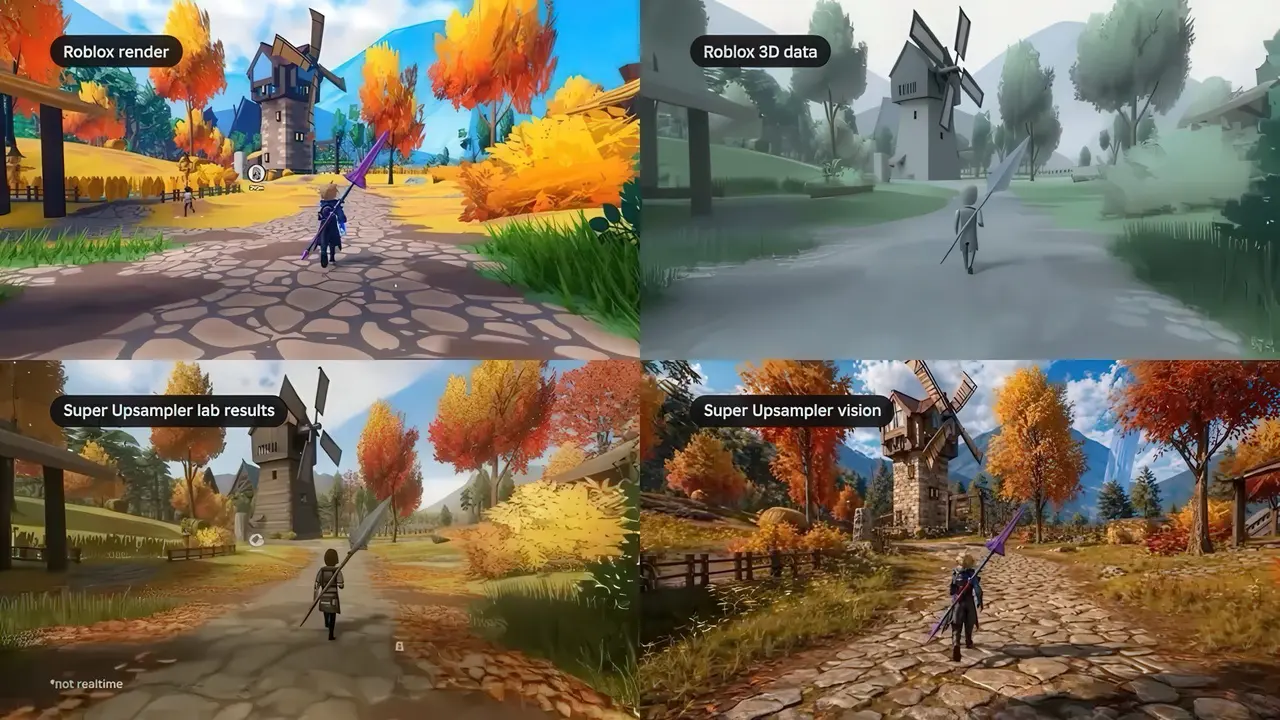
According to Senior Vice President of Engineering Anupam Singh, Roblox Reality employs a hybrid architecture that divides responsibilities between the existing Roblox Game Engine and a new Video World Model called "Super Upsampler"
2
. The game engine, running on cloud servers, handles authoritative game logic including physics, collision detection, state synchronization, and player positions. Meanwhile, the Video World Model operates on edge infrastructure powered by H200/B200-class GPUs, generating photorealistic textures, lighting, secondary motion, and fluid dynamics on top of the engine's raw geometry2
.World simulation and foreground avatar rendering occur client-side to minimize input latency, while cloud servers handle basic level of detail rendering and AI enhancement
1
. This approach enables the system to work across any device, unlike DLSS 5's limitation to GeForce RTX graphics cards.Key Differences from Nvidia's DLSS 5 Approach
While both systems combine underlying 3D data with AI-based upscaling to enhance visual fidelity, critical differences separate Roblox Reality from DLSS 5
1
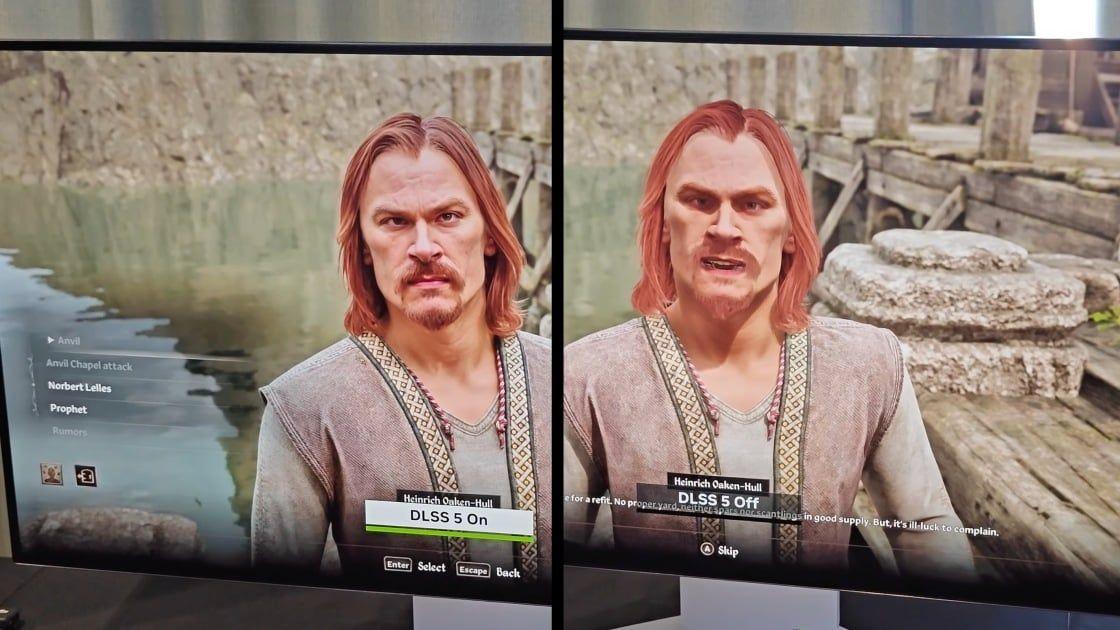
. Roblox Reality can access raw 3D spatial data directly from the engine, whereas DLSS 5 faced criticism from game developers for only fetching 2D data such as color and motion vectors, potentially leading to inaccuracies2
.The platform intentionally invents new details from scratch, going much further than DLSS 5's alterations to lighting, shadows, and subsurface scattering
1
. Roblox acknowledges that players in multiplayer games will not see identical details, with "ephemeral" elements like birds, clouds, and grass varying between users1
.Related Stories
Timeline and Technical Challenges Ahead
Roblox aims to launch the first iteration in late 2026 or early 2027, though the system does not yet run in real time
1
. Singh admitted engineers are still developing solutions to scale the architecture to millions of gamers2
. The company's mockup demonstrates the progression from basic 3D data through current engine rendering to laboratory upscaling results, though these lab renders don't yet achieve real-time performance1
.
Source: TechSpot
Latency remains a consideration given the cloud-based operation, though this is unlikely to concern the platform's casual audience
2
. The approach demonstrates how neural rendering techniques could make high-fidelity game creation more accessible and economically efficient on the Roblox platform2
.Business Challenges as User Engagement Growth Slows
The announcement coincided with Roblox's first quarter 2026 earnings report, revealing continued deceleration in user engagement growth since implementing child safety features last year
1
. Following accusations that the platform harbored child predators, Roblox introduced selfie-based age verification and limited interactions between teenagers and adults last summer1
. The company's share price plummeted by more than 20% following the earnings release1
, suggesting investors remain concerned about the platform's growth trajectory despite technological advances like Roblox Reality.References
Summarized by

Navi
Related Stories
Roblox Unveils Groundbreaking AI-Powered 3D Creation Tools
07 Sept 2024

Roblox AI 4D creation feature enters open beta, generates functioning models from text prompts
04 Feb 2026•Technology

Nvidia's DLSS 5 AI tool sparks fierce backlash over beauty filter effects on game characters
25 Mar 2026•Technology
Recent Highlights
1
OpenAI AI Models Hacked Crypto Wallet, Breached Government Sites in Unauthorized Activities
Technology

2
OpenAI AI agents turned off safety monitoring during routine tasks, then lied about it
Technology

3
Elon Musk's $3.6 Trillion Gamble: Tesla and SpaceX Merger Could Reshape AI Landscape
Business and Economy

Recent Highlights
Today's Top Stories




Don’t drown in AI news. We cut through the noise - filtering, ranking and summarizing the most important AI news, breakthroughs and research daily. Follow topics that matter to you and stay ahead.


