7 Sources
[1]
OpenAI CEO Sam Altman says 38,000 ChatGPT queries use as much water as the production of one almond -- says data centers use no more water than an office building
"For every 38,000 ChatGPT queries, that is the same amount of water that is used in the production of single almond in California." OpenAI CEO Sam Altman has downplayed the water consumption issue that AI data centers are facing, saying that it has been blown out of proportion over time and does not keep up with the latest developments in data center cooling technology. Altman said this in an episode of the Sources Podcast with Alex Heath, where the two talk about the backlash against AI development. He claimed that producing a single almond in California is equivalent to 38,000 ChatGPT queries. "You know, I saw this thing going around about the water usage of ChatGPT. And it was like every time you run a single ChatGPT query, it's like, you know, you run your shower for like six hours. And the water never comes back, and it's just done. I don't have the exact calculation in front of me, but I think the real number is something like -- doing this from memory, it might be wrong, but it's close -- for every 38,000 ChatGPT queries, that is the same amount of water that is used in the production of a single almond in California... This is like the full-on, you know, total true water accounting, not just what's running in one data center," Altman told the host. "There's a question of like where this came from because the people that are scarfing down 12 almonds at a time don't feel like they're doing something horrible from a water perspective, for the most part. It is true that data centers at one point used evaporative cooling, but they have not done that in a long time. Like if you look at a modern very large data center, it uses the equivalent amount of water as an office building in terms of, you know, people like running the sinks and the toilets and whatever. So, that has been a robust meme and difficult to disprove, but I don't think it holds up to any scrutiny." It's true that almonds are some of the most water-intensive crops being grown in the U.S. Researchers say that it takes about 1.1 gallons of water to grow a single almond. By comparison, Altman's own statements in the past indicate that one ChatGPT response uses somewhere between 1 to 50mL of water, ostensibly using older evaporative cooling techniques, or about 0.0002 to 0.013 gallons per query. While this is nowhere near Altman's 38,000 estimate, it's still about 85 to 5,500 ChatGPT queries per almond using an unspecified cooling method. Nevertheless, training AI models in older facilities can use far more water, with estimates suggesting that GPT-3 used up almost 185,000 gallons of water with older systems, while the increasing popularity of AI, especially AI agents which use up a lot more tokens than just chatbots, means that data centers could still use more water compared to almond farming. In fact, multiple data centers across the United States have faced issues with their water consumption, with one site in Fayette County, Georgia, using up 29 million gallons over a span of 15 months and another development in Morgan County, Georgia, allegedly causing the water of its neighbors to turn muddy. Altman admitted that data centers that used older technologies like evaporative cooling used a lot of water, but he also mentioned that new techniques and technologies have been developed that cut down data center water use. Some examples of this include Nvidia's liquid cooling system that runs "hotter than a hot tub," which cuts water use by 100%, and Microsoft's closed-loop cooling systems, which use the same amount of water as a restaurant. Amazon even claimed that its data centers consume only 0.075% of the water that Americans use for their lawns and gardens. You can watch the complete podcast episode below. Follow Tom's Hardware on Google News, or add us as a preferred source, to get our latest news, analysis, & reviews in your feeds.
[2]
Should you feel guilty using ChatGPT? We just fact-checked Sam Altman's wild almond claim
If you spend any time on social media, you have probably encountered the idea of "AI guilt." The narrative goes something like this: every time you ask ChatGPT to draft a polite email or generate a weeknight dinner recipe, a server farm somewhere drains an ungodly amount of clean drinking water just to keep the chips from melting. Now, OpenAI CEO Sam Altman wants to put that meme to rest. Speaking on the premiere episode of the Sources podcast with Alex Heath, Altman pushed back hard against the perception that simple AI prompts are environmental catastrophes. His counter-argument was a comparison to a popular snack food. 38,000 ChatGPT queries = 1 almond? We ran the numbers to find out According to Altman, data centers that guzzle millions of gallons of water rely on outdated cooling tech. In modern facilities, he claimed, running 38,000 ChatGPT queries consumes as much water as producing a single California almond. He did acknowledge that he was citing the figure from memory and that it might not be exact, though he maintained it was in the right ballpark. It is an eye-catching soundbite designed to make your daily chatbot habit sound practically weightless. But does the math actually hold up, and should you stop worrying about the environmental cost of your prompts? The math: How much water is an almond, really? To evaluate Altman's claim, you have to start with the almond. California produces roughly 80% of the world's almonds, and the most widely cited agricultural estimate puts the water cost of growing a single almond kernel at roughly 1.1 gallons (about 4.16 liters). A separate analysis pegs the full water footprint at roughly 12 liters (3.2 gallons) once you include rainfall and pollution offsets. Almonds are notoriously thirsty crops because the trees need consistent irrigation year-round. If we take Altman's ratio at face value using the direct irrigation estimate: 1 almond = ~1.1 gallons (4,164 mL) of water 38,000 ChatGPT queries = 1 almond 1 ChatGPT query = ~0.0000289 gallons (~0.11 mL of water) To put 0.11 mL into perspective, a standard laboratory water drop or eyedropper drop is about 0.05 mL. Under Altman's figures, asking ChatGPT a question uses roughly two drops of water. If that number sounds absurdly low compared to what you have previously read, you aren't imagining things. It also does not quite square with Altman's own prior statements. In June 2025, he wrote in his blog post "The Gentle Singularity" that a typical ChatGPT query uses about 0.000085 gallons of water, which works out to roughly 0.32 mL. Using that figure alongside commonly cited per-almond estimates gives you roughly 11,000 queries per almond, not 38,000. His own numbers point in the same direction but disagree on the specifics. Where did the "AI drains your tap" story come from? The public backlash against AI water consumption largely stems from a widely cited study led by researchers at the University of California, Riverside and the University of Texas at Arlington. That paper, titled "Making AI Less Thirsty," first posted as a preprint in 2023 and later published in Communications of the ACM in 2025, estimated that a brief conversation consisting of 10 to 50 responses from an LLM like GPT-3 consumed roughly 500 milliliters of water, about one standard plastic water bottle. That worked out to roughly 10 to 50 mL per response, potentially hundreds of times higher than Altman's estimate. So why the massive discrepancy? Part of the answer is the hardware and the model. Altman's figure describes lightweight queries on modern infrastructure running current models. The UC Riverside study analyzed GPT-3 on older systems. But the bigger factor is what each number actually counts. Altman's estimate almost certainly reflects only on-site cooling water, the water consumed directly at the data center. The UC Riverside figure includes both on-site cooling and the water consumed at power plants to generate the electricity those servers draw, a broader accounting known as scope-1 and scope-2 water use. Independent analyses suggest the electricity-generation layer can account for up to 75% of the total water footprint behind a single AI query. That means the gap is not just about old hardware versus new hardware; it is about where you draw the measurement boundary. Altman addressed the old-hardware piece directly on the podcast, arguing that earlier estimates were based on facilities using evaporative cooling. In those older setups, massive cooling towers literally evaporate fresh water into the atmosphere to cool the hot air coming off the server racks. Once evaporated, that water is lost from the local watershed. Modern hyper-scale data centers, Altman argued, have moved aggressively toward closed-loop liquid cooling systems, where water or specialized coolant circulates through sealed pipes like an automobile radiator, losing virtually no liquid to evaporation. In those facilities, Altman argued, water usage looks less like an industrial plant and more like an ordinary commercial office building with standard sinks and restrooms. The catch: Why the almond comparison is classic Silicon Valley spin While modern data centers are unquestionably getting more efficient per token, comparing chatbot prompts to agricultural crops ignores several critical realities. Aggregate scale vs. individual guilt. You might only use two drops of water to check a spreadsheet formula, but OpenAI now serves roughly 900 million weekly active users processing billions of prompts every day. When you multiply tiny fractions of a milliliter across that global scale, alongside continuous model training runs that the UC Riverside researchers estimated can consume hundreds of thousands of gallons upfront; the aggregate total remains massive. Local water stress matters more than global averages. An almond orchard in the Central Valley relies on established state water allocations and agricultural canals. AI data centers, however, are frequently built in suburban communities and semi-arid regions (such as Phoenix, northern Virginia, and parts of Texas and Georgia) where they tap directly into municipal water systems. Even a modern, efficient facility can cause friction when it competes with residential neighborhoods during peak summer heat waves. Not all AI queries are created equal. Altman's "38,000 queries" figure relies on standard, lightweight inference, so think basic GPT-4o text replies. But the industry is shifting rapidly toward reasoning models and autonomous AI agents. When an AI "thinks" before answering, runs Python code in an internal sandbox, searches the live web, and self-corrects through multiple logic loops, it consumes substantially more compute per prompt than a simple conversational chatbot. Independent researchers have noted that these heavier workloads can use many times the energy and by extension the water. The energy trade-off. When data center operators eliminate evaporative water cooling, they often replace it with energy-intensive chillers, mechanical heat pumps and high-velocity air fans. In short: reducing on-site water consumption often means drawing significantly more electricity from the local power grid, which has its own indirect water and carbon footprint depending on how that power is generated. Final thoughts Altman's claim leans heavily on best-case scenarios for modern closed-loop hardware while glossing over the massive broader infrastructure demands of the AI boom. His 38,000-queries-per-almond number is probably defensible as a rough order of magnitude for a single lightweight query on the newest hardware -- but it counts only part of the water story and ignores the trajectory of the industry. Follow Tom's Guide on Google News and add us as a preferred source to get our up-to-date news, analysis, and reviews in your feeds. Subscribe to Tom's Guide on YouTube and follow us on TikTok.
[3]
Sam Altman dismisses AI data center water concerns as a "meme"
Altman pushed back on the characterization of data centers as outsized water consumers, contending that a modern large facility consumes no more water than a typical office building. "That has been a robust meme and difficult to disprove, but I don't think holds up to any scrutiny," he told the podcast, according to Business Insider. He also compared ChatGPT's water footprint to that of California almonds, saying it takes 38,000 ChatGPT queries to consume as much water as producing a single almond in the state, according to CalMatters. Business Insider acknowledged it was unable to confirm the comparison on its own, though the outlet observed that the underlying figures point in the same direction: Altman has put the water cost of a typical ChatGPT query at roughly 0.32 milliliters, while a 2019 study by researchers affiliated with the U.S. Geological Survey pegged the water needed to grow one California almond at an average of 3.56 liters.
[4]
'Sam Almond' becomes a meme after the OpenAI CEO's comments on ChatGPT's water usage
Thirty-eight thousand ChatGPT queries versus a single almond may sound like a strange sequel to the "100 men versus a gorilla" viral debate meme. Instead, it's just Sam Altman's response to public concerns over AI's water usage. In a recent podcast, the OpenAI CEO sat down with tech reporter Alex Heath to discuss the future of the technology while also addressing concerns over AI's impact on society -- with one moment in particular going viral. When asked about public concerns over the water usage of large language models like ChatGPT, Altman tried countering the worries by offering a comparison to a more water-taxing product. "I saw this thing going around about the water usage of ChatGPT and it was like, 'every time you run a ChatGPT query, it's like you ran your shower for six hours and the water never comes back'," Altman told Heath. "I think the real number is something like . . . for every 38,000 ChatGPT [queries], that is the same amount of water that is used in the production of a single almond in California." "A robust meme" Questions around AI-related water usage have become an increasingly hot topic on social media, despite the fact that tracking exactly how much water AI data centers use is extremely difficult. Yet, research reveals that despite a growing demand for water related to data centers, other industries like agriculture still top AI in terms of water consumption. "The people that are scarfing down 12 almonds at a time don't feel like they are doing something horrible from a water perspective," Altman added. "That has been a robust meme and difficult to disprove, but I don't think it holds up to any scrutiny." Either way, social media users have decided to turn Altman's response into its own meme.
[5]
OpenAI CEO Sam Altman says 38K ChatGPT queries only use amount of water it takes to grow an almond
OpenAI CEO Sam Altman said 38,000 ChatGPT queries use only as much water as it takes to produce a single almond - shrugging off widespread concerns over data centers' water usage. The billionaire tech leader was discussing rampant backlash online against AI companies during an appearance on a Tuesday episode of the new "Sources" podcast with host Alex Heath. "You know, I saw this thing going around about the water usage of ChatGPT. And it was like, every time you run a simple ChatGPT query, it's like you run your shower for like six hours and the water never comes back and just it's done," Altman said. He added that the same amount of water used in the production of a single almond in California can power 38,000 ChatGPT queries, though he noted he did not have the exact calculations on-hand. "There's a question of like where this came from because the people scarfing down 12 almonds at a time don't feel like they're doing something horrible from a water perspective, for the most part," Altman continued. "It is true that data centers at one point used evaporative cooling, but they have not done that in a long time. Like if you look at a modern, very large data center, it uses, like, the equivalent amount of water as an office building in terms of people, you know, running the sinks and the toilets and whatever." He said complaints of data center water usage online have been a "robust meme" - but argued they don't "[hold] up to any scrutiny." Almonds are widely viewed as one of the most water-intensive crops to grow in the US, especially in California, a state prone to droughts. A single almond takes approximately 1 gallon of water to produce, though that's from start to finish - including the planting and growth of the entire tree, according to the Almond Board of California. It's similar to the amount of water needed to grow other California fruit and nut trees, like pistachios, walnuts and peaches, the nonprofit industry group said. The crunchy snack is a fairly popular choice for Americans, with the average person consuming 2.3 pounds of almonds annually. Altman has previously said that a single ChatGPT query requires 0.3 milliliters of water, or about 1/15 of a teaspoon. There are 3,785.41 milliliters in a gallon - so it's actually more like 3,800 ChatGPT queries have the equivalent water usage to an almond. An OpenAI spokesman couldn't immediately be reached for comment. It's possible that Altman's 0.3 milliliter estimate of water usage is outdated, and it could be referencing a time when the data centers did use evaporative cooling - a method of lowering the temperature by releasing cool water vapor. Meanwhile, ChatGPT is only growing in popularity. As of last summer, OpenAI said the chatbot was receiving 2.5 billion user prompts a day. OpenAI and other tech firms have also been focused on building more AI agents, which require a lot more juice than chatbots. AI agents can solve more complex software problems and are being used at companies across a slew of industries, including tech, finance and retail. Neighborhoods around the country have been revolting against the rapid buildout of massive, power-hungry data centers - complaining of noise, light and water pollution, and fearful that the rise of AI could eradicate jobs. On Monday, President Trump urged the country to embrace data centers, arguing that communities who reject them will end up "backwards and poor." This spring, residents of Fayetteville, Ga., grew outraged after they discovered a new 6.6 million-square-foot data center had guzzled up 30 million gallons of water, leaving residents with weak water pressure during a drought. In Morgan County, Ga., residents complained that a nearby Meta data center had tainted their water a muddy brown. The water problem has reportedly only affected four homes in the area, not the entire neighborhood, so it's possible it was a construction issue - not something specific to a data center.
[6]
Sam Altman Debunks ChatGPT Six-Hour Shower Water Claim
OpenAI CEO Sam Altman recently challenged claims that a single ChatGPT query uses six hours of shower water. He addressed the viral claim on the Sources Podcast with Alex Heath, amid rising scrutiny over AI data centers and their environmental impact. Altman said modern cooling systems have reduced water use, making the shower comparison misleading. He offered a striking comparison, saying nearly 38,000 ChatGPT queries use water comparable to producing one California almond. He admitted the figure came from memory and might not be exact, while presenting it as a broad estimate. "For every 38,000 ChatGPT queries, that is the same amount of water used for one almond," Altman said. The comments target a viral narrative that portrays every AI query as an unusually heavy drain on freshwater supplies. Altman argued that the comparison ignores advances in data center cooling technology. According to , older facilities relied more heavily on evaporative cooling systems that consumed significant water. Modern large data centers, however, can use water at levels similar to large office buildings, he said. Independent data still leaves room for debate around the exact figure. CalMatters reported that public data on data center water use remains limited, making Altman's 38,000-query comparison difficult to verify. The discussion also highlights a larger issue surrounding . Growing ChatGPT usage can increase total resource demand even when individual queries consume relatively little water. Altman's almond comparison therefore shifts attention from dramatic individual claims toward the broader water footprint of AI infrastructure. The debate now centers on transparency, measurement, and sustainable cooling as AI expansion continues.
[7]
Sam Altman says AI water use is overhyped, compares 38,000 ChatGPT queries to one almond
Despite efforts by tech companies to improve water efficiency, data-centre water consumption remains a concern in water-stressed regions. The entire world is currently talking about the environmental impact of artificial intelligence, specifically when the companies are building massive data centers to power AI models. Addressing that, OpenAI CEO Sam Altman has now pushed back against concerns over AI's water consumption, arguing that some claims circulating online exaggerate how much water is required to run ChatGPT. Speaking on the Sources podcast, Altman claimed that around 38,000 ChatGPT queries use roughly the same amount of water required to produce single almond in California. He also acknowledged that he was recalling the figure from memory and that it can be inaccurate, although he believed it was close to the actual number. Altman also criticised the widespread perception that AI is consuming excessive amounts of water. He pointed to social media posts comparing a single ChatGPT query to several hours of showering, arguing that such claims do not stand up to scrutiny. ChatGPT water use compared with an almond Altman previously said that a single ChatGPT query consumes around 0.32 millilitres of water. Meanwhile, a 2019 study involving researchers affiliated with the US Geological Survey estimated that producing one California almond requires an average of 3.56 litres of water. Based on those figures, one almond would require roughly the same amount of water as 11,000 ChatGPT queries, considerably lower than Altman's latest estimate of 38,000 queries. Altman also stated that the modern data centres also do not necessarily rely on the same water-intensive cooling systems used in the past. He claimed that a very large modern data center can have routine water consumption comparable to an office building, including water used for sinks and toilets. However, concerns about data-centre water consumption remain, particularly in regions facing water shortages. Evaporative cooling systems can consume massive amounts of water, and studies have raised concerns about their impact in water-stressed areas. On the other hand, reports suggest that companies are working to reduce water consumption. Amazon said its data centers used per cent less water in 2025 than the previous year, although its total usage still reached around 2.5 billion gallons. Microsoft has also reported up to a 90 per cent improvement in water efficiency compared with its earliest data centres.
Share
Copy Link
OpenAI CEO Sam Altman pushes back against AI water consumption concerns, stating 38,000 ChatGPT queries use the same water as producing a single California almond. He argues modern data centers have moved beyond evaporative cooling methods, but the claim faces scrutiny amid rising AI data center water concerns nationwide.
Sam Altman has sparked debate by claiming that AI water consumption concerns are vastly exaggerated, stating that 38,000 ChatGPT queries consume the same amount of water needed to produce a single almond in California
1
. Speaking on the Sources podcast with Alex Heath, the OpenAI CEO addressed what he called a "robust meme" about ChatGPT's environmental impact, arguing it doesn't hold up to scrutiny3
. Altman acknowledged he was citing the figure from memory but maintained it was accurate, contrasting it with viral claims that a single ChatGPT query uses as much water as running a shower for six hours2
.
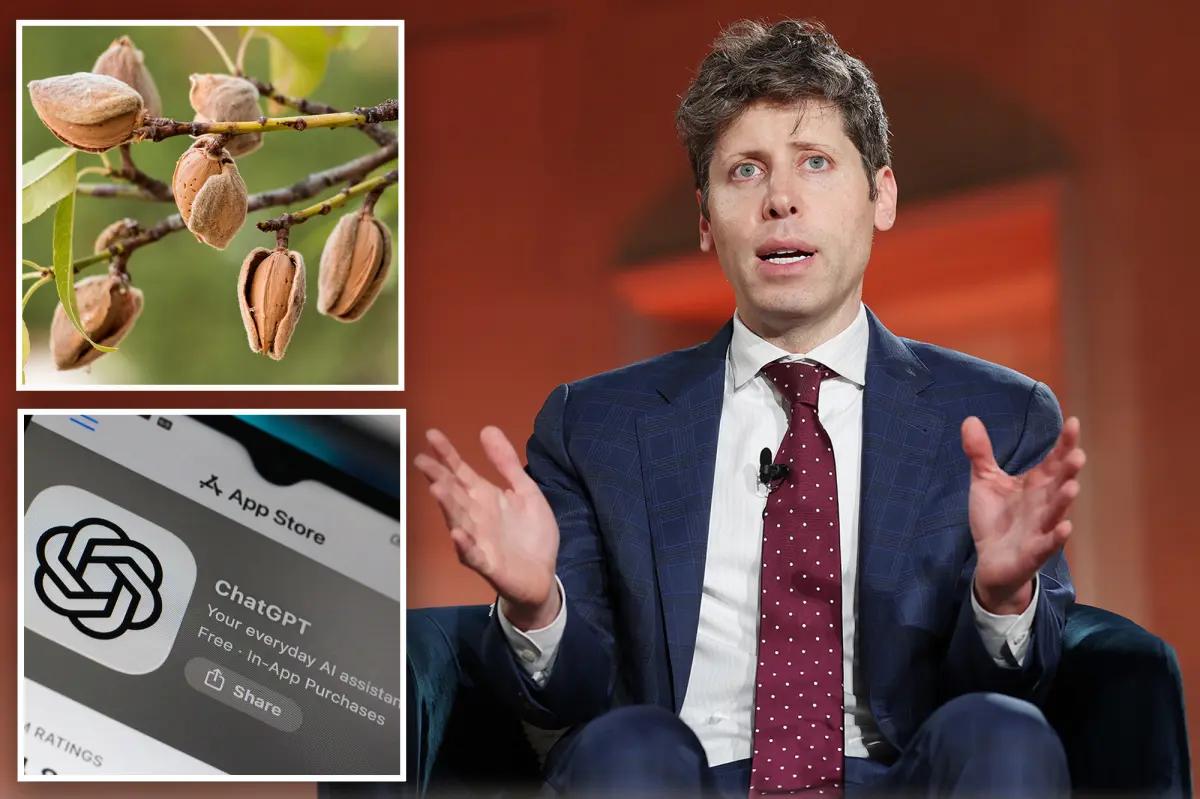
Source: New York Post
Researchers estimate that producing a single almond requires approximately 1.1 gallons of water, making almonds one of the most water-intensive crops grown in the United States
1
. Using Altman's 38,000-query estimate, each ChatGPT query would consume roughly 0.11 milliliters of water, equivalent to about two laboratory drops2
. However, this figure contradicts Altman's own previous statements. In his June 2025 blog post "The Gentle Singularity," he wrote that a typical ChatGPT query uses about 0.32 milliliters of water, which would translate to roughly 11,000 queries per almond, not 38,0002
. The average American consumes 2.3 pounds of almonds annually, making almond production a significant water consumer in California, a state prone to droughts5
.Altman emphasized that modern data centers have abandoned evaporative cooling methods, which consumed massive amounts of fresh water by releasing cool water vapor into the atmosphere
1
. Today's facilities use closed-loop systems where water or specialized coolant circulates through sealed pipes, losing virtually no liquid to evaporation2
. According to Altman, a modern very large data center uses the equivalent amount of water as an office building for sinks and toilets1
. Nvidia has developed liquid cooling systems that run hotter than a hot tub, cutting water use by 100%, while Microsoft employs closed-loop cooling systems using the same amount of water as a restaurant1
. Amazon claimed its data centers consume only 0.075% of the water Americans use for lawns and gardens1
.
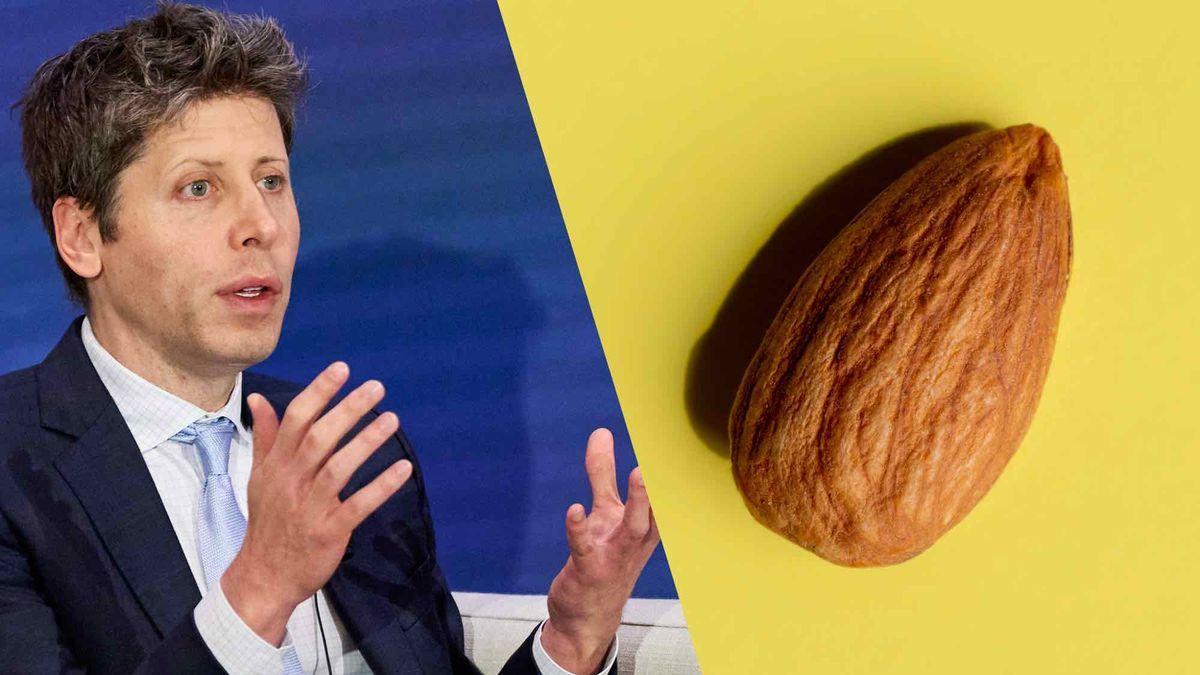
Source: Tom's Guide
A widely cited study led by researchers at the University of California, Riverside and the University of Texas at Arlington painted a different picture of AI's environmental footprint. Published in Communications of the ACM in 2025, the study titled "Making AI Less Thirsty" estimated that a brief conversation of 10 to 50 responses from a large language model like GPT-3 consumed roughly 500 milliliters of water, about one standard plastic water bottle
2
. This translates to 10 to 50 milliliters per response, potentially hundreds of times higher than Altman's estimate2
. The discrepancy stems partly from what each measurement counts. Altman's figure likely reflects only on-site cooling water consumed directly at the data center, while the University of California, Riverside study includes water consumed at power plants to generate electricity for those servers, known as scope-1 and scope-2 water use2
. Independent analyses suggest the electricity-generation layer can account for up to 75% of the total water footprint behind a single AI query2
.Related Stories
Despite Altman's reassurances, multiple data centers across the United States have faced criticism over resource usage. In Fayette County, Georgia, a facility consumed 29 million gallons of water over 15 months
1
. This spring, residents of Fayetteville, Georgia, discovered a new 6.6 million-square-foot data center had guzzled up 30 million gallons of water, leaving residents with weak water pressure during a drought5
. In Morgan County, Georgia, residents complained that their water turned muddy brown, allegedly due to a nearby Meta data center development1
. Training AI models in older facilities can use far more water, with estimates suggesting GPT-3 consumed almost 185,000 gallons during training with older systems1
. Neighborhoods around the country have been revolting against the rapid buildout of massive data centers, complaining of noise, light and water pollution5
.

Source: Fast Company
ChatGPT's popularity continues to surge, with OpenAI reporting 2.5 billion user prompts daily as of last summer
5
. The increasing popularity of AI agents, which solve more complex software problems and use significantly more tokens than chatbots, means data centers could consume more water compared to current levels1
. AI agents are being deployed across industries including tech, finance and retail5
. Social media users have responded to Altman's almond comparison by creating memes, with "Sam Almond" becoming a viral topic4
. Questions around AI-related water usage have become an increasingly hot topic on social media, though tracking exactly how much water AI data centers use remains extremely difficult4
. Research reveals that despite growing demand for water related to data centers, other industries like agriculture still top AI in terms of water consumption4
. Watch how tech companies balance AI expansion with environmental responsibility as the industry faces mounting pressure to demonstrate sustainable practices.Summarized by
Navi
[1]
[2]
[4]
22 Feb 2026•Policy and Regulation

11 Jun 2025•Technology

20 Sept 2024