Samsung Galaxy Watch can predict fainting episodes with AI, but experts raise concerns


12 Sources
[1]
Samsung's Galaxy Watches Could Alert Users Before They Faint
Expertise Smart home | Smart security | Home tech | Energy savings | A/V Smartwatches and fitness trackers often tout expansive health-monitoring capabilities, though some features can create more anxiety than reassurance without independent validation, as CNET senior editor Anna Gragert
[2]
Samsung watches can predict if you're about to faint - but there are big caveats
Samsung's Galaxy Watch may predict fainting episodes.False alarms and missed warnings remain concerns.More real-world testing is still needed. Samsung wants you to know its smartwatch can do more than count your steps, track your sleep, and guilt you for not moving enough. The company has
[3]
Samsung Galaxy Watches May One Day Predict If You're Going to Faint
Smartwatch fall detection is a life-saving feature for anyone at risk of passing out or tripping, but what if your device could predict that you're going to faint before you do? Samsung is on its way to figuring that out. A new clinical study from Samsung, in collaboration with Korea's Chung-Ang
[4]
Samsung says its Galaxy Watch can predict fainting with 'high accuracy' - Engadget
The most common type of fainting called vasovagal syncope (VVS) is normally not dangerous in itself, but it can cause sudden falls that results in severe secondary injuries like concussions. Now, Samsung says that it has figured out how to predict VVS "with high accuracy" via biosignals from its
[5]

Your next Galaxy Watch update could save you from a nasty fall
Researchers used the Galaxy Watch 6's PPG sensor and AI analysis to detect warning signs before users fainted. Samsung wants your smartwatch to do more than count steps and buzz with notifications. Its latest research suggests the Galaxy Watch could eventually warn users before they faint. In a
[6]

Your next Samsung Galaxy Watch could 'dramatically reduce' your chances of injury thanks to this one clever feature
* New research suggests smartwatches could predict fainting episodes * This would give you time to minimize the danger of a fall * The research was commissioned by Samsung Most of the time, fainting episodes come out of the blue, leaving a split second for someone to support you before you start
[7]

Samsung Announces World-First Breakthrough in Fainting Prediction With Galaxy Watch
Joint study with Chung-Ang University Gwangmyeong Hospital demonstrates potential for early fainting detection using Galaxy Watch, paving the way for real-time warning systems Samsung today announced that a joint clinical study with Chung-Ang University Gwangmyeong Hospital in Korea has
[8]

Your Galaxy Watch can now warn you before you faint
Your wrist might know you're about to faint before your brain does. Fainting might seem like a dramatic but harmless event, but the real danger lies in what happens next. A sudden fall can result in fractures, concussions, and other serious injuries. It is especially harmful for elderly people and
[9]

Galaxy Watch 6 predicts fainting with 84% accuracy, says study
Samsung announced that its Galaxy Watch 6 can predict fainting due to vasovagal syncope (VVS) with high accuracy. VVS is the most common type of fainting, which can cause severe secondary injuries from sudden falls. The company collaborated with Chung-Ang University Gwangmyeong Hospital in Korea to
[10]

Samsung: The smartwatch will be able to predict fainting minutes before it happens
Vasovagal fainting is the most common type of temporary loss of consciousness, and although it is not dangerous in itself, the sudden fall that follows it can lead to severe head injuries and concussions. Now, Samsung claims it has managed to crack the method for predicting this condition with high
[11]

Samsung Galaxy Watch successfully predicts fainting spells in new clinical trial
A recent joint clinical study conducted by Samsung and Chung-Ang University Gwangmyeong Hospital in South Korea has demonstrated that biosignals obtained from a commercial smartwatch can accurately predict vasovagal syncope (VVS). Vasovagal syncope is a condition characterized by an abrupt drop in
[12]

Samsung, Chung-Ang University demonstrate Galaxy Watch can predict fainting in advance - The Korea Times
A patient wears a Samsung Electronics Galaxy Watch while lying on a bed. Courtesy of Samsung Electronics Samsung Electronics announced Thursday that a clinical study conducted jointly with Chung-Ang University Gwangmyeong Hospital has demonstrated that biosignal analysis technology in the Galaxy
Share
Copy Link
Samsung's Galaxy Watch 6 achieved 84.6% accuracy in predicting vasovagal syncope up to five minutes before it happens in a clinical study with 132 patients. The wearable technology uses a photoplethysmography sensor and AI algorithm to analyze heart rate variability. But medical experts warn the 64% specificity could trigger excessive false alarms in real-world use.
Samsung Galaxy Watch Demonstrates Ability to Predict Fainting Episodes
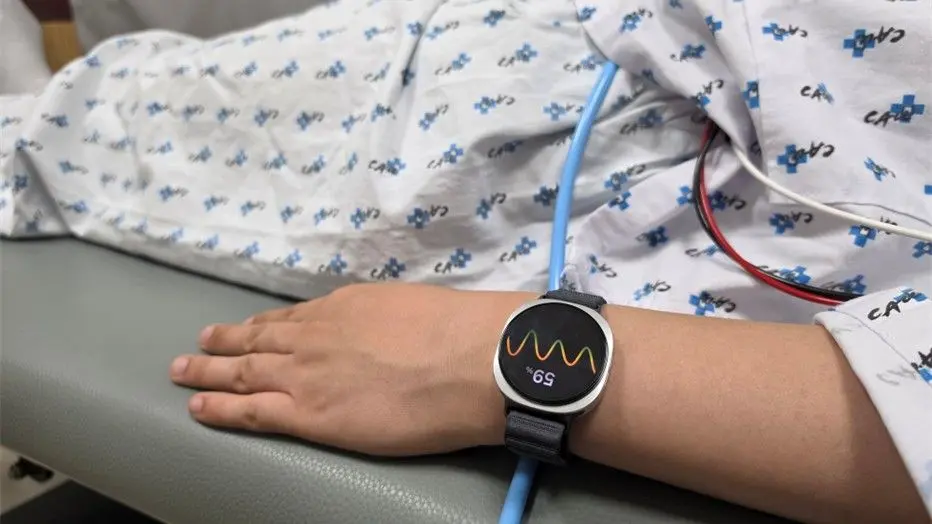
Samsung has released findings from a clinical study showing its Galaxy Watch 6 can predict fainting episodes with 84.6% accuracy using an AI algorithm and biosignals
1
. The research, conducted in partnership with Chung-Ang University Gwangmyeong Hospital in Korea, evaluated 132 patients with suspected vasovagal syncope symptoms during induced fainting tests4
. The Samsung Galaxy Watch successfully predicted fainting episodes up to five minutes in advance, achieving a clinical sensitivity of 90% and specificity of 64%1
.
Source: Samsung
The wearable technology uses a photoplethysmography sensor, or PPG sensor, which measures changes in blood flow beneath the skin using light
1
. By analyzing heart rate variability data collected through this sensor, the AI algorithm identifies patterns that emerge before someone faints5
. The findings were published in European Heart Journal - Digital Health, with Samsung calling it a "world-first breakthrough in fainting prediction"4
.Understanding Vasovagal Syncope and Its Risks
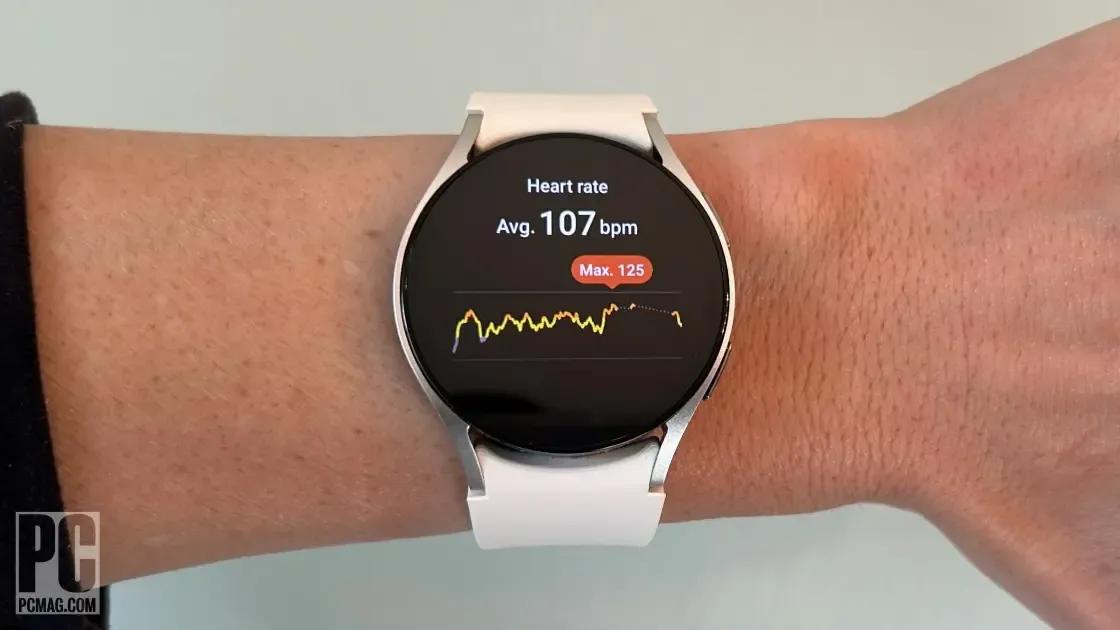
Vasovagal syncope affects up to 40% of people throughout their lives, according to Professor Junhwan Cho from Chung-Ang University Gwangmyeong Hospital
3
. This common type of fainting occurs when heart rate and blood pressure drop abruptly, often triggered by stress, dehydration, standing too long, or emotional distress2
. While the fainting itself is rarely life-threatening, secondary injuries from falls can cause concussions, fractures, or blood loss3
.
Source: PC Magazine
"An early warning could give patients advance time to get into a safe position or call for help, which would dramatically reduce the incidence of secondary injuries," Professor Cho explained
3
. Dr. Sam Setareh, director of cardiology at Beverly Hills Cardiovascular and Longevity Institute, echoed this view: "Even a few minutes of warning could be meaningful: sit or lie down, hydrate, perform counterpressure maneuvers, or call for help. That could reduce falls, fractures, concussions, and other secondary injuries"2
.Medical Experts Highlight Significant Limitations
Despite the promising results, medical professionals have raised concerns about the study's limitations and real-world applicability. Dr. Brett A. Sealove, chair of cardiology at Hackensack Meridian Jersey Shore University Medical Center, identified the 64% specificity as one of the biggest issues
2
. "In a controlled tilt-table lab, that may be acceptable," he said, "but in the real world, where millions of watch users are moving through daily life, that false-positive rate could generate an enormous volume of unnecessary alerts"2
.The clinical study was conducted in a highly controlled environment with patients undergoing tilt-table testing specifically designed to provoke fainting episodes
2
. Dr. Setareh cautioned that everyday factors such as motion artifact, hydration status, posture, medications, sleep, alcohol, and anxiety can all affect biosignals in real-world settings2
. "Too many false positives can create anxiety, alarm fatigue, and unnecessary medical evaluations," he warned2
.Dr. Sealove also noted that all participants had suspected neurally mediated syncope and were undergoing a deliberately provocative laboratory procedure. "The study tells us nothing about how this algorithm would perform in someone who has never had a tilt-table test, who has no documented history of vasovagal syncope, or who is simply going about their daily life," he said
2
.Related Stories
Path to Preventive Healthcare Remains Uncertain
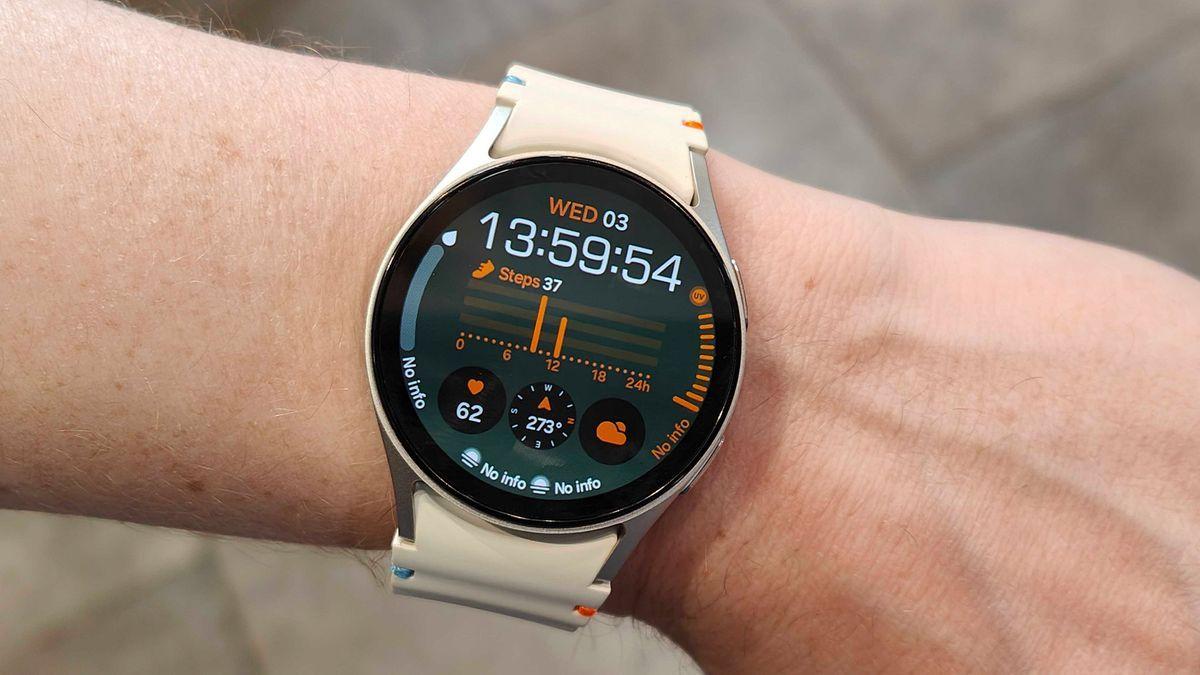
"This study is an example of how wearable technology can help shift healthcare from being designed for 'post-care' to a model of preventive care," said Jongmin Choi, head of Samsung's health R&D group
1
. Samsung has expressed commitment to "driving technological innovation that empowers our users to lead healthier everyday lives" and intends to "accelerate the implementation of personalized health solutions"3
.
Source: TechRadar
However, Samsung hasn't confirmed when or if this fainting prediction feature will become available to Galaxy Watch users
4
. The company would likely need to navigate regulatory approval and conduct more extensive real-world testing before releasing such a feature commercially5
. Samsung plans to work with more medical institutions and focus on preventive healthcare, but the timeline for bringing this capability to market remains unclear5
.References
Summarized by

Navi
[5]
Related Stories
Samsung Galaxy wearables will detect early signs of dementia using AI-powered brain health monitoring
05 Jan 2026•Technology
Samsung Partners with Stanford to Enhance Galaxy Watch's Sleep Apnea Features Using AI
10 Apr 2025•Health

Samsung Health app overhaul brings AI-powered features to turn raw data into actionable guidance
30 May 2026•Technology

Recent Highlights



Recent Highlights
Today's Top Stories



Don’t drown in AI news. We cut through the noise - filtering, ranking and summarizing the most important AI news, breakthroughs and research daily. Follow topics that matter to you and stay ahead.


