Samsung posts record profit up eightfold as AI chips demand defies geopolitical uncertainties


14 Sources
[1]
Samsung Profit Up Eight-Fold After AI Chip Sales Defy War Fears
Samsung Electronics Co. earned a stronger-than-expected eight-fold leap in quarterly profit, underscoring robust demand for memory chips used for artificial intelligence and data centers even amid uncertainties triggered by war in the Middle East. The chips-to-smartphones conglomerate reported
[2]
Samsung forecasts record profit on AI boom
Samsung Electronics has projected that its operating profit surged more than eightfold to a record in the first quarter, citing an "unprecedented supercycle" for memory chips from the AI boom. This comes despite the deepening Middle East conflict that has sharply increased energy costs for data
[3]
Samsung flags eightfold jump in Q1 profit as AI chip demand drives up prices
SEOUL, April 7 (Reuters) - Samsung Electronics (005930.KS), opens new tab on Tuesday projected a record-high first-quarter profit, up more than eightfold from a year earlier and well above expectations as booming demand for artificial intelligence infrastructure caused supply bottlenecks and drove
[4]
Samsung shares rise nearly 5% on record-breaking earnings forecast buoyed by AI chip demand
The guideline suggests that Samsung is regaining ground in the high-bandwidth memory race. Shares of Samsung Electronics rose as much as 4.8% on Tuesday after the South Korean technology giant forecast record quarterly profit amid strong demand for artificial intelligence chips. Shares later pared
[5]

Samsung Q1 2026 record profit forecast on AI chip demand
An operating profit of 57.2 trillion won ($37.8 billion) for the January-to-March period of 2026 -- representing a greater-than-eightfold year-over-year gain from 6.69 trillion won and an all-time quarterly high -- is what Samsung Electronics said this week it expects to report. Put another way,
[6]

Samsung forecasts insane operating profit growth thanks to surging memory prices - SiliconANGLE
Samsung forecasts insane operating profit growth thanks to surging memory prices Samsung Electronics Co. Ltd. forecast record quarterly profit thanks to rising demand for its memory chips to support artificial intelligence workloads, sending its stock higher during today's market session. The
[7]

Samsung flags eightfold jump in Q1 profit as AI chip demand drives up prices - The Economic Times
Samsung estimated an operating profit of 57.2 trillion won ($37.92 billion) for the January to March period, compared with an LSEG SmartEstimate of 40.6 trillion won and a more than eight-fold jump from 6.69 trillion won a year earlier.Samsung Electronics on Tuesday projected a record-high
[8]

Samsung Apologized Last Year For Lagging In AI Chips, Now The Company Eyes Record Profit Of Nearly $38 Bi
On Tuesday, Samsung Electronics (OTC:SSNLF) projected a first-quarter operating profit of about KRW 57.2 trillion ($37.92 billion). AI Boom Fuels Samsung's Record Profit Surge The projection blows past expectations and exceeds the company's total profit for all of last year. The world's largest
[9]

Earnings surprise puts Samsung Electronics on course for 300T annual operating profit
Cars form a line at the entrance to Samsung Electronics' main campus in Suwon, Gyeonggi Province, on April 7, 2026. (Yonhap) Samsung Electronics reported 57.2 trillion won in operating profit in the first quarter of the year, an earnings surprise that far exceeded projections. In short, the wave
[10]

Samsung Electronics estimates $37.9 bil. 'super surprise' profit for Q1 - The Korea Times
Samsung Electronics on Tuesday provided its earnings guidance for the first quarter of this year, predicting 57.2 trillion won ($37.9 billion) in operating profit and 133 trillion won in sales, achieving record-breaking profitability amid a global surge in demand for artificial intelligence (AI)
[11]

Samsung sees eightfold increase in Q1 profit on soaring AI chip demand By Investing.com
Investing.com-- Samsung Electronics (KS:005930) projected a sharp surge in first-quarter profit on Tuesday, as booming demand for artificial intelligence chips drove a strong recovery in its semiconductor business. The company said it expects operating profit of about 57.2 trillion won ($38
[12]

Samsung flags eightfold jump in quarterly profit as AI chip demand pumps prices - VnExpress International
Samsung has emerged as one of the major beneficiaries of the AI data center boom that has constrained supply for traditional chips used in smartphones, PCs and game consoles and led to a near-doubling in chip prices in the first quarter alone. The world's largest memory chipmaker estimated an
[13]

Samsung Projects Eightfold Profit Leap as AI Chip Demand Soars -- Update
Samsung Electronics, the world's largest memory-chip maker, forecast a more than eightfold jump in first-quarter operating profit, signaling continued record earnings amid the artificial-intelligence boom despite uncertainties fueled by the Middle East conflict. The stronger-than-expected
[14]
Samsung flags eightfold jump in Q1 profit as AI chip demand drives up prices
SEOUL, April 7 (Reuters) - Samsung Electronics on Tuesday projected a record-high first-quarter profit, up more than eightfold from a year earlier and well above expectations as booming demand for artificial intelligence infrastructure caused supply bottlenecks and drove chip prices higher. The
Share
Copy Link
Samsung Electronics reported a preliminary operating profit of $37.9 billion for Q1 2026, an eightfold increase driven by explosive demand for memory chips used in AI computing and data centers. The result nearly triples the company's previous quarterly record and exceeds its entire 2025 profit, signaling an unprecedented supercycle in the semiconductor industry despite Middle East conflict concerns.
Samsung Achieves Record-Breaking Operating Profit Amid AI Boom
Samsung Electronics posted a preliminary operating profit of 57.2 trillion won ($37.9 billion) for the January-March 2026 quarter, marking an eightfold surge from 6.69 trillion won a year earlier
1
. The figure significantly exceeded analyst expectations of 40.6 trillion won and represents a quarterly record that nearly triples Samsung's previous peak of 20.07 trillion won from Q4 20253
. Revenue climbed 68% to 133 trillion won, against the average estimate of 116.8 trillion won1
. This record profit exceeds Samsung's entire 2025 operating profit of 43.6 trillion won, underscoring what analysts describe as an "unprecedented supercycle" for the booming artificial intelligence sector.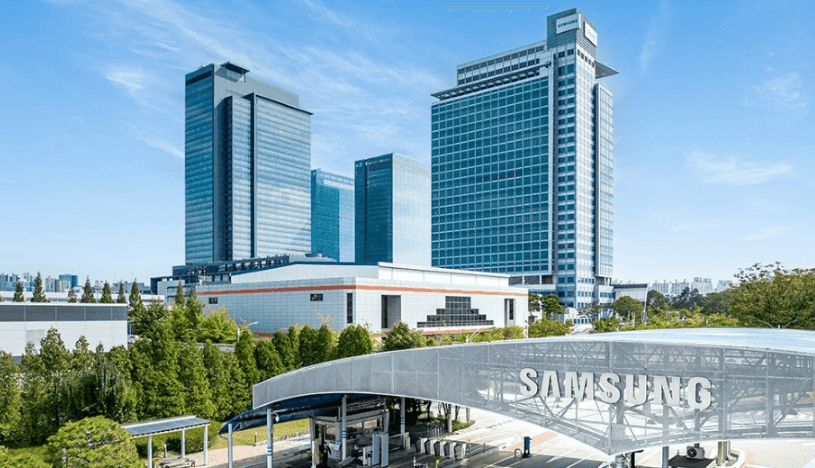
Source: SiliconANGLE
Memory Chip Demand Drives Explosive Growth in AI Computing
The extraordinary results stem from surging memory chip demand for artificial intelligence infrastructure and data centers, where supply bottlenecks have driven rising chip prices to unprecedented levels
3
. The average selling price of global DRAM surged 64% in the first quarter from the previous quarter, according to Citigroup analysts1
. Research firm TrendForce expects contract DRAM memory chip prices to increase more than 50% in the current quarter as supply shortages persist3
. Samsung's Device Solutions division, which includes memory chips, accounted for 39% of revenues and 57% of operating profits in 20254
. Customers led by cloud service providers are ramping up orders, lifting both volumes and margins across the memory market1
.
Source: Reuters
High-Bandwidth Memory Competition Intensifies
Samsung has been narrowing the gap with South Korean rival SK Hynix Inc. in the high-bandwidth memory race, particularly with its latest HBM4 chips
3
. The company previously lagged behind competitors in supplying High-Bandwidth Memory (HBM) chips critical to Nvidia Corp.'s AI chipsets, prompting a CEO apology about a year ago for disappointing earnings and share price performance3
. Samsung now dominates global memory supply alongside SK Hynix Inc. and Micron Technology Inc., with the trio increasingly shifting production toward high-bandwidth memory used in Nvidia Corp.'s AI accelerators, tightening supply of conventional memory1
. Samsung has also benefited from the rebound in traditional chip demand fueled by AI inference, which allows AI models like ChatGPT to generate responses in real time3
.Related Stories

Geopolitical Uncertainties Fail to Dampen Semiconductor Supercycle
Despite geopolitical uncertainties triggered by the deepening Middle East conflict between the U.S.-Israel and Iran, which has sharply increased energy costs for data centers, the semiconductor industry continues its robust trajectory. Samsung shares initially surged up to 4.8% on the news before closing up 1.76%, though the stock has fallen about 6% since the war began in late February
5
. Daniel Kim, an analyst at Macquarie, stated: "It is historically the best single print ever for Korean [chipmaking] corporates. The industry supercycle is expected to outlast the Iran war". South Korea's semiconductor exports soared 151.4% in March to a record $32.8 billion, serving as a bellwether of global technology demand1
.
Source: Korea Times
Future Outlook Amid Supply Shortages and Pricing Pressures
Citigroup forecasts annual operating profit of 310 trillion won—equivalent to $206 billion—in 2026, saying it expects strong AI inference demand to sustain pricing
1
. However, potential headwinds loom as chipmakers face materials shortages tied to the Middle East conflict, particularly helium disruptions, though Korean chipmakers reportedly have more than six months of the inert gas in inventories. TrendForce Senior Vice President Avril Wu noted that spot DRAM prices softened recently, citing difficulty among end consumers in keeping pace with the run-up in pricing5
. Analysts remain largely upbeat on South Korea's biggest company, dismissing concerns about AI optimization by offerings such as Google's TurboQuant or Anthropic's Claude Mythos1
. Samsung will release full first-quarter earnings on April 305
.References
Summarized by

Navi
Related Stories
Samsung profit triples to record $13.8B as AI demand sends memory prices soaring 313%
08 Jan 2026•Business and Economy

Samsung profit soars 48-fold as AI demand creates unprecedented memory chip shortage
30 Apr 2026•Business and Economy

Samsung Electronics Q4 profit triples to record high as AI demand fuels memory chip shortage
29 Jan 2026•Business and Economy
Recent Highlights
1
Meta Unveils Muse Wonder Frontier AI Models, Claims Performance Matching OpenAI and Anthropic
Technology

2
IMF Report Warns AI Market Correction Could Spark Global Financial Crisis With $1.4T at Risk
Business and Economy

3
OpenAI Releases 722 AI-Generated Math Solutions, Triggering Existential Crisis in Mathematics
Technology

Recent Highlights
Today's Top Stories







Don’t drown in AI news. We cut through the noise - filtering, ranking and summarizing the most important AI news, breakthroughs and research daily. Follow topics that matter to you and stay ahead.


