Santander eyes 3,000 early retirements in Spain as AI reshapes European banking workforce


2 Sources
[1]
Santander weighs up to 3,000 early retirements in Spain amid AI shift, newspaper says
0 seconds of 0 secondsVolume 0% Press shift question mark to access a list of keyboard shortcuts Keyboard ShortcutsEnabledDisabled Shortcuts Open/Close/ or ? Play/PauseSPACE Increase Volume↑ Decrease Volume↓ Seek Forward→ Seek Backward← Captions On/Offc Fullscreen/Exit
[2]
Santander weighs up to 3,000 early retirements in Spain, Expansión reports
The move comes as lenders across Europe brace for the impact of artificial intelligence (AI), which is expected to streamline operations but also reduce staffing needs, especially in back-office roles. A Santander spokesperson said talks are currently under way with unions to set a framework for
Share
Copy Link
Spanish banking giant Santander has initiated talks with unions over voluntary early retirement for up to 3,000 employees in Spain, representing 10-15% of its domestic workforce. The move reflects broader AI-driven restructuring across European banks, with Santander projecting over €1 billion in cost savings and revenue from AI initiatives by 2028.
Santander Negotiates Major Workforce Reduction in Home Market
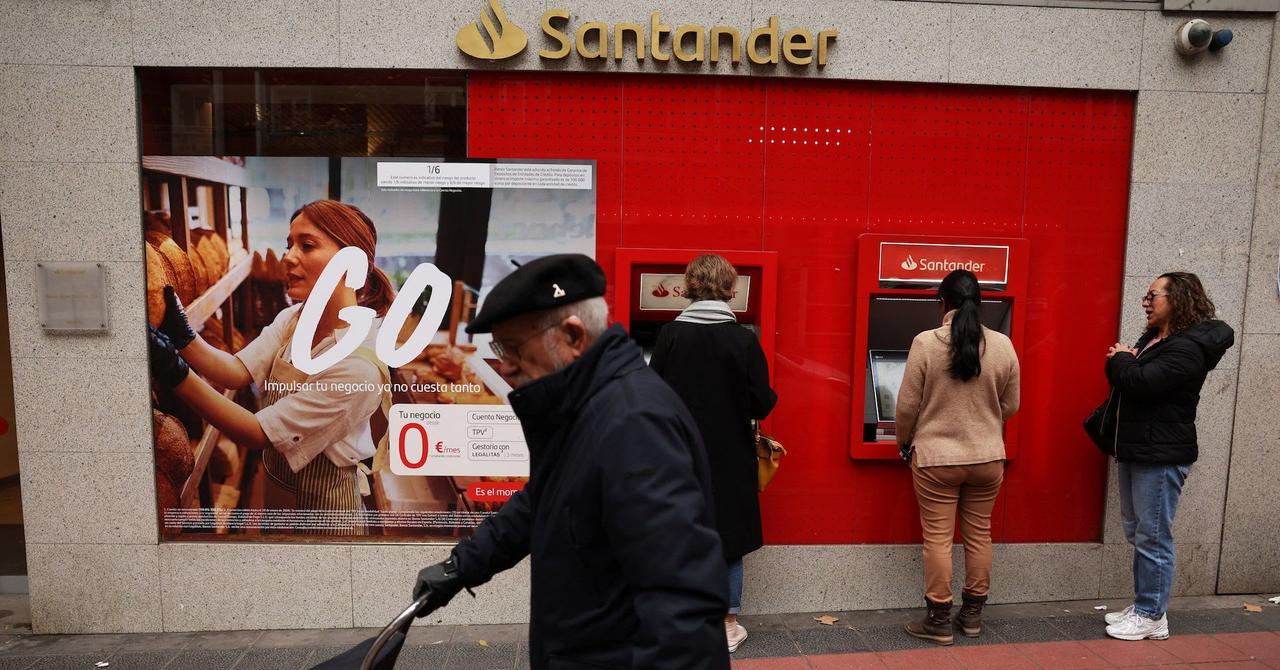
Santander has begun talks with unions over a plan to offer voluntary early retirement to up to 3,000 employees in Spain, according to Spanish newspaper Expansión
1
. The potential headcount reduction could affect between 10% and 15% of the Spanish bank's roughly 20,000 employees in its home country2
. While Santander confirmed that discussions with unions are ongoing to establish a framework for voluntary early retirements, the company emphasized that no specific targets have been set1
.
Source: Reuters
AI-Driven Cost-Cutting Strategy Accelerates Across European Banking
The move comes as lenders across Europe brace for the impact of AI, which is expected to transform operations by streamlining operations while simultaneously reducing staffing needs, particularly in back-office roles and administrative functions
2
. In its strategic update in February, Santander projected that cost savings and revenue from AI initiatives would exceed €1 billion ($1.14 billion) by 20281
. This ambitious target underscores how deeply AI is reshaping the workforce reduction strategy at major financial institutions.Ongoing Negotiations and Compensation Details
Comisiones Obreras, the largest union in the Spanish banking sector, confirmed it had started negotiations with the bank, which are set to continue until July
1
. The talks focus on voluntary retirement extending until 2028, though union representatives stressed these are not part of a mandatory restructuring plan. Under the scheme being negotiated, Santander is offering 74% of gross annual pay for employees aged 55 to 57, and 76% for those aged 58 and above1
. In 2025, around 800 staff in Spain left Santander under a similar voluntary retirement scheme, while approximately 400 have departed so far this year1
.Related Stories

Broader Context of Workforce Transformation
Like other European banks, Santander has already implemented significant cost savings measures by reducing its workforce by approximately 14,000 employees over the past two years, bringing the global headcount below 200,000
1
. Taking into account the corporate centre, which houses the global headquarters, the number of employees in Spain rises to 34,000 . The current Santander early retirements in Spain represent the latest phase in this ongoing transformation, signaling that traditional banking roles continue to face pressure from automation and digital innovation. As AI capabilities expand, industry observers anticipate further workforce adjustments across the financial sector, with particular impact on administrative and processing functions that can be automated.References
Summarized by

Navi
[2]
Related Stories
Santander targets €1 billion annual boost from AI investments as it expands customer base to 210M
25 Feb 2026•Business and Economy

Santander extends AI tools to all 185,000 employees, targets $1.15 billion in business value
22 Jun 2026•Business and Economy

Intesa Sanpaolo to Cut 9,000 Jobs Amid AI and Digitalization Push
24 Oct 2024•Business and Economy

Recent Highlights
1
Microsoft and Nvidia Launch Surface Laptop Ultra: A $2,599 AI-Ready PC With RTX Spark Chip
Technology

2
OpenAI Releases 722 AI-Generated Math Papers on GitHub, Igniting Fury Among Mathematicians
Science and Research

3
Trump Consulted Grok AI Before Ordering Venezuela Invasion and Capture of Nicolás Maduro
Policy and Regulation

Recent Highlights
Today's Top Stories










Don’t drown in AI news. We cut through the noise - filtering, ranking and summarizing the most important AI news, breakthroughs and research daily. Follow topics that matter to you and stay ahead.


