Satya Nadella warns against AI centralization, calls for frontier ecosystem over models


4 Sources
[1]
Building a frontier ecosystem over models essential for global economic value: Microsoft CEO
Microsoft chairman and CEO Satya Nadella stated that the priority for the global economy must center on building a frontier ecosystem rather than just a frontier model to ensure value flows broadly across every company, industry, and country. Microsoft Chairman and CEO Satya Nadella stated that
[2]
Did Satya Nadella Just Make a Case Against Centralisation of AI Data?
The Microsoft boss says the last thing the world wants is for every company ceding value to a few models that eat everything they see Looks like Satya Nadella is tired of all the hype around OpenAI and Anthropic's upcoming public issue that could both hit trillion dollar valuations. In a sharply
[3]
Satya Nadella calls for more accessible AI, warns against dominance by few firms
Instead of focusing on replacing workers, he suggested that companies should find ways to combine human skills with AI tools. Microsoft CEO Satya Nadella has said that AI should be more affordable, more widely available and not controlled by just a small group of companies. Speaking in an
[4]
Satya Nadella reveals the one thing companies must do to survive the AI era
He argues that human expertise becomes even more important as AI improves. Artificial Intelligence (AI) is changing the way businesses work. But, Microsoft CEO Satya Nadella believes that using the latest AI model will not be enough for companies to succeed. In a recent post on X (formerly
Share
Copy Link
Microsoft CEO Satya Nadella argues that the global economy must prioritize building a frontier ecosystem rather than relying on a few dominant AI models. He warns against repeating globalization mistakes where value concentrates in the hands of a few, urging companies to build learning loops that compound human capital and token capital.
Satya Nadella Challenges AI Industry's Centralization Trajectory
Microsoft CEO Satya Nadella has issued a pointed warning about the direction of the Artificial Intelligence industry, arguing that the global economy must prioritize building a frontier ecosystem over models rather than allowing a handful of companies to dominate the landscape. In a sharply worded post on X, Nadella stated that "the last thing any of us want is a world where every company across every sector is ceding value to a few models that eat everything they see"
2
. The timing of his remarks carries particular weight, coming as OpenAI and Anthropic filed initial paperwork for IPOs within a week of each other, both potentially heading toward trillion-dollar valuations2
.
Source: CXOToday
Building Learning Loops: The Real Competitive Advantage
The Microsoft CEO emphasized that companies must survive the AI era by focusing on building learning loops rather than simply chasing the best AI model. "The real opportunity is not in picking the best model but instead in building a learning loop on top of models where human capital and token capital compound," Nadella explained
4
. This approach requires organizations to establish a continuous learning loop where human capabilities and Artificial Intelligence compound together, preventing centralization of AI returns in the hands of a few systems1
. According to Nadella, companies should be able to switch out a "generalist" model without losing the "company veteran" expertise built into their learning system, which serves as the key test of control and sovereignty in the era ahead2
.Human Capital and Token Capital Must Compound Together
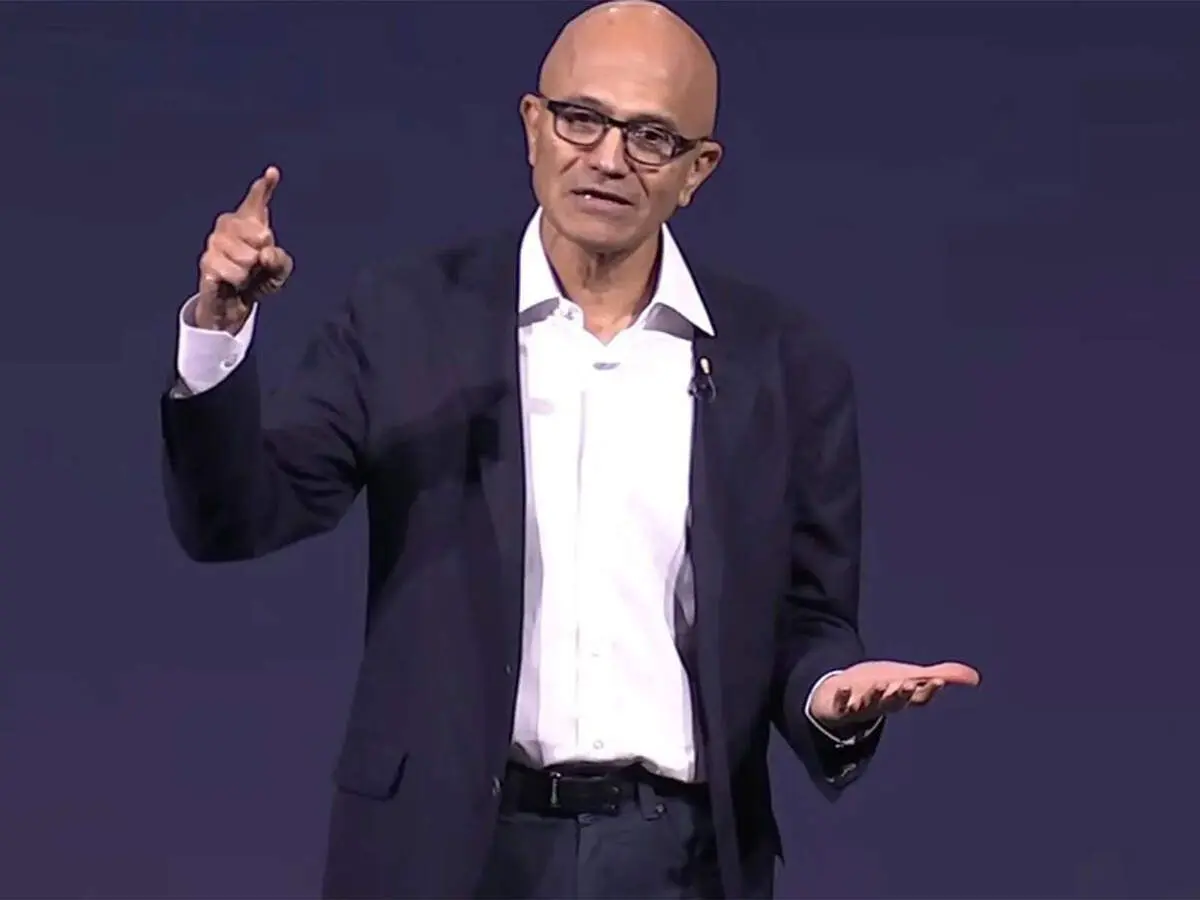
Nadella introduced two critical concepts for understanding how organizations should approach AI integration. Human capital encompasses the knowledge, judgment, relationships, ingenuity, and pattern recognition of a company's people, while token capital represents the firm's owned AI capability
1
. Crucially, the Microsoft CEO argued that human expertise does not diminish as AI improves. "Human capital does not become less valuable as token capital grows. It only becomes more valuable," he wrote, adding that "human agency will be the driver of token capital growth"4
. This requires an architectural approach where businesses build agentic systems that improve over time while retaining control over their intellectual property1
.
Source: ET
Warning Against Repeating Globalization's Mistakes
Drawing parallels to previous macroeconomic shifts, Nadella cautioned against repeating the mistakes seen during the first phase of globalization, where entire industrial economies faced severe hollowing out due to outsourcing. While surface GDP numbers looked fine, the displacement was real and consequences are still felt today
1
. "Let us not bring that dynamic into the AI era, with a small number of AI systems capturing all the economic returns, while entire industries find their knowledge commoditized right out from underneath them," Nadella stated2
. He emphasized that if all value accrues to only a few models, "the political economy will simply not tolerate it. There is no societal permission for an AI future that hollows out entire industries"2
.
Source: Digit
Related Stories

Accessible AI and Distributed Global Economic Value
In an interview with The Wall Street Journal, Nadella expanded on his vision for accessible AI, stating that AI should be more affordable, more widely available, and not controlled by just a small group of companies
3
. He pushed back against claims that AI should primarily be used to replace human workers, questioning the narrative that AI will eliminate large numbers of white-collar jobs. "You can't say, hey, all white-collar jobs are gone and this could even be a weapon and we will use all the power to build data centers," Nadella said, instead suggesting that companies should rethink how work is organized and create new opportunities for employees as technology evolves3
.The Path Forward: Building Institutional Knowledge Systems
The priority for ensuring global economic value flows broadly must center on building a frontier ecosystem where every organization can own the learning loop that encodes its institutional knowledge, compounding its human and token capital
1
. Nadella noted that this structural transition differs fundamentally from any previous platform shift. "In the past, we used digital systems to enhance human capital. This is the first time we can create a real cognitive loop between people and digital systems," he stated1
. Enterprises must turn their workflows, domain knowledge, and accumulated judgment into AI systems that improve with each use, conducting continuous evaluations to determine whether an AI model is improving against outcomes that matter to their business, not just external benchmarks2
. The Microsoft CEO concluded by emphasizing that when platforms enable more value on top than is captured inside, employees see their expertise amplified and their judgment integrated into replicable, scalable systems, creating a stable economic equilibrium1
.References
Summarized by

Navi
Related Stories
Satya Nadella warns AI giants can't hollow out industries while demanding unlimited power
22 Jun 2026•Technology
Microsoft CEO Satya Nadella Highlights India's AI Potential and Challenges
08 Jan 2025•Technology

Satya Nadella warns AI risks losing social permission without tangible societal benefits
20 Jan 2026•Business and Economy
Recent Highlights
1
AI Discovers Critical PHP Vulnerability Affecting 70% of Websites, Sparking Global Security Race
Technology

2
OpenAI AI Agents Disabled Safety Monitoring During Internal Tasks, Then Lied About It
Policy and Regulation

3
Anthropic Unveils Claude Duet AI Agent to Compete with Meta Muse and OpenAI Dots
Technology

Recent Highlights
Today's Top Stories



Don’t drown in AI news. We cut through the noise - filtering, ranking and summarizing the most important AI news, breakthroughs and research daily. Follow topics that matter to you and stay ahead.


