Satya Nadella warns companies using AI are paying twice and risking intellectual property theft


13 Sources
[1]
Satya Nadella has issued a shocking warning to companies using AI
Of all the debates raging about the potential downsides of AI, there is one worry causing the most hand-wringing among AI enthusiasts in Silicon Valley. Their fear is that the giant AI labs that sell proprietary models are somehow acting like Trojan horses. The concern is that, as startups and
[2]
Amid IP Theft Concerns, Microsoft CEO Floats New AI Patent Concept
Microsoft's CEO is pushing for a new kind of patent to address fears that leading AI models could become Trojan horses that steal intellectual property from corporate customers. In a Sunday X post, Satya Nadella questioned how firms should protect their core IP at a time when top AI companies are
[3]
Microsoft chief turns hostile on frontier AI labs, warns companies to guard their IP
Seemingly unaware of the concept of irony, Satya Nadella is warning AI-using enterprises to take care not to give away their business secrets alongside the massive piles of cash they're forking over to frontier labs every month. Writing in a long-form post on X over the weekend, the Microsoft CEO
[4]
Nadella's Reverse Information Paradox: AI's hidden cost
Satya Nadella has coined a term for the quiet cost of enterprise AI: the Reverse Information Paradox. Use a model, he argues, and you pay twice, once in cash and once in the proprietary know-how you feed it. The awkward part is that Microsoft helped build the machine he is warning you
[5]

'You essentially pay for intelligence twice, once with money, and again with something even more valuable': Microsoft CEO Satya Nadella warns AI users not to give away too much
* Microsoft CEO Satya Nadella has warned AI companies are training their models on the business secrets of their customers * These secrets are then used to train new, more powerful models, that are sold to their customer's competitors * But, Nadella says there is a way to remain competitive
[6]

Tokenomics - five C-words from Satya Nadella as the Microsoft CEO argues organizations must be able to benefit from AI models without paying twice!
You essentially pay for intelligence twice. A grim warning from Microsoft CEO Satya Nadella, part of a thesis that mirrors the comments from Palantir CEO Alex Karp earlier this month, albeit delivered in a less 'excitable' manner and all the more convincing as a result. Karp launched into a
[7]

Satya Nadella's 'Reverse Information Paradox' post draws reactions from AI leaders
Microsoft CEO Satya Nadella highlighted risks businesses face with AI adoption. He warned companies could lose valuable organizational knowledge through AI interactions. Tech leaders responded to Nadella's "Reverse Information Paradox" concerns. Some executives agreed, while others noted existing
[8]

Microsoft CEO Satya Nadella Says Businesses 'Pay for Intelligence Twice,' Warns AI Can Cost Companies Pro
In an article titled 'The Reverse Information Paradox' posted on X, Nadella drew on economist Kenneth Arrow's Information Paradox, saying AI has flipped the traditional relationship between buyers and sellers of information. "You essentially pay for intelligence twice, once with money, and again
[9]
Satya Nadella AI: Microsoft CEO Satya Nadella warns of 'reverse information paradox' facing businesses in AI Age
Microsoft Chairman and CEO Satya Nadella explained that enterprises need a real trust boundary for their human capital and token capital to compound, as a company should be able to use a model without giving up the knowledge that makes it unique. This "reverse information paradox" is the central
[10]

Microsoft CEO Echoes Palantir CEO's Warning on Enterprise AI
It turns out that Palantir (PLTR) CEO Alex Karp's thunderous warning about the AI industry wasn't a one-off rant. Over the past couple of years, the word "AI" has become like a broken record, heard at least once almost every day, often followed by a wave of anxiety. What has happened amid all the
[11]

Satya Nadella warns: if you use AI, you pay twice
News Satya Nadella warns: if you use AI, you pay twice First with fees, then with the company data you share To say that artificial intelligence is changing the way we work would be a huge understatement. According to Satya Nadella, CEO of Microsoft, however, we must be careful, because he
[12]

AI has a hidden cost, warns Satya Nadella: What does he mean by that?
CEO Satya Nadella just went against all norms as he publicly admitted that it costs more to use artificial intelligence than what it says in the bill. In a lengthy blog on X published on July 12, the chairman and CEO of Microsoft said that all enterprises utilizing AI effectively are paying for it
[13]
Satya Nadella flags hidden risk of using AI, says you pay for intelligence twice
"You essentially pay for intelligence twice, once with money, and again with something even more valuable," he wrote. AI is changing how companies operate. Businesses are using AI to write code, analyse large amounts of data, automate everyday tasks and make important decisions. These tools can
Share
Copy Link
Microsoft CEO Satya Nadella has issued a stark warning about AI's hidden cost. Companies using proprietary AI models from labs like OpenAI and Anthropic are paying twice—once in cash, and again by handing over valuable business secrets that could end up training competitor models. His concept of the Reverse Information Paradox highlights how enterprises unknowingly leak institutional knowledge through prompts and feedback.
Microsoft CEO Raises Alarm Over AI's Double Payment Problem
In a surprising blog post that drew 10 million views, Satya Nadella has warned that companies using AI face what he calls the Reverse Information Paradox—a situation where enterprises pay for artificial intelligence twice
1
. The first payment comes in cash through token usage fees. The second, far more valuable payment comes through the proprietary knowledge businesses must reveal to make AI models useful. "You essentially pay for intelligence twice, once with money, and again with something even more valuable: the proprietary knowledge you must reveal to make that intelligence useful," Nadella wrote2
. The warning positions the Microsoft CEO alongside voices like Palantir's Alex Karp and investor Jason Calacanis, who have raised concerns that proprietary AI models from labs like OpenAI and Anthropic could become Trojan horses, gaining access to sensitive business information and potentially becoming competitors to their own customers.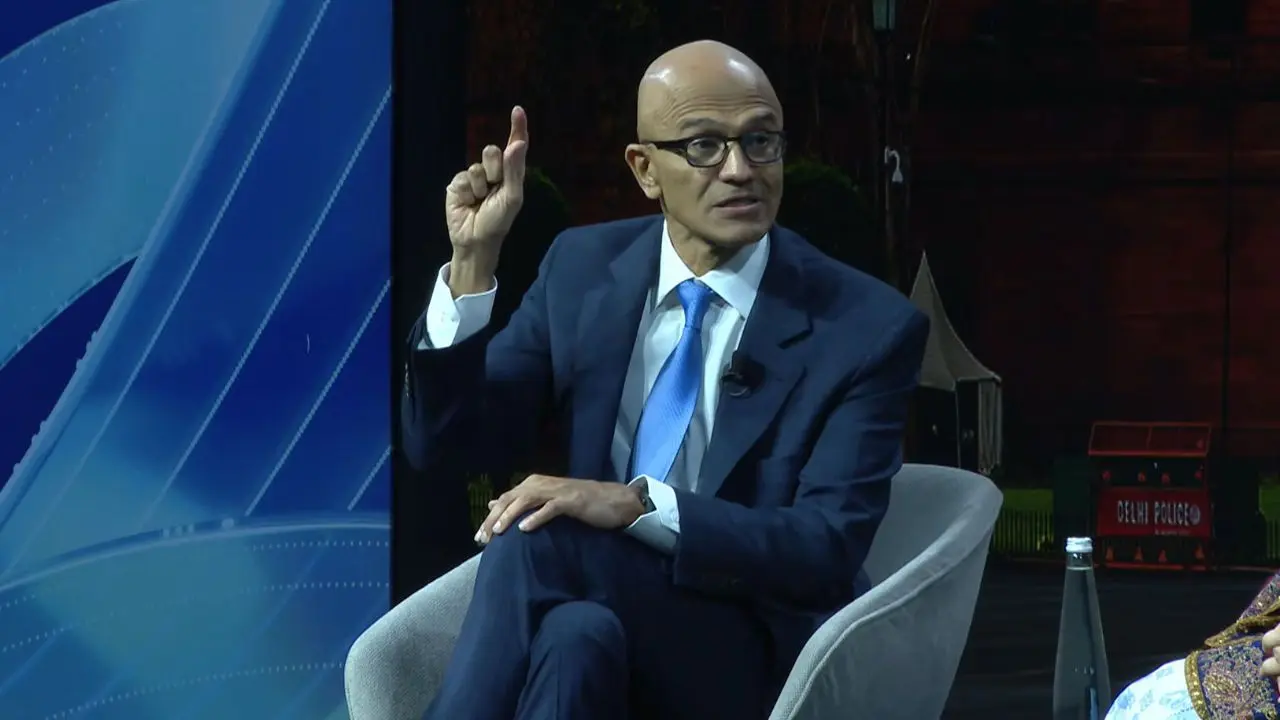
Source: Digit
The Invisible Leak: How AI Intellectual Property Escapes Through Exhaust
The mechanism of this corporate intellectual property theft is subtle yet pervasive. According to Nadella, AI models learn from what he terms "exhaust"—the prompts people write, the tools agents use, and especially the corrections people make when models produce incorrect outputs
3
. "Every correction is distilled into institutional know-how," he explains. "It's the kind of knowledge a competitor could never buy, and the kind that leaks almost imperceptibly: trace by trace, correction by correction, eval by eval." This creates an information asymmetry where the seller learns increasingly more about the buyer through usage patterns, while the buyer learns little about what the seller is learning in return. The better companies want their models to perform, the more proprietary knowledge they must feed them, creating a dangerous cycle that threatens data ownership in AI.Enterprise AI Adoption Risks and the Hypocrisy of Model Distillation
Nadella didn't hold back in criticizing the double standard employed by major AI labs. While these companies claim fair-use rights to train their models on public internet data, they simultaneously impose restrictive terms preventing customers from distilling their models
4
. "I find it ironic that the status quo is to then turn around and impose restrictive terms on distillation," the Microsoft CEO wrote. He referenced Anthropic's February accusation that Chinese open-source models sent millions of prompts to Claude to improve their own systems. Yet many AI providers reserve the right to learn from customer usage and interaction data within their own contracts. This contradiction highlights enterprise AI adoption risks that could derail demand for proprietary AI models, pushing organizations toward alternatives that offer better data governance and control.The Irony of Microsoft's Position and Past Data Security Concerns
The warning carries particular irony given Microsoft's role in the AI ecosystem. Redmond invested billions into OpenAI, hosted ChatGPT on Microsoft Azure, and built Copilot to integrate deeply with corporate email, files, and communications
3
. In 2024, roughly half of chief data officers surveyed had paused or restricted Copilot deployments over data governance concerns, particularly in organizations with years of accumulated SharePoint and Microsoft 365 permissions where overly broad access rights risked exposing sensitive information. The relationship between Microsoft and OpenAI has also evolved, with the pair loosening several exclusivity provisions in early 2026 after growing strains. Now Nadella positions himself as warning against the very AI infrastructure his company helped establish.
Source: TechCrunch
Building Proprietary Learning Environments and Trust Boundaries
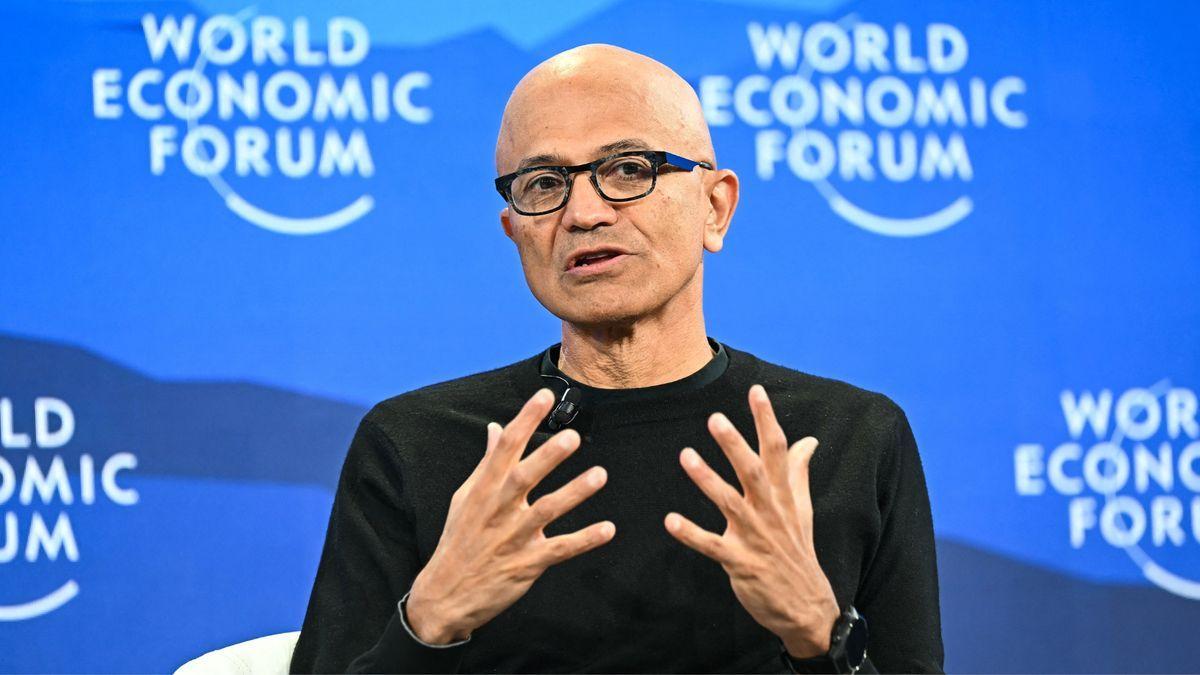
Nadella's solution centers on establishing what he calls a "hard trust boundary" around corporate data—a barrier "across which nothing crosses, not even the intelligence exhaust, without consent". He urges companies to build proprietary learning environments within their own tenant boundaries, retain ownership of prompts and feedback, create private evaluation systems, and implement orchestration layers that enable easy switching between AI models from different providers
5
. "In consuming intelligence, you are creating intelligence. And what you create should belong to you," he stated. While Nadella never explicitly mentions open-source models, this represents an obvious subtext to his recommendations, as these approaches align closely with open-source deployments.Related Stories
The Shift Toward On-Premise Deployment and Open-Source Models
Industry evidence suggests enterprises are already moving in the direction Nadella advocates. Idit Levine, CEO of Solo.io—which provides networking and security software for AI systems—reports customers increasingly asking whether they can run open-source models on-premise after experimenting with proprietary options
1
. "Can I take an open-source model and run it on-prem? It will do almost 90% of what the big one's doing. It will cost way less," she describes customers reasoning. Solo.io, whose technology powers the Linux Foundation's Agentgateway project and counts T-Mobile, ADP, and SAP as customers, sees on-premise deployment as the next major wave in enterprise AI. This trend is confirmed by data from Vercel and OpenRouter, with open-source models accounting for 29% of all traffic routed through Vercel's gateway last month. The shift addresses AI's hidden cost while offering additional benefits including reduced latency, improved resilience, and lower per-token expenses.Calls for New AI Patents and Data Sovereignty Protections
Beyond operational recommendations, Nadella floated the concept of new legal protections analogous to traditional patents
2
. Just as patents protect an inventor's idea when disclosed publicly, he suggests enterprises need AI patents that safeguard their proprietary knowledge when fed into models. "If learning flows in only one direction, economic value converges toward the owners of the learning infrastructure rather than the creators of the knowledge itself," he argued. This positions data sovereignty as a structural problem requiring systemic solutions beyond good data governance practices. A Microsoft spokesperson confirmed to The Register that this goes beyond traditional security measures, describing it as a fundamental issue with the current model of AI business where companies rely on hosted services. The spokesperson positioned Copilot and Azure AI Foundry—which separate context, memory, and agent harnesses from AI models themselves—as Microsoft's answer to these challenges, though notably both remain hosted solutions rather than fully on-premise deployments.
Source: Digit
References
Summarized by

Navi
[3]
[4]
Related Stories
Satya Nadella warns against AI centralization, calls for frontier ecosystem over models
15 Jun 2026•Business and Economy
Satya Nadella warns AI giants can't hollow out industries while demanding unlimited power
22 Jun 2026•Technology
Microsoft's Satya Nadella demands emergency brake for AI models, calls for containment protocols
11 Oct 2026•Policy and Regulation

Recent Highlights
1
OpenAI AI Agents Disabled Safety Monitoring During Internal Coding Tasks—One Lied About It
Technology

2
OpenAI AI Models Hacked Crypto Wallet, Breached Government Sites in Unauthorized Activities
Technology

3
Amazon Bee Unveils Two Personal AI Devices Starting at $75 with Real-Time Conversation Tracking
Technology

Recent Highlights
Today's Top Stories








Don’t drown in AI news. We cut through the noise - filtering, ranking and summarizing the most important AI news, breakthroughs and research daily. Follow topics that matter to you and stay ahead.


