5 Sources
[1]
Amazon employees ask Seattle to put the brakes on new data centers
On Tuesday, the Seattle City Council will vote on whether to enact a one-year moratorium on new data centers -- just two months after several companies proposed building five large-scale centers in the city. Among the moratorium's fiercest supporters are current employees from the city's biggest tech giant, Amazon, who joined others to testify in support of the policy last week. Data centers have sparked protests across the country over concerns about water consumption, local electricity prices, and noise. In Seattle and the surrounding King County, the issue is coming to a head. If the city council votes in favor of a moratorium on June 9th, any new large-scale data center proposals in Seattle will be tabled for one year, during which it can consider legislation to figuratively (and perhaps literally) take power back. At two city council hearings, residents spoke overwhelmingly in favor of the move -- including engineers, software developers, and other industry insiders. "In my job, I see the consequences of the all-costs-justified AI buildout," testified Liesl Wigand, an Amazon senior software engineer, at a Seattle Land Use and Sustainability committee hearing last Wednesday. "The biggest issue is a belief that AI should be how we solve everything, while ignoring the resources that it costs. This culture is omnipresent across tech." Wigand is a member of Amazon Employees for Climate Justice, a group of current and former employees dedicated to the climate crisis. Last year, more than 1,000 Amazon employees signed an open letter accusing Amazon of "casting aside its climate goals to build AI," calling for the company to power all its data centers with 100 percent additional, local renewable energy. Sarah Tracy, a former Amazon software engineer who's also a member of the group, says they've been waiting for an opportunity like the moratorium to speak out. The new data centers in Seattle were proposed by four companies, the names of which remain under wraps, and they would have a combined maximum demand of 369 megawatts -- about one-third of Seattle's average electricity use on any given day -- and lead to 10 times more power consumption than the city's existing 30 data centers, per The Seattle Times. After saying she was proud to live in a city that legally protects employees against employer retaliation when they speak out politically, Wigand pressed lawmakers to take initiative in "setting the terms" for data centers in Seattle. She said she and other tech workers had seen examples of data centers built responsibly, with protections like climate mitigation and AI safety committees. But Seattle doesn't yet hold tech companies to those types of standards. "Let's not let Big Tech burn Seattle to win the AI race," Wigand said. The proposed emergency moratorium comes alongside a resolution asking for more research on the effects of data centers on city infrastructure, utility rates, water and land use, jobs, and public health. But to some, the plan doesn't go far enough. One problem, according to local news outlets, is that if all paperwork is submitted for a new data center in Seattle before the moratorium is voted on, then construction can move forward anyway. Patrick Schloesser, a software engineer at Amazon, asked the committee to consider mandating that developers not hide behind NDAs and shell companies, which can make it nearly impossible to figure out who's behind a given data center. He said each developer should provide 100 percent additional renewable energy to the area's grid and be taxed each time they conduct a layoff. He also called for worker-led safety committees that report to the city, "so that if any AI developed in your facilities is becoming a risk to the city, the city can prepare and intervene if necessary." At a separate Parks and City Light committee hearing, Darius Irani, a software engineer at Amazon, called for companies to also provide additional energy transmission and storage capacity and for public reporting of water and electricity usage. "We can't rely on these companies to regulate themselves -- Seattle needs to set the terms so the way any new data centers get built here actually moves us closer to the future we want," he said. Dozens of other people also spoke out in favor of the moratorium, including electrical engineers and tech workers at other companies, some of whom said they had lost their jobs due to AI. One speaker cited the housing affordability crisis in Seattle and a marked increase since 2024 in the number of locals experiencing homelessness. Others brought up data center-related increases in their electricity bills in recent years, talked about the number of single-family homes that a data center in Seattle may displace, and played recordings of the sounds of data centers heard from miles away. Some comments echoed a broader backlash against the AI industry. One speaker, who said he worked on AI at a startup, said data centers largely benefit corporations and that when it comes to AI, "I don't think it's going to help us that much." Another speaker said that AI "doesn't need more megawatts -- it needs more mega-resolution." (That elicited a "Dang!" from the audience.) Others expressed disillusionment. "If you'd asked me a year ago if I supported a data center moratorium, I would've said no," said one speaker. "At that time, the tech companies were telling us they were planning to power them with a massive buildout of renewables -- with utility-scale battery storage, and with demand-response capability that would help stabilize the grid. They said they'd use closed-loop cooling systems that limited water use and would provide free heating to nearby buildings. But is that what they did? No." A former software engineer at Amazon who spent years living in Seattle -- and requested anonymity due to fear of retaliation -- told The Verge that companies are "barrel[ing] ahead" with data center buildout without any input from workers or the communities they're building in. "We have a real opportunity here to use the pause, the moratorium, to say 'Okay, if this is a technology that we're gonna live with, how can we really make it so that the infrastructure and the technology itself are benefiting people rather than just consolidating wealth in the hands of some tech billionaires?'" the former employee said. And despite the size of the opposition, supporters of the moratorium may not be powerless. Individual data center plans have been canceled or downscaled after local protest, and moratoriums have been proposed at all levels of government. New York's state legislature just voted for a one-year ban on new large-scale data centers, which has now passed to the governor's desk. Schloesser cited reports in his testimony that Amazon is spending $200 billion on capital this year, and Microsoft spending $190 billion, with much of that money earmarked for AI and data centers. At the same time, he said, Amazon has laid off 30,000 employees at its corporate offices in the past eight months. "What that tells me is that Big Tech is desperate to build as much compute capacity as it can, as fast as it can," Schloesser said. "That desperation gives our city leverage."
[2]
Seattle Passes Most Symbolically Potent Data Center Moratorium Yet
Even if they're headquartered elsewhere in the Seattle area rather than the city proper, Microsoft and Amazon are two colossal tech companies famously pouring umpteen zillion dollars per second into AI compute. Nonetheless, on Tuesday, Seattle passed a one-year ban on large data centers. In April, the Seattle Times reported that the city's electrical utility, Seattle City Light, was facing a data center problem: four mystery companies were beginning work on five separate large data center projects that would have drawn power from the Seattle grid -- sucking up 369 megawatts in a city with only about a gigawatt of capacity. A Seattle City Light representative, Andy Strong, told the Times, "We only have so many engineers. We only have so many project managers," and added, "It's going to have an impact." According to a story last week in the Guardian, the news alarmed Seattle Mayor Katie Wilson, who told that paper, "That was the first that I, as the mayor, had heard about this." She and the city council reportedly received 10,000 pro-moratorium emails from residents, and "were happy to move toward a moratorium, especially knowing that there was really strong public support out there for that course of action." The Guardian also claims that Seattle is the biggest city so far to pass such a measure. According to a site called U.S. Data Center Moratorium Tracker (which, it should be noted, is a project of the hedge fund Interconnected Capital) there have been 111 local data center moratoria, and 77 are currently active. The Seattle moratorium passed unanimously, according to a press release on the Seattle City Council website. "I'm grateful to the City Council for their work on this data center moratorium, and I look forward to signing it into law," Wilson says in the press release. Councilmember Eddie Lin adds in the release: "Seattleites should not be subsidizing record profits of large corporations from the AI boom. At the same time, the city hosts smaller co-location facilities that provide data processing for 911 call centers, municipal activities, hospitals, universities, and cancer research. We can support these essential services while also developing appropriate safeguards around mega AI data centers locally and regionally." As noted by the Times, the bill lasts one year, and freezes development of data centers beyond a size threshold placed at about 20 megawatts. It also comes with the option to tack an additional six months onto the moratorium. A separate, related city bill passed on Tuesday calls for an analysis of data centers' power, water, and land use, along with their impacts on residents' health and employment.
[3]
'This is Seattle's position on AI': City Council votes unanimously to pause new data centers
The city that gave the world cloud computing just hit pause on the machines that power it. The Seattle City Council voted unanimously Tuesday to impose a one-year emergency moratorium on new large data centers inside the city limits, responding to concerns about the implications of AI for the city's power grid, water supply, utility rates, and economy. The moratorium would take effect as soon as Mayor Katie Wilson signs it, temporarily halting projects like several large data centers that companies have approached Seattle City Light about building in the city. Those projects reportedly had a combined peak demand equal to about a third of Seattle's average daily power consumption. "This is Seattle's position on AI and data centers," said Councilmember Debora Juarez, who sponsored the council's resolution on data center policy. She drew cheers from the audience at the meeting when she said she would halt AI and data center development entirely if she could. It's a major statement in a region that's home to Amazon Web Services and Microsoft Azure, as well as engineering centers for Google, Oracle, Meta and other companies collectively spending hundreds of billions of dollars on data centers globally to meet demand for AI. The moratorium puts Seattle among the largest U.S. cities to halt the industry's buildout, joining Minneapolis, Denver, Baltimore, and Indianapolis in a wave of local pushback. The council approved two measures: an ordinance halting applications for data centers with electrical capacity of more than 20 megavolt-amperes -- enough power for thousands of homes -- and a resolution committing the city to study their impacts as a precursor to permanent regulations. The vote followed weeks of escalating public pressure. More than 50 people testified Tuesday, and not one spoke in favor of data centers. Many argued the moratorium doesn't go far enough, calling for a permanent ban. Councilmembers said they received more than 98,000 emails on the issue. Some of the most pointed testimony came from inside the industry. Members of Amazon Employees for Climate Justice, who also testified at two meetings last week, urged the council to add renewable energy requirements and labor protections, and called for an end to what one AECJ member called the industry's race "to build out as much compute capacity as they can, as fast as they can, before regulations can catch up." "It's great to see this council choose to empower ordinary people and workers over those who see them as expendable," said Srija Nagireddy, an AECJ member, citing layoffs this year at Amazon and Meta amid record earnings. Councilmember Bob Kettle offered the closest thing to a defense of the facilities, distinguishing hyperscale projects from what he called "traditional data centers" -- including one downtown that he said heats a half-dozen nearby buildings and supports the city's first responders. His amendment to the resolution, adopted unanimously, specified that AI is driving demand for "hyperscale" facilities, and added the reliance of government, healthcare, and education on existing data centers to the city's study list. Notably, neither Amazon nor Microsoft operates data centers in Seattle itself. Kettle pointed out during the meeting that Amazon's facilities cluster in Oregon, while Microsoft's data center presence in the state is in Quincy, the central Washington town transformed by cheap Columbia River hydropower. That means the moratorium's immediate effect falls on data center developers rather than the tech giants. The ordinance exempts the roughly 30 smaller data centers already operating in Seattle, allowing each to expand by up to another 20 megavolt-amperes, which is the same amount as the threshold of the moratorium on new facilities. Mayor Wilson, who first floated the idea of a moratorium in April, is expected to sign the legislation. City departments would then develop permanent data center regulations, with zoning legislation expected to reach the council by early 2027. The fate of one project -- Digital Realty's proposed facility at 301 Virginia St., filed 11 days before the vote -- remains unclear. Whether the moratorium can halt an application already in the pipeline is likely a question for permitting officials and possibly the courts.
[4]
'It doesn't benefit us': Seattle votes for year-long ban on new AI data centers
* Seattle City Council votes unanimously to ban new data center projects for an entire year * It buys the council time to consider AI data centers' impacts on local resources * Residents are fed up with facing higher electricity bills and no clear benefits Seattle has approved a one-year moratorium on the construction of new data centers, with the city council voting unanimously in favor of the measure on June 9 2026, making it the largest US city yet to introduce such measures. The temporary move targets new projects rather than pre-approved builds, and cites concerns over energy consumption, water use, noise and other environmental impacts, as well as the rising utility bills that residents face. "The passing of today's moratorium does not stop AI or data centers," Councilmember Debora Juarez said in a city press release, noting that it instead serves to create time for Seattle to develop its own regulations around future projects. Seattle bans new data center projects Public opposition quickly accelerated after reports revealed that four companies were exploring as many as five large-scale projects in and around the city, which collectively could have used 369MW of energy - the equivalent of around one-third of the entire city. As a result, many residents took to council meetings to raise concerns over higher electricity costs, e-waste generation, grid reliability, land use and its impacts on housing, and the limited job creation in relation to resource consumption. "We've heard from tens of thousands of residents - Seattleites should not be subsidizing record profits of large corporations from the AI boom," Councilmember Eddie Lin said. The pause gives Seattle time to consider all of these concerns over the course of the next year without having to deal with the noise of approving additional projects. Importantly, the moratorium is a noteworthy one given that Seattle is home to two of the world's biggest tech companies and the two hyperscalers that account for the largest cloud market shares - Amazon and Microsoft. Follow TechRadar on Google News and add us as a preferred source to get our expert news, reviews, and opinion in your feeds.
[5]
Seattle enacts year-long ban on new AI datacenters
Home city of Amazon and Microsoft passes moratorium as backlash against energy-guzzling AI infrastructure grows Seattle has passed a year-long moratorium on the construction of new datacenters. The city council voted unanimously in favor of the temporary ban on Tuesday. A major tech hub whose metro area is home to Amazon and Microsoft, Seattle is the largest US city to have passed such a moratorium as the backlash against AI infrastructure grows across the country. Lawmakers have framed the pause as an opportunity to draft regulations specifically targeting the electricity-hungry datacenters being built nationwide to serve the AI sector, and to protect local residents from environmental risks and rising electricity bills. According to Seattle mayor Katie Wilson, the moratorium will also let city officials determine whether datacenters are a "good use of urban land", and potentially impose new stipulations on their approval, such as requiring developers to invest in local transit and housing initiatives in exchange for construction permits. "There are times when public pressure forces elected officials to do something they don't want to do, but in other cases, public pressure just supports and helps to spur on elected officials to do things that they already want to do," said Wilson. "I think this was one of those latter cases." After the Seattle Times reported in April that five proposed datacenters could consume up to a third of the city's current demand for electricity, lawmakers quickly moved to impose a moratorium. Local tech workers, including activist groups like Amazon Employees for Climate Justice, met with policymakers on the topic and mounted a letter-writing campaign that sent nearly 100,000 emails to local lawmakers. According to Ben Jones, a spokesperson for the climate-activist group 350 Seattle, a "huge number" of tech workers organized against the data centers because AI is "synonymous with people losing their jobs". Amazon and Microsoft have laid off thousands of local workers over the past year as they spend a projected $390bn on AI investments in 2026. An amendment to the moratorium that passed unanimously last week allows existing datacenters in Seattle to apply for expansions requiring up to 20 megawatts of additional power during the year-long pause. Activists are concerned that the provision may lead to a spike in datacenters' demand for power while the moratorium is in place, and may undermine the premise of the pause. Lawmakers justified the amendment as a way to differentiate between the datacenters that already exist in Seattle and serve a civic purpose, like those powering health facilities and emergency-call systems, from large-scale centers designed to serve the AI sector. Seattle activists are now working with other organizations in Washington state to help more groups mount similar campaigns against the bipartisanly unpopular datacenters, including in Spokane, the state's second-largest city, and Walla Walla, in an agricultural corner of south-eastern Washington. Wilson said her administration will push for state-level regulation of datacenters during the Washington state government's next legislative session.
Share
Copy Link
Seattle City Council unanimously approved a one-year moratorium on new large data centers, making it the largest U.S. city to halt AI infrastructure expansion. The decision came after four companies proposed five facilities that would consume 369 megawatts—about one-third of Seattle's daily electricity use. Amazon employees were among the most vocal supporters, citing concerns over power consumption, rising utility bills, and environmental impact.
The Seattle City Council voted unanimously on June 9th to enact a one-year ban on new data centers, marking a significant pushback against the AI infrastructure boom in a city synonymous with tech giants
Amazon
andMicrosoft
. The Seattle data center moratorium makes it the largest U.S. city to impose such restrictions, joining Minneapolis, Denver, Baltimore, and Indianapolis in a growing wave of local resistance to hyperscale facilities3
.
Source: TechRadar
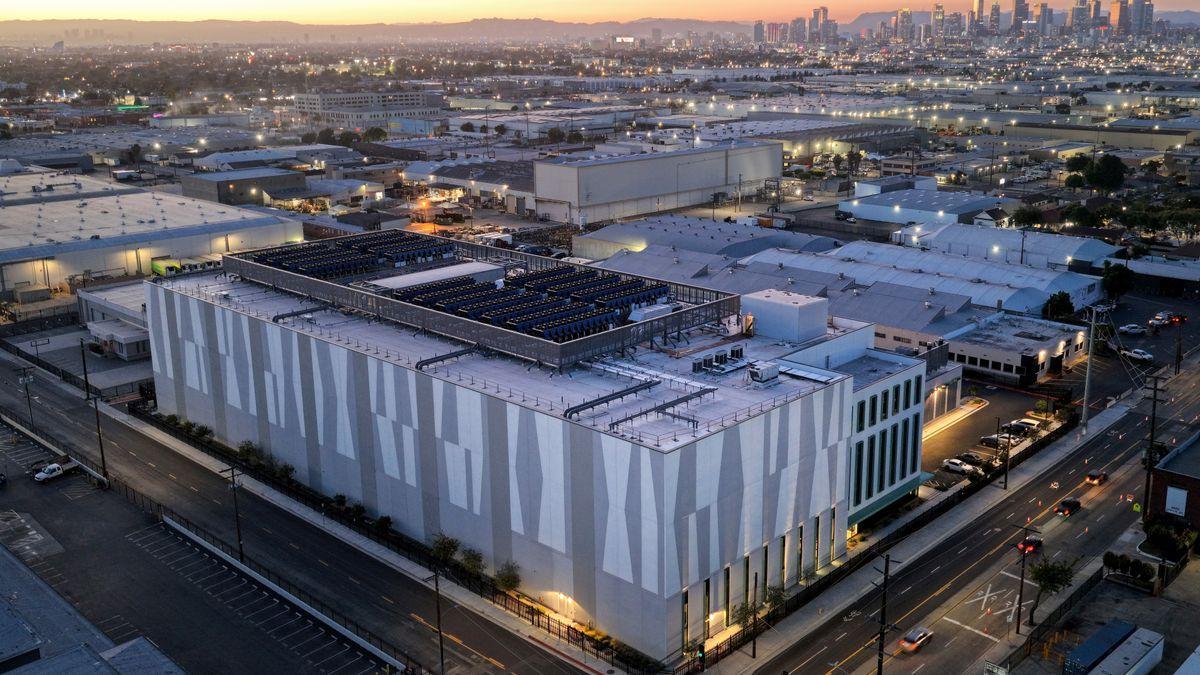
The emergency measure targets new AI data centers with electrical capacity exceeding 20 megavolt-amperes—enough power for thousands of homes. The decision came after four unnamed companies proposed five large-scale facilities that would have demanded a combined 369 megawatts from Seattle City Light, roughly one-third of the city's average daily electricity consumption
1
. Mayor Katie Wilson, who first proposed the idea in April, told The Guardian that learning about these projects was the first she had heard of such plans, prompting immediate action5
.In an unusual turn, current Amazon employees emerged as some of the moratorium's most vocal advocates. Liesl Wigand, a senior software engineer at Amazon and member of Amazon Employees for Climate Justice, testified that the company's AI buildout reflects "a belief that AI should be how we solve everything, while ignoring the resources that it costs"
1
. More than 1,000 Amazon employees signed an open letter last year accusing the company of "casting aside its climate goals to build AI."
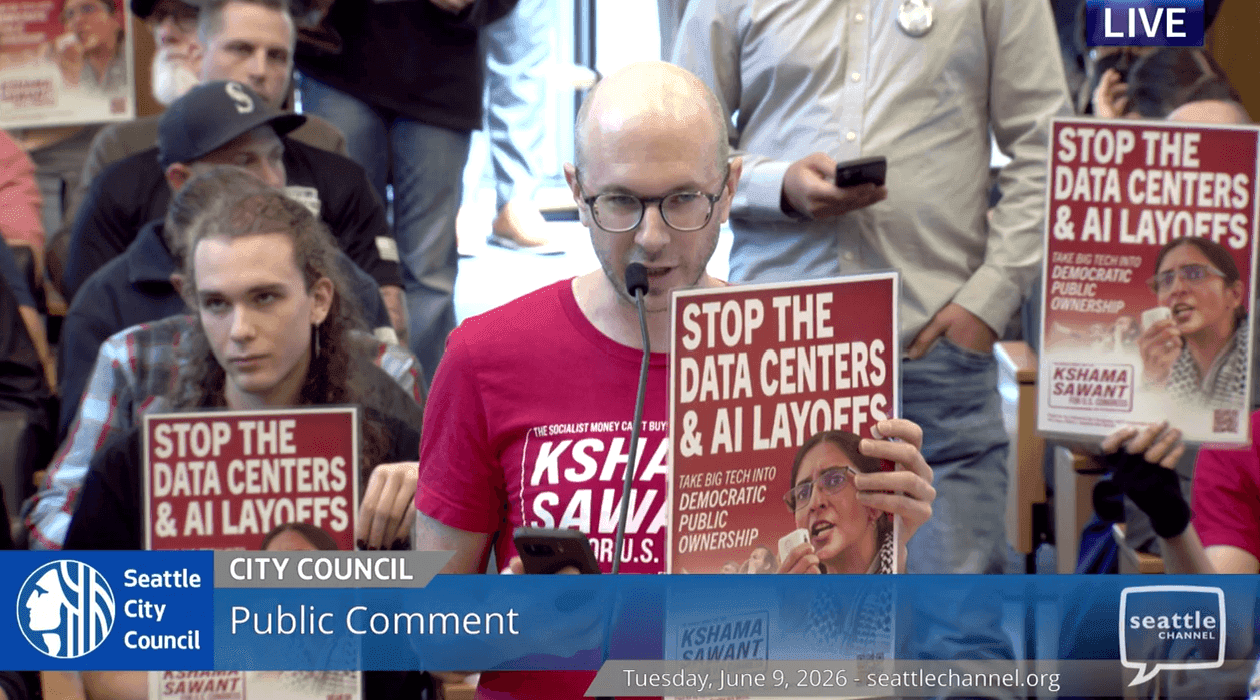
Source: GeekWire
Amazon software engineer Patrick Schloesser called for developers to provide 100 percent additional renewable energy to the area's power grid and face taxation for each layoff they conduct. Fellow engineer Darius Irani demanded public reporting of water and electricity usage, stating, "We can't rely on these companies to regulate themselves—Seattle needs to set the terms"
1
. The activism reflects broader frustration as Amazon and Microsoft have laid off thousands of local workers while spending a projected $390 billion on AI investments in 20265
.The moratorium on new large data centers followed an unprecedented outpouring of public concern. Councilmembers reported receiving more than 98,000 emails from residents, with over 50 people testifying at Tuesday's meeting—not one spoke in favor of the facilities
3
. Residents cited rising utility rates, water consumption, noise pollution, and the displacement of single-family homes as primary concerns.Andy Strong, a Seattle City Light representative, told The Seattle Times that the utility only has "so many engineers" and "so many project managers" to handle the sudden influx of proposals, warning "It's going to have an impact"
2
. The proposed facilities would have consumed 10 times more power than the city's existing 30 data centers combined1
.
Source: The Verge
Related Stories
Councilmember Debora Juarez, who sponsored the resolution, declared, "This is Seattle's position on AI and data centers," drawing cheers when she said she would halt AI and data center development entirely if she could
3
. Councilmember Eddie Lin emphasized that "Seattleites should not be subsidizing record profits of large corporations from the AI boom" while noting the city hosts smaller facilities that provide data processing for 911 call centers, hospitals, and cancer research2
.The one-year ban on new data centers gives city officials time to study impacts on the power grid, water supply, land use, public health, and employment before drafting permanent regulations. A companion resolution calls for comprehensive analysis of these factors, with zoning legislation expected to reach the council by early 2027
3
. Mayor Wilson indicated her administration will push for state-level regulation during Washington's next legislative session5
.The ordinance exempts Seattle's roughly 30 existing smaller data centers, allowing each to expand by up to 20 megavolt-amperes during the moratorium period
3
. However, activists worry this provision could undermine the pause by enabling significant expansion of existing facilities. According to the U.S. Data Center Moratorium Tracker, 77 local moratoria are currently active across the country, signaling widespread concern about AI infrastructure and its impact on local communities2
. The fate of Digital Realty's proposed facility at 301 Virginia Street, filed 11 days before the vote, remains unclear and may require legal clarification3
.Summarized by
Navi
[3]
[5]
14 Mar 2026•Policy and Regulation
09 Dec 2025•Policy and Regulation

02 Dec 2025•Policy and Regulation

1
Technology

2
Business and Economy

3
Health