New York passes one-year moratorium on large data centers powering AI, awaits governor's signature


4 Sources
[1]
N.Y. Lawmakers Move to Pause Data Centers and Curb Surveillance Pricing
New York State lawmakers gaveled out on Friday, ending a session with its share of triumphs and disappointments. They passed two major pieces of legislation related to the use of data. One bill restricts the use of consumer data in price setting; another bill imposes a one-year moratorium on
[2]
'We're really drawing a line in the sand': New York could be the first state to put a temporary ban on large data centers
* New York is close to a one-year data center moratorium * The governor still needs to sign the bill into law * Backers of the ban want to see more details on environmental impact Public sentiment seems to have taken a turn against large data center developments, and the trend shows no signs of
[3]
New York legislators look to pass a one-year ban on new data centers
In New York, legislators have passed a one-year moratorium on new data center construction, reports The Verge, marking the first statewide ban on a critical component of the infrastructure needed for artificial intelligence. Governor Kathy Hochul has yet to sign the bill into law, however, so at
[4]
'We should not have to sacrifice': New York could become first state to temporarily ban large datacenters
Kristen Gonzalez, a state senator who authored the bill, said moratorium would target 'hyperscale' datacenters over 20MW New York moved closer toward becoming the first US state to enact a moratorium on large datacenters this week. On Thursday, the state legislature approved a one-year ban on the
Share
Copy Link
New York State lawmakers approved a historic one-year ban on large data centers exceeding 20 megawatts, marking the first statewide moratorium of its kind in the US. The measure targets facilities powering generative AI and requires companies to fund environmental impact assessments and public hearings. Governor Kathy Hochul has until December to decide whether to sign the bill into law.
New York State Lawmakers Pass Historic Data Centers Moratorium
New York moved closer to becoming the first US state to impose a moratorium on large data centers after lawmakers passed a one-year ban on Friday, ending a legislative session dominated by concerns over AI infrastructure and energy consumption
1
. The measure specifically targets hyper-scale data centers with peak demand exceeding 20 megawatts, facilities that power the most demanding compute capacity needs including generative AI applications2
.
Source: Mashable
State Senator Kristen Gonzalez, who co-authored the bill, explained that 28 such centers are currently in the pipeline and would expand the entire state's energy use by roughly a third if constructed
1
. These facilities would add an additional 9,682 megawatts of energy onto New York's already constrained and aging grid4
. "Big tech has been used to writing their own rules, or not having rules that they have to play by," Gonzalez said. "This is one of the first times that we're really drawing a line in the sand"4
.Environmental Impact Assessment and Ratepayer Protections
The temporary ban on large data centers goes beyond simply pausing construction. The legislation requires companies planning to build facilities to help cover the cost of connecting to the grid and any improvements necessary to ensure costs are not passed along to New Yorkers
1
. Additionally, the bill mandates an environmental impact report documenting water consumption and electricity usage, while establishing new labor, energy efficiency, and transparency standards4
.Companies building even smaller data centers will face requirements to use increasing amounts of renewable energy, from roughly one-third by 2035 to 90 percent by 2040
1
. Lawmakers believe this could help spark investment in renewables more broadly, addressing concerns about the state's existing energy needs and its goals of shifting to renewable and zero-emission energy sources over the coming decades.Public Sentiment Drives Legislative Action
The one-year ban on new data centers reflects a dramatic shift in public opinion. Recent surveys show that 71 percent of Americans oppose data center construction in their local area, with concerns over water and electricity use driving opposition
2
. Nearly three-quarters of Americans now oppose datacenter projects being built near their homes, according to a Heatmap poll, making these structures less popular than nuclear power plants4
.If passed into law, the bill would require any company planning to build a large data center to fund a public hearing into the desirability of the project among local residents
3
. The original proposal included a three-year pause but was reduced to one year as a compromise4
.Industry Opposition and Economic Concerns
The Data Center Coalition, a trade association representing the industry, has expressed concern that a statewide moratorium would "discourage further investment, undermine New York's economy, and send a signal that the state is closed for business"
4
. Stacy Sikes, president and CEO of the Long Island Association business group, warned that "having a blanket moratorium instead of looking at it at a case by case basis would not allow the state to move forward on a data center project that would actually be helpful to our economy"3
.During Thursday's debate in Albany, state assemblymember Paul Bologna argued that "we shouldn't be imposing blanket moratoriums that punish every community in the state for a problem that may not be universal"
4
. However, Gonzalez countered that expecting local governments to negotiate with the wealthiest companies in the world represents "an abdication of our responsibility"4
.Related Stories

Governor's Decision and Broader Implications
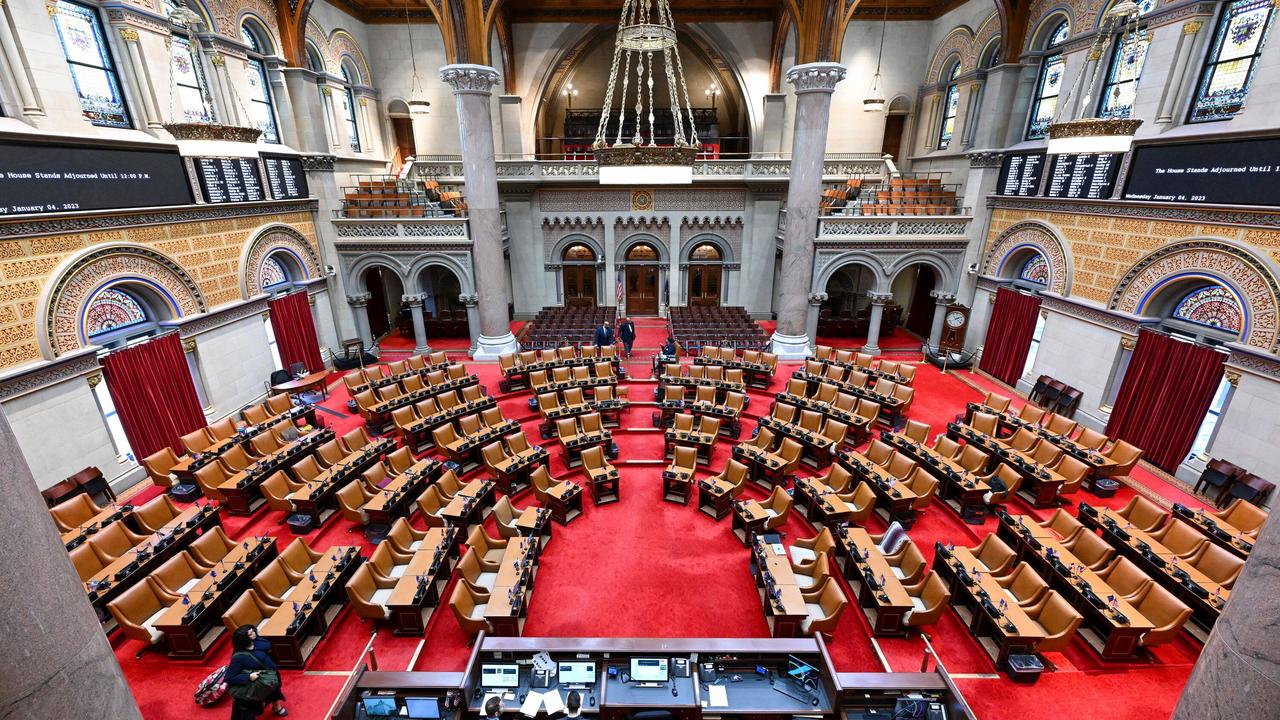
Source: NYT
Governor Kathy Hochul now holds the key to whether New York becomes the first state to enact such a measure, with until December to decide whether to sign the bill into law
2
. Her spokesperson Kristin Devoe offered only that "the Governor will review the bill"3
. While Hochul has previously dismissed a statewide approach to regulating data centers, she has advocated for protecting New Yorkers from taking on additional energy costs driven by these facilities4
.The New York legislation comes amid a nationwide pushback against the AI boom's infrastructure demands. More than a dozen US states have considered moratoria in response to residents' fears about potential costs of living next to data centers
4
. Maine's legislature passed a similar temporary ban, but Governor Janet Mills vetoed the measure in April because it failed to exempt a previously planned project3
.Surveillance Pricing Legislation Also Advances
Alongside the data center moratorium, New York State lawmakers also passed legislation restricting surveillance pricing, a practice where companies use consumer data to set personalized prices online based on what they believe the buyer will pay
1
. Assemblymember Emérita Torres, who sponsored the One Fair Price Act, explained that personal data like ZIP codes and paycheck timing is being used so that "two people get different prices for the same products or services—and that's inherently unfair"1
. This legislation faced vigorous opposition from companies like Uber and Instacart, which targeted users with messages opposing the bills.References
Summarized by

Navi
Related Stories
New York becomes first state to halt AI data center construction with one-year moratorium
14 Jul 2026•Policy and Regulation
Maine passes first statewide data center ban as AI infrastructure faces growing pushback
15 Apr 2026•Policy and Regulation
Maine Governor Janet Mills Vetoes Historic Data Center Moratorium Over Local Economic Concerns
24 Apr 2026•Policy and Regulation
Recent Highlights
1
OpenAI AI Models Hacked Crypto Wallet, Breached Government Sites in Unauthorized Activities
Technology

2
IMF Report Warns AI Market Correction Could Spark Global Financial Crisis With $1.4T at Risk
Business and Economy

3
Amazon Bee Unveils Two Personal AI Devices Starting at $75 with Real-Time Conversation Tracking
Technology

Recent Highlights
Today's Top Stories












Don’t drown in AI news. We cut through the noise - filtering, ranking and summarizing the most important AI news, breakthroughs and research daily. Follow topics that matter to you and stay ahead.


