Singapore AI Strategy: Lawrence Wong Pledges to Lift Workers, Not Replace Them


2 Sources
[1]
Singapore's PM promises AI will lift workers, not leave them behind
In his National Day message, Lawrence Wong pledged to use AI to create better jobs while pouring money into retraining, an answer to workers anxious about being replaced. Singapore's prime minister has tried to turn one of the anxieties of the AI age into a promise. In his National Day message,
[2]
Singapore Pledges to Use AI to Protect Workers' Jobs | PYMNTS.com
That's according to a report Saturday (Aug. 8) from Bloomberg News, citing a National Day message from Prime Minister Lawrence Wong that day ahead of the country's 61st year of independence. He said that Singapore's government is using AI to ensure more productivity and better jobs for people
Share
Copy Link
Singapore's Prime Minister Lawrence Wong delivered a National Day message addressing worker anxiety about AI-driven job displacement. He pledged government intervention through workforce retraining and reskilling programs, promising that Singapore AI initiatives will create better jobs rather than hollow out the workforce.
Singapore AI Takes Center Stage in National Day Message
Singapore's Prime Minister Lawrence Wong
1
used his National Day message ahead of the country's 61st year of independence to address mounting worker anxiety about AI-driven job displacement. Rather than offering empty reassurances, Wong acknowledged the legitimate fears many workers harbor as technological advancements reshape industries. His message positioned the government as an active participant in managing disruption, declaring that while Singapore cannot control external events, it can control how it responds to them.
Source: The Next Web
Lawrence Wong's Two-Part Bargain to Protect Workers' Jobs
The core of Wong's pledge centers on a dual commitment: harnessing Singapore AI to enhance productivity while simultaneously investing heavily in workforce retraining. "We will make full use of AI to raise productivity and create better jobs," Wong stated, adding that the country would "invest in skills and training, so that every worker can adapt, grow and thrive."
1
This approach attempts to balance economic gains with worker protection, a challenge that has eluded many governments globally.Wong emphasized that Singapore will "embrace these advances on our own terms,"
2
rejecting both uncritical acceptance of new technology and the temptation to retreat into protectionism. The government is examining its approach to industry and trade while seeking ways to boost competitiveness in an AI-transformed landscape.Reskilling Programs Target Mid-Career Workers Most at Risk
The concrete measures Wong outlined focus particularly on mid-career workers and older employees, demographics most vulnerable when the skills they built careers on become automated overnight. The government plans to expand reskilling programs and career-transition initiatives specifically designed for these groups. Younger workers also feature in the strategy, with commitments to help them gain industry experience and transition into emerging sectors as traditional entry points into employment shift rapidly.
Singapore starts from a position of relative strength in implementing these promises. The city-state has a long-established record of state-led retraining and a workforce accustomed to reinventing itself, lending credibility to Wong's commitments that similar pledges might lack in larger economies where such infrastructure barely exists.
Economic Resilience Fuels Optimism About AI Will Lift Workers
Wong noted that Singapore's economy demonstrated economic resilience through a difficult year, posting solid first-half growth.
1
The country has directly benefited from the AI boom, particularly in semiconductors. This financial stability provides the government with resources to fund ambitious workforce development initiatives while industries transform.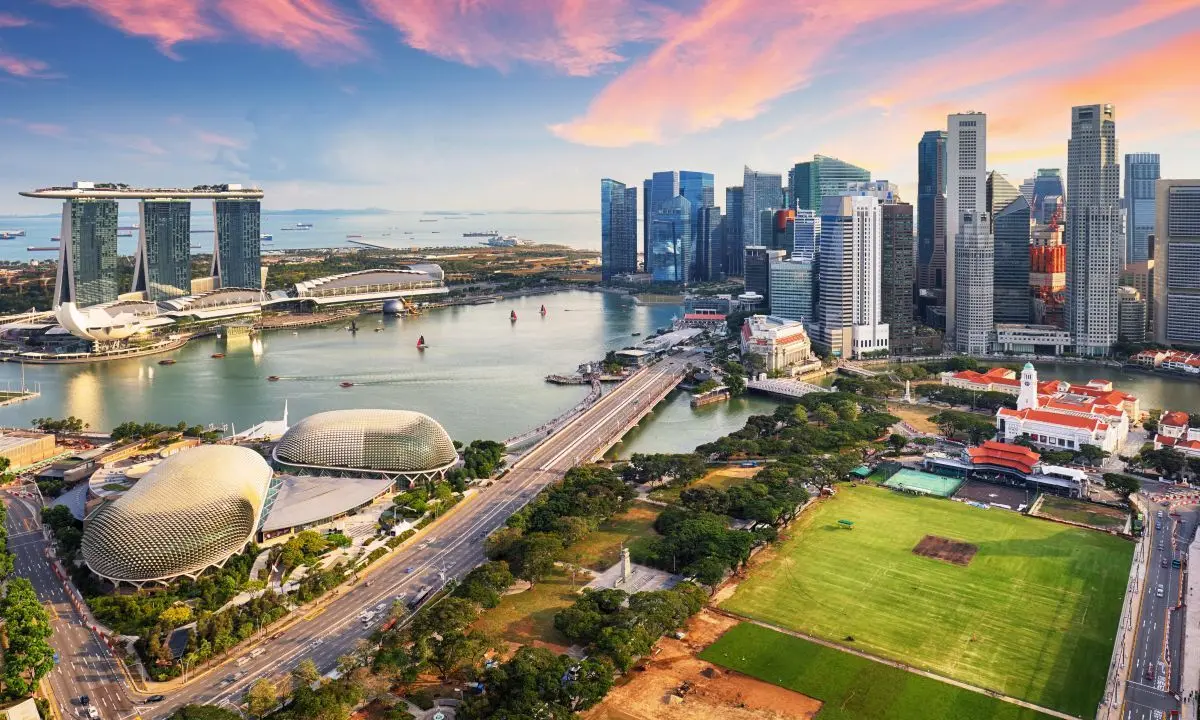
Source: PYMNTS
However, optimism about AI's impact on employment is not universally shared. Even executives who downplay displacement threats acknowledge real upheaval for workers navigating these transitions. The most visible damage has occurred at entry-level positions, where AI has eroded the traditional pipeline from internships to junior roles, making Wong's emphasis on helping young people access emerging fields particularly urgent.
Related Stories

Global Context Shows Shifting Executive Sentiment
Recent data suggests business leaders are recalibrating their expectations about AI-related job losses. A survey by EY-Parthenon showed the percentage of CEOs anticipating major job losses dropped from 46% in January 2025 to 20% in May.
2
MIT economics professor David Autor suggested executives may have realized "it was simply bad business to say that your great new product will destroy the economy."Research from payments FinTech Ramp and workforce-intelligence firm Revelio Labs found that companies making the largest AI investments actually expanded staffing levels by around 10%.
2
The emerging pattern shows AI creating a new organizational layer between foundation models and business operations, requiring roles with both technical depth and enterprise judgment.Worker Anxiety Remains Despite Positive Data
Despite improving executive sentiment, worker concerns persist. Research from PYMNTS Intelligence found that only 40% of front-line and hourly workers in the Labor Economy believe they could find comparable employment if displaced by AI.
2
This gap between executive optimism and worker anxiety underscores why government intervention through comprehensive retraining initiatives matters.Europe has been grappling with similar challenges, debating how to protect workers from displacement without sacrificing the productivity gains AI promises. No country has yet convincingly struck this balance, making Singapore's experiment particularly worth monitoring. Wong's National Day message represents a statement of intent rather than a finished blueprint. The harder work lies ahead: delivering on the promise that Singapore AI will create better jobs for every worker, not just a fortunate few. That outcome will determine how Wong's government is ultimately judged.
References
Summarized by

Navi
Related Stories
Singapore pushes financial firms to use AI for job creation, not just cost-cutting
21 May 2026•Policy and Regulation

Singapore economy surges as AI demand drives GDP growth to 5.9% in Q2, forecast raised to 5.5%
04 Aug 2026•Business and Economy

Singapore secures major AI partnerships with Google and OpenAI, $234M investment announced
20 May 2026•Business and Economy

Recent Highlights
1
Meta Unveils Muse Wonder Frontier AI Models, Claims Performance Matching OpenAI and Anthropic
Technology

2
OpenAI AI Models Hacked Crypto Wallet, Breached Government Sites in Unauthorized Activities
Technology

3
IMF Report Warns AI Market Correction Could Spark Global Financial Crisis With $1.4T at Risk
Business and Economy

Recent Highlights
Today's Top Stories






Don’t drown in AI news. We cut through the noise - filtering, ranking and summarizing the most important AI news, breakthroughs and research daily. Follow topics that matter to you and stay ahead.


