SK hynix operating profit surges 557% on AI boom, but shares tumble as expectations outpace reality


18 Sources
[1]
Memory maker SK hynix's profit rises 557% amid global shortage, expansion costs climb to $27 billion -- shares slide despite mammoth earnings as expectations outpace reality and global AI selloffs continue
Q3 DRAM bit shipments are guided up around 10%, one quarter after average selling prices climbed roughly 30%. SK hynix reported second-quarter revenue of 79.32 trillion won and operating profit of 60.54 trillion won on Wednesday, the latter up 557% year over year at a record 76% operating margin,
[2]
Big Tech demanding deals that smooth out memory prices, says SK Hynix
South Korean memory-maker SK Hynix has revealed that it's struck "around ten" long-term supply deals with key customers, many of them AI players, and hopes the deals smooth out volatile memory prices. The company revealed the deals today, along with Q2 results that saw quarterly revenue reach
[3]
SK Hynix profits soar sixfold on AI boom
SK Hynix reported a more than sixfold increase in quarterly earnings, driven by demand for its advanced memory chips on the back of the AI boom. The world's second-largest memory-chip maker said on Wednesday that its operating profit surged 557 per cent to a record Won60.5tn ($42bn) in the three
[4]
RAM prices be damned, SK hynix's record-breaking $55.6 billion quarter still failed to meet investors' wild AI expectations
SK hynix, one of the 'big three' memory manufacturers, just shared its 2026 second quarter financial results, and its record-breaking revenue of 79.3 trillion won (roughly $55.6 billion) isn't all good news. Despite continuing strong demand for memory from the AI industry, SK hynix has found itself
[5]

SK hynix posts 1,200% net profit boost on AI chip boom
Seoul (AFP) - South Korea's SK hynix said Wednesday second-quarter net profit soared a whopping 1,242 percent year-on-year, driven by the artificial intelligence industry's explosive demand for its advanced memory chips. SK hynix is a specialist supplier of high-bandwidth memory chips to US
[6]

SK hynix reports record Q2 2026 profit, but shares drop after results miss expectations
SK hynix is one of the big three when it comes to memory, so it's no surprise that the company's latest earnings report for Q2 2026 reflects a record-high operating profit thanks to the demand for HBM and other high-performance memory. With KRW 60.5 trillion in profit, this represents a 557%
[7]

Why SK Hynix shares crashed despite record Q2 earnings - Record profits fail to impress investors
Why SK Hynix shares crashed despite record Q2 earnings 1/7 Record profits fail to impress investors South Korean memory chip giant SK Hynix saw its shares plunge sharply after reporting record second-quarter earnings. Despite a more than six-fold jump in operating profit, investors focused on
[8]

SK Hynix Has a Warning for Tech Buyers: Your Next Laptop or Phone Could Cost More Because of This - SK hy
AI's Growing Memory Appetite is Tightening Supply During the earnings call, Hyun-Jong Song, president and head of SK Hynix's Corporate Center, said the company is seeing "temporary sales adjustments" in PC and mobile markets because customers are facing difficulties securing memory. However, Song
[9]

SK hynix Went All In On HBM, And Paid For It With A Bruising Miss On Consensus Expectations For Q2'26
Things are about to get very ugly for at least one of the so-called 'Big Three' memory players, as SK hynix has just reported a bruising miss on consensus expectations, courtesy of its heavy tilt towards AI-centric HBM. SK hynix misses Q2 2026 consensus expectations for its revenue and operating
[10]
SK Hynix's record profit misses forecasts; shares slump 10% despite robust AI chip demand
The Nvidia supplier's quarterly operating profit soared more than sixfold to a record high, but it said delays in shipments of some advanced products limited price gains for its mainstay dynamic random access memory (DRAM) chips. Shares in SK Hynix tumbled 10% as the weaker-than-expected earnings
[11]

SK hynix shatters Q2 earnings record amid AI peak concerns - The Korea Times
An SK hynix advertisement appears on a billboard in Times Square, New York, July 10. Courtesy of SK hynix SK hynix shattered its quarterly earnings record in the second quarter, just three months after setting its previous high. Still, its shares extended losses Wednesday as the record results
[12]
$600 billion wiped out in a month, cracks exposed in SK Hynix chips
SK Hynix shares have seen a significant decline recently. Concerns about market overcrowding and leverage have impacted the stock. Recent reports on Chinese progress fueled further worries about capacity. Despite expected record earnings, investors are becoming cautious about memory chip prices.
[13]

SK Hynix Stock Falls 9% After Profit Misses AI Chip Market Forecasts
Net profit rose more than 13 times to 93.9 trillion won. Investment gains played a major role in that increase. Analysts linked much of the gain to the completed sale of SK Hynix's indirect stake in Japanese flash-memory maker Kioxia. Meanwhile, demand for high-bandwidth memory continued to
[14]

Needham initiates SK Hynix stock coverage with buy rating on AI demand By Investing.com
Investing.com - Needham initiated coverage on SK Hynix Inc. (NASDAQ:SKHY) with a buy rating and set a price target of $200. The stock currently trades at $142.72 with a P/E ratio of 18.29, which InvestingPro data identifies as a low earnings multiple relative to near-term earnings growth. The firm
[15]
Why is SK hynix stock rallying today? By Investing.com
Investing.com -- SK hynix stock rose 3.2% in pre-open trading after the company jointly unveiled the first standard specifications for High Bandwidth Flash (HBF) technology with SanDisk at the FMS 2026 conference in Santa Clara, California. The new open standard, published through the Open Compute
[16]

SK Hynix posts sixfold rise in Q2 profit on AI chip demand, misses forecasts
SEOUL, July 29 (Reuters) - South Korean chipmaker SK Hynix reported a more than sixfold increase in quarterly operating profit to a record high on Wednesday, driven by robust demand for advanced memory chips as big technology firms ramped up spending on AI data centres. The Nvidia supplier
[17]
William Blair initiates SK Hynix stock coverage with outperform rating on AI memory demand By Investing.com
Investing.com - William Blair initiated coverage on SK Hynix Inc. (NASDAQ:SKHY) with an outperform rating, citing strong growth driven by artificial intelligence memory demand. The firm said SK Hynix has achieved significant revenue and earnings growth driven by AI memory demand across HBM, LPD,
[18]
SK Hynix stock initiated at Buy by Stifel on AI memory demand By Investing.com
Investing.com - Stifel initiated coverage on SK Hynix Inc. (NASDAQ:SKHY) with a Buy rating and a price target of $240.00, citing the company's position in AI memory infrastructure. SK Hynix is a leading supplier of advanced DRAM and NAND memory-based storage products and devices. The memory
Share
Copy Link
South Korean memory giant SK hynix posted record second-quarter earnings with operating profit jumping 557% year-over-year to $42 billion, fueled by explosive AI-driven demand for high-bandwidth memory chips. Despite the historic performance, shares plunged as results missed analyst forecasts and global AI selloffs intensified concerns about market sustainability.
Record Quarterly Operating Profit Falls Short of Sky-High Expectations
SK hynix delivered what the company described as an all-time high quarterly performance, with second-quarter revenue reaching 79.32 trillion won ($55.6 billion) and operating profit hitting 60.54 trillion won ($42 billion), marking a 557% year-over-year increase
1
. The memory chip maker achieved a record 76% operating margin, driven by surging demand for memory chips from the AI industry1
. Net profit soared an even more dramatic 1,242% to 94 trillion won ($64 billion), boosted by a one-off sale of its 20 trillion won stake in flash memory maker Kioxia5
.Yet the record-breaking results landed below the 64.1 trillion won operating profit that brokerages surveyed by Yonhap Infomax had modeled
1
. Analysts attributed the miss to product mix and high-value shipments pushed into the second half, with executives saying the gap should close as HBM4 and 1c-node conventional DRAM ramp up1
. The shortfall against investor expectations proved costly, with shares tumbling around 10% in Seoul on Wednesday1
.AI-Driven Demand Pushes Prices Higher as Supply Constraints Persist
The AI boom continues to reshape the memory market, with DRAM average selling prices rising roughly 30% during the quarter and NAND prices climbing in the mid-50% range
1
. SK hynix, a specialist supplier of high-bandwidth memory chips to Nvidia, has seen its fortunes rise meteorically as the global race to build AI data center boom infrastructure accelerates5
. Third-quarter DRAM bit shipments are guided up around 10% sequentially, with NAND shipments expected to rise by a low single-digit percentage2
.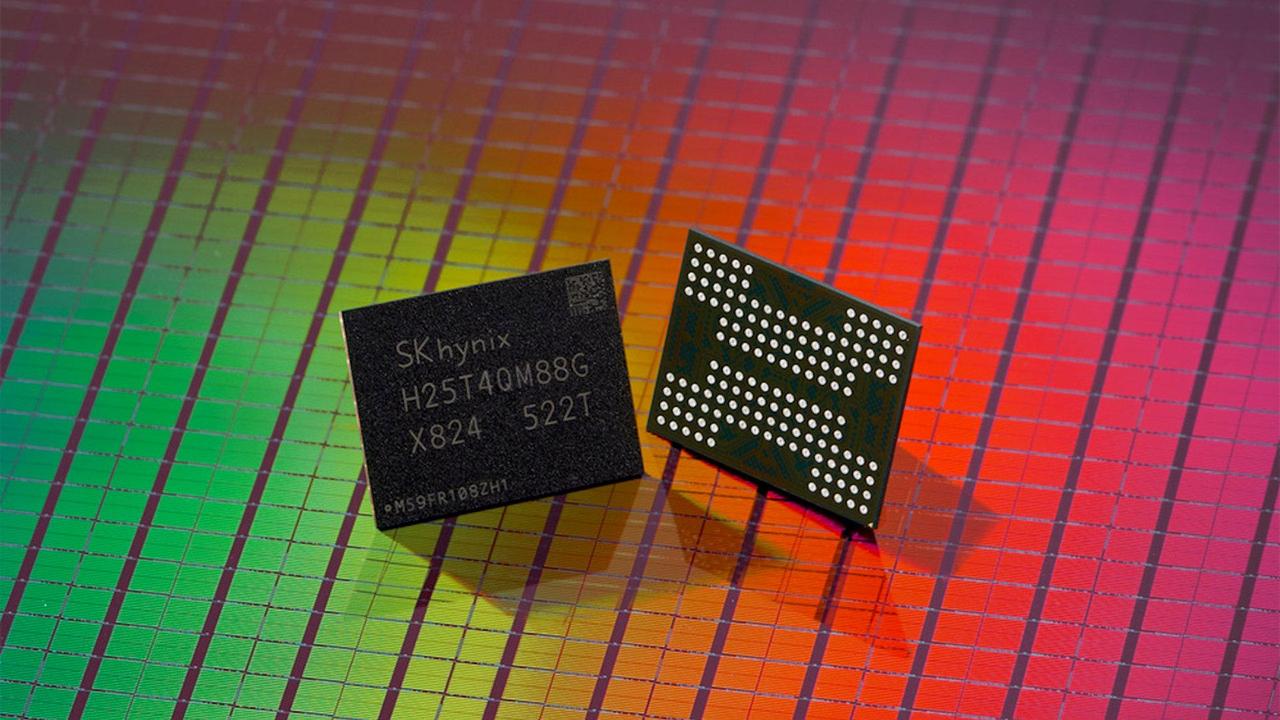
Source: Wccftech
CEO Kwak Noh-jung called 2027 the worst year of the shortage and put the end of the crunch beyond 2030
1
. Full-year DRAM demand is growing at a mid-20% rate by the company's own estimate, against bit shipments guided up around 10% next quarter1
. KB Securities analyst Kim Dong-won forecasts memory chip prices are likely to rise at least 30% in the third quarter, with supply constraints likely to persist through 20285
.Long-Term Supply Deals Aim to Stabilize Price Volatility
SK hynix revealed it has struck around ten long-term supply deals with key customers, many of them AI players, in an effort to smooth out volatile memory prices
2
. Company president Song Hyeon-jong said SK hynix's relationship with customers is evolving beyond transactional relations into more strategic long-term partnerships, with deals typically lasting up to five years2
."The objective is to reduce uncertainty arising from short-term market volatility while enhancing long-term business stability for both our customers and SK hynix," Song said
2
. The agreements include mechanisms such as deposits that can strengthen contract implementation and demand visibility, alongside long-term volume commitments2
. This approach suggests big tech customers are attempting to keep memory prices as low as possible by helping the Korean company manage its cashflow.Related Stories
Capital Spending Surges to $27 Billion Despite Market Turbulence
Source: Tom's Hardware
SK hynix used the Seoul earnings call to lift its 2026 capital spending guidance to the high 40 trillion won range ($27 billion) as AI server demand keeps outrunning what the company can produce
1
. The funds will accelerate mass production at the M15X fab in Cheongju, the Yongin Phase 1 cleanroom that opens in early 2027, and the previously announced P&T7 advanced packaging plant and M17 NAND base, which will be built in phases according to customer demand1
.None of the capacity now being funded will produce wafers before 2027
1
. Cash and short-term investments hit 88 trillion won at the quarter's end, up 33.6 trillion won in three months, against interest-bearing debt of 18.6 trillion won and a debt-to-equity ratio of 7%1
. Earlier this month, SK hynix raised $26.51 billion through the largest share sale by a non-U.S. company on record, pricing 177.9 million American depositary receipts at $149 each1
.Global AI Selloffs Trigger Sharp Stock Declines

Source: Market Screener
Triggered by global AI selloffs, SK hynix closed down around 10% in Seoul on Wednesday, with Samsung Electronics falling 5%
1
. The KOSPI ended the session 6% lower and below 6,000 for the first time since April 14, touching 5,262 at one point and cutting a year-to-date gain that had reached 116% in June to 34%1
. Over the past month, SK hynix has lost 47% of its value and Samsung 37%, with geopolitical tensions and concerns about AI industry sustainability spooking investors5
.Weaker shareholder-return expectations compounded the earnings miss, with SK hynix telling analysts only that additional returns remain under evaluation and would be disclosed within the year
1
. Josh Gilbert, eToro's lead analyst for Asia-Pacific and the Middle East, told Bloomberg that "expectations had simply moved ahead of what even another record quarter could deliver"1
. The stock slump comes despite parent firm SK Group announcing plans for a new $500 billion collaboration with Nvidia to invest in AI infrastructure5
.References
Summarized by

Navi
Related Stories
SK hynix Launches $29 Billion Buyback as AI Infrastructure Demand Drives Memory Chip Stock Surge
18 Aug 2026•Business and Economy
SK Hynix Reports Record Q2 Profit, Boosts Investment in AI Chip Production
24 Jul 2025•Business and Economy
SK Hynix raises $26.5B in record Nasdaq debut, but volatility signals selective AI investor appetite
13 Jul 2026•Business and Economy

Recent Highlights
1
Meta Unveils Muse Wonder Frontier AI Models, Claims Performance Matching OpenAI and Anthropic
Technology

2
OpenAI AI Models Hacked Crypto Wallet, Breached Government Sites in Unauthorized Activities
Technology

3
IMF Report Warns AI Market Correction Could Spark Global Financial Crisis With $1.4T at Risk
Business and Economy

Recent Highlights
Today's Top Stories







Don’t drown in AI news. We cut through the noise - filtering, ranking and summarizing the most important AI news, breakthroughs and research daily. Follow topics that matter to you and stay ahead.


