SK Hynix will pay its chip suppliers even when their projects fail


9 Sources
[1]
SK Hynix to spend $1 billion over five years to support chip suppliers
SEOUL, Nov 16 (Reuters) - South Korea's SK Hynix (000660.KS), opens new tab said on Monday it plans to spend 1.4 trillion won ($1.05 billion) over the next five years to support domestic suppliers of semiconductor materials, parts and equipment, aiming to strengthen its supply chain as competition
[2]
Trinity Fab: SK Hynix opens a $654m test line to Korean suppliers
SK Hynix will pay up to half of suppliers' early costs. Trinity Fab, built with the government, opens in May 2027 inside its Yongin plant. SK Hynix said on Monday it will spend 1.4tn won ($1.05bn) over five years on South Korea's smaller chip suppliers. The plan includes Trinity Fab, an 874.6bn
[3]
SK Hynix to spend $1 billion to support South Korean chip suppliers
The chipmaker plans an 874.6 billion won shared testing facility at its Yongin complex, scheduled to open in May 2027 SK Hynix announced Monday that it plans to commit 1.4 trillion won ($1.05 billion) across the coming five years to back South Korean suppliers of semiconductor materials, parts and
[4]
SK Hynix to Invest $1 Bn in Chip Supplier Support Over 5 Years
The South Korean chipmaker will fund supplier development and build a shared testing facility to strengthen its semiconductor supply chain. South Korean semiconductor company SK Hynix will invest 1.4 trillion won ($1.05 billion) over five years to support domestic suppliers of semiconductor
[5]

SK Hynix to spend $1 billion over five years to support chip suppliers
South Korea's SK Hynix said on Monday it plans to spend 1.4 trillion won ($1.05 billion) over the next five years to support domestic suppliers of semiconductor materials, parts and equipment, aiming to strengthen its supply chain as competition intensifies in the AI chip market. The chipmaker
[6]

SK Hynix Bets Over $1 Billion on Domestic Chip Suppliers, Commits to $655 Million Testing Center: SKHY St
SK Hynix (NASDAQ:SKHY) plans to invest $1.05 billion over five years to strengthen South Korean semiconductor suppliers as demand for artificial intelligence chips accelerates. The chipmaker will direct the money toward domestic companies producing semiconductor materials, components and
[7]

SK hynix will pay suppliers that fail. Blame a hidden bottleneck
A small Korean company can develop a better chemical for etching memory chips and still wait years to sell its first drum. The product has to prove itself on a working production line. Chipmakers are wary of risking their own lines on an unproven supplier. That wait is one of the least visible
[8]

SK Hynix's USD 1 Billion Move can Change South Korea's Position in the Global AI Chip Race
SK Hynix plans to invest USD 1.05 billion over five years to support local chip suppliers. The move could help South Korea improve chip production and compete better in the growing AI market. South Korean chipmaker SK Hynix has plans to spend 1.4 trillion won over the next five years. The
[9]

SK Hynix to spend $1 billion over five years to support chip suppliers
SEOUL, Nov 16 (Reuters) - South Korea's SK Hynix said on Monday it plans to spend 1.4 trillion won ($1.05 billion) over the next five years to support domestic suppliers of semiconductor materials, parts and equipment, aiming to strengthen its supply chain as competition intensifies in the AI chip
Share
Copy Link
SK Hynix will spend 1.4 trillion won over five years to support South Korean chip suppliers, with a shared testing facility at Yongin funded nearly half by government money.
SK Hynix will spend 1.4 trillion won, about $1.05 billion, over five years to support South Korean suppliers of chip materials, parts and equipment
9
1
. The company says the aim is to strengthen its supply chain as competition in the AI chip market intensifies. It also wants to help smaller suppliers get past financing and technology hurdles9
1
5
.
Source: Benzinga
Money for failure
The program is designed to cover four stages: R&D, testing, mass production and sales
9
5
. Its most unusual clause concerns R&D. SK Hynix says it will advance up to 50% of a supplier's initial development costs and pay for work done even on projects that miss their goals9
5
7
. The Miami Herald notes that paying for failure shifts the risk of dud projects onto SK Hynix, on the bet that suppliers will attempt harder work sooner - a bet nobody has tested yet7
.
Source: Reuters
SK Hynix and a group of banks launched a 2 trillion won financing program in October, backed by the Korea Trade Insurance Corporation, and the company has doubled its interest-free payment support fund to 100 billion won
2
.A factory for testing
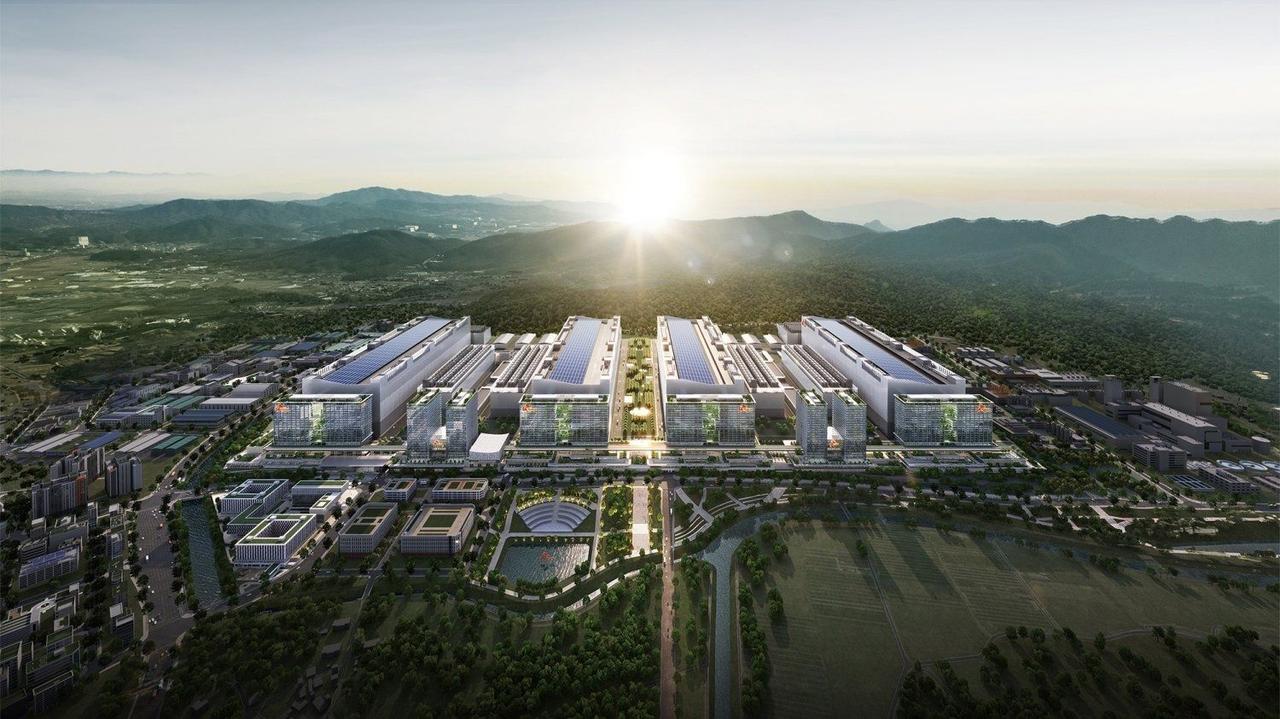
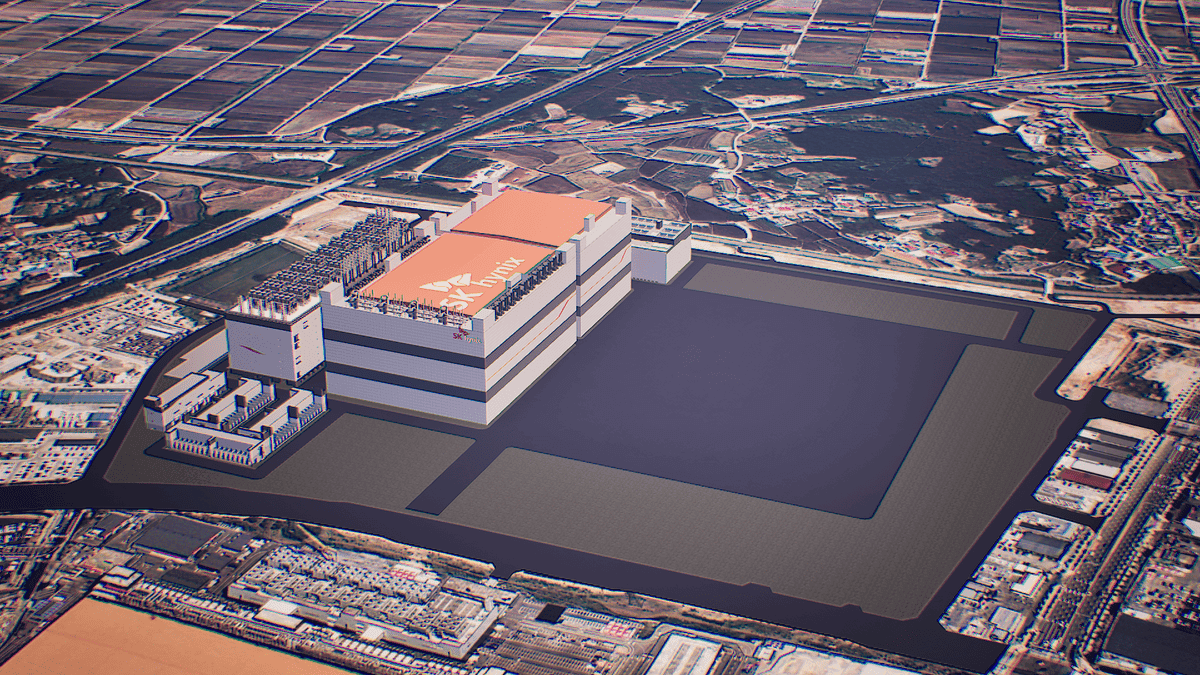
The program's flagship is Trinity Fab, an 874.6 billion won testing facility, about $655 million, at the Yongin complex south of Seoul, due to open in May 2027
9
5
. SK Hynix is putting in 443.2 billion won, with 373.6 billion won from the central government and 57.7 billion won from local ones. That puts governments together at nearly half the cost, by the reported figures9
5
.
Source: Quartz
The point is to let small firms test products in conditions close to a real production line. The company says that cuts testing costs and shortens the road to market
9
5
. Small Korean suppliers rarely get that chance on their own: a cleanroom is expensive, and chipmaking chains together hundreds of processes no small firm can replicate2
7
. Trinity Fab's 3,305-square-metre cleanroom carries equipment for lithography, etching, deposition and inspection. An independent non-profit foundation will run it, a structure meant to keep suppliers' intellectual property and commercial information safe while they test inside a customer's building9
5
.By its maker's account, Trinity Fab is the world's first open-access testbed aimed at getting products ready for mass production, a company claim that has not been independently verified
2
. How much time it saves is disputed. Lee Jae-ho, vice chairman of the testing equipment maker TES, estimates about a year off a five-year equipment development and certification cycle. Seeking Alpha cites a goal of cutting validation times by 30% to 50%2
7
. Full-scale testing is expected to start in the final quarter of 2027, per Seeking Alpha7
.Related Stories
Why now, and why the stock fell anyway
The announcement lands weeks after record results. SK Hynix's own earnings release put third-quarter operating profit at 8.03 trillion won, roughly $6 billion. It also forecast that memory demand will exceed supply through 2030, citing the difficulty of leading-edge processes and long plant lead times
3
7
. Long-term agreements with 14 customers already cover more than half of its 2027 and 2028 capacity7
. Against that, the whole five-year program comes to about a day and a half of that quarterly profit, per the Miami Herald's calculation7
. Seoul, for its part, has put chips at the center of its 2027 budget2
.The market did not celebrate. SK Hynix shares dropped about 4.4% in Seoul on Monday, in a selloff that hit the wider market too. Bloomberg attributed the drop to Nvidia's troubles and to investors making space for Anthropic's share sale. Samsung plunged as well, so the drop looks sector-wide
6
3
7
. Per the Miami Herald, investors and the company are hedging separate dangers. The market is pricing near-term AI risk; SK Hynix is planning for a shortage it expects to last through 2030.References
Summarized by

Navi
Related Stories
SK Hynix commits $38 billion to new memory chip plants as AI demand reshapes semiconductor industry
07 Aug 2026•Business and Economy

SK Hynix commits $13 billion to world's largest HBM plant as AI demand creates historic shortage
13 Jan 2026•Business and Economy
SK Hynix invests $64 billion in AI memory chips as NAND flash shortage intensifies
02 Jul 2026•Business and Economy

Recent Highlights


Recent Highlights
Today's Top Stories







Don’t drown in AI news. We cut through the noise - filtering, ranking and summarizing the most important AI news, breakthroughs and research daily. Follow topics that matter to you and stay ahead.


