Smart Brain Implants: A Revolutionary Approach to Treating Parkinson's and Other Neurological Disorders


2 Sources
[1]
Smart brain implants are helping people with Parkinson's and other disorders
Although the brain is our most complex organ, the ways to treat it have historically been rather simple. Typically, surgeons lesioned (damaged) a structure or a pathway in the hope that this would "correct the imbalance" that led to the disease. Candidate structures for lesioning were usually found
[2]
Smart brain implants are helping people with Parkinson's and other disorders
Although the brain is our most complex organ, the ways to treat it have historically been rather simple. Typically, surgeons lesioned (damaged) a structure or a pathway in the hope that this would "correct the imbalance" that led to the disease. Candidate structures for lesioning were usually found
Share
Copy Link
Adaptive deep brain stimulation, a new AI-powered treatment for Parkinson's disease and other neurological disorders, has been approved by US and European health authorities. This technology represents a significant advancement in neurosurgery and brain treatment methods.

The Evolution of Brain Treatment
Historically, brain treatments have been relatively simple, often involving lesioning specific structures or pathways. However, a serendipitous discovery in 1987 by French neurosurgeon Alim-Louis Benabid led to the development of deep brain stimulation (DBS), a treatment involving electrical pulses delivered via implanted electrodes
1
2
.Deep Brain Stimulation for Parkinson's Disease
Since the early 2000s, DBS has been used to treat advanced Parkinson's disease. Initially, the stimulator settings remained constant once set by a specialist, only changeable during clinic visits. This approach was seen as an adjustable and reversible form of lesioning
1
2
.The Revolution: Adaptive Deep Brain Stimulation
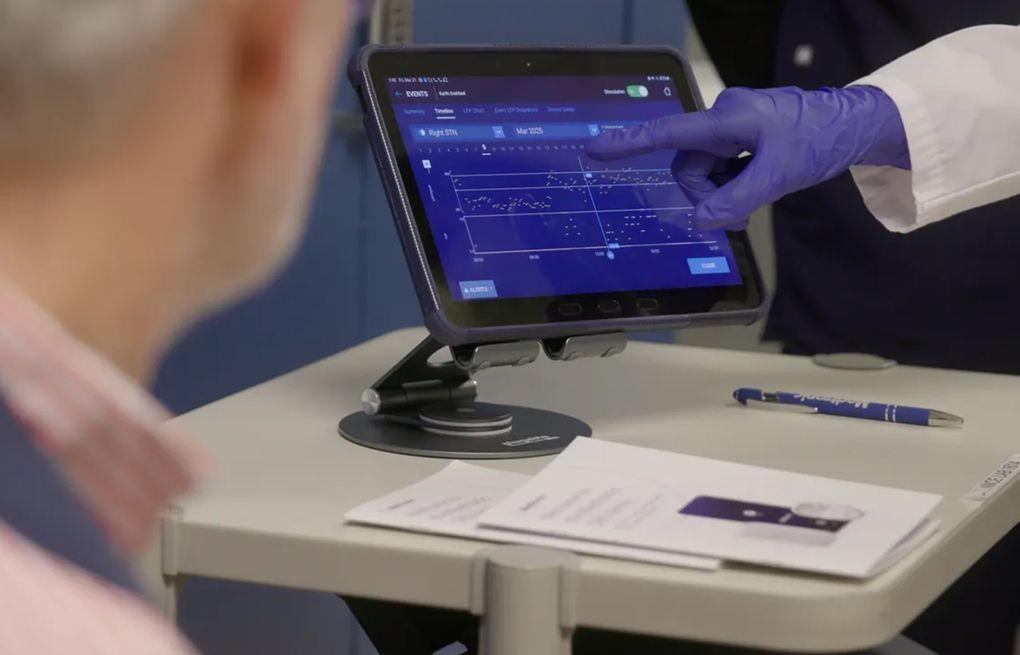
A significant breakthrough came with the recent approval of adaptive deep brain stimulation by US and European health authorities. This innovative approach uses a computer to interpret brain activity and adjust stimulation amplitude in real-time, providing optimal symptom relief
1
2
.The Science Behind Adaptive Stimulation
The foundation for adaptive stimulation was laid over two decades ago by scientists at University College London. They discovered specific brain waves that correlated with symptom severity in Parkinson's patients. This finding led to the development of a system akin to a thermostat, where stimulation is activated when these waves reach a certain threshold
1
2
.Technological Advancements
Initially bulky and hospital-bound, the technology has been miniaturized to a device smaller than a matchbox, implantable in a patient's chest. This progression took nearly a decade of research and development
1
2
.Related Stories

Challenges and Opportunities
While adaptive DBS offers new possibilities for personalized treatment, it also presents challenges:
- Increased complexity in parameter setting
- Greater demands on clinical team time and attention
- Need for extended testing periods to optimize settings
1
2
Broader Applications and Future Directions
The sensing abilities of adaptive stimulators open new avenues for understanding and treating other neurological and psychiatric conditions:
- Potential applications in depression and cognitive decline treatment
- Use of AI tools to analyze brain signals and identify subtle patterns
- Ongoing research in mapping brain circuits for various symptoms
- Recent successes in treating depression, OCD, and severe headaches
1
2
As the field progresses, the focus is on stimulating the right brain areas at the right time, considering the patient's activities. With the foundational technology in place, rapid advancements are anticipated in the near future
1
2
.References
Summarized by

Navi
[1]
Related Stories
AI-Enhanced Adaptive Deep Brain Stimulation Shows Promise in Treating Parkinson's Disease
04 Apr 2025•Health
AI-powered deep brain stimulation adapts in real time to improve gait in Parkinson's disease
16 Jun 2026•Health
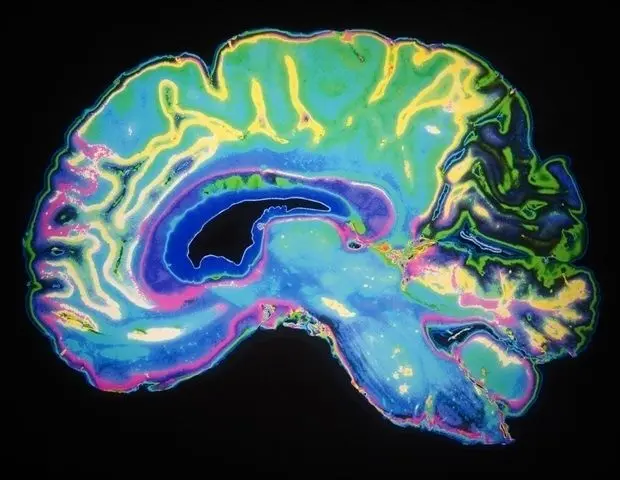
AI and Optogenetics Breakthrough: A New Era in Parkinson's Disease Diagnosis and Treatment
26 Sept 2025•Health
Recent Highlights



Recent Highlights
Today's Top Stories






Don’t drown in AI news. We cut through the noise - filtering, ranking and summarizing the most important AI news, breakthroughs and research daily. Follow topics that matter to you and stay ahead.


