13 Sources
13 Sources
[1]
Snap is cutting 1,000 jobs, 16% of its workforce | TechCrunch
Snap is laying off roughly 16% of its global workforce, impacting around 1,000 full-time employees, according to a memo sent to staff from Snap CEO Evan Spiegel on Wednesday. The company cites advancements in AI for the cuts. "While these changes are necessary to realize Snap's long-term potential, we believe that rapid advancements in artificial intelligence enable our teams to reduce repetitive work, increase velocity, and better support our community, partners, and advertisers," the memo, made public via an SEC filing, reads. "We have already witnessed small squads leveraging AI tools to drive meaningful progress across several important initiatives, including Snapchat+, enhanced ad platform performance, and efficiency improvements in our Snap Lite infrastructure." Spiegel also wrote that the company is closing more than 300 open roles. Snap had about 5,261 full-time employees as of December 2025. The company says the cuts will allow it to reduce its annualized cost base by more than $500 million by the second half of 2026, helping to "establish a clearer path to net-income profitability." "Snap faces a crucible moment -- squeezed between giants with enormous resources and nimble startups moving fast," the company wrote in a presentation to investors. "To meet this moment, we are pivoting toward profitable growth." Employees based in the U.S. will receive four months of severance, healthcare coverage, equity vesting, and transition support.
[2]
Snap is laying off 16 percent of its staff as it leans into AI
Snap is laying off roughly 16 percent of its global workforce in a cost-cutting effort to chase improved profitability with the help of AI. The cuts will impact around 1,000 full-time employees, according to a memo sent to staffers from Snap CEO Evan Spiegel. An additional 300 open roles are also being closed. "While these changes are necessary to realize Snap's long-term potential, we believe that rapid advancements in artificial intelligence enable our teams to reduce repetitive work, increase velocity, and better support our community, partners, and advertisers," Spiegel wrote in the memo, which was included in the company's 8-K filing. "We have already witnessed small squads leveraging AI tools to drive meaningful progress across several important initiatives."
[3]
Snap Lays Off 16% of Its Staff. CEO Says AI Tools Can Handle Repetitive Tasks
Snapchat is laying off 16% of its workforce as part of organizational changes at the company. The move is intended to help the social network find "a new way of working that is faster and more efficient, while pivoting towards profitable growth," says CEO and co-founder Evan Spiegel. Approximately 1,000 employees will be affected by the job cuts; they will be notified via email today. In the US, impacted employees will receive four months of severance, healthcare coverage, equity vesting, and career transition support. Snap will also close more than 300 open roles. Spiegel says the decision came after months of reviewing work priorities and focusing on investments that could generate long-term value. With these reductions, the company expects to reduce its annual expenses by over $500 million by the second half of this year. The decision was also influenced by rapid AI developments. With AI tools, smaller teams within the company have driven progress and enhanced performance, Spiegel says. Around 65% of the company's new code is reportedly being written by AI agents. "We believe that rapid advancements in artificial intelligence enable our teams to reduce repetitive work, increase velocity, and better support our community, partners, and advertisers," he adds. In November, Snap struck a deal with Perplexity to enable conversational AI search. It will pay Perplexity $400 million to close the deal over the course of a year. Since the beginning of 2025, several tech companies have announced layoffs linked to rapid AI development or organizational efficiency, including HP, Amazon, Intel, Meta, and Microsoft.
[4]
Snap is laying off 16 percent of its workforce, blames AI
Snap is laying off around 1,000 staff, amounting to 16 percent of its workforce, which it will seemingly replace with AI. The cuts were announced in a company-wide memo from CEO Evan Spiegel, who added that more than 300 open roles are also being closed. Spiegel said the "incredibly difficult" decision would likely save Snap more than $500 million by the second half of 2026, in turn helping it to "establish a clearer path to net-income profitability." Impacted staff were notified by email and the company's North America-based team were instructed to work from home. Snap said it would provide four-month severance packages to those affected by the layoffs, as well as healthcare and other entitlements. "While these changes are necessary to realize Snap's long-term potential, we believe that rapid advancements in artificial intelligence enable our teams to reduce repetitive work, increase velocity, and better support our community, partners, and advertisers," Spiegel wrote. "We have already witnessed small squads leveraging AI tools to drive meaningful progress across several important initiatives, including Snapchat+, enhanced ad platform performance, and efficiency improvements in our Snap Lite infrastructure."
[5]
Snapchat owner cuts 1,000 jobs as says AI will reduce repetitive work
Snap is the latest tech company to cut jobs, citing the growing ability of artificial intelligence (AI) tools. The Snapchat owner has axed about 1,000 employees - 16% of staff - and withdrawn hundreds of open job roles, according to a financial disclosure. Evan Spiegel, Snap's co-founder and CEO, told employees the company was in "a crucible moment" and the goal of the cuts was to reduce yearly costs by $500m (£368m). Spiegel said that workers who remain at the company will be using AI tools to "reduce repetitive work and increase velocity," as "small squads" of employees have been doing in recent months. "Change of this magnitude and at this speed is never easy and it will not be seamless," Spiegel added in his memo. This cut at Snap marks at least the third larger scale layoff at the company since 2022, when it conducted its first major layoff which impacted 20% of its staff at the time. Spiegel's comments on Wednesday are the first time he has pointed to AI as an explanation for staffing decisions. This year, activist investor Irenic Capital Management took a stake in Snap, saying in a public letter to Spiegel that it was "strange" the company remained unprofitable after 15 years in business and with hundreds of millions of monthly users. Irenic noted that an investor who put $1 into Snap when it went public in 2017 would be left with a stake worth only 23 cents today. An activist investor is a person or investment firm that buys shares in a company it believes is underperforming and then applies pressure for management and business changes. Snap now requires "a new way of working that is faster and more efficient, while pivoting towards profitable growth", Spiegel wrote in his memo to staff. His explanation echoed that of other tech executives this year who have begun citing the increased capability of AI technology, mainly tools that help software engineers do coding work, as they order their own mass job cuts. Already this year Amazon, Meta, Block, Pinterest and Atlassian, among others, have collectively laid off several thousand workers. Company executives have either pointed to increased use of AI tools meaning they need fewer workers, or noted that plans to spend hundreds of billions of dollars a year on investing in AI requires cost-cutting in other parts of the company. Jack Dorsey, the CEO of Block and the former leader of Twitter, said at the end of February that the rise of AI tools for tech workers "fundamentally changes what it means to build and run a company". He also said people in the industry should expect further job cuts at "the majority of companies" over the next year.
[6]
Snap Is Laying Off 16% of Full-Time Staff as It Embraces A.I.
The company, which owns the social media app Snapchat, said it was laying off about 1,000 employees as it increases its reliance on artificial intelligence. Snap on Wednesday announced plans to eliminate about 1,000 jobs, including 16 percent of its full-time staff, as the company seeks to lower costs and increase its reliance on artificial intelligence. In a memo to employees, Evan Spiegel, Snap's chief executive, said that the company, based in Santa Monica, Calif., is also eliminating more than 300 roles it had planned to fill. The cuts are an attempt to find a path to profitability, he added, as Snap plans to reduce costs by more than $500 million by the second half of this year. It was unclear whether the 1,000 job cuts included some held by part-time employees. "While these changes are necessary to realize Snap's long-term potential, we believe that rapid advancements in artificial intelligence enable our teams to reduce repetitive work, increase velocity, and better support our community, partners, and advertisers," Mr. Spiegel added in the memo. Investors embraced the decision, sending the Snap's stock up about 9 percent in early trading Wednesday to more than $6 a share. Still, the company's stock price is down more than 30 percent since the beginning of the year. Snap joins a flood of tech companies announcing staff cuts as they say that A.I. can take over more of the work and improve efficiency. While many computer programmers view A.I. as a tool rather than a replacement, tech company executives have pushed the belief that the technology will continue to rapidly improve and reduce the need for humans. Nearly 90 tech companies have eliminated at least 70,000 jobs this year, according to Layoffs.fyi, which tracks job cuts in the industry. The financial services company Block, which owns Square, Cash App and Tidal, laid off about 4,000 employees in February, or about 40 percent of its work force, citing its embrace of A.I. In an investor update on Wednesday, Snap said that more than 65 percent of its code is now generated by A.I. "A.I. gives small, creative teams the ability to do the work that once required much larger organizations," the update added. The layoffs at Snap follow pressure last month from the activist investor Irenic Capital Management, which owns about 2.5 percent of the social media company's shares. In a letter to Snap, Irenic criticized the company for overhiring and said it should rein in costs. Irenic also criticized Snap's $3.5 billion investment in its A.I.-powered Specs glasses, which has yet to deliver strong returns. Irenic urged Snap to focus on using A.I. to find gains. Snap had 5,261 full-time employees in December. It previously reduced staff by 10 percent in 2024, and in 2022, cut about 20 percent of its employees citing slowed advertising revenue growth. The company, which will report its first-quarter earnings on May 6, said it was expecting revenue to grow by 12 percent to $1.53 billion year-over-year. Snap expects to incur up to $130 million in layoff-related costs in its second quarter, according to a filing with the Securities and Exchange Commission.
[7]
Snap Inc blames AI as it lays off 1,000 workers
Cuts by Snapchat's parent company come in response to a declining stock price and pressure from an activist investor Snapchat's parent company plans to lay off 16% of its employees, around 1,000 people, citing "rapid advancements in artificial intelligence", the social media company told staff on Wednesday in an internal memo. The staff reduction is part of a wave of tech industry layoffs in the past year, with many firms blaming AI for the cuts. Snap Inc's layoffs follow demands last month from Irenic Capital Management, an activist investor whose portfolio manager wrote a letter to Snap Inc CEO, Evan Spiegel, calling on him to reduce costs and headcount while criticizing the company's current strategy. In Spiegel's memo to staff, he claimed that the layoffs would move Snap towards profitability and suggested that artificial intelligence could fill the lack of human labor. "While these changes are necessary to realize Snap's long-term potential, we believe that rapid advancements in artificial intelligence enable our teams to reduce repetitive work, increase velocity, and better support our community, partners, and advertisers," Spiegel wrote. Snap, which owns the photo and video sharing app Snapchat, joins a host of other tech companies that have carried out mass layoffs amid the AI boom. Microsoft, Amazon, Oracle, Jack Dorsey's financial services firm Block and others have cut tens of thousands of jobs while embracing a shift towards AI tools and claiming that the technology allows for businesses to do more with less human labor. Although Spiegel's memo stated that the company had already seen productivity benefits from AI, many experts and workers believe that the reality of receiving gains from implementing AI is murkier. Former workers and even pro-AI executives have also sometimes accused firms of "AI-washing" layoffs in an attempt to posture for investors and the market. Marc Andreesen, a venture capitalist and AI booster, similarly claimed recently that AI-related cuts were being used as an excuse for firms that had overstaffed. As discontent with AI and concern over its impact on the labor market grow, however, top AI firms such as OpenAI and Anthropic have become increasingly concerned about their image problem and have mounted a political charm offensive to address AI's potentially harmful effects on the labor market. OpenAI published a set of policy proposals earlier this month suggesting companies could move to a four day work week and that the government could create a public wealth fund to return profits to citizens. Snap's stock rose around 6% in the early hours of trading on Wednesday following news of its layoffs - recovering some of its value after dropping in price over 30% in the year-to-date. The company, which was founded in 2011, employed around 5,200 people as of December of last year, according to regulatory filings. It had posted an additional 300 open roles, which Spiegel told staff will no longer be filled.
[8]
Snap announces massive layoffs after collapse of Perplexity deal
Artificial intelligence was linked to an estimated 50,000 layoffs in 2025, and just this year, Amazon, Atlassian, Pinterest, Block, and Fiverr have announced layoffs linked to AI. Now, you can add Snap to the list. In a memo to Snap employees posted on Wednesday, billionaire CEO Evan Spiegel said the company is laying off about 1,000 employees, or 16 percent of its workforce. As part of these cuts, 300 open roles have also been eliminated. Spiegel told North American employees to work from home on Wednesday, telling them they would find out if they were impacted imminently. The memo to employees cited the importance of artificial intelligence, and Spiegel said the company would reduce its annual costs by $500 million by the end of the year. Last fall, I described Snap as facing a crucible moment, requiring a new way of working that is faster and more efficient, while pivoting towards profitable growth....While these changes are necessary to realize Snap's long-term potential, we believe that rapid advancements in artificial intelligence enable our teams to reduce repetitive work, increase velocity, and better support our community, partners, and advertisers. We have already witnessed small squads leveraging AI tools to drive meaningful progress across several important initiatives, including Snapchat+, enhanced ad platform performance, and efficiency improvements in our Snap Lite infrastructure. The company has said that it uses AI to generate code and improve efficiency, but it's also worth noting that activist investor Irenic Capital Management (which holds 2.5 percent of the company) called on Snap to make cuts last week and better use AI, according to Reuters. It's also important to mention that Snap's much-publicized $400 million partnership with AI firm Perplexity has also fallen through, according to tech reporter Alex Heath's Sources newsletter. If the deal had gone through, Perplexity would have given Snap a combination of cash and equity to integrate Perplexity's AI search into the Snapchat app. If nothing else, AI eliminating human jobs is no longer a purely hypothetical threat, but a grim reality for workers in the tech sector.
[9]
Snap cuts 16pc workforce to prioritise AI and savings
AI advancements allow workers to reduce repetitive work and 'increase velocity', Spiegel said. Snap is laying off 16pc of its workforce to cut costs and veer towards long-term profitability. The company is cutting around 1,000 employees, including 300 casual roles. In a memo sent to employees today (15 April), company CEO Evan Spiegel said that Snap is prioritising investments with the potential for long-term growth. He said that AI advancements allow workers to reduce repetitive work and "increase velocity". The layoffs are expected to reduce the company's annual costs by more than $500m by the second half of the year. Snap shares rose more than 7.75pc in pre-market trading, but have overall been down nearly 30pc since last year. Snap, alongside other major social media platforms, has been under regulatory scrutiny over the past few years over issues surrounding child safety and access to content. The platform has been banned for those under 16 in Australia. Snap last laid off 500 jobs in 2024. At the time, the company said that the layoffs would "reduce hierarchy and promote in-person collaboration". Two years prior, it cut around 20pc of the company to improve business performance. Spiegel is the latest in a growing list of company leads linking layoffs to AI advancements. In his memo, he said small teams leveraging AI tools have already had a positive impact on Snap's ad platform performance. In February, Jack Dorsey cut 4,000 jobs at Block in preference for AI tools and flatter teams. Since then, Atlassian cut 10pc of its workforce, Meta laid off several hundred, and Oracle reportedly cut thousands, over AI. Dorsey, at the time, said that a "majority of companies" will reach similar conclusions around smaller teams, and make similar structural changes "within the next year". Journalist Alex Heath, meanwhile, has reported that Snap's $400m deal with Perplexity has also been axed. Announced last November, the deal would have seen Perplexity deploy its conversational search tool into Snapchat. The one-year partnership was expected to rebrand Snapchat into a platform where AI companies could connect with the platform's community. Don't miss out on the knowledge you need to succeed. Sign up for the Daily Brief, Silicon Republic's digest of need-to-know sci-tech news.
[10]
Snap layoffs today: 16% of jobs cut as CEO Evan Spiegel is the latest to tout AI advances
"We believe that rapid advancements in artificial intelligence enable our teams to reduce repetitive work, increase velocity, and better support our community, partners, and advertisers." On Wednesday, April 15, Snap CEO Evan Spiegel included that statement in a letter to employees announcing the company would lay off about 1,000 people, including 16% of its full-time employees. Yet, that message could have been pulled from a number of tech CEO's recent bold statements that AI will replace employees. Spiegel joins the ranks of CEOs like Block's Jack Dorsey who are unabashed in their decision to lay off their staff in favor of AI. In his February letter to shareholders, Dorsey stated: "Intelligence tools have changed what it means to build and run a company. We're already seeing it internally. A significantly smaller team, using the tools we're building, can do more and do it better. And intelligence tool capabilities are compounding faster every week." He then went on to boast how most companies are "late" to this realization and will soon follow suit. Block laid off about 4,000 employees.
[11]
Snap To Cut 1,000 Jobs After Activist Pressure, Bets On AI Efficiency
April 15 (Reuters) - Snap will lay off about 1,000 employees, including 16% of full-time staff, the company said on Wednesday, becoming the latest tech firm to shift toward leaner teams as it ramps up AI adoption to streamline operations. The move, which also includes the closure of more than 300 open roles, comes weeks after Irenic Capital Management pushed the Snapchat parent to optimize its portfolio and improve performance. The activist investor has an economic interest of about 2.5% in the company. Snap said advances in artificial intelligence are helping it streamline operations and operate with smaller teams, with AI generating more than 65% of new code as it assigns critical work to focused teams and AI agents. The company had about 5,261 full-time employees as of December. The social media firm's shares rose 5.8%. The stock has fallen about 31% so far this year. The company has invested heavily in its augmented reality glasses unit Specs, and plans to launch the product this year. However, Irenic Capital has urged it to spin off or shut the cash-burning business, citing more than $3.5 billion in investment, while also calling for broader cost cuts. "Cutting costs may appease an activist in the near term, and give long-suffering shareholders some relief, but whether it really leaves the company with a defensible business model and competitive position that it can defend, develop and turn into profits and cash flow is still unclear," said Russ Mould, investment director at AJ Bell. Snap expects to cut more than $500 million in annualized expenses by the second half of the year, driven significantly by the recent layoffs, and broader efforts to reduce operating costs and stock-based compensation, CEO Evan Spiegel said. He asked North America employees to work from home on Wednesday. AI is reshaping the workforce by automating routine tasks, with 80 tech companies cutting about 71,440 jobs so far this year, according to data aggregator Layoffs.fyi. Snap expects first-quarter revenue to rise about 12% to roughly $1.53 billion, largely in line with Wall Street expectations, according to data compiled by LSEG. The company declined to comment on whether preliminary results include revenue from the $400 million Perplexity deal, announced last year. Snap said in February that the companies "have yet to mutually agree on a path to a broader rollout." Despite its efforts, Snap has underperformed rivals in recent quarters, a trend advisory firm Madison and Wall does not expect to reverse. The company forecast adjusted core profit of about $233 million for January-March, higher than Wall Street expectations of $186.8 million. It expects $95 million to $130 million in layoff-related charges, mostly in the second quarter, a regulatory filing showed. Snap is set to report quarterly results on May 6.
[12]
Job cuts in U.S.: Massive lay offs underway in Snapchat parent company. Check severance package, which employees are losing jobs right now?
Job cuts in USA: Snapchat owner said on Wednesday that 16 per cent of its global workforce, or about 1,000 jobs will be culled in the company's latest round of layoffs. Snap Inc. said in a regulatory filing that the job cuts will cost about $95 million to $130 million in severance payments and related costs. The move, which also includes the closure of more than 300 open roles, comes weeks after Irenic Capital Management pushed the Snapchat parent to optimize its portfolio and improve performance. The activist investor has an economic interest of about 2.5 per cent in the company. Snap said advances in artificial intelligence are helping it streamline operations and operate with smaller teams, with AI generating more than 65 per cent of new code as it assigns critical work to focused teams and AI agents. The company had about 5,261 full-time employees as of December. Snap expects to cut more than $500 million in annualized expenses by the second half of the year through the layoffs, CEO Evan Spiegel said, as part of a broader plan to reduce operating costs and stock-based compensation. He also asked North America employees to work from home on Wednesday. Artificial intelligence is reshaping the workforce by automating routine tasks, with more than 80 tech companies cutting about 71,440 jobs so far this year, according to data aggregator Layoffs.fyi. The start of the year has seen massive layoffs across U.S. companies as they streamline operations amid rising adoption of artificial intelligence tools. Investors' and economists' concerns that artificial intelligence will upend established industries are deepening, with job losses already emerging in sectors most exposed to automation. Goldman Sachs economists said in February that AI was responsible for 5,000 to 10,000 monthly net job losses last year in the most exposed U.S. industries. A survey by global outplacement firm Challenger, Gray & Christmas linked AI to 7 per cent of total U.S. planned layoffs announced in January. Meta plans to cut around 10 per cent of the employees in its Reality Labs division who work on products including the metaverse, according to a New York Times report Nike is laying off 775 employees, primarily impacting distribution center roles in Tennessee and Mississippi, a source familiar with the matter told Reuters Citigroup will cut about 1,000 jobs as part of a plan announced two years ago to reduce the workforce by 20,000, a source familiar with the matter told Reuters Morgan Stanley has cut about 3 per cent of its workforce, or roughly 2,500 employees, across all divisions, a person familiar with the matter told Reuters.
[13]
Snap slashes 1K jobs in 'AI efficiency' bloodbath
Snap shares spiked 7% on Wednesday after billionaire CEO Evan Spiegel revealed plans to slash about 1,000 jobs and rely on artificial intelligence to take over their work. Spiegel, whose personal fortune is pegged by Forbes at $2.3 billion, said he was "deeply sorry" in a staff memo announcing the cuts, which amount to 16% of the Snapchat parent's overall workforce. The company is also closing more than 300 open roles. "While these changes are necessary to realize Snap's long-term potential, we believe that rapid advancements in artificial intelligence enable our teams to reduce repetitive work, increase velocity, and better support our community, partners, and advertisers," Spiegel said in the memo. "We have already witnessed small squads leveraging AI tools to drive meaningful progress across several important initiatives, including Snapchat+, enhanced ad platform performance, and efficiency improvements in our Snap Lite infrastructure," Speigel added. Snap employees in North America were told to work from home on Wednesday following the announcement, with impacted workers learning their fate by email. The social media firm, which has struggled with intense competition from rivals like Instagram and TikTok, had about 5,261 full-time employees as of the end of last year. The layoffs came as Snap faced pressure from activist investor Irenic Capital Management, which had pushed the company to streamline its business, according to Reuters. Irenic advised Snap to either spin off or shut down its "Specs" augmented reality glasses business and enact other cost-cutting moves. Even after Wednesday's intraday trading gains, Snap shares were still down about 26% since the start of the year. Snap expects to achieve cost savings of more than $500 million by the second half of this year, which will help the company "establish a clearer path to net-income profitability," according to Spiegel. Snap will report quarterly earnings on May 6. The rise of advanced AI models has contributed to fears of major upheaval in the US job market. In February, financial tech firm Block said it would cut 40% of its workforce, or more than 4,000 employees, while pivoting to a full embrace of AI tools. At the time, Block CEO Jack Dorsey, best known for cofounding Twitter, predicted that more companies would make the same move in the coming months. "Within the next year, I believe the majority of companies will reach the same conclusion and make similar structural changes. I'd rather get there honestly and on our own terms than be forced into it reactively," Dorsey wrote in an open letter.
Share
Share
Copy Link
Snapchat's parent company Snap is laying off approximately 1,000 employees—16% of its workforce—as CEO Evan Spiegel points to artificial intelligence advancements that enable smaller teams to handle more work. The company expects to reduce annual costs by over $500 million while pursuing net-income profitability, with AI agents now writing 65% of new code.
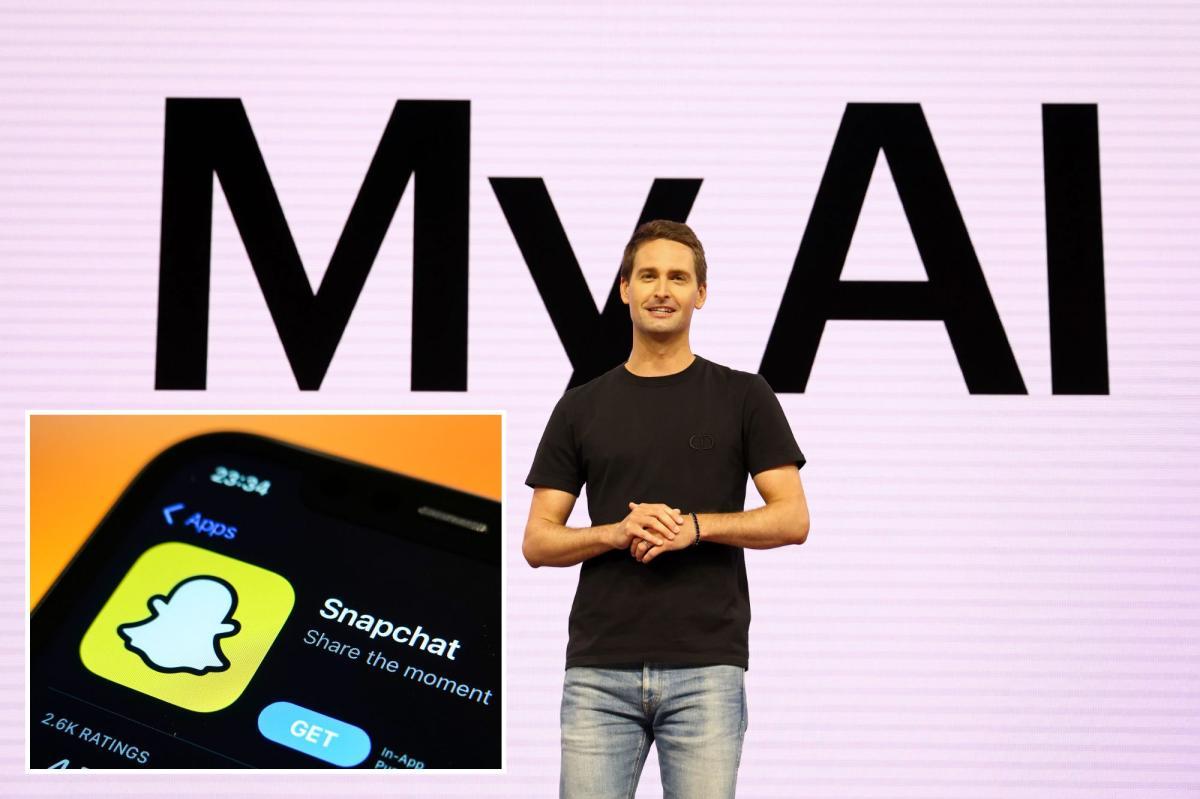
Snapchat's parent company Snap is eliminating roughly 16% of its workforce, affecting approximately 1,000 full-time employees, according to a memo sent by CEO Evan Spiegel on Wednesday
1
. The company is also closing more than 300 open roles as part of a broader restructuring effort aimed at achieving net-income profitability3
. Snap had about 5,261 full-time employees as of December 2025, making this workforce reduction one of the company's largest since its initial public offering1
.

Source: ET
The decision to pursue these Snap layoffs stems directly from what the company describes as rapid advancements in artificial intelligence. "While these changes are necessary to realize Snap's long-term potential, we believe that rapid advancements in artificial intelligence enable our teams to reduce repetitive work, increase velocity, and better support our community, partners, and advertisers," Spiegel wrote in the memo, which was made public via an SEC filing
2
. The company has already witnessed small squads leveraging AI tools to drive meaningful progress across several important initiatives, including Snapchat+, enhanced ad platform performance, and efficiency improvements in Snap Lite infrastructure4
. Around 65% of the company's new code is reportedly being written by AI agents, demonstrating how these tools now handle repetitive tasks that previously required human developers3
.
Source: New York Post
Snap expects the cuts will allow it to reduce its annualized cost base by more than $500 million by the second half of 2026, helping to establish a clearer path to net-income profitability
1
. "Snap faces a crucible moment—squeezed between giants with enormous resources and nimble startups moving fast," the company wrote in a presentation to investors1
. This pressure has intensified following activist investor Irenic Capital Management taking a stake in Snap, noting in a public letter to Evan Spiegel that it was "strange" the company remained unprofitable after 15 years in business and with hundreds of millions of monthly users5
. Irenic pointed out that an investor who put $1 into Snap when it went public in 2017 would be left with a stake worth only 23 cents today5
.

Source: The Verge
Related Stories

Employees based in the U.S. will receive four months of severance, healthcare coverage, equity vesting, and transition support
1
. Impacted staff were notified by email, and the company's North America-based team were instructed to work from home4
. This marks at least the third larger-scale layoff at the company since 2022, when it conducted its first major layoff which impacted 20% of its staff at the time5
. However, Spiegel's comments on Wednesday are the first time he has pointed to AI as an explanation for staffing decisions5
.Snap's decision aligns with a broader trend across tech companies this year. Since the beginning of 2025, several major firms have announced layoffs linked to rapid AI development or organizational efficiency, including HP, Amazon, Intel, Meta, and Microsoft
3
. Already this year, Amazon, Meta, Block, Pinterest, and Atlassian have collectively laid off several thousand workers5
. Company executives have either pointed to increased use of AI tools meaning they need fewer workers, or noted that plans to spend hundreds of billions of dollars a year on investing in AI requires cost-cutting in other parts of the company5
. Jack Dorsey, the CEO of Block and the former leader of Twitter, said at the end of February that the rise of AI tools for tech workers "fundamentally changes what it means to build and run a company," adding that people in the industry should expect further job cuts at "the majority of companies" over the next year5
. In November, Snap struck a deal with Perplexity to enable conversational AI search, agreeing to pay Perplexity $400 million over the course of a year3
.Summarized by
Navi
27 Jan 2026•Business and Economy

11 Feb 2025•Business and Economy

03 Jun 2025•Business and Economy