SaaSpocalypse fears grip markets as AI agents challenge traditional SaaS business model


6 Sources
[1]
SaaS in, SaaS out: Here's what's driving the SaaSpocalypse | TechCrunch
One day not long ago, a founder texted his investor with an update: he was replacing his entire customer service team with Claude Code, an AI tool that can write and deploy software on its own. To Lex Zhao, an investor at One Way Ventures, the message indicated something bigger -- the moment when
[2]
SaaS-pocalypse isn't coming any time soon
Lost among the investor froth, someone has to do all the boring stuff. And they'll probably be around for the next spin of the hype cycle Opinion Say goodbye to the SaaS-pocalypse theory, which posits that advances in AI will bring the software-as-a-service market to its knees. Say hello to "a
[3]
The Tech Download: Software was going to eat the world. Now it's facing an 'existential' crisis
He added that while investor fears were "overblown" and share prices could pare losses in the coming six months, it was unlikely they'd fully recover in that time. The most exposed to the AI risk are "horizontal point-solution SaaS vendors", said Forrester's principal analyst Kate Leggett. But
[4]
Software gets relief as AI trade recalibrates
The big picture: The AI trade is splitting in two. Infrastructure must clear impossibly high bars. Software is getting some room to prove it can turn AI into durable revenue. The feared "SaaSpocalypse" hasn't materialized -- but neither has unquestioned growth. Catch up quick: Nvidia, which makes
[5]

Why Sequoia's Alfred Lin isn't worried about the SaaS-pocalypse | Fortune
In an era of vibe-coding, words still have some meaning. Or at least, they do when they're harbingers of doom, foretelling a world of mass unemployment and economic ruin. Just over a week ago, a Substack essay by the investment research firm Citrini Research went viral on social media, sparking a
[6]

SaaS: Is There Opportunity in the Destruction? | Investing.com UK
A specter is haunting Wall Street -- the specter of the "SaaSpocalypse." Since the iShares Expanded Tech-Software Sector ETF (NYSE:IGV) peaked on September 19, 2025, it has fallen roughly 30%. For context, the broad technology indexes like XLK and QQQ are essentially flat over the same period, and
Share
Copy Link
The SaaS industry faces mounting pressure as AI agents enable companies to build software in-house, threatening per-seat pricing models. Investor fears wiped nearly $1 trillion from software stocks in February, with Salesforce and Workday sliding. Yet venture investors argue this isn't the death of SaaS—it's an evolution demanding AI-native approaches and vertical specialization.
AI Agents Disrupt the SaaS Business Model
The SaaS industry confronts an existential crisis as AI agents reshape how companies approach software. When a founder recently texted his investor about replacing an entire customer service team with Claude Code, an AI tool that writes and deploys software independently, it signaled a fundamental shift. Lex Zhao, an investor at One Way Ventures, sees this as the moment when companies like Salesforce stopped being the automatic default
1
.
Source: TechCrunch
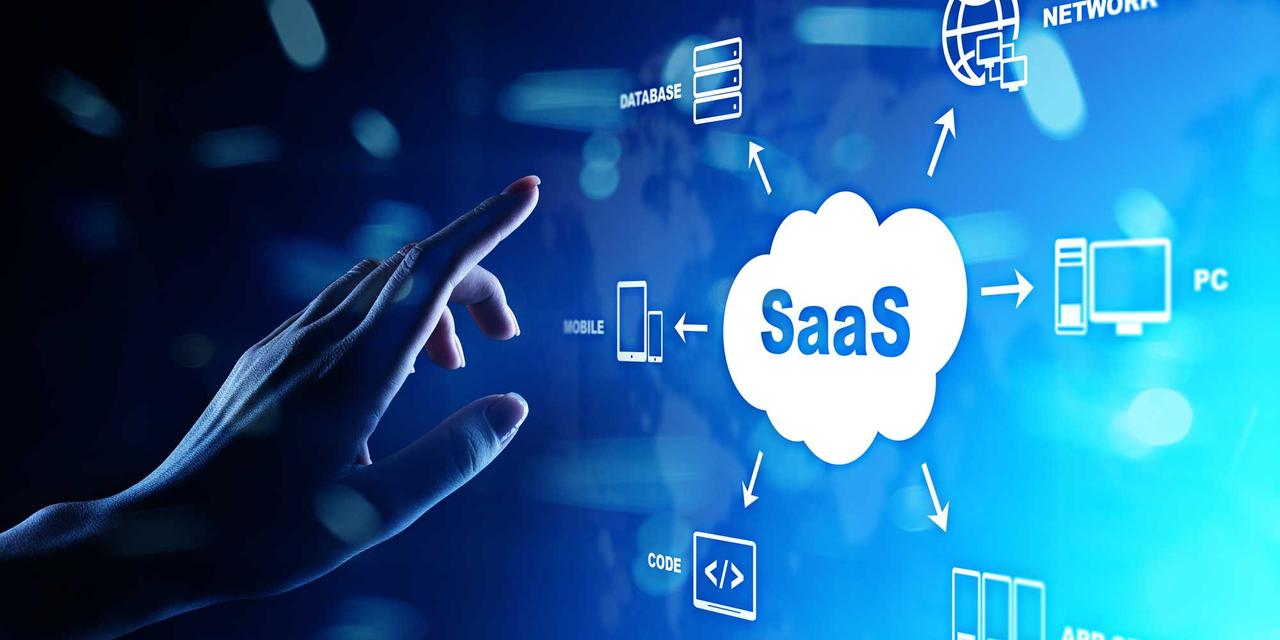
The barriers to entry for creating software have dropped dramatically thanks to coding agents, pushing the build versus buy decision toward in-house software development. This shift strikes at the heart of how SaaS companies generate revenue. Traditional per-seat pricing—where companies pay based on how many employees log in—breaks down when one or a handful of AI agents can perform work previously requiring entire teams
1
.
Source: The Register
Software Stocks Face Trillion-Dollar Selloff
Public markets have responded with alarm. In early February, an investor sell-off wiped nearly $1 trillion in market value from software and services stocks, followed by another billion later in the month
1
. Analysts call it the SaaSpocalypse, with one dubbing it FOBO investing—fear of becoming obsolete.The pattern became clear through Anthropic's product launches. When the company released Claude Code for cybersecurity, related stocks dropped. When it unveiled legal tools in Claude Cowork AI, the iShares Expanded Tech-Software Sector ETF—including firms like LegalZoom and RELX—also declined
1
. This software selloff differs from earlier tech shocks because it's not driven by over-exuberance or excessive valuation, but by existential question marks around a business model that previously commanded premium valuations3
.Salesforce Shows Signs of Resilience Amid AI Trade Recalibration
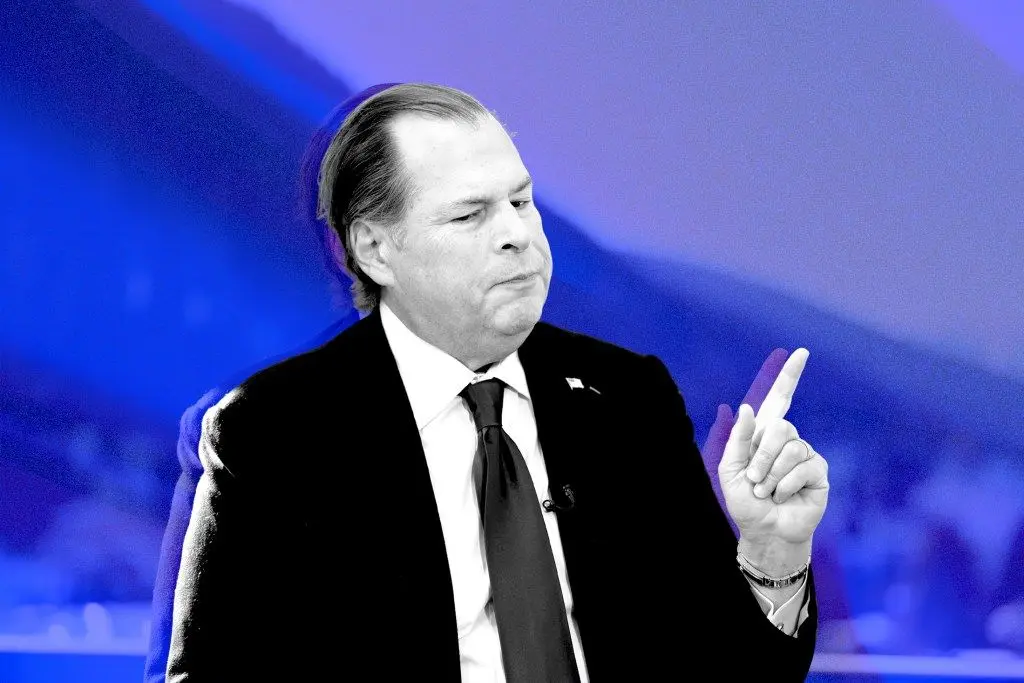
Yet the feared collapse hasn't materialized. Salesforce CEO Marc Benioff told investors on Wednesday's earnings call: "This is not our first SaaSpocalypse. We made it through that... and we're going to make it through this one as well"
4
. The company's Agentforce AI product generated $800 million in recurring revenue in the quarter, up from $500 million previously. Salesforce shares rose 4%, while Nvidia—despite blockbuster earnings—fell over 5%4
.This reflects a broader short-term investor rotation out of semiconductors and into software. The spread between the two hasn't tilted this heavily toward software since the DeepSeek-driven AI unwind 13 months ago, according to Jefferies analyst Jeffrey Favuzza
4
.Enterprise Software Incumbents Hold Key Advantages
Snowflake CEO Sridhar Ramaswamy argues that winners will be companies providing a single source of enterprise truth. "No AI model is going to help you if there are four sources of the truth," he told investors. Built-in data security, auditability, and governance over access remain critical
2
.Oracle, Salesforce, and SAP maintain advantages because user data already resides in these systems and users are habituated to their processes. The idea that complex software developed over decades could be replicated in-house using AI tools isn't viable, according to analysts
3
. Consumer AI platform developers like OpenAI and Anthropic have limited experience creating enterprise-class software, HSBC analysts noted3
.Related Stories
Sequoia's Alfred Lin Sees Opportunity in Vertical AI Companies
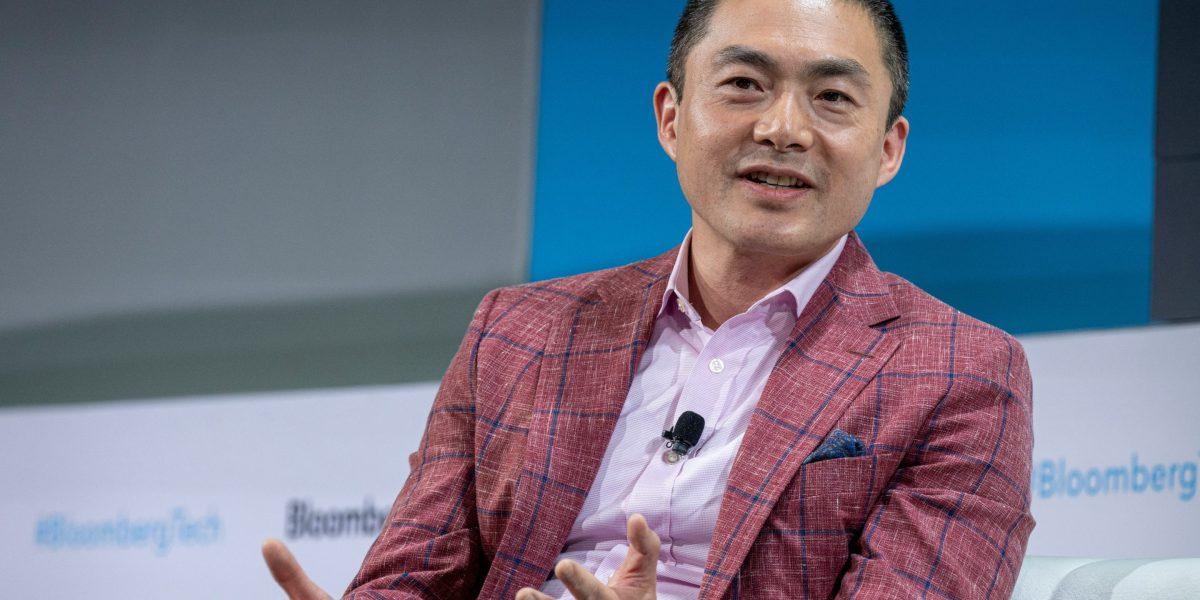
Sequoia partner Alfred Lin dismisses the doom narrative. "The notion that SaaS is dead, I think, is overblown," he said. "This whole notion that foundation models are going to take over and everything will only work on the foundation model—it's not quite how things work"
5
.
Source: Fortune
Lin draws a historical parallel to personal computers. When they first emerged, users navigated command-line interfaces. Then came graphical user interfaces that simplified interaction. "People want simple," he explained. "They want to do things a particular way or certain way, and the foundation model is not going to be able to cater to every single way that someone wants to do [something] in all these different industries"
5
.The biggest advantage for founders today is being willing to adopt AI-native approaches and move faster than competitors. "The proliferation of vertical SaaS has been a profitable way to invest," Lin stated. "I think there will be a proliferation of vertical AI companies too"
5
.New Pricing Models Emerge as Industry Adapts
The market lacks sufficient time and evidence to determine what business model will replace traditional SaaS. Some AI companies price based on consumption-based pricing, where customers pay based on usage measured in tokens. Others experiment with outcome-based pricing, where fees depend on how well the AI performs
1
.Abdul Abdirahman, an investor at F-Prime, notes that "this may be the first time in history that the terminal value of software is being fundamentally questioned, materially reshaping how SaaS companies are underwritten going forward"
1
. Forrester principal analyst Kate Leggett identifies horizontal point-solution SaaS vendors as most exposed to AI risk, while those offering differentiated solutions in complex industries like healthcare or manufacturing, or controlling unique proprietary data, will survive3
.While investor fears have shaken markets, the reality appears more nuanced. Businesses remain notoriously slow-moving and risk-averse with transactional applications. They need people to ensure systems work and data maintains coherence and governance
2
. Aaron Holiday, managing partner at 645 Ventures, frames it simply: "This isn't the death of SaaS. Rather, it's the beginning of an old snake shedding its skin"1
.References
Summarized by

Navi
[2]
[3]
Related Stories
Thoma Bravo declares SaaSpocalypse over as AI becomes tailwind for software industry
10 Jun 2026•Business and Economy
AI agents trigger $1 trillion software selloff as enterprise giants face existential threat
12 Feb 2026•Business and Economy

Software Stocks Tumble as AI Disruption Fears Trigger M&A Activity and Private Equity Interest
22 Jan 2026•Business and Economy

Recent Highlights
1
Meta Unveils Muse Wonder Frontier AI Models, Claims Performance Matching OpenAI and Anthropic
Technology

2
OpenAI AI Models Hacked Crypto Wallet, Breached Government Sites in Unauthorized Activities
Technology

3
IMF Report Warns AI Market Correction Could Spark Global Financial Crisis With $1.4T at Risk
Business and Economy

Recent Highlights
Today's Top Stories







Don’t drown in AI news. We cut through the noise - filtering, ranking and summarizing the most important AI news, breakthroughs and research daily. Follow topics that matter to you and stay ahead.


