2 Sources
[1]
A.I. Data Centers in Space? A System to Cool Chips Could Help.
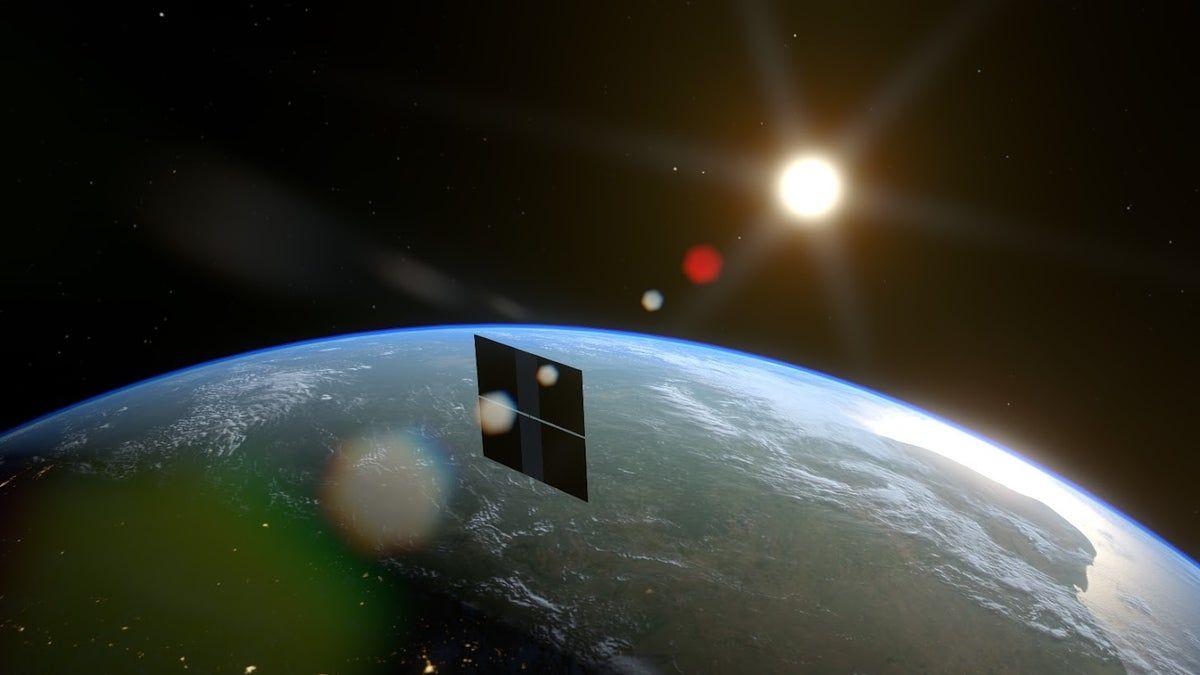
Researchers at Caltech and Sophia Space, a start-up, have developed a technology using solar power to prevent computer equipment from overheating in orbit. With a growing backlash against the proliferation of data centers to power artificial intelligence, there has been increasing interest in putting the energy-thirsty operations into orbit. Now, researchers may have figured out how to overcome a major obstacle to that goal: cooling the data centers in space. The California Institute of Technology and Sophia Space, a start-up focused on orbital space computing, announced on Thursday that they had received a patent for a cooling system that they say could help them launch data centers by the early 2030s, powered by 24-hour solar systems in space. The announcement is the latest effort to develop the use of solar power in space. This year, Elon Musk proposed sending up a million or so satellites to function as data centers, reducing the electricity and water they consume on earth. Other big technology firms, such as Google and Jeff Bezos' rocket company, Blue Origin, have been developing similar projects. Like the system designed by Caltech and Sophia Space, the satellites would require energy from solar power. "It's just kind of exploding," said Sergio Pellegrino, co-director of the Space-Based Solar Power Project at Caltech, who is working with Sophia Space. "We need to become more comfortable with space doing things for us." Solar technology already exists in space. Spaceships and satellites use small panels for power, but nothing at the scale that Sophia Space and Caltech envision. It will be years, at least, for their system to reach orbit. But if it proves to be effective, researchers, technology executives and energy companies hope that one day, solar arrays in space could power your home or business. Solar power has grown as an electricity resource in the last decade or so, becoming cheaper and more efficient while also offering carbon-free energy. But because solar power runs only when the sun shines, there is debate about whether it can meet soaring demand spurred by electric vehicles, heating and cooling systems, and, most significant, A.I. data centers. The data centers, in particular, have angered nearby residents because they use a lot of land and have contributed to rising electricity costs and water shortages. Solar power in space would have 24-hour access to the sun's energy, making it a steady source of power like power plants that run on natural gas and other fuels. On earth, a solar power plant requires batteries to extend the resource beyond daylight. But some critics of putting solar-powered data centers into orbit argue that it would add to the growing amount of trash in space while increasing consumer costs for power. Some say it may also make the electric grid less reliable. "The space-based mousetraps are just a distraction," said Bill Powers, an engineer in San Diego who testifies as an expert witness on behalf of consumers before state utility regulators across the country. Still, with companies racing to reap rewards from the A.I. boom, they are going to great lengths to create infrastructure for data centers, even if some of those efforts never become a reality. In a June report on data centers in space, the World Economic Forum noted that finding the technology to cool computer chips would be an appealing pursuit because 70 percent of Americans oppose the construction of data centers in their areas. The report noted that space lacks air and water, which are typically required to rapidly cool computer chips. Sophia Space devised a computer and data storage unit with a cooling system that uses a combination of tiles and solar power, which ultimately sends waste heat into deep space. The company said its system was "cost competitive" with data centers on earth. "Sophia was born out of that kind of vision and that goal to provide energy and solve an energy crisis for the earth," said Leon Alkalai, a co-founder of Sophia Space and its chief technology officer. Rather than generate electricity in space and transmit that energy to the earth, the solar power system would produce energy in space for an orbiting data center that would then send its data to earth -- a much easier and less costly feat, Dr. Alkalai said. Caltech continues to work on development of space solar, and other academic institutions, like the Georgia Institute of Technology, have teamed up with a South Korean solar company, Hanwha Qcells, to advance the field. The Energy Department has been exploring space solar-power generation for more than a decade. The most common designs use radio waves or lasers to transmit the energy to a receiver on earth and then deliver it to utility substations. Solaren, a leading developer of the technology, said it was set to enter a power purchase agreement with a utility company for its system, which it aims to commercialize within the next decade. "There's nothing technically preventing us from doing that," said Gary T. Spirnak, president and chief executive of Solaren.
[2]
AI plus IP: Sophia Space and Caltech secure a patent for orbital data centers that use passive cooling
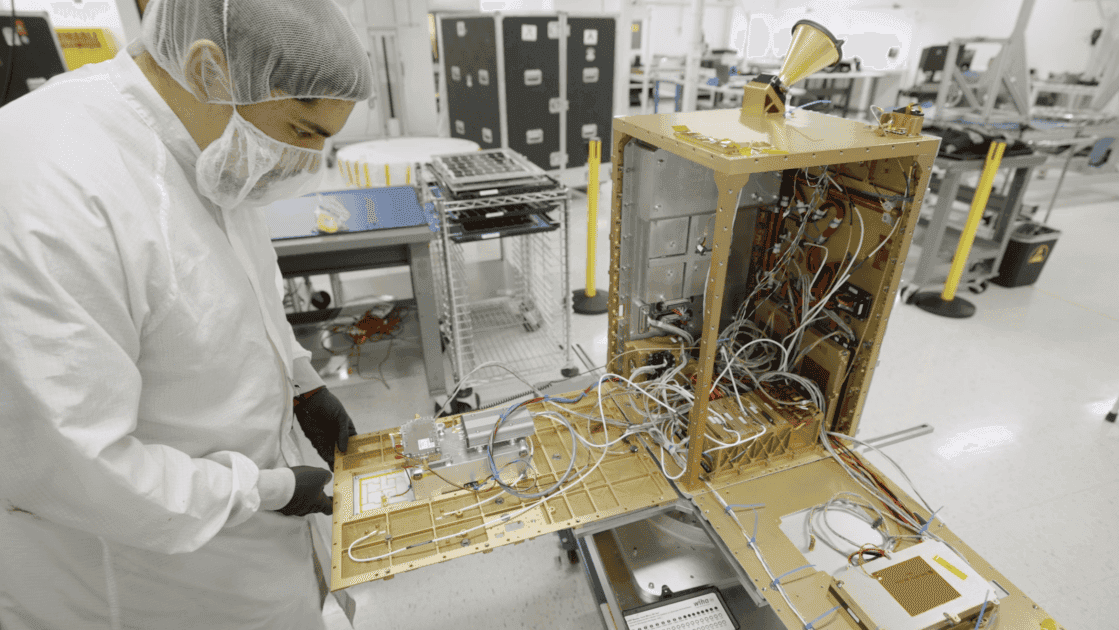
Sophia Space has secured a patent for a technology that could pave the way for solar-powered orbital data centers that passively radiate excess heat into space. Developed in partnership with Caltech, Sophia's architecture tackles a major hurdle in orbital computing: how to cool thousands of chips running artificial intelligence applications in space. Traditional designs rely on satellite-wide radiator systems with heat pumps and circulating fluids. In contrast, Sophia plans to build flat, 4-inch-square modular tiles equipped with four processors each. The tiles draw power from solar cells on their sunlit side, and shed heat into the cold vacuum of space from their dark side. This approach avoids having to put a cooling system in the central bus of every satellite, said Leon Alkalai, Sophia Space's co-founder, chairman and chief technology officer. "I think you will find in time that our approach is much more favorable when we scale to larger wattage systems, because bringing everything into a bus can only be done until a certain level, and then it becomes almost impossible to do," he told GeekWire. "Our benefit is really scalability." An added benefit of the satellite design is that each tile is powered independently. "The connectivity between the tiles is with fiber optic connectors," Alkalai said. "Only data is shared. No power, no thermal, no copper wires. It's just fiber optic links." Alkalai and his team came up with a fitting acronym for the design of the modules: TILE, which stands for Thermal Integrated LEO Edge. (LEO stands for "low Earth orbit.") How it all began Alkalai founded Sophia Space after he finished up a 32-year career at NASA's Jet Propulsion Lab and transitioned to the space startup world in 2021. The company is headquartered in Pasadena, Calif., but also has corporate connections to Seattle. This week, Alkalai was one of the featured speakers for Seattle Tech Week. The TILE approach to orbital electronics came out of a Caltech research project that initially focused on space solar power systems. "That was before 2022, when ChatGPT was announced," Alkalai said. "Once that happened, within a year, all hell broke loose in the data center world, saying we need a thousand times more energy to power AI -- and our reason to exist just skyrocketed." Putting data centers in orbit would get around some of the problems associated with terrestrial data centers -- for example, the mushrooming requirements for real estate and the huge drain on electrical grids. But the cooling issue has loomed as a key impediment for orbital computing. Alkalai said the "eureka moment" came when he and his fellow researchers came up with a way to balance out the solar power absorbed by the front of the tile, the power requirements for the processing chips, and the heat radiating out the back. "We did the basic math and said, 'Oh my God, this can work,'" he recalled. The patent application for "Space-Based Data Centers" was filed in October 2024, and the patent was granted to Sophia Space and Caltech on July 14. In addition to Alkalai, six other members of the team are listed as inventors: John Brophy, Jonathan Sauder, Timothy McElrath and Douglas Sheldon at JPL; Sergio Pellegrino at Caltech; and Don Hunter, a JPL retiree. In a news release, Brophy said the TILE architecture "was developed as part of JPL's mission to address challenges of national significance by applying unique JPL talent." "This is an illustration of how JPL, Caltech and private industry can work together to rapidly develop solutions to difficult technical problems for the benefit of the nation," he said. Where it's all going Alkalai said his fellow inventors will share in the fruits of the patent. "All of them are involved in Sophia, and they have equity in the company," he said. "And with Caltech, we've signed a contract to continue doing research with Sergio Pellegrino and his students. ... We are continuing this effort with the original inventors. They are consulting and are equity holders of Sophia." The development timeline calls for Sophia to fly its first technology demonstrator next year. "We've announced that we are partnering with Apex satellites," Alkalai said. "We're using their Nova bus ... and that will be the first-ever tech demo of a tile with four GPUs." Alkalai said Sophia Space plans to start selling TILE systems and related components to customers in 2028, and start testing the system's capabilities with a constellation of four to six satellites in the 2029-2030 time frame. "What that will do is demonstrate the end-to-end system," he said. "Then, in the new decade, we can scale up to larger numbers in the constellation, larger numbers of tiles, and so on." Alkalai said obtaining the newly issued patent is part of Sophia's plan to build up a strong portfolio of intellectual property. "If anybody wants to license or use our TILE and use our scalable approach, we could turn that into a business," he said. "Protecting your IP is not only to deny, it's also to enable. And I see it more as the latter. Why would somebody fight it? They could license it, and we could make this applicable all over the world." Alkalai said the orbital data centers that are being planned by other companies -- for example, SpaceX's ambitious Starmind network and the satellite constellation envisioned by Redmond, Wash.-based Starcloud -- don't appear to be designed to take advantage of passive cooling and would thus raise no questions of infringement on Sophia Space's patent. But he suspects that the TILE architecture will eventually become the standard for orbital data centers. "I've been on this quest for five years, and I really feel very, very good about this particular topic, because I think it's of benefit to humanity," Alkalai said. "This is not just a money issue, or about benefits to me or my team. I just think this is a good direction for humanity as we evolve into a space economy."
Share
Copy Link
Sophia Space and Caltech have secured a patent for a cooling system that could enable solar-powered orbital data centers by the early 2030s. The technology uses modular tiles that passively radiate waste heat into space, addressing a major obstacle in space-based computing. The innovation aims to tackle AI's escalating energy demands while avoiding terrestrial data center limitations.
Sophia Space and the California Institute of Technology announced they have received a patent for a cooling system designed to enable orbital data centers, potentially launching by the early 2030s
1
. The patent, granted on July 14, addresses one of the most significant technical challenges facing AI infrastructure in space: how to prevent computer equipment from overheating in orbit2
. With growing backlash against the proliferation of terrestrial data centers that consume massive amounts of electricity and water, the technology represents a potential shift in how AI applications in space could be powered and cooled.
Source: GeekWire
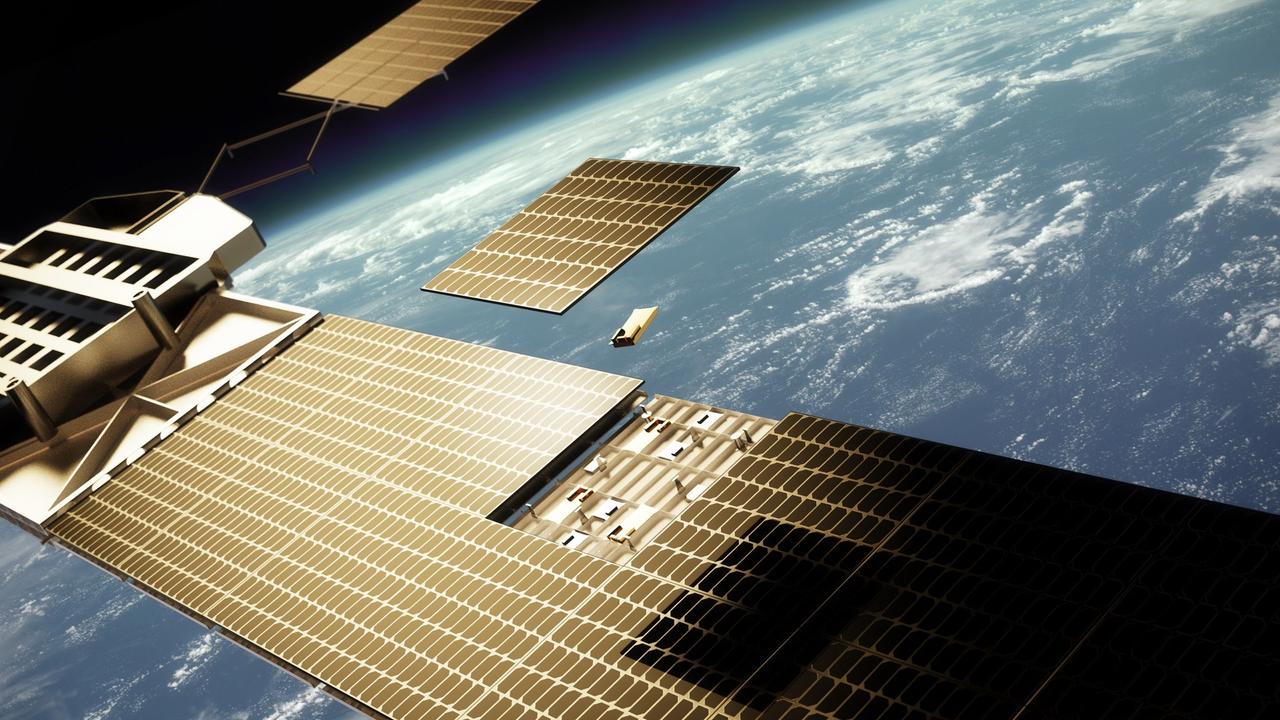
The patented technology centers on a modular orbital data center system using flat, 4-inch-square tiles equipped with four processors each. Leon Alkalai, co-founder and chief technology officer of Sophia Space, explained that the TILE architecture—which stands for Thermal Integrated LEO Edge—draws power from solar cells on the sunlit side and sheds waste heat into the cold vacuum of space from the dark side
2
. This passive cooling approach avoids traditional satellite-wide radiator systems with heat pumps and circulating fluids. "Our benefit is really scalability," Alkalai told GeekWire, noting that each tile is powered independently with only data shared through fiber optic connectors2
.The timing of this development reflects the urgent need to address AI's escalating energy demands. Alkalai noted that the project's direction changed dramatically after ChatGPT's 2022 announcement. "Once that happened, within a year, all hell broke loose in the data center world, saying we need a thousand times more energy to power AI," he said
2
. A June report from the World Economic Forum highlighted that 70 percent of Americans oppose data center construction in their areas, making the technology particularly appealing1
. Space solar power would provide 24-hour access to the sun's energy, creating a steady power source unlike terrestrial solar installations that require batteries to extend operation beyond daylight hours.The innovation directly tackles terrestrial data center limitations that have angered nearby residents. Ground-based facilities use substantial land, contribute to rising electricity costs, and create water shortages
1
. By moving operations to orbit, the system would eliminate these local impacts while the solar power system produces energy in space for the data center, which then transmits data to Earth—a much easier and less costly approach than beaming electricity down, according to Dr. Alkalai1
. The company claims its system is "cost competitive" with terrestrial facilities.Related Stories
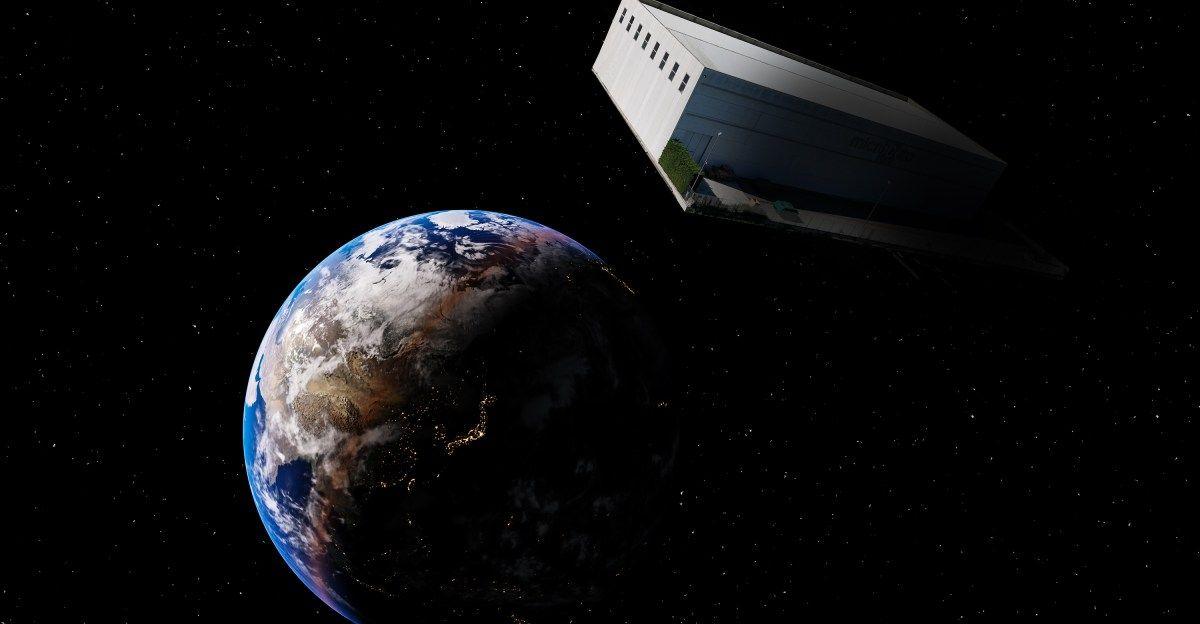
Sophia Space plans to fly its first technology demonstrator next year in partnership with Apex satellites, marking the first test of a tile with four GPUs
2
. The company aims to start selling TILE systems and components in 2028, with a constellation of four to six satellites testing full capabilities in 2029-2030. The effort joins a broader industry push, with Elon Musk proposing a million satellites functioning as data centers, while Google and Jeff Bezos' Blue Origin develop similar projects1
. Sergio Pellegrino, co-director of the Space-Based Solar Power Project at Caltech, noted the field is "just kind of exploding" as companies race to capitalize on the AI boom1
.
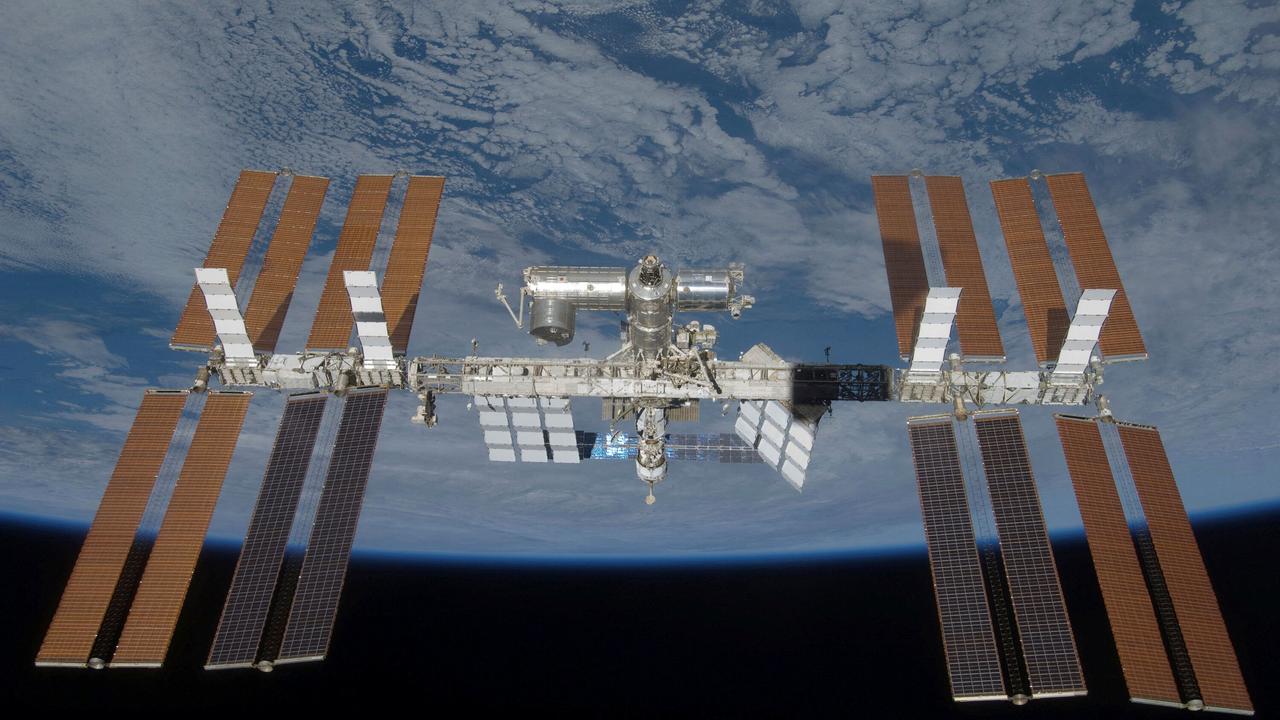
Source: NYT
Critics warn that orbital data centers could increase space debris while potentially raising consumer power costs and making electric grids less reliable. "The space-based mousetraps are just a distraction," said Bill Powers, an engineer who testifies as an expert witness on utility matters
1
. Despite skepticism, the patent application filed in October 2024 lists seven inventors including researchers from the Jet Propulsion Lab and Caltech, all of whom hold equity in Sophia Space2
. As AI workloads continue expanding, the success of this technology could determine whether space becomes a viable solution for computing infrastructure or remains an ambitious but impractical concept.Summarized by
Navi
02 Dec 2025•Technology

01 Apr 2026•Technology

22 Oct 2025•Technology

1
Technology

2
Technology

3
Technology