South Korea Faces 25-30 GW Power Demand Surge as AI Boom Drives Nuclear Energy Expansion Plans


3 Sources
[1]
South Korea's power demand set to soar on AI boom as nation weighs expanding nuclear energy
SEOUL, Sept 8 (Reuters) - South Korea's demand for power in the coming years is set to surge on plans by chipmakers Samsung Electronics (005930.KS), opens new tab and SK Hynix (000660.KS), opens new tab to expand production and the building of new AI data centres, according to the country's energy
[2]
South Korea's AI boom could need 20 new nuclear reactors' worth of power
The energy minister puts the extra demand at 25 to 30 gigawatts. A revised official forecast is even bigger, and the decision on how to supply it lands within months. South Korea expects artificial intelligence, and the chip fabs feeding it, to add between 25 and 30 gigawatts to national
[3]
South Korea's power demand set to soar on AI boom
SEOUL - South Korea's demand for power in the coming years is set to surge on plans by chipmakers Samsung Electronics and SK Hynix to expand production and the building of new artificial intelligence data centers, according to the country's energy minister. Those AI-driven power needs alone will
Share
Copy Link
South Korea's energy minister reveals AI-driven power needs will add 25 to 30 gigawatts to national demand, equivalent to 20 nuclear reactors. Samsung Electronics and SK Hynix are accelerating chip manufacturing plants originally planned for 2045 to early 2030s, while U.S. tech giants including Nvidia eye data center investments.
South Korea Power Demand Set to Jump 25-30 GW
South Korea power demand is poised for a dramatic surge as the AI boom transforms the nation's energy landscape. Minister of Climate, Energy and Environment Kim Sung-whan revealed that AI-driven power needs alone will lift demand by 25 to 30 gigawatts in the coming years
1
. This increase, equivalent to approximately 20 nuclear reactors based on South Korean design standards, stems from aggressive expansion plans by Samsung Electronics and SK Hynix, two of the world's largest chipmakers whose products form the backbone of AI infrastructure1
.
Source: The Next Web
Accelerated Timeline for Chip Manufacturing Plants
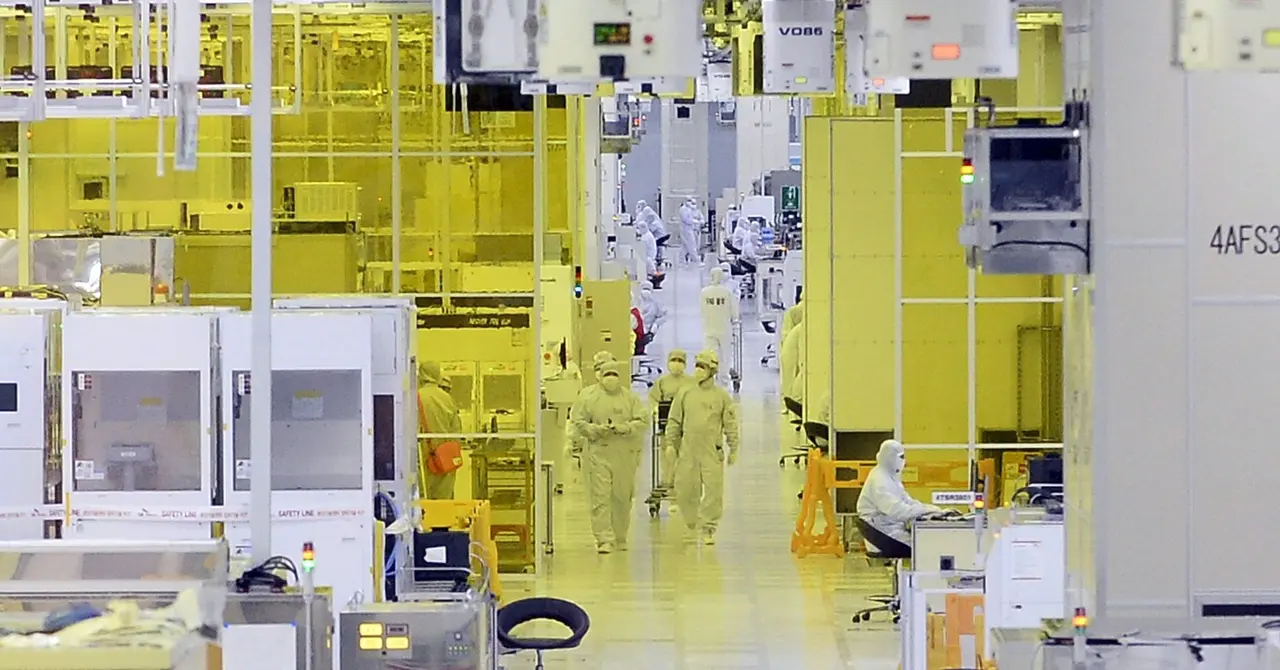
The timeline for semiconductor manufacturing expansion has been dramatically compressed. Projects originally slated for completion around 2045 have been significantly accelerated and are now due by the early 2030s, according to the energy minister
1
. This acceleration is part of an 800 trillion won ($590 billion) mega project announced by the government, with Samsung Electronics and SK Hynix pledging to build new facilities in the country's southwest1
. The revised official forecast paints an even more dramatic picture: peak demand in 2040 is now projected at 158.4 to 165 gigawatts, compared to 131.8 to 138.2 gigawatts estimated just four months earlier in April2
. Current peak demand sits around 100 gigawatts2
.AI-Driven Data Centers Fuel Energy Appetite
AI-driven data centers represent a substantial portion of the projected increase, accounting for 11.9 gigawatts in the working forecast
2
. This figure nearly triples the earlier estimate and reflects only the first phase of projects with firm details—planners set aside an additional 9.9 gigawatts from corporate submissions deemed too uncertain2
. Several U.S. tech companies, including Nvidia, have expressed interest in building data centers in South Korea specifically because of its dependable power supply, Kim told Reuters1
. The commercial pull is clear: the reliability that attracts the load is precisely what the load puts under strain.Nuclear Energy as Essential Solution
Kim described nuclear energy as "an essential element to consider within the power generation structure of our energy mix" ahead of next month's update to the long-term energy roadmap, which extends planning by two years to 2040
1
. Asia's fourth-largest economy currently operates 26 nuclear reactors, which account for just under a third of the country's power needs1
. While South Korea aims to boost renewables—currently at 11% of power needs, one of the lowest shares in the OECD—reliance on nuclear energy is unavoidable for now despite safety risks, the energy minister stated1
2
. Park Woo-young of the Korea Energy Economics Institute argues that among carbon-free sources, nuclear is effectively the only one able to follow the load patterns a grid experiences, which is precisely what a cluster of chip manufacturing plants and AI-driven data centers running continuously demands2
.Related Stories
Balanced Energy Mix and Additional Demand Drivers
Beyond AI infrastructure, South Korea must contend with increased power demand from the shift to electric vehicles from gasoline-engine cars and to heating via electricity rather than gas
1
3
. The current balanced energy mix includes coal at 29% and gas at 27% of power needs1
. The country operates 60 coal-fired power plants and aims to phase them out by 2040, though 20 will still have legal design lifespans beyond that point and could serve as emergency backup power1
.Public Safety Concerns and Strategic Risks
A poll by the state-run Korea Energy Information Culture Agency found 79% of 2,000 respondents supported including new nuclear plants in the long-term energy roadmap
1
. However, public safety concerns persist at the local level. In May, a civic group in Ulsan, a potential site for new plants, collected more than 10,000 signatures opposing additional reactors on safety grounds1
2
. Han Ga-hee of Solutions for Our Climate warned that building forecasts on unverified corporate submissions risks overinvestment in generating capacity, a concern with weight given the grid operator's existing debt burden2
. Conversely, Seoul National University's Kim Hee-jip cautioned that supply shortfalls preventing the country from pursuing advanced manufacturing or AI would constitute a strategic mistake2
. The government proposal is due in October, with the plan finalized by year's end2
.References
Summarized by

Navi
[1]
[3]
Related Stories
South Korea commits $1 trillion to AI and chip investment as memory shortages intensify
24 Jun 2026•Technology
Taiwan Considers Nuclear Revival to Power AI Chip Boom
22 Oct 2024•Business and Economy

AI energy consumption strains power grid as data center demand drives costs up for manufacturers
06 Jul 2026•Policy and Regulation
Recent Highlights



Recent Highlights
Today's Top Stories







Don’t drown in AI news. We cut through the noise - filtering, ranking and summarizing the most important AI news, breakthroughs and research daily. Follow topics that matter to you and stay ahead.


