KOSPI Rallies on Strong AI Demand as South Korean Exports Surge 68.7% in August


3 Sources
[1]
Global Market: KOSPI gains as AI-driven chip demand lifts South Korean export
South Korean shares gained on Tuesday, with the KOSPI rising 0.33%, as stronger-than-expected exports and robust semiconductor demand linked to the AI boom supported technology stocks. Samsung Electronics, SK Hynix and LG Energy Solution led gains, while the Korean won weakened and government bond
[2]
Global Market: Kospi gains over 1% as Nvidia outlook lifts chipmakers
South Korean shares rose, led by chipmakers after Nvidia forecast strong AI-driven revenue growth. The KOSPI gained 1.22%, while Samsung Electronics and SK Hynix advanced. The Bank of Korea raised rates by 25 basis points to 3% and upgraded its 2026 growth forecast to 3.3%, keeping investors
[3]
Nvidia-inspired KOSPI rally subdued after BOK's 2nd straight rate hike - The Korea Times
Foreign investors bought a net 152.4 billion won and institutional investors bought 177.6 billion won, while retail investors sold a net 1.91 trillion won. Seoul stocks fell just short of reclaiming the 7,000 mark on Thursday, as Nvidia's stronger-than-expected earnings fueled an early rally
Share
Copy Link
South Korea's benchmark KOSPI gained over 1% fueled by robust AI demand and semiconductor demand. Samsung Electronics and SK Hynix led chipmakers higher after Nvidia forecast 70% revenue growth. South Korean exports surged 68.7% in August, extending a 15-month growth streak, though the Bank of Korea's second consecutive rate hike to 3% tempered gains.
KOSPI Climbs on AI-Driven Chip Demand
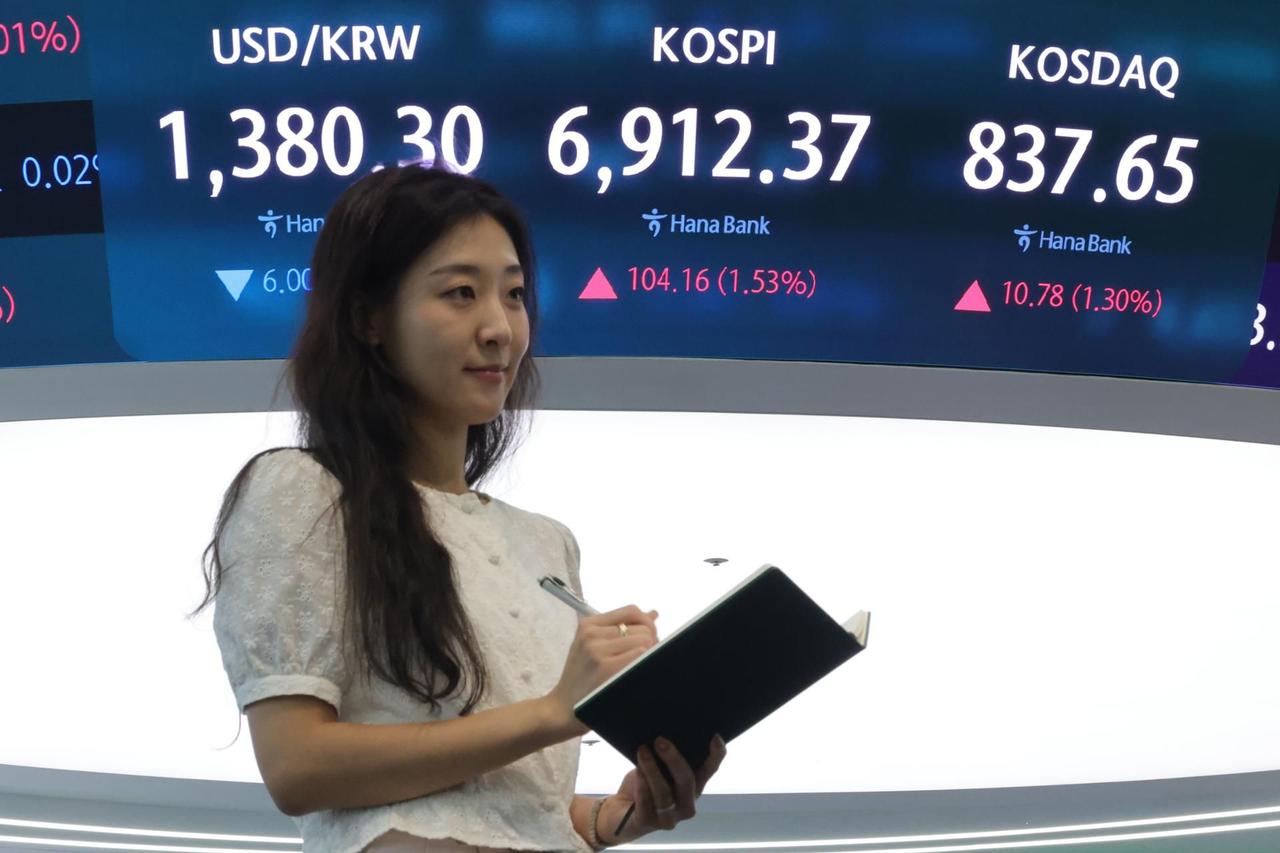
The South Korean stock market posted solid gains as AI demand and semiconductor demand continued to drive technology stocks higher. The benchmark KOSPI rose 1.22% to 6,894.25, reaching its highest intraday level since August 18 before settling at 6,912.37, up 1.53%
2
3
3
. The index has gained 62.37% so far this year, reflecting sustained investor confidence in the South Korean stock market1
.Nvidia Outlook Fuels Chipmakers Rally
Chipmakers led the rally after Nvidia forecast a 70% increase in revenue for its next fiscal year, reporting fiscal second-quarter revenue of $96.2 billion, up 106% year-over-year and above Wall Street estimates
2
3
3
. The Nvidia outlook highlighted continued strong demand for AI infrastructure investment and computing capabilities. Samsung Electronics rose 1.72% to 266,000 won, while SK Hynix gained 2.49% to 1.73 million won3
. LG Energy Solution advanced nearly 3.42%, reflecting broader optimism across technology sectors2
.South Korean Exports Extend 15-Month Growth Streak
South Korean exports surged 68.7% in August from a year earlier, extending their growth streak to 15 consecutive months and exceeding analysts' expectations
1
. The stronger-than-expected export performance highlighted the continued strength of global technology demand, particularly for semiconductors used in artificial intelligence applications. This robust trade data provided crucial support to South Korean equities despite selling pressure from foreign investors in some sessions.Bank of Korea Rate Hike Tempers Market Enthusiasm
The Bank of Korea raised its benchmark interest rate by 25 basis points to 3%, delivering its second consecutive rate increase as inflation remains above target and financial stability risks persist
2
3
3
. The Bank of Korea rate hike announcement around 10 a.m. caused gains to narrow sharply, with the KOSPI pulling back from its early high of 6,996.123
. However, the central bank also raised its growth forecast for 2026 to 3.3%, from 2.6% projected in July, signaling confidence in the economy's resilience2
.Related Stories
Mixed Investor Sentiment and Currency Movements
Foreign investors showed mixed activity, selling a net 116.5 billion won in one session while buying 152.4 billion won in another
1
3
3
. Institutional investors purchased 177.6 billion won, while retail investors sold a net 1.91 trillion won3
. The Korean won strengthened to 1,380.9 per dollar, up 3.9 won, continuing its upward trajectory with a 5.1% gain against the dollar year-to-date1
3
3
. Government bond yields rose, with the three-year Korean Treasury bond yield climbing 4.1 basis points to 3.878% and the benchmark 10-year yield increasing 5.8 basis points to 4.371%1
.
Source: Korea Times
What to Watch: Volatility Amid Economic Crosscurrents
Analysts expect the tug-of-war between AI-driven earnings growth and monetary policy tightening to shape the KOSPI's direction in coming months. Byun Jun-ho, an analyst at IBK Securities, noted that while Nvidia's strong earnings should ease concerns surrounding the AI and semiconductor industries, the prospect of a peak in the economic cycle will likely keep investors wary of heightened market volatility
3
. The Korean market is likely to remain range-bound amid signs of an economic slowdown, geopolitical events, and continued assessment of AI infrastructure investment sustainability. The secondary bourse Kosdaq also gained 1.3%, closing at 837.65, reflecting broader optimism across technology sectors3
.References
Summarized by

Navi
Related Stories
South Korea's AI stocks now set the tone for global markets as chipmaker swings ripple worldwide
17 Jul 2026•Business and Economy
AI Stock Sell-Off Hammers Chipmakers as South Korean Market Plunges 25% in Month
28 Jul 2026•Business and Economy
SK Hynix raises $26.5B in record Nasdaq debut, but volatility signals selective AI investor appetite
13 Jul 2026•Business and Economy
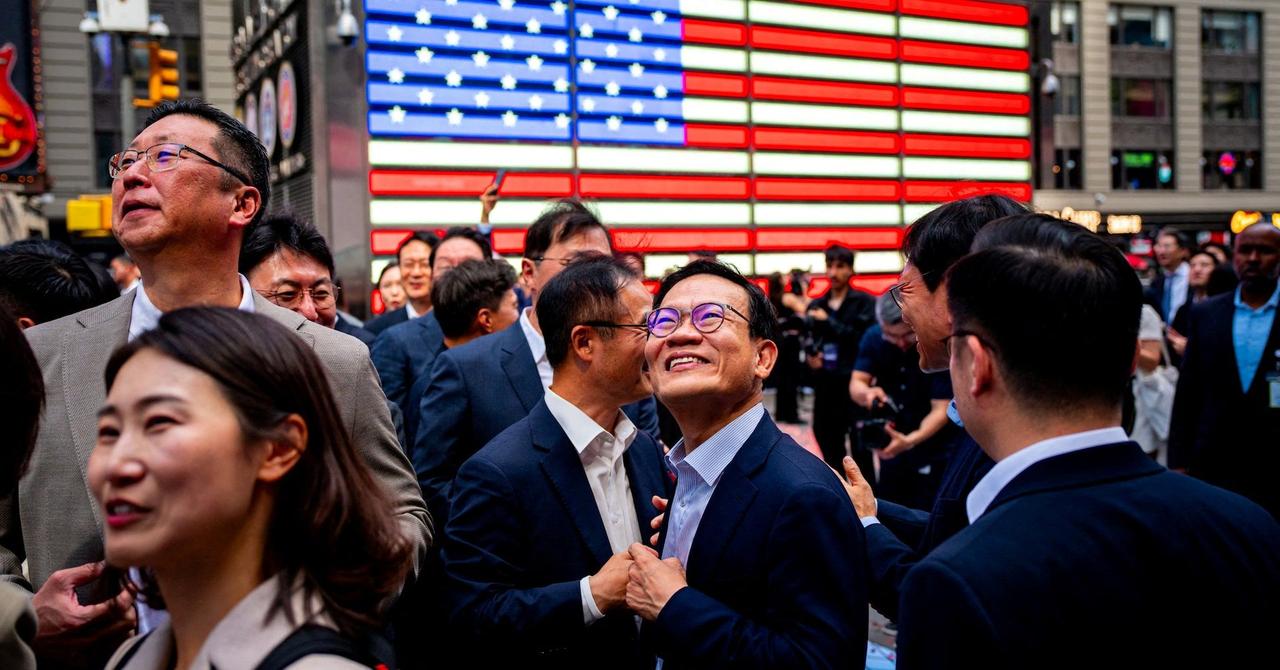
Recent Highlights
1
Microsoft and Nvidia Launch Surface Laptop Ultra: A $2,599 AI-Ready PC With RTX Spark Chip
Technology

2
Meta Muse AI Agent Surges to 6.6M Downloads Despite Privacy and Security Controversies
Technology

3
Scientists Build AI Model That Reconstructs Images From Brain Scans in Record Time
Science and Research

Recent Highlights
Today's Top Stories









Don’t drown in AI news. We cut through the noise - filtering, ranking and summarizing the most important AI news, breakthroughs and research daily. Follow topics that matter to you and stay ahead.


