3 Sources
3 Sources
[1]
Is SpaceX Worth $2 Trillion? Key Questions for Musk's Big IPO
In the seven and a half years since Apple Inc.'s market capitalization broke through the $1 trillion mark, investors have become accustomed to seeing big tech companies command 13-digit valuations in public markets. There are more on the way. SpaceX, the space exploration company controlled by Tesla Inc. founder and world's richest man Elon Musk, has signaled it is planning a mega-initial public offering in the coming months. Artificial intelligence rivals OpenAI and Anthropic also might go public this year, and their private valuations already have soared into the hundreds of billions of dollars. SpaceX has boosted its target valuation to more than $2 trillionBloomberg Terminal for an IPO that could raise as much as $75 billion, Bloomberg News has reported. Whether public-market investors will be prepared to buy shares supporting that valuation remains to be seen. Get the Markets Daily newsletter. Get the Markets Daily newsletter. Get the Markets Daily newsletter. What's happening in stocks, bonds, currencies and commodities right now. What's happening in stocks, bonds, currencies and commodities right now. What's happening in stocks, bonds, currencies and commodities right now. Plus Signed UpPlus Sign UpPlus Sign Up By continuing, I agree to the Privacy Policy and Terms of Service. SpaceX has morphed from a relative underdog in the space industry to an aerospace behemoth that receives billions of dollars in government contracts and serves as a backbone for the US space program. In addition to its rocket launch business, SpaceX owns a satellite-based internet broadband service, Starlink, that has become the company's main cash flow generator. Following an all-stock acquisition in February of xAI, SpaceX also owns Grok, a money-burning AI operation whose flagship product is the Grok AI assistant. X, the microblogging site previously known as Twitter, rounds out its portfolio of businesses. A SpaceX IPO would be a huge market spectacle as investors get a chance to buy into Musk's fast-evolving vision to create a combined space and AI powerhouse. Yet skeptics say investors might worry that Musk will deplete SpaceX, a company that is the clear leader in its industry, to fund xAI, one of many players in a crowded field. Why is SpaceX planning an IPO? Even though SpaceX is believed to have significant cash flow, largely from Starlink, the company would require a lot more money to fund its biggest ambitions. In an employee memo in December reported by Bloomberg, SpaceX said IPO proceeds would fund the ongoing development of the Starship rocket, AI data centers in space and a base on the Moon. SpaceX could opt to continue raising capital in private markets rather than going public. But SpaceX's funding needs appear to have risen substantially with the acquisition of xAI, which is burning through around $1 billion of cash per month to cover the cost of computing infrastructure including training its AI models, according to people briefed on the company's financials. In addition, being a public company with the ability to tap the broader market for funds could help SpaceX's AI business to raise money faster than rivals OpenAI and Anthropic PBC before they go public themselves, as they all spend hundreds of billions of dollars on their AI dreams. What valuation and deal size is SpaceX targeting? A listing for SpaceX would raise as much as $75 billion, which would shatter the previous record set by Saudi Aramco's $29.4 billion listing in 2019. SpaceX is targeting a valuation in the IPO of more than $2 trillion. That amounts to a nearly two-thirds increase in SpaceX's valuation in a matter of months. (Musk appeared to push back on the $2 trillion target in an April 3 X post, saying "don't believe everything you read.") The big question is whether that valuation can really be sustained in public markets. Analysts value companies based on their future earnings and growth, as well as industry competition and profit margins. Yet valuation isn't a science. Especially in bullish market conditions, investors are sometimes prepared to pay up for a company's shares based on something other than financial fundamentals. Some might see the seemingly vast potential of SpaceX's space businesses as justifying a higher price than the company's current financials would ordinarily support. But the challenges surrounding the xAI business could dampen the appeal. Are there pitfalls to going public? For SpaceX, the downside of having an IPO is that the company will have to publicly report its financials every quarter and answer to Wall Street analysts and public investors. Its plans also could be disrupted if its stock price is volatile or falls sharply in reaction to bad news. What's the IPO timeline? SpaceX has filed confidentially for an IPO that could take place in June, Bloomberg News reportedBloomberg Terminal. A confidential filing starts a process at the Securities and Exchange Commission that typically takes two to three months, assuming there are no major holdups. Following this review, the company normally will file the document publicly. The public filing, which would lay out all of SpaceX's financials in public for the first time, starts a 15-day public viewing period. After that concludes, the company will undertake a formal marketing exercise to sell shares, usually within a set price range but before the final price is set. Who gets in? Once the price range is set, banks will take orders for shares from institutional investors. At the same time, ordinary investors will be able to put in orders via brokers affiliated with the banks. Some of the millions of so-called retail investors who are users of popular trading platforms like Robinhood Markets Inc. and SoFi Technologies Inc. will likely be able to put orders in directly through their platforms, though for hot IPOs, allocations for such investors can be scant. The day before the shares begin to trade, SpaceX and the banks will agree on a final share price that initial investors will pay and on how many shares will be sold. In deciding that price, SpaceX and the banks will have to balance what's best for existing shareholders, who want to limit seeing their stakes shrink from the issuance of too many shares, and new investors who want access to shares. Once pricing is decided, the shares will begin trading the next day. How is Wall Street preparing? The sheer size of the offering, unprecedented for Wall Street, has bankers lining up to help SpaceX go public, and most of the big Wall Street banks will be involved in some way. The real prestige for financial institutions, though, comes from leading the offering and being involved in key decisions such as marketing, pricing and allocations. At this stage, five of the big banks -- Bank of America Corp., Citigroup Inc., Goldman Sachs Group Inc., JPMorgan Chase & Co. and Morgan Stanley -- are confirmed to be the primary banks involved in the offering, but their exact roles aren't clear. How does the xAI acquisition affect a potential SpaceX IPO? Not everyone is pleased that SpaceX has opted to buy xAI ahead of the IPO. That's because xAI is burning a lot of cash, potentially diluting the appeal of SpaceX's core businesses, especially Starlink. Investors who thought they owned a space company now have a big exposure to AI, and for those with a bearish take on the sector, they suddenly would be shouldering another potential loser from the high-stakes race to dominate that business. If SpaceX is viewed as an unwieldy conglomerate, it might translate into a lower valuation than the company is hoping for. For his part, Musk believes having a business that now spans rockets, space-based internet, AI and social media constitutes a "vertically integrated innovation engine," specifically helping it pursue the business opportunity of building data centers in space. Putting all the businesses under one roof would constitute a unique proposition, according to one Pitchbook analyst: "The combination of Starlink's subscriber growth, launch dominance, and the direct-to-cell buildout is a profile that doesn't exist anywhere else in public markets." How would a SpaceX IPO affect Musk's control of the company? Prior to the xAI acquisition, Musk owned less than half of the shares in SpaceX after countless private funding rounds that have brought in outside investors, including Peter Thiel's Founders Fund, Fidelity Investments Inc. and Alphabet Inc. It isn't clear how much of SpaceX Musk owns after the xAI deal. SpaceX is weighing a post-IPO ownership structure that would allow insiders, potentially including Musk, to have near-total control of key strategic and corporate decisions. Investors enthralled by SpaceX's potential and Musk's track record likely aren't bothered by this, but it could present problems if something went wrong and investors were ever bold enough to want change at the helm. How will Musk pitch SpaceX to IPO investors? Central to the pitch is that SpaceX dominates the commercial space industry and has seemingly vast growth potential and links to industries such as defense and telecommunications. SpaceX also has a cash cow in Starlink, with its global high-speed internet service, and a massive competitive advantage in the rocket launch business. Tougher will be convincing investors that these businesses will also help SpaceX be a dominant player in AI. To get investors to buy into SpaceX's massive valuation, Musk will also look to tap into his cult status and track record with the many investors who profited from owning Tesla shares, which have surged around 3,000% in the past decade. For some potential IPO investors, that might be the best advertisement of all.
[2]
SpaceX Files Confidentially for IPO, Reports Say
Elon Musk is officially taking SpaceX public, Bloomberg reported on Wednesday. SpaceX filed confidentially for an IPO with the U.S. Securities and Exchange Commission, according to the outlet, citing people familiar with the matter. A confidential filing helps the company seek regulatory approval first before presenting the information to public scrutiny. That means information is still unavailable on SpaceX's financials and the price range it's gunning for with the IPO until the SEC makes it public. SpaceX could be seeking a valuation of more than $1.75 trillion, the sources told Bloomberg, which would make the public offering one of the largest IPOs in history. The company is expecting to raise more than $75 billion in the offering, according to a recent The Information report. If all goes as expected, that would place it among a small group of IPOs worldwide to have raised more than $20 billion and shatter the previous record set by oil giant Saudi Aramco, which raised $29.4 billion in 2019. The company, which as of February is the amalgamation of both SpaceX and xAI, is reportedly on track for a June listing on the stock market. A Reuters report from this week said that it was working with a whopping 21 different banks for the IPO. Musk founded SpaceX in 2002. Roughly 20 years later, he founded xAI in 2023 with a group of 11 engineers, all of whom had left as of this past weekend, as Musk undertakes an organizational restructuring after merging the AI company with SpaceX. Currently, SpaceX is the largest private space company in the U.S., but the IPO would have make-or-break implications for more than just the space industry. It is also deeply linked to AI hype, and not just through xAI's Grok. SpaceX is planning to use the IPO to fund its incredibly expensive plans to put data centers in space. Musk announced the company's first major steps towards achieving that goal earlier this month. In February, SpaceX filed an FCC application to launch an orbital data center constellation of up to 1 million Starlinks. Musk's two companies, SpaceX and Tesla, are planning to build a giant chip factory in Austin, Texas, to make inference chips for Tesla's cars and robots, and high-powered chips to be used in space. The plan will put significant financial strain on the company that previously reported that it is shelling out more than $20 billion this year, without factoring in the giant chip factory it’s building in Texas or its solar factory projects. SpaceX is also only the first of three major AI-related IPOs expected this year. Rival AI giants Anthropic and OpenAI are also both reportedly planning to go public later this year. Investors are already visibly more wary of AI hype and the large financial commitments from tech giants, with even a once stock-driving event like Nvidia's GTC causing only a small move in the company's shares in March. How these three IPOs will actually be received by the market later this year will likely either save the AI trade or be the nail in its coffin.
[3]
SpaceX files for IPO, setting stage for potential US$1.75 trillion valuation
Elon Musk's private rocket company SpaceX, which has fundamentally reshaped modern spaceflight, has confidentially filed for an initial public offering in the US, according to people familiar with the matter. The move could result in the largest stock market listing in history, with a potential valuation exceeding US$1.75 trillion. According to Reuters, the company -- which merged last year with Musk's artificial intelligence startup xAI -- plans to host an analyst day on April 21 and offer a visit to xAI's "Macrohard" data center in Memphis, Tennessee, on April 23. A virtual session for financial analysts is scheduled for May 4, according to sources. Starlink carries the weight SpaceX dominates private spaceflight, routinely launching more rockets than any other company, while operating Starlink, a satellite broadband network with nearly nine million subscribers and growing defense contracts. Investors see Starlink as the "recurring revenue engine" underpinning the company's enormous valuation. Angelo Bochanis, a data and index associate at Renaissance Capital, said investors are eager for any exposure to SpaceX, though its valuation could swing dramatically based on public confidence in Musk's vision -- similar to what has been seen with Tesla. AI meets orbit The merger with xAI, which develops the Grok chatbot, has further intertwined SpaceX's ambitions with artificial intelligence, with the company aiming to extend computing infrastructure into orbit. SpaceX has sought regulatory approval to deploy up to one million solar-powered satellites functioning as orbital data centers -- a plan far exceeding any current or proposed satellite deployments. NASA engineers have long speculated about off-planet computing, and SpaceX appears poised to bring that vision closer to reality. Record IPO in the making Headquartered in Starbase, Texas, SpaceX's IPO could raise more than US$50 billion, surpassing the 2019 flotation of Saudi Aramco, the current record-holder. The confidential filing allows the company to submit documents privately to regulators, refining disclosures before public scrutiny. Analysts expect a dual-class share structure that would let Musk retain control while raising capital. A race with no finish line The IPO comes amid a renewed US space race. NASA is preparing a 10-day lunar mission this week, marking one of the most ambitious American spaceflights in decades. Meanwhile, an increasing number of billionaires and private firms -- including Jeff Bezos's Blue Origin -- have invested heavily in rockets, satellite networks, and lunar ambitions. Space stocks responded positively: Intuitive Machines jumped 11%, while Planet Labs, AST SpaceMobile, and Rocket Lab each added 6% to 10%. Despite Musk's polarizing reputation and the complexity of overseeing multiple ventures with a collective value exceeding US$1 trillion, analysts emphasize that SpaceX is operationally mature and technologically advanced, distinguishing it from most startups. Much of SpaceX's staggering valuation rests on Starlink, its satellite broadband network, but investors are equally captivated by the company's vision of integrating AI with orbital infrastructure. "Starlink is the only element that makes this valuation defensible," said Shay Boloor, chief market strategist at Futurum Equities. "It will serve as the recurring revenue engine, with nine million subscribers, defense contracts, and its own independent data network." With a projected profit of US$8 billion on US$15 billion to US$16 billion in revenue last year, SpaceX has demonstrated operational viability while pursuing a bold expansion into space-based computing and AI integration. As Wall Street braces for what could be a historic IPO, the offering underscores the growing convergence of technology, finance, and the new space race -- a competition with far-reaching implications for communications, national security, and the global digital economy.
Share
Share
Copy Link
Elon Musk's SpaceX has confidentially filed for what could become the largest IPO in history, targeting a valuation exceeding $2 trillion. The company, now merged with xAI, plans to raise up to $75 billion to fund ambitious projects including orbital data centers, Starship development, and a lunar base.
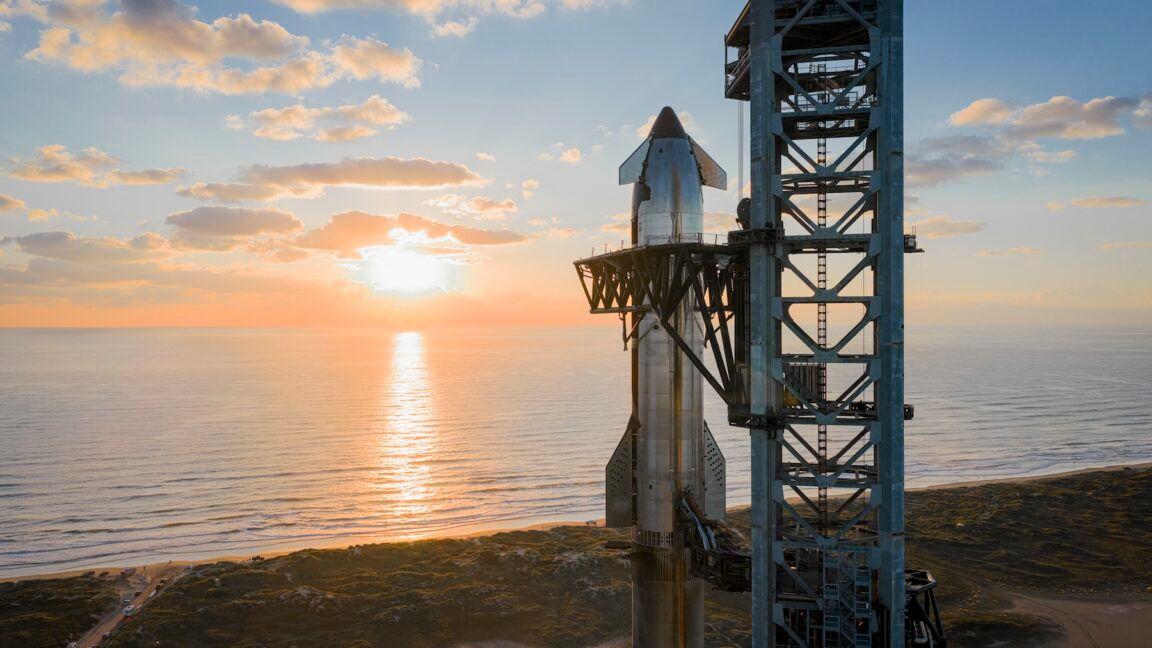
Elon Musk's space exploration company SpaceX has confidentially filed for an Initial Public Offering with the U.S. Securities and Exchange Commission, setting the stage for what could become the largest stock market listing in history
1
2
. The aerospace industry leader is targeting a SpaceX valuation of more than $2 trillion, though Musk himself appeared to push back on this figure in an April 3 post on X, saying "don't believe everything you read"1
. The confidential filing allows the company to submit documents privately to regulators before facing public scrutiny, with financials and pricing details remaining undisclosed until the SEC makes them public2
.
Source: DIGITIMES
SpaceX could raise as much as $75 billion through the IPO, which would shatter the previous record set by Saudi Aramco's $29.4 billion listing in 2019
1
2
. This represents a nearly two-thirds increase in the company's valuation in just a matter of months. The company is working with 21 different banks for the offering and has scheduled an analyst day for April 21, with a visit to xAI's "Macrohard" data center in Memphis, Tennessee, planned for April 233
. A virtual session for financial analysts is set for May 4, with a potential June listing on the horizon2
3
.Following an all-stock acquisition in February, SpaceX now owns xAI, the artificial intelligence operation whose flagship product is the Grok AI assistant
1
. The merger with xAI has fundamentally altered SpaceX's business model, intertwining space ambitions with AI development3
. However, this integration brings significant financial challenges, as xAI is burning through around $1 billion of cash per month to cover computing infrastructure costs, including training its AI models1
. Skeptics worry that Musk might deplete SpaceX, a clear leader in its industry, to fund xAI, which operates in a crowded field alongside rivals like OpenAI and Anthropic1
.
Source: Gizmodo
Investors view Starlink, SpaceX's satellite broadband network with nearly nine million subscribers, as the "recurring revenue engine" underpinning the company's enormous valuation
3
. Shay Boloor, chief market strategist at Futurum Equities, emphasized that "Starlink is the only element that makes this valuation defensible," citing its nine million subscribers, defense contracts, and independent data network3
. The satellite network has become the company's main cash flow generator, with SpaceX projected to have achieved a profit of $8 billion on $15 billion to $16 billion in revenue last year3
.Related Stories
According to an employee memo in December, IPO proceeds would fund ongoing development of the Starship rocket, AI data centers in space, and a base on the Moon
1
. In February, SpaceX filed an FCC application to launch an orbital data center constellation of up to 1 million Starlinks, far exceeding any current or proposed satellite deployments2
3
. This ambitious plan to extend computing infrastructure into orbit represents a bold convergence of space and artificial intelligence technologies. The company is reportedly shelling out more than $20 billion this year, not including the giant chip factory it's building with Tesla in Austin, Texas, to make inference chips for Tesla's cars and robots, and high-powered chips for space use2
.
Source: Bloomberg
Angelo Bochanis, a data and index associate at Renaissance Capital, noted that investors are eager for any exposure to SpaceX, though its valuation could swing dramatically based on public confidence in Musk's vision—similar to what has been seen with Tesla
3
. Space stocks responded positively to the news, with Intuitive Machines jumping 11%, while Planet Labs, AST SpaceMobile, and Rocket Lab each added 6% to 10%3
. Being a public company with the ability to tap the broader market for funds could help SpaceX's AI business raise money faster than rivals OpenAI and Anthropic before they go public themselves1
. However, investors are already visibly more wary of AI hype and large financial commitments from tech giants, with how these three IPOs are received likely to either sustain or deflate the AI trade2
. The downside for shareholders is that SpaceX will have to publicly report its financials every quarter and answer to Wall Street analysts, with plans potentially disrupted if the stock price proves volatile1
.Summarized by
Navi
22 Apr 2026•Business and Economy

21 Jan 2026•Business and Economy

08 Feb 2026•Business and Economy

1
Technology

2
Science and Research

3
Technology