SpaceX IPO raises record $75 billion as AI ambitions fuel valuation debate and market volatility


5 Sources
[1]
The Year of the Humongous IPO
This is the year of the giga-IPO. SpaceX, Elon Musk's aerospace and artificial-intelligence company, raised a record $75 billion in capital when it went public earlier this month, instantly becoming one of the 10 most valuable companies in the world. The AI giants Anthropic and OpenAI, meanwhile,
[2]
The $17 billion mistake hidden inside SpaceX's blockbuster IPO | Fortune
The absolute dollar amounts that SpaceX (SPCX) sacrificed in going public, however, are staggering and precedent-shattering. Put simply, Elon Musk's creation stands in urgent need of tens of billions to fund the giant capital expenditures required to power what it acknowledges as its principal
[3]
SpaceX valuation hinges on uncertain AI economics, says Professor Aswath Damodaran
SpaceX's massive market debut, reaching a $2 trillion valuation, is largely fuelled by AI ambitions, according to valuation expert Aswath Damodaran. While Starlink contributes significantly, he cautions that the AI business is nascent with uncertain economics and high costs. Damodaran warns against
[4]
SpaceX's next frontier: AI, growth and investor expectations - Historic IPO creates market frenzy
SpaceX's next frontier: AI, growth and investor expectations 1/10 Historic IPO creates market frenzy SpaceX made history with the largest IPO ever, raising nearly $75 billion before underwriters expanded the offering further. The stock rallied sharply after listing, briefly pushing the company's
[5]
SpaceX extends losses premarket after 16% decline wipes out bulk of IPO gains By Investing.com
Investing.com -- SpaceX closed 16.4% lower on Monday after KeyBanc adopted a more cautious stance on the stock, arguing that its valuation has become increasingly stretched following a sharp post-IPO rally. Shares closed at $154.59, just a few dollars ahead of the $150 IPO opening price on June
Share
Copy Link
SpaceX completed the largest IPO in history, raising $75 billion and briefly reaching a $2 trillion valuation. But the stock has since tumbled 16%, erasing most IPO gains as analysts question whether its AI ambitions can justify premium multiples. Valuation expert Aswath Damodaran warns the AI business remains nascent with uncertain economics, while the company burns through $1 billion monthly on AI infrastructure.
SpaceX IPO Shatters Records with $75 Billion Raise
SpaceX completed the largest IPO in history earlier this month, raising $75 billion in capital and instantly becoming one of the 10 most valuable companies in the world
1
. Elon Musk's aerospace and artificial intelligence company debuted on Nasdaq under the ticker SPCX at $150 per share, 11% higher than its IPO price of $1353
. The stock initially rallied to close at $160.75 on its first day, pushing SpaceX valuation to approximately $2 trillion and making it more valuable than Tesla, which was worth about $1.2 trillion3
. The blockbuster debut made Elon Musk the world's first trillionaire, with the Bloomberg Billionaires Index estimating his net worth at roughly $1.05 trillion . The historic listing has revived enthusiasm for mega technology offerings, particularly AI-driven IPOs, with Anthropic and OpenAI both filing to go public later this year, ensuring the three biggest IPOs in history will occur within months1
.
Source: The Atlantic
Massive First-Day Pop Leaves $16.7 Billion on the Table
Despite the celebratory atmosphere, the SpaceX IPO left an unprecedented $16.7 billion on the table when including the over-allotment or "Green Shoe" option, according to IPO expert Jay Ritter from the University of Florida
2
. This figure nearly triples the former record of $5.9 billion set by Visa in 2008 and represents almost 20% of SpaceX's $18.7 billion in revenue last year2
. The 19% first-day bump, while matching the average IPO pop over recent decades, translates to staggering absolute dollars that privileged investors who secured shares at the IPO price captured in one-day profits2
. Most of the $86 billion raised through the offering and Green Shoe is already committed, with $62.6 billion—or 71% of the total—earmarked for repaying a loan from Tesla and acquiring spectrum from EchoStar, leaving just $23 billion available for covering capital expenditures2
.SpaceX's AI Ambitions Drive Urgent Need for Capital
The company is burning through $1 billion every month on its AI business, which has become the primary justification for its sky-high valuation
1
. SpaceX operates three business segments: Connectivity (housing Starlink satellite internet service, which accounted for 61% of 2025 revenue), Space (covering launch vehicles including Falcon 9 and Starship), and artificial intelligence (which includes the Grok chatbot and xAI computing infrastructure following the February 2026 merger with Elon Musk's AI startup)5
. Last year, capital expenditures dedicated to AI infrastructure amounted to $12.7 billion, absorbing 81% of expenditures on plant and equipment, while in Q1 alone, outlays for data centers, GPUs and related technology jumped to $7.7 billion2
. The AI segment has recently attracted major long-term compute contracts including a deal with Anthropic worth roughly $1.25 billion per month and a separate agreement with Google at $920 million per month5
. KeyBanc estimates AI segment revenue will reach approximately $50.6 billion by 2027, making it the largest growth driver over the medium term5
.Valuation Expert Warns of Uncertain AI Economics
Aswath Damodaran, veteran valuation expert, cautioned that SpaceX's soaring valuation rests heavily on uncertain assumptions around artificial intelligence, even as its core businesses remain relatively niche
3
. "The trillion-dollar narrative is driven almost entirely by AI. The market is huge... that's what's driving the trillion, 2 trillion, 2.5 trillion pricing. But the business is really not a business yet," Damodaran warned3
. He highlighted fundamental concerns around AI economics, pointing to high costs and weak margins, stating "The unit economics right now are not great... it's going to stay, in my view, a low gross margin business because of the nature of the business"3
. xAI reportedly posted a net loss of $1.46 billion for the September quarter, compared with a loss of $1 billion in the previous three months, though revenue nearly doubled sequentially to $107 million3
. Damodaran also flagged a strategic contradiction, noting the tension between competing for AI market share while simultaneously renting out data center space to biggest competitors3
.
Source: ET
Related Stories
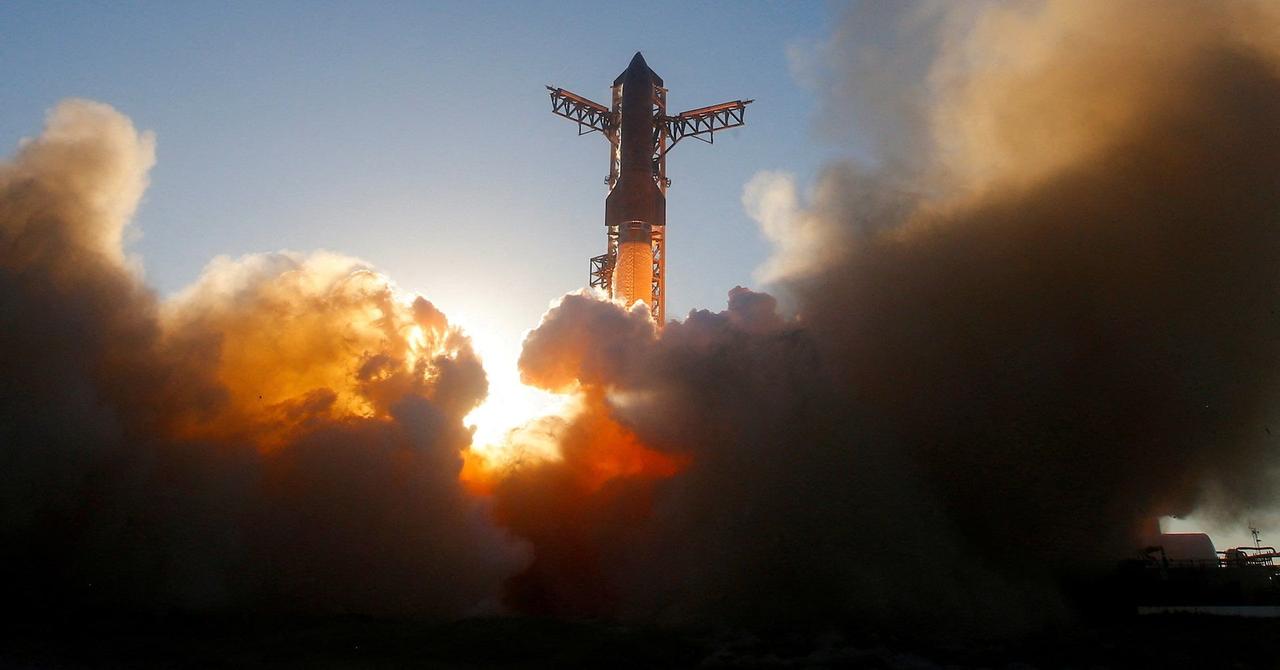
Market Volatility Erases IPO Gains as Analysts Question Premium Multiples
SpaceX shares tumbled 16.4% on Monday, closing at $154.59—just a few dollars ahead of the $150 IPO opening price and erasing $400 billion in market value
5
. The stock had reached as high as $225.64 since the company's trading debut before the sharp pullback5
. KeyBanc initiated coverage with a Sector Weight rating, arguing that the commercial space company's significant long-term growth opportunities are already reflected in its current share price5
. Shares of SPCX trade at roughly 29 times price-to-sales and 71 times EV/EBITDA on KeyBanc's 2027 estimates, a significant premium to peers across space, AI, and communications services sectors5
. The firm noted that while Starlink is the company's primary profit engine, generating roughly $11.4 billion in revenue and a 63% adjusted EBITDA margin in 2025, xAI's Grok model has yet to gain meaningful traction, holding just 3.1% U.S. business adoption versus 41% for Anthropic and 39.5% for OpenAI5
.
Source: ET
SpaceX's Next Frontier Hinges on Starship and AI Execution
Investor expectations now center on whether SpaceX can execute its ambitious AI strategy while advancing its Starship development timeline, which KeyBanc identified as the key variable for the investment case
5
. The rocket is critical to deploying next-generation Starlink V3 satellites, reducing launch costs through full reusability, and eventually enabling orbital data centers5
. Recent reports suggest SpaceX has identified a $22.7 trillion long-term AI opportunity by combining its satellite network with next-generation computing infrastructure4
. In the past five quarters, the company has spent $31 billion on capital expenditures, four times the cash collected from running its businesses, as deep operating losses in AI alongside lesser deficits on the rocket side dwarf profits from Starlink2
. The stretched valuation and market volatility underscore the risks investors face, with the company's long-term success dependent on delivering results that justify investor expectations amid what analysts call a "prove it phase" for the next 12-24 months5
.References
Summarized by

Navi
[1]
[4]
Related Stories
SpaceX files for IPO with $2 trillion valuation target, merging space exploration and AI ambitions
02 Apr 2026•Business and Economy

SpaceX files for record IPO, stakes future on $26.5 trillion AI market and orbital data centers
21 May 2026•Business and Economy
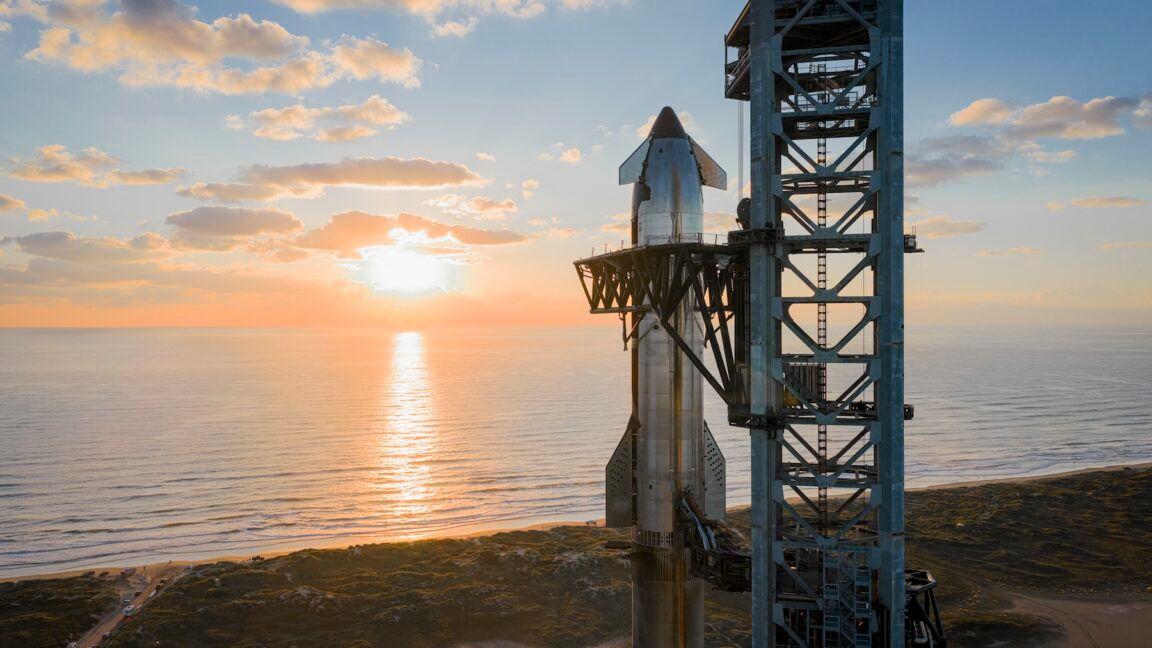
SpaceX IPO makes Musk first trillionaire as AI potential drives $1.8 trillion valuation
11 Jun 2026•Business and Economy
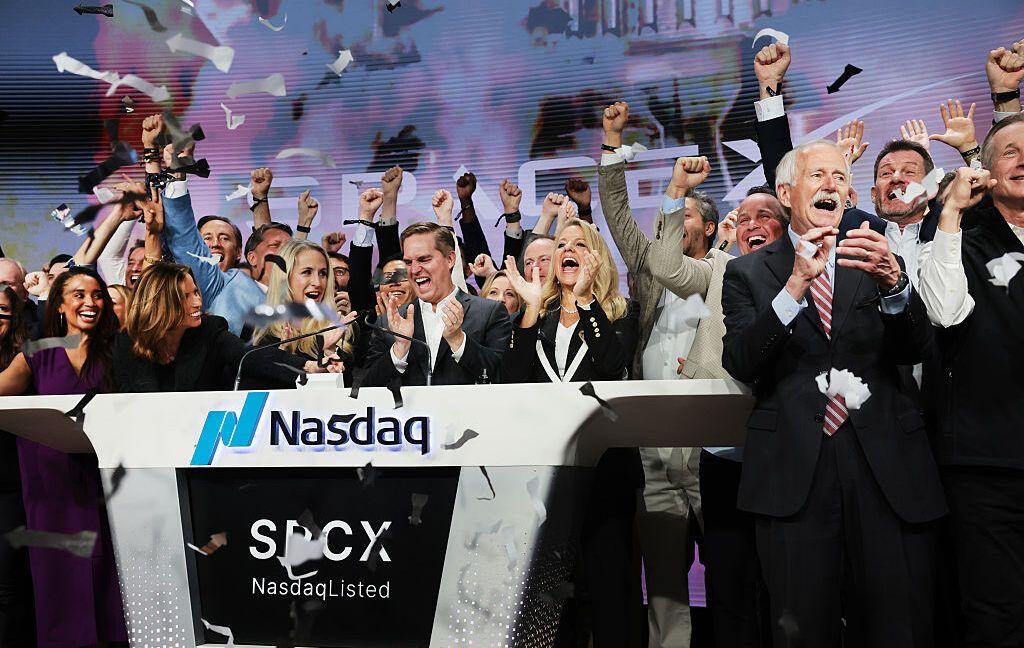
Recent Highlights



Recent Highlights
Today's Top Stories






Don’t drown in AI news. We cut through the noise - filtering, ranking and summarizing the most important AI news, breakthroughs and research daily. Follow topics that matter to you and stay ahead.


