8 Sources
[1]
SpaceX could make $500 billion in 2027, Elon Musk says
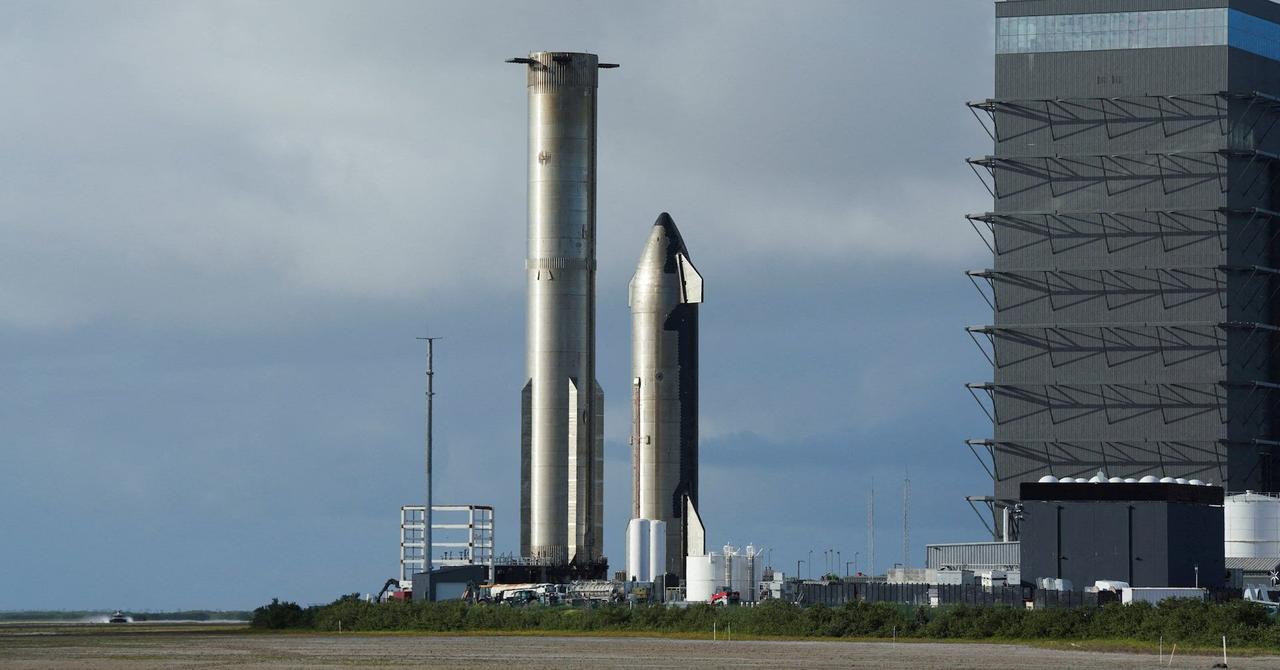
SpaceX is an AI company now, and it sees huge money in the burgeoning field. SpaceX isn't a launch company anymore. SpaceX is famous for launching, and landing, its Falcon 9 and Falcon Heavy rockets and sending astronauts to space aboard its Dragon crew capsule. Recently, however, the company has been transitioning into an artificial intelligence (AI) outfit -- and that journey is now mostly complete. "Our AI revenue will exceed all other SpaceX revenue probably in September -- like, next month -- and will significantly exceed all other SpaceX revenue in in the fourth quarter," company founder and CEO Elon Musk said during an address to employees that the company posted on X today (Aug. 11). "So, AI has become an extremely important part of SpaceX's future." Earlier this year, SpaceX bought xAI, a startup that Musk founded in 2023. xAI created the chatbot Grok and also operates a powerful supercomputer cluster in Tennessee called Colossus. But that was just the beginning. Musk laid out just how deeply SpaceX is diving into AI during his 29-minute talk, which came a week after SpaceX's first-ever quarterly earnings call as a public company. "Probably in four or five years, AI will be 99% of the value of SpaceX; I'd say five years for sure," Musk said. "And the value of SpaceX will be some astronomical number." Astronomical is right. According to Musk, the company aims to get 10 gigawatts of AI compute up and running by the end of next year. That's a big jump from its current 1.4 GW, which SpaceX sells to tech companies and AI labs. "The value per watt is probably going to be 30 to $50, which means if we bring 10 gigawatts of AI online by the end of next year, it will be 300 to $500 billion a year in revenue," he said. "Big numbers." And those numbers will get even bigger over time, if all goes according to plan. SpaceX just announced plans to build a gigantic complex in Texas called Terafab, a joint operation with Tesla that will manufacture advanced semiconductor chips for a wide range of applications. And the company aims to launch a million of its "Starmind" AI satellites to low Earth orbit in the coming years using its fully reusable Starship megarocket, which is still in development. Over the longer haul, the company plans to establish factories on the moon that will build these off-Earth data centers. The satellites will be launched into space from the lunar surface via electromagnetic mass drivers -- basically, high-powered rail guns. SpaceX envisions Starmind and its other AI efforts as returning almost unimaginable profits down the road. For example, in paperwork the company filed just before its record-breaking IPO, SpaceX identified an eventual "total addressable market" of $28.5 trillion, nearly $23 trillion of it in the AI field. For some perspective: The gross domestic product of the entire United States last year was about $30.8 trillion. "The future is fundamentally AI and robots," Musk said during his address to employees. "Assuming civilization continues to progress, I think that AI will probably -- the amount of digital intelligence will probably be more than a trillion times the amount of biological intelligence." He also said he's not just in this for the money. "It's important that we have an AI that cares about humanity, that fosters humanity and helps take us to other planets and other star systems," Musk said. "This is why I think it's essential that SpaceX succeed not just with AI hardware but also with AI software," he added. "I think an AI that is sort of SpaceX's baby will be a very good AI. I think SpaceX is a collection of some of the very best humans on Earth, both in capability and morality and goodness." He urged SpaceX employees to aid the company's AI efforts in any way that they can, stressing that success could lead to some amazing vacations. "One of the nice benefits of this also is that anyone at SpaceX who wants to go to the moon or Mars will be able to go in the future," he said. "You have my word."
[2]
'Trained on you': Musk says SpaceX AI will out-earn rockets
Musk told staff AI will out-earn rockets and satellites by September. He also told them their own work will train it. SpaceX posted a 30-minute all-hands to X on Tuesday. Elon Musk used it to make two claims, and they only make sense together. The first is a number. AI revenue will pass everything else the company sells by next month. The second is a method. SpaceX will train Grok on its own information, including the people who work there. The arithmetic is the story Look at what that first claim requires. SpaceX reported second-quarter revenue of $7.81bn, of which AI was $2.56bn, Business Insider notes. Connectivity brought in $4.29bn and space products $962m. So everything that is not AI came to $5.25bn. For AI to exceed all of that, it has to more than double while the rest stays still. Musk gave himself until September. He seemed aware of how it sounded. "Not probably, definitely," he said, correcting his own hedge mid-sentence. He added that AI would "significantly exceed" the rest in the fourth quarter. Employees as training data The second claim is where it gets uncomfortable. "We're going to be training Grok on the sum total of all SpaceX information," Musk told the meeting. Then came the line that has travelled since. "So in a way, it will be trained on you." He framed that as a safety argument rather than a data grab. Staff are "a collection of some of the very best humans on Earth", he said. A model built on them ought to inherit decent values. "You will effectively be the parents of the AI. It will inherit your thoughts and ideas and beliefs, and I think that's a good thing." Nobody has said what the data is The detail is missing entirely. SpaceX has not said which employee data it means. It has not said how it plans to collect it, or whether staff can decline. The company did not respond to a request for comment. That leaves a very large promise resting on an undefined noun. There is a recent precedent, and it did not go well. Meta began collecting employee keystrokes and mouse movements in April to train its models. It paused the programme in June. Private conversations and performance data had become visible across the whole company. Why the company needs it This is not sentiment, it is supply. AI companies have exhausted the readily available internet. What they want now is data showing how humans actually operate a computer. That is exactly what agents need. SpaceXAI launched Grok Bot the same day. They are agents with their own cloud machine, and they sign into apps to finish multi-step work. This desk covered that launch on Tuesday. Training something to work like a colleague requires recordings of colleagues working. So the two announcements are really one. The revenue target needs the agent product. The agent product needs the training data. The training data is the staff. The company this now is SpaceX absorbed xAI shortly before its June listing and renamed itself SpaceXAI. Its first results as a public company showed AI at roughly a third of revenue. The spending matches the rhetoric. It is buying Cursor for $60bn, committing to Nvidia hardware, and planning data centres in orbit. Musk closed on the reward rather than the risk. Anyone at SpaceX who wants to go to the moon or Mars will be able to, he said. He gave his word on it. The reasons to wait and see Grok is not winning. It trails OpenAI and Anthropic on several major benchmarks. That is awkward for a company betting its revenue mix on it. Musk's AI products also have a habit of stalling. Grokipedia was going to beat Wikipedia and then simply stopped updating. Big promises are the house style here. This is the same company that floated factories on the Moon. Musk introduced that one by saying he knew it sounded nuts. The September claim is different, because it is checkable. In roughly six weeks SpaceX will either report AI revenue above $5.25bn or it will not. Unlike a lunar factory, there is a date attached. The employee data question has no such deadline, and that is the one staff should be asking about now.
[3]
Morgan Stanley Warns Investors Underestimating SpaceX's AI Unit
They said SpaceX's acquisition of Cursor could drive significant revenue growth, with Cursor's annual revenue run rate seen reaching $33 billion by 2030. Wall Street's expectations for SpaceX's AI unit are so low, it may not need a pogo stick -- let alone a rocket -- to clear the bar, Morgan Stanley analysts argued in a recent note. "The implied valuation for SpaceX's AI business at the current price is, in our opinion, extremely conservative," analysts led by Adam Jones wrote in a note late Monday arguing investors are failing to appreciate the AI potential that underpins their $300 price target. "From our conversations, very few investors are bullish SpaceX's AI business beyond neocloud," they wrote, referring to the lucrative data center leasing deals SpaceX has struck with Anthropic and Alphabet. Though, by Morgan Stanley's estimates, investors aren't ultra-bullish on that business, either. They calculate investors are currently valuing SpaceX's entire AI business at $12 a share, "well below even neocloud peers." Morgan Stanley says investors are also underestimating upside from SpaceX's impending acquisition of Cursor, the AI coding agent platform it agreed to buy in June for $60 billion. Once the acquisition closes later this quarter, Morgan Stanley believes the rollout of new Grok models incorporating Cursor data and updates on Cursor's revenue growth could be catalysts that brighten the outlook for SpaceX AI. Enterprise AI adoption is growing fast, with the median monthly AI spend per employee growing 167% year-over-year to $11 in June, according to the Ramp AI Index. The top 1% of companies in terms of AI spending are shelling out nearly $5,000 per employee for AI services every month. And there's still room for growth. By Ramp's measure, nearly half of U.S. companies spend no money at all on AI products or services, and the Census Bureau puts that figure at 80%. Morgan Stanley expects Cursor's annual revenue run rate to skyrocket from $4 billion in June to $8 billion by year-end, $17 billion next year, and $33 billion by 2030. "As investors see more breadcrumbs on the Cursor/Grok story, we see potential for the implied valuation discount on SpaceX's AI business to lift, driving potentially substantial appreciation of the stock," the analysts wrote. SpaceX (SPCX) stock tumbled nearly 5% yesterday after closing on Monday above its $135 IPO price for the first time since mid-July. Shares pointed 1% higher in premarket trading Wednesday.
[4]
Elon Musk Says AI Will Be SpaceX's Biggest Business by September: Does the Math Check Out? Elon Musk: Spa
SpaceX (NASDAQ:SPCX) CEO Elon Musk says artificial intelligence will overtake everything else the company sells as soon as next month. In an all-hands meeting, Musk said AI revenue "will exceed all other SpaceX revenue probably in September, like next month," and will "significantly exceed" the rest of the business in the fourth quarter. The forecast implies a rapid shift. AI generated $2.56 billion of the $7.81 billion SpaceX reported for the second quarter, behind the $4.29 billion from its Starlink-led connectivity unit. The company is targeting a roughly $100 billion annualized revenue run rate by year-end, more than triple the roughly $31 billion pace implied by the second quarter. The Math Behind the $100 Billion Path Inference is the computing used each time a trained AI model responds to a user. Because those economics are so lucrative, the firm argues scarce, immediately available compute could rent for around $30 million to $50 million per megawatt each year. SpaceX expects to have more than two gigawatts of compute capacity online by year-end. At SemiAnalysis's $40 million-per-megawatt assumption, two gigawatts of fully rented capacity would imply $80 billion in annualized revenue. That is illustrative math based on SemiAnalysis's assumptions rather than a SpaceX forecast, and the company may keep some capacity in-house to train Grok rather than rent it out. SpaceX has separately said its compute investments are paying back quickly. CFO Bret Johnsen said new AI investments have payback periods of less than a year. Why SpaceX Could Build Faster Than Rivals Musk has argued that building data centers is relatively simple compared with SpaceX's day job, saying the work "ain't rocket science" and joking that rockets "desperately want to blow themselves into tiny pieces." The record offers some support. Musk's xAI built Colossus, a 100,000-GPU supercomputer, in 122 days, then doubled it to 200,000 GPUs in another 92 days. Nvidia said training began just 19 days after the first rack arrived. SemiAnalysis says Colossus 2 is repeating that playbook at far larger scale, and estimates peak construction labor per gigawatt at roughly one-third the level of even the fastest conventional developers. SpaceX Is Selling Speed A recent deal with Alphabet Inc. (NASDAQ:GOOGL) shows what that speed is worth. SemiAnalysis estimates SpaceX is effectively charging Google about $14 per hour for GB300 capacity, versus roughly $3 per hour for comparable conventional compute. The premium reflects timing. Conventional data centers can take 12 to 18 months to come online, while SpaceX can deliver large blocks of capacity within months. Prediction-market traders are leaning bullish in the near term, with Polymarket pricing roughly a 73% chance SpaceX shares reclaim $140 by the end of August. The next earnings report should show whether Musk's prediction is translating into the kind of AI revenue growth needed to support the $100 billion target. Image: Shutterstock Market News and Data brought to you by Benzinga APIs To add Benzinga News as your preferred source on Google, click here.
[5]
Elon Musk Says AI Will Become SpaceX's Biggest Business
SpaceX (SPCX) stock investors spent the lion's share of the post-IPO period questioning if its expensive AI push deserves any value. Subsequently, the stock's steep slide sharpened that skepticism. Nevertheless, analysts felt SpaceX was being valued purely on a single revenue engine, while AI was being treated more as a liability given its heavy capex burden. CEO Elon Musk, though, just complicated that view. Instead of backing away from a business investors were overlooking, Musk flipped the script, framing it as part of the answer to SpaceX's valuation conundrum. That begs the question: Has Wall Street been valuing the company around the wrong business? Is SpaceX becoming an AI company? Elon Musk believes SpaceX's AI endeavors will overtake the businesses that have typically defined the company. In a 30-minute all-hands meeting with employees, as reported by Business Insider and posted on X (the former Twitter) on Aug. 11, Musk said: "Probably our AI revenue - not probably, definitely - our AI revenue will exceed all other SpaceX revenue probably in September, like next month." That claim is particularly striking when pitted against SpaceX's Q2 numbers. AI generated $2.56 billion of the company's $7.81 billion in quarterly sales, while connectivity products raked in an impressive $4.29 billion, and space products another $962 million. AI was already a booming business, but it is clearly still a tall order for it to go past the company's established operations. Musk is suggesting that the gap be closed out almost immediately. He makes the case that AI "will significantly exceed all other SpaceX revenue in the fourth quarter." On top of that, the serial entrepreneur talked about how deeply he wants Grok embedded inside SpaceX. He said he wants to train the model on the "sum total" of SpaceX information. Musk told employees that, in a sense, Grok would be "trained on you," explaining that company workers are the "parents of the AI" whose ideas, beliefs, and institutional knowledge could potentially shape the system. That thought, in many ways, reignites the idea that Microsoft (MSFT) CEO Satya Nadella raised a few weeks ago about companies paying for intelligence twice, a point later echoed by Palantir (PLTR) CEO Alex Karp. Palantir Chief Revenue Officer Ryan Taylor took that criticism up a few notches at the company earnings call, arguing that businesses are "paying to give away their most important secrets." So far Musk hasn't revealed exactly what the employee data would be used for and how it would be collected. Also, according to Mashable reporting, Meta Platforms (META) faced backlash earlier this year for its AI model training program that used employees' keystrokes, which it later paused. Has SpaceX stock finally recovered from its IPO slump? SpaceX shares staged a tremendous comeback after the post-IPO slide. Through Aug. 11, the stock closed at $133.29, up nearly 23% from its $108.27 close on Aug. 5, when AI spending concerns in its earnings report sent its stock tanking 13.6%. The reversal was nothing short of dramatic. SpaceX hit an intraday low of $104.83 on Aug. 3 after surging to $225.64 shortly after its June debut. Its stock then jumped 6.1% on Aug. 6, surged 15.8% on Aug. 7, added 4.2% on Aug. 10, and then dropped 3.9% on Tuesday, Aug. 11. Interestingly, the Aug. 6 lockup expiration made nearly 911.5 million insider shares eligible for sale, more than doubling its float, yet SpaceX stock rallied instead. At $133.29, shares are just around 1.3% behind the $135 IPO price, though still about 17% below their $160.95 first-day close and about 41% below the post-IPO peak. What does Musk's AI call mean for SpaceX investors? For SpaceX investors, Musk's latest comments actually strengthen the case Morgan Stanley analyst Adam Jonas was making before earnings. He had argued in his note that when SpaceX traded near $100, investors were valuing its business purely on its launch and connectivity businesses, while attaching little to no value to AI. Jonas went on to say that "many ascribe zero or even negative value for AI," due to its tremendous capex requirements and uncertain economics. Consequently, Morgan Stanley's $300 price target assigned more than 50% of SpaceX's $300 target to AI, implying over $150 per share of value from that business alone. Musk's new sales prediction adds more fuel to that debate. Nevertheless, AI could become SpaceX's biggest business while still consuming a ton of capital through Nvidia systems, model training, and data-center infrastructure. What matters most is whether SpaceX can turn that AI growth into bottom-line strength and stronger cash flow, not just whether AI becomes bigger than Starlink or launches. And if AI is progressing toward the forefront of SpaceX's revenue mix, investors might soon have actual operating results to test that thesis. Naturally, that makes AI the biggest swing factor for investors in assigning a higher multiple to SpaceX stock. For perspective, according to Seeking Alpha data, SpaceX stock is trading at an eye-popping 355 times non-GAAP forward earnings. The Arena Media Brands, LLC THESTREET is a registered trademark of TheStreet, Inc. This story was originally published August 12, 2026 at 6:47 PM.
[6]
SpaceX shares soar 11% as Wall Street bets on Musk's 'real-world' AI ambitions By Investing.com
Investing.com -- SpaceX shares surged 11% following a major Wall Street endorsement of its artificial-intelligence capabilities and renewed investor enthusiasm over its expanding suite of enterprise software products. The rally was sparked by a research note from Morgan Stanley arguing that public markets are severely underestimating SpaceX's AI enterprise platform, alongside comments from Chief Executive Elon Musk teasing the launch of the company's flagship model, Grok 4.7. The market response highlights a shift in how institutional investors evaluate SpaceX, viewing it less as a pure-play aerospace and satellite hardware provider and increasingly as a vertically integrated tech giant combining proprietary data, global network infrastructure, and frontier AI models. Wall Street Re-Evaluates SpaceXAI In a note to clients, Morgan Stanley equity analyst Adam Jonas argued that recent product rollouts from the company's AI division, SpaceXAI, demonstrate a broader software engine that the market has yet to properly price in. Crucial to that thesis is the beta launch of Grok Bot -- an always-on virtual assistant capable of executing complex workflows inside cloud environments. Currently available to SuperGrok Heavy, Cursor Ultra, and Cursor Teams Premium subscribers on desktop and iOS, the tool coordinates multi-agent systems to handle complex tasks automatically. "Grok Bot is less a standalone product than early evidence of a broader AI platform combining unique real-time data with vertically integrated compute, connectivity, and intelligence, none of which the market is meaningfully valuing today," Mr. Jonas wrote. While critics have drawn comparisons between Grok Bot and competing agentic tools from standalone AI laboratories, Morgan Stanley stressed that SpaceX possesses two structural advantages that insulate it from commoditization: The note followed a Morgan Stanley primer on SpaceX's acquisition of code-editing platform Cursor. The firm estimates Cursor will reach $8 billion in annual run-rate (ARR) by the end of the year and scale to $33 billion by 2030, leveraging an enterprise foot in the door that already includes 50,000 businesses and roughly two-thirds of the Fortune 500. Valuation Disconnect According to Morgan Stanley's sum-of-the-parts analysis, investors are currently pricing SpaceXAI at valuations below those of standalone "neocloud" peers. Stripping out SpaceX's core launch and Starlink connectivity businesses -- valued by the bank at $127 per share, or 52 times estimated 2028 Ebitda -- leaves a residual valuation of just $12 per share for its Consumer and Enterprise AI units. That equates to roughly 1 times estimated 2028 enterprise value-to-sales. Mr. Jonas framed an upcoming lock-up expiration as an attractive buying window rather than a risk factor, calling it "a rare entry point into a generational compounder that converts energy into swarming." Musk Points to 'Real-World' Engineering Edge Adding fuel to the market momentum, Mr. Musk took to social media to outline the roadmap for Grok 4.7, set for release later this month. He emphasized that SpaceX's physical hardware operations and proprietary technical datasets give its models a distinct edge over rivals. "Grok 4.7 will exceed all current models," Mr. Musk wrote on X. "That said, Anthropic is a great company and will probably release improved models soon. However, the SpaceX training corpus is so awesome & unique that I would be shocked if any model is better at real-world engineering than 4.7." The comments align with SpaceX's rapid release schedule. The company rolled out Grok 4.6, a 1.5-trillion parameter model designed for enhanced coding, terminal management, and enterprise workflows. Priced at $2 per million input tokens, Grok 4.6 scored a 61 ELO on the Artificial Analysis Intelligence Index, positioning it alongside top-tier frontier models. With the Cursor acquisition expected to close within weeks, market attention now turns to SpaceX's near-term product cadence, which includes the wider release of Grok 4.7 later this month and the planned launch of Grok 5 before the end of the year.
[7]
Morgan Stanley reiterates SpaceX stock rating on AI platform potential By Investing.com
Investing.com - Morgan Stanley reiterated an Overweight rating and $300 price target on SpaceX (NASDAQ:SPCX). The firm values SpaceX's Space and Connectivity businesses at $127 per share, or 52 times 2028 estimated EBITDA. That leaves $12 per share attributed to Consumer and Enterprise AI, representing roughly 1 times 2028 enterprise value to sales. The stock currently trades at $142.52 with a market capitalization of $1.88 trillion. InvestingPro analysis indicates the stock is overvalued at current levels, and an InvestingPro Tip notes the company is "Trading at a high EBITDA valuation multiple." For deeper insights, investors can access a comprehensive Pro Research Report on SPCX, one of 1,400+ available reports. Morgan Stanley expects several AI model releases in coming months. Grok 4.6 is expected this week, Grok 4.7 later this month, and Grok 5 before year end. Progress on Cursor is expected to be shared after the acquisition closes within weeks. The firm describes Grok Bot as early evidence of an AI platform combining real-time data with compute, connectivity, and intelligence. Morgan Stanley states the market is not meaningfully valuing these capabilities today. Morgan Stanley maintains a bull case price target of $600 for the stock. In other recent news, SpaceX reported impressive financial results, with first-quarter revenues reaching $7.8 billion, marking a 92% increase. The company has projected a year-end 2026 revenue run rate nearing $100 billion, surpassing previous expectations set by analysts at Argus. Following these strong results, Argus upgraded SpaceX's stock rating to Buy from Hold and set a price target of $160. Additionally, Bernstein SocGen Group raised its price target for SpaceX to $248, maintaining an Outperform rating, citing improved revenue assumptions and favorable compute pricing outlooks. SpaceX also announced the launch of Grok Bot, an artificial intelligence tool designed to independently complete work tasks across various applications. In a significant corporate move, SpaceX plans to acquire the AI coding platform Cursor for $60 billion in Class A common stock, with the transaction expected to close in the third quarter of 2026. Morgan Stanley maintained its price target for SpaceX shares at $300, with a bull case scenario of $600, reflecting the potential value of the Cursor acquisition. Meanwhile, options trading activity for SpaceX reached record levels, with call volume hitting 1.3 million contracts, highlighting increased investor interest. This article was generated with the support of AI and reviewed by an editor. For more information see our T&C.
[8]
Why is Space Exploration Technologies stock surging today? By Investing.com
Investing.com -- Space Exploration Technologies Corp stock surged 7.0% in mid-day trading after Morgan Stanley analyst Adam Jonas published a note reaffirming an Overweight rating and $300 price target while simultaneously outlining a $600 bull-case valuation -- a scenario that would place the company among the most valuable in the world. Jonas argued that the market is significantly underpricing SpaceX's AI business, and that as investors receive more evidence of the Cursor and Grok platform strategy coming together, the implied valuation discount on the AI segment could close, driving meaningful stock appreciation. Analyst activity provided a second tailwind, with Argus Research independently upgrading SPCX to Buy with a $160 price target today, citing management's assertion that AI compute investments carry a payback period of under one year. Adding to the positive tone, Norway's $2.3 trillion sovereign wealth fund disclosed a $1.22 billion stake in SpaceX as of June 30, signaling institutional conviction in the name. The prior day's launch of Grok Bot -- SpaceXAI's autonomous enterprise AI agent priced at $120 per seat per month for teams -- also kept fresh product momentum in focus heading into today's session. The broader market offered a supportive but secondary backdrop, with the NASDAQ gaining +0.4% and the S&P 500 adding +0.2% during today's session. SPCX's move also builds on the company's strong Q2 2026 results reported earlier this week, which showed revenue of $7.81 billion -- up roughly 92% year-over-year and well ahead of Wall Street's estimate -- alongside an earnings-per-share loss that came in far better than analysts had expected. Taken together, a confluence of fresh bullish analyst catalysts, institutional ownership disclosures, and continued positive sentiment from the Q2 earnings beat pushed SPCX sharply higher today, with the stock trading as high as $143.25 intraday -- still well below its 52-week peak of $225.64 but recovering meaningfully from its 52-week low of $104.83 set earlier this month. This article was generated with the support of AI and reviewed by an editor. For more information see our T&C.
Share
Copy Link
Elon Musk announced that SpaceX AI revenue will overtake all other business segments by September 2025, marking a dramatic shift from launch services to artificial intelligence. The company generated $2.56 billion from AI in Q2 2025 and aims for $500 billion annually by 2027 through massive compute capacity expansion.
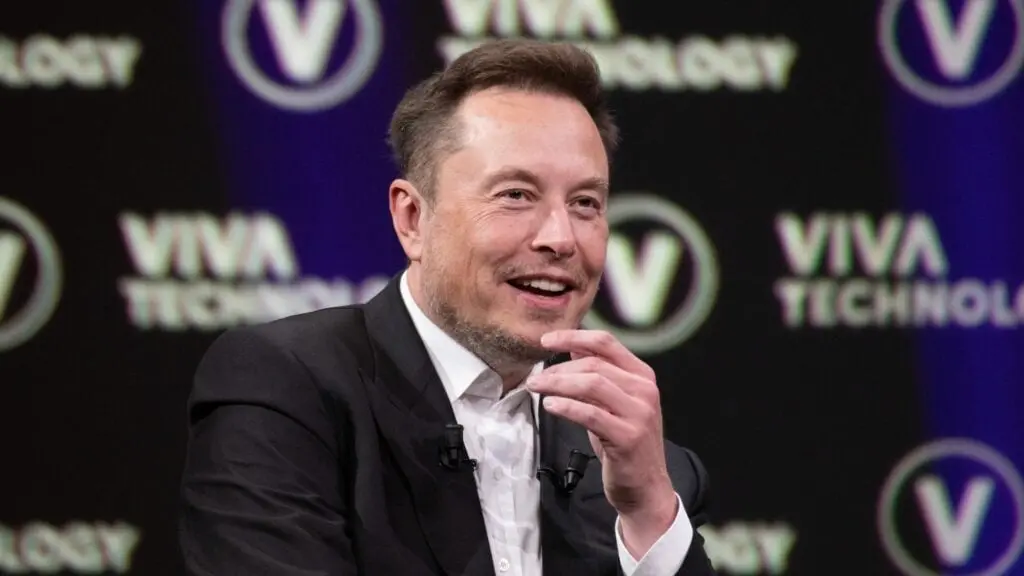
Elon Musk declared during an all-hands meeting on August 11 that SpaceX AI revenue will exceed all other SpaceX revenue streams by September 2025, fundamentally redefining what was once primarily a launch company
1
2
. The bold prediction comes just weeks after the company's first quarterly earnings as a public entity showed AI generating $2.56 billion of its $7.81 billion in second-quarter revenue, while connectivity products brought in $4.29 billion and space products added $962 million3
4
. For AI to surpass everything else, it must more than double while other segments remain flat. Musk corrected himself mid-sentence during the meeting, changing "probably" to "definitely" when discussing the September timeline, and added that AI would "significantly exceed" all other revenue in the fourth quarter2
.
Source: Benzinga
The company's strategic shift toward AI comes with astronomical financial projections. SpaceX aims to deploy 10 gigawatts of AI compute capacity by the end of 2026, a massive jump from its current 1.4 gigawatts
1
. Musk explained that at a value of $30 to $50 per watt, this expansion could generate $300 to $500 billion annually by 20271
. The company is targeting a roughly $100 billion annualized revenue run rate by year-end, more than triple the approximately $31 billion pace implied by second-quarter results4
. Industry analysis from SemiAnalysis suggests that at $40 million per megawatt, two gigawatts of fully rented capacity would imply $80 billion in annualized revenue4
. SpaceX CFO Bret Johnsen disclosed that new AI investments have payback periods of less than a year, indicating strong unit economics4
.Musk revealed plans to train the Grok AI model on "the sum total of all SpaceX information," including employee data, telling staff that "in a way, it will be trained on you"
2
5
. He framed employees as "the parents of the AI" whose ideas, beliefs, and institutional knowledge would shape the system, arguing this would create an AI that "cares about humanity"1
5
. However, SpaceX has not disclosed which employee data will be collected, how it will be gathered, or whether staff can opt out2
. The announcement echoes a recent precedent at Meta Platforms, which paused its employee keystroke and mouse movement collection program in June after private conversations and performance data became visible across the company2
. AI companies increasingly seek operational data showing how humans use computers, which is essential for training AI coding agents and enterprise AI systems2
.Related Stories
Morgan Stanley analysts warned that investors are significantly underestimating SpaceX's AI unit, calculating that the market currently values the entire AI business at just $12 per share, "well below even neocloud peers"
3
. The firm's $300 price target assigns more than 50% of value to AI, implying over $150 per share from that business alone5
. Morgan Stanley expects the $60 billion Cursor acquisition, an AI coding agent platform set to close this quarter, to be a major catalyst3
. Analysts project Cursor's annual revenue run rate will skyrocket from $4 billion in June to $8 billion by year-end, $17 billion in 2026, and $33 billion by 20303
. Enterprise AI adoption is accelerating rapidly, with median monthly AI spend per employee growing 167% year-over-year to $11 in June, while top spenders allocate nearly $5,000 per employee monthly3
.SpaceX demonstrates execution speed that rivals struggle to match. The company's xAI built Colossus, a 100,000-GPU supercomputer, in just 122 days, then doubled it to 200,000 GPUs in another 92 days, with training beginning just 19 days after the first rack arrived
4
. Musk argued that building data centers is relatively simple compared with rocket engineering, joking that rockets "desperately want to blow themselves into tiny pieces"4
. SemiAnalysis estimates Colossus 2 construction uses roughly one-third the peak labor per gigawatt compared to even the fastest conventional developers4
. This speed commands premium pricing, with SpaceX reportedly charging Alphabet approximately $14 per hour for GB300 capacity versus roughly $3 per hour for comparable conventional compute, reflecting the value of delivering large capacity blocks within months rather than the 12 to 18 months conventional data centers require4
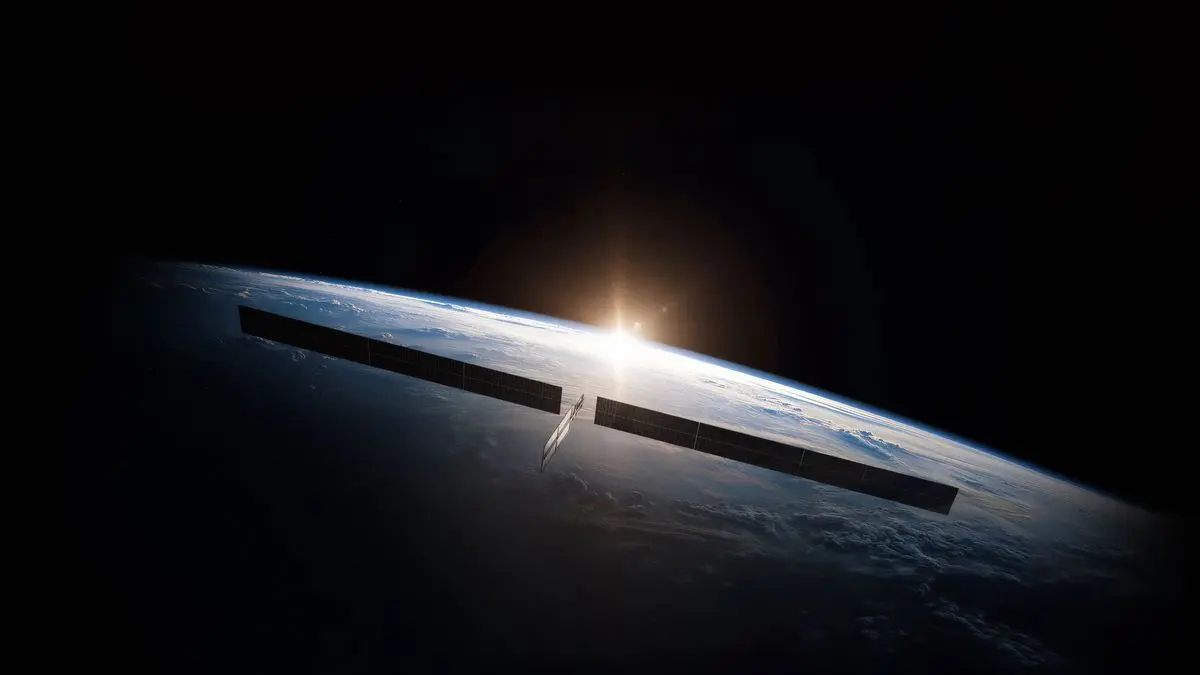
. SpaceX also announced plans for Terafab, a joint operation with Tesla in Texas to manufacture advanced semiconductor chips, and aims to launch a million "Starmind" AI satellites to low Earth orbit using its Starship megarocket, with eventual plans for lunar factories and orbital data centers1
.
Source: Space
Summarized by
Navi
[2]
[3]
[4]
[5]
03 Aug 2026•Business and Economy

07 Jul 2026•Business and Economy

22 Apr 2026•Business and Economy

1
Technology

2
Science and Research

3
Technology