SpaceX AI Infrastructure Plans Drive Major Analyst Upgrades With 70-82% Upside Potential


2 Sources
[1]
SpaceX's AI infrastructure plans are not yet fully priced in, analysts say
Space Exploration Technologies is likely to rally as its artificial intelligence infrastructure plans take shape, according to a pair of analysts. Bernstein, which has an outperforming rating on the aerospace stock, raised its price target to $268 from $248. The new target is about 82% above
[2]
Bernstein raises SpaceX stock price target on AI expansion plans By Investing.com
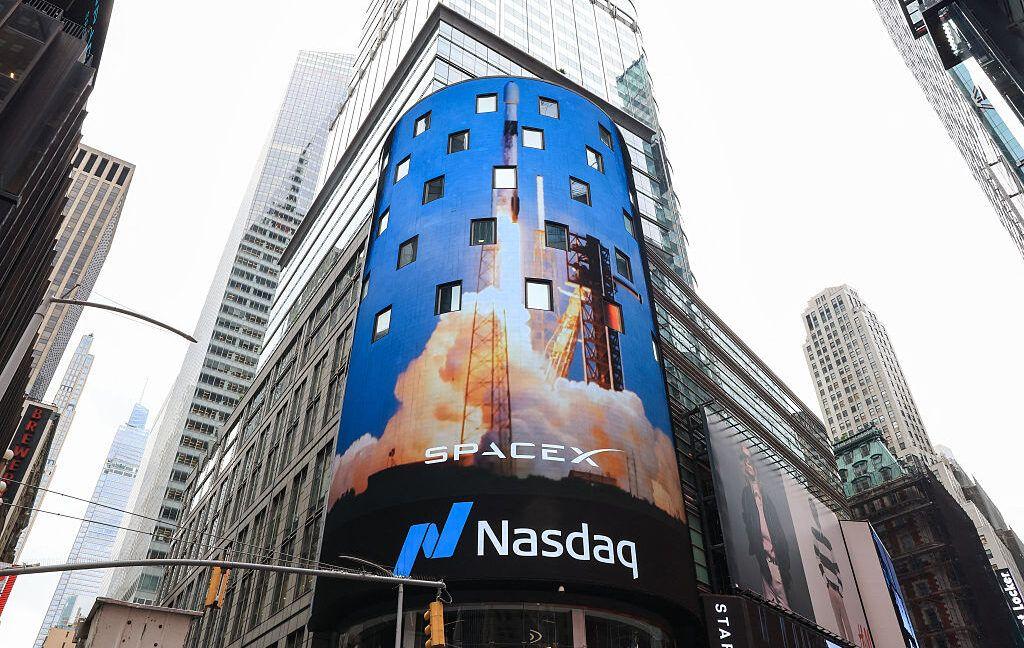
Investing.com - Bernstein SocGen Group raised its price target on SpaceX (NASDAQ:SPCX) to $268 from $248 while maintaining an Outperform rating on the stock. The company currently trades at $147.49 with a market capitalization of $2 trillion. The firm increased its outlook primarily based on the
Share
Copy Link
Bernstein and Deutsche Bank raised SpaceX stock price targets to $268 and $250 respectively, citing the company's ambitious AI infrastructure plans. Analysts believe SpaceX's terrestrial AI build-outs and planned orbital data centers could drive significant upside, with the aerospace giant targeting 10-20 gigawatts of compute capacity by 2027-2028.
SpaceX Gains Momentum on AI Infrastructure Strategy
SpaceX received significant analyst upgrades as investment firms recognize the aerospace company's expanding role in AI infrastructure. Bernstein raised its SpaceX stock price target to $268 from $248 while maintaining an Outperform rating, representing approximately 82% upside from Friday's close at $147.49
2
. Deutsche Bank similarly increased its target to $250 from $230, implying nearly 70% potential gains1
. Both firms cite the company's terrestrial AI build-outs and compute capacity expansion as primary drivers behind their bullish outlook.Terrestrial AI Build-Outs Reshape Revenue Projections
Bernstein analyst Douglas Harned emphasized that SpaceX's AI expansion plans represent a material addition to the company's overall revenue trajectory. The firm now projects SpaceX revenues between $500 billion to $1 trillion exiting 2027, with Bernstein's own estimate reaching $424 billion for full year 2028—a significant increase from prior forecasts
2
. This compares to $32 billion in revenue over the last twelve months, with analysts forecasting 166% revenue growth in fiscal 20262
. Bernstein now assumes a total of 13 gigawatts of terrestrial compute capacity by end of 2027, representing 5 gigawatts above its prior estimate, with projections extending to 20 gigawatts by 20282
.Compute Capacity Advantages Drive Competitive Edge
SpaceX aims to bring roughly 10 gigawatts of incremental computing capacity online by the end of next year, according to Deutsche Bank's Edison Yu
1
. The company's compute could be priced at roughly $35 billion per gigawatt versus the industry standard of $50 billion per gigawatt, providing SpaceX a substantial cost advantage over peers1
. Bernstein raised its pricing assumptions based on SpaceX achieving prices above the $30-50 per watt level of recent deals, with estimated capital expenditures of $35 billion per gigawatt2
. Yu noted that SpaceX's ability to leverage this compute advantage into better inference and intelligence capabilities remains underappreciated by the market1
.Related Stories
Orbital Data Centers Present Long-Term Valuation Catalyst
While terrestrial AI build-outs drive near-term revenue contributors, Bernstein believes SpaceX's multi-trillion dollar valuation ultimately rests on the success of orbital data centers
1
. SpaceX plans first orbital data center launches in late 2027, with operations beginning mid-20282
. The company's Enterprise & Government Connectivity subsegment appears to be outperforming expectations, adding another dimension to its AI infrastructure strategy2
.Strong Financial Performance Supports Expansion Plans
SpaceX reported impressive third-quarter results that significantly exceeded expectations, achieving a 161% year-over-year increase in revenue to $14.6 billion and a remarkable 306% rise in adjusted EBITDA to $8.8 billion
2
. The company's management issued optimistic revenue guidance for the first quarter of 2027, estimating between $33 billion and $37 billion, well above consensus estimates2
. With a current market capitalization of $2 trillion, SpaceX trades with substantial room for growth according to analyst upgrades2
. Of the 43 analysts covering SpaceX, 33 have a buy or strong buy rating on the stock, reflecting widespread confidence in the company's AI infrastructure plans and overall growth trajectory1
.References
Summarized by

Navi
Related Stories
SpaceX Stock Climbs as Wall Street Bets Big on Grok and Cursor AI Ambitions
26 Aug 2026•Business and Economy
SpaceX AI Revenue Could Eclipse Rockets by September, Reach $500 Billion by 2027, Elon Musk Claims
12 Aug 2026•Business and Economy

SpaceX Stock Rallies as AI Compute Leasing Emerges as Dominant Revenue Driver Worth $54 Billion
29 Sept 2026•Business and Economy
Recent Highlights



Recent Highlights
Today's Top Stories


Don’t drown in AI news. We cut through the noise - filtering, ranking and summarizing the most important AI news, breakthroughs and research daily. Follow topics that matter to you and stay ahead.


