Square Enix Plans AI-Driven QA Revolution Sparks Industry Debate Over Human vs. Automated Testing


8 Sources
[1]
Larian publishing director balks at Square Enix's push to replace QA workers with AI: 'The idea that QA people can be replaced at a large scale is stupid ... They are a massively advantageous vibe check'
Quality assurance -- the sacred task of making sure games break as infrequently as possible -- is a non-negotiable part of development, especially when you're talking about big triple-A RPGs. It's something the folks at Square Enix and Larian know a thing or two about; but while the higher-ups at
[2]
After chasing NFTs and the metaverse, Square Enix wants generative AI to do 70% of its QA by 2027
Square Enix wants 70% of its QA work to be handled by generative AI by the end of 2027, in partnership with the University of Tokyo's Matsuo-Iwasawa Laboratory. Announced in a progress report for last year's Mid-Term Business Plan, the company notes its reason for doing so, the hope that: "through
[3]
Final Fantasy Maker Wants Generative AI To Fix 70% Of Game Bugs
Square Enix is currently in the middle of a reboot. Following a bunch of flops (remember Foamstars?) and some great games held back by timed exclusivity (Final Fantasy XVI, Final Fantasy VII Rebirth), the RPG publisher has been pivoting to a multiplatform approach and retooling its slate of
[4]
Baldur's Gate 3 publishing lead slams Square Enix's push to automate 70% of debugging with AI: "The idea that QA people can be replaced at a large scale is stupid"
Larian's Michael Douse says QA workers "know what is good and what is bad before the audience does." Square Enix recently doubled down on its commitment to AI and shared that it's planning to "automate 70% of QA" in the next few years. But it's an initiative that Baldur's Gate 3 publishing
[5]

Square Enix: "70% of QA and debugging tasks" for games should be done by AI
For over ten years, there has been an epidemic of AAA games being released in an unfinished state, with us gamers expected to pay full price and then act as unpaid beta testers. It's a nasty scheme, but it seems to be working, as we see no desire to change the concept. However, Square Enix has its
[6]

Square Enix Is Pushing Hard for AI in Game Development, Planning to Let It Handle 70% Of QA By 2027
Square Enix is the latest video game publisher to push for AI usage in video game development, aiming to let it handle a critical part of development almost completely by 2027. As part of the company's latest earnings report, the Japanese publisher shared a Progress Report on its Medium-Term
[7]
Mass layoffs hit Square Enix hours after it shares plans to have AI handle "70%" of its quality assurance and debugging soon
Square Enix also revealed plans to shift development to Japan Layoffs have hit Square Enix in the US and UK, with upwards of 100 employees reportedly impacted. Several laid-off employees confirmed the news on social media. I reached out to Square Enix for comment and clarification, and received
[8]
Square Enix's multiplatform plan is already working, but it still wants to follow up a Dragon Quest roguelike and Dissidia Final Fantasy with more mobile games based on "major IPs" and "automate 70% of QA" with AI
The house of Final Fantasy wants to "establish a competitive advantage in game development" with AI tech Square Enix's latest update on its three-year business "reboot" has shed light on the company's future plans, so expect more multiplatform releases and mobile games based on the publisher's
Share
Copy Link
Square Enix aims to automate 70% of quality assurance tasks with AI by 2027, drawing sharp criticism from Larian's publishing director who argues QA workers provide irreplaceable human insight and serve as crucial entry points into the gaming industry.
Square Enix's Ambitious AI Integration Plan
Square Enix has unveiled an ambitious strategy to revolutionize its quality assurance processes through artificial intelligence, aiming to automate 70% of QA and debugging tasks in game development by the end of 2027
2
. This initiative, detailed in the company's Mid-Term Business Plan progress report, represents a significant shift toward AI-driven game development processes3
.
Source: Wccftech
The project emerged from an AI-themed "idea contest" within the company and will be executed through a joint research initiative with the Matsuo-Iwasawa Laboratory at the University of Tokyo
2
. The research team comprises more than ten members, including both university researchers and Square Enix engineers, working together to develop automation technology that the company believes will "improve the efficiency of QA operations and establish a competitive advantage in game development"5
.Industry Pushback and Professional Concerns
The announcement has sparked significant controversy within the gaming industry, with prominent figures expressing strong opposition to the plan. Michael Douse, publishing director at Larian Studios and key figure behind Baldur's Gate 3's success, has been particularly vocal in his criticism
1
.
Source: GamesRadar
Douse acknowledged that "AI and automation is clearly integral to QA for any large scale game" but argued that "the idea that QA people can be replaced at a large scale is stupid because it supposes that the conversations with them can be replaced and they can't"
4
. He emphasized that QA workers serve as a "massively advantageous vibe check" and possess invaluable human insight that cannot be replicated by artificial intelligence.The Human Element in Quality Assurance
The debate highlights fundamental questions about the role of human judgment in game development. Douse pointed out that QA workers are "some of the most video games-engaged people in any company" and often "know what is good and what is bad before the audience does"
4
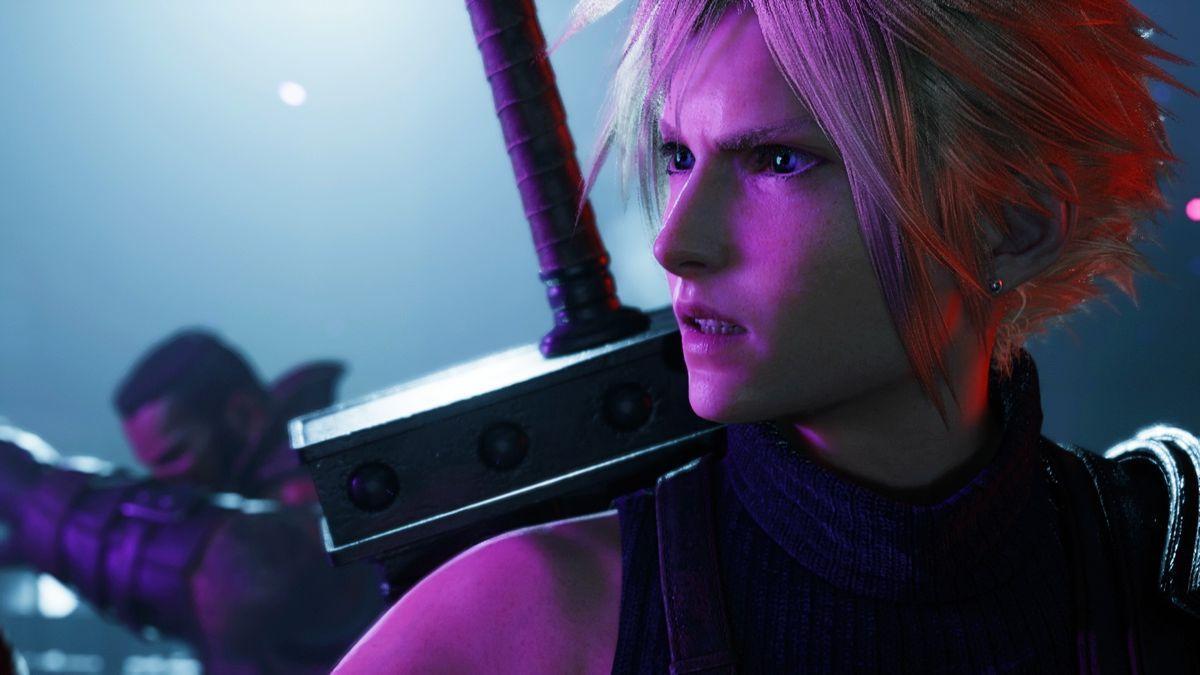
. This human intuition and gaming expertise represents a crucial component of the development process that extends beyond simple bug detection.Veteran game artist Del Walker raised practical concerns about AI's limitations in understanding complex visual issues, citing a recent Marvel Rivals bug where a costume completely breaks a character's model during certain animations. Walker questioned whether generative AI could "critically understand what it's looking at to report the issue accurately"
3
.
Source: GamesRadar
Related Stories
Career Development and Industry Access
Beyond immediate functionality concerns, critics worry about the broader implications for career development within the gaming industry. Douse emphasized that QA positions serve as crucial "gateways to the industry" and, while not inherently entry-level, often help workers transition to roles like lead designer
1
. Without these stepping-stone positions, the industry may struggle to cultivate new talent and provide pathways for professional growth.This concern reflects a broader debate about AI's impact on junior-level positions across various industries, where automation may eliminate traditional entry points that allow workers to develop skills and advance their careers
4
.References
Summarized by

Navi
[2]
Related Stories
Gaming Industry Splits Over AI Use as Arc Raiders Success Sparks Heated Debate
11 Nov 2025•Technology

Gaming industry splits as Dragon Age creator condemns generative AI while Epic CEO champions it
30 Jun 2026•Technology
Gaming industry splits on AI as EA touts creativity boost while Steam data reveals 53% review penalty
16 Jun 2026•Entertainment and Society

Recent Highlights
1
Microsoft and Nvidia Launch Surface Laptop Ultra: A $2,599 AI-Ready PC With RTX Spark Chip
Technology

2
OpenAI Releases 722 AI-Generated Math Papers on GitHub, Igniting Fury Among Mathematicians
Science and Research

3
Trump Consulted Grok AI Before Ordering Venezuela Invasion and Capture of Nicolás Maduro
Policy and Regulation

Recent Highlights
Today's Top Stories










Don’t drown in AI news. We cut through the noise - filtering, ranking and summarizing the most important AI news, breakthroughs and research daily. Follow topics that matter to you and stay ahead.


