11 Sources
[1]
Sriram Krishnan is leaving his role as White House AI advisor
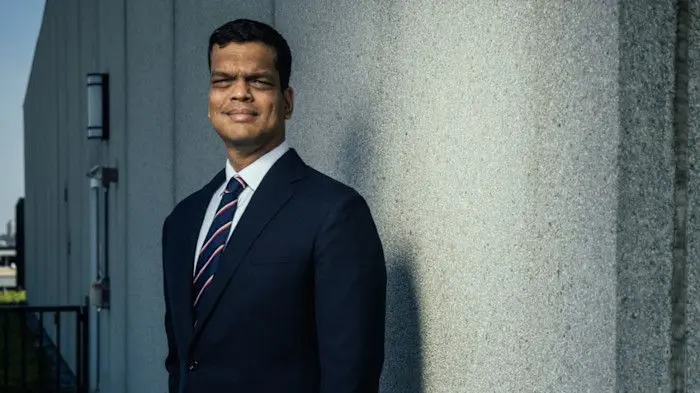
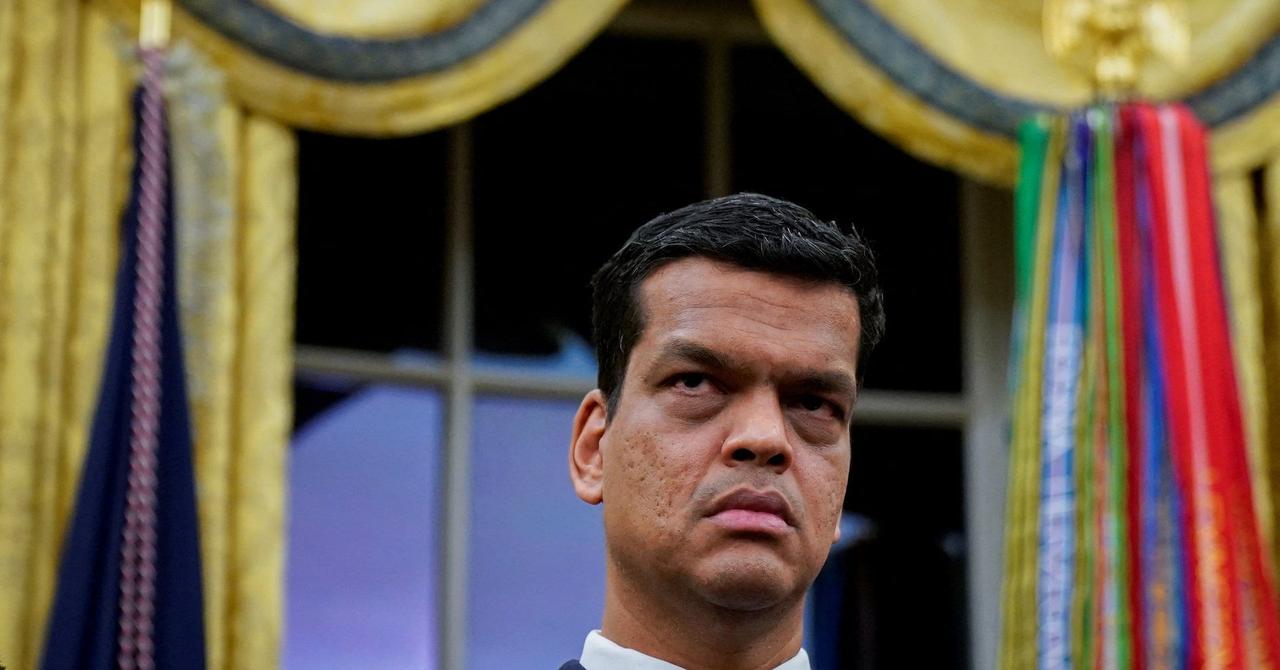
Former tech executive and VC Sriram Krishnan is leaving the Trump administration at the end of June. "It is hard to express how big a privilege it has been to serve the American people and how grateful I am to have had the opportunity to do so," Krishnan said in a post on X. "First and foremost, it has been an honor to serve under President [Donald Trump]. Without his leadership, we would not be leading in the AI race." Krishnan, who's been serving as a senior policy advisor on artificial intelligence at the White House, was one of a number of tech industry figures to take roles in the second Trump administration. Krishnan has led product teams at Microsoft, Twitter, Yahoo, Facebook, and Snap, and he was most recently a partner at Andreessen Horowitz, a firm whose founders threw their support behind Trump during the 2024 election. In his post, Krishnan highlighted some "key public accomplishments," starting with the administration's AI Action Plan, which prioritized data center construction over regulation and safety. Since then, Trump has signed several executive orders around AI, including one that seeks to challenge state-level AI regulations and another focused on oversight that was delayed and narrowed after industry pushback. Trump has also endorsed the idea that the government could take an equity stake in major AI companies. Krishnan noted that the person he "worked [most] closely with over the last 18 months" was David Sacks, the investor and podcaster who stepped down as AI and crypto czar earlier this year and became co-chair of the President's Council of Advisors on Science and Technology. "[Sacks'] continuing advocacy for America winning on AI has been and continues to be crucial," Krishnan said. Next, Krishnan said he will be "building institutions" that tackle big challenges for "America and its allies." According to The Washington Post, he's planning to start an outside institution that will still give him a role in influencing Trump's AI policy. "Whether it is energy, data centers or a clear path for Americans to experience the benefits of AI, there are many tough issues we all need to navigate together," Krishnan said.
[2]
White House AI policy adviser Krishnan to leave position, the Information reports
June 6 (Reuters) - White House AI policy adviser Sriram Krishnan plans to leave his position at the end of June, the Information reported on Saturday, citing people familiar with the matter. Krishnan has discussed starting a policy institution following his time in the White House, staffed with engineers to support the Trump administration's AI plans, the report added. Reuters could not immediately verify the report. Reporting by Anusha Shah in Bengaluru Editing by Rod Nickel Our Standards: The Thomson Reuters Trust Principles., opens new tab
[3]
White House AI policy adviser Krishnan to leave position
White House artificial intelligence policy adviser Sriram Krishnan on Saturday said he will leave his position at the end of June, marking the exit of a leading figure helping craft policies for frontier technologies. "This journey has been the privilege of a lifetime," Krishnan posted on X. He did not give a reason for leaving. Krishnan has been involved in Trump administration efforts to create a national framework for regulating AI developments, as security fears in Washington have mounted over powerful new systems. Anthropic's Mythos, for example, has reportedly demonstrated the ability to expose cybersecurity weaknesses in computer systems such as at banks. The White House on Tuesday released an executive order that directs federal agencies to ask leading AI developers to voluntarily submit their most capable models for government cybersecurity tests before releasing them to the public.
[4]
Trump's top AI adviser Sriram Krishnan is stepping down from the White House
White House AI adviser Sriram Krishnan is leaving at the end of June. He plans to start an outside institution to continue influencing AI policy. Sriram Krishnan, the White House's senior policy adviser on artificial intelligence, is stepping down. The former Andreessen Horowitz partner was tapped by President Donald Trump to help shape the administration's AI strategy during his second term. He will leave at the end of June, according to the Washington Post. Krishnan played a central role in the administration's AI action plan. In May, he helped broker an agreement with Google, Microsoft, and xAI to give the US government early access to their AI models before public release. The arrangement lets the government assess capabilities and security risks during a 30-day review window. White House AI and crypto czar David Sacks credited Krishnan with work on "policy initiatives and international diplomacy" as part of efforts to ensure "American AI dominance." White House spokesperson Kush Desai called him "a critical asset for President Trump's push to cement American dominance in technology and innovation." Krishnan said he plans to continue working with the White House as an outside adviser. He is reportedly starting a new institution focused on AI policy. "After a break, I'll be working on helping tackle some of the large challenges facing America on AI," he wrote on X. The departure follows a busy stretch of AI policymaking. On Tuesday, Trump signed an executive order outlining a voluntary framework for cybersecurity threats posed by AI, stopping short of mandatory testing. On Friday, he directed national security agencies to work with more than one AI provider, a move that followed the Pentagon's feud with Anthropic over contract terms. Anthropic had been the only vendor approved for classified military use until the Defence Department blacklisted it as a supply chain risk after the company refused to allow its models to be used for autonomous weapons or mass surveillance. The administration has since signed classified AI deals with Nvidia, Microsoft, and AWS. Krishnan's exit also raises questions about Andreessen Horowitz's influence on AI policy. The firm has been a significant force in shaping the administration's approach, with Bloomberg previously reporting on its rising role in Trump-era AI decisions. Whether Krishnan's new institution maintains that pipeline remains to be seen.
[5]
White House AI policy adviser to leave role at end of month
A top White House adviser on artificial intelligence confirmed Saturday that he will be stepping down from his position at the end of this month. Sriram Krishnan, a tech investor and senior policy adviser on AI, was a key figure in the Trump administration AI efforts, including developing strategic plans for Trump's goal of AI dominance and shaping pro-industry policies. "I'll be working on helping tackle some of the large challenges facing America on AI," Krishnan wrote in a post on social media platform X. He did not specify his reason for leaving, but said "This journey has been the privilege of a lifetime." Krishnan will continue to work with the White House as an outside adviser, according to White House AI and crypto czar David Sacks. Sacks praised Krishnan for his tenure in a lengthy post on X, describing him as a critical asset and one of the administration's most influential voices on AI policy. "Your skills are genuinely unique: a rare combination of deep technical fluency in AI, sharp policy instincts, exceptional strategic thinking, and true diplomatic talent," Sacks wrote, detailing several of Krishnan's achievements including co-authoring the administration's AI action plan and his involvement in the national AI policy framework used in Congress. "It will be a huge loss for the administration," he added. Krishnan's departure comes as the administration tackles threats posed by AI, including in cybersecurity and job displacement. Earlier this year, Trump and other White House tech leaders sent an AI policy "wish list" to Congress, and the framework served as a long-awaited response to the demands. Trump also signed an executive order last week for a voluntary process allowing AI labs to provide the government with their models for testing up to 30 days before they are released to the public. The order also reduced the 90-day period for government testing amid industry concerns that such a period could benefit competitors as AI development runs on a much quicker timeline.
[6]
White House AI adviser Sriram Krishnan quits
Sriram Krishnan, an Indian-origin AI policy adviser, is departing the White House after an 18-month tenure. He announced his exit on X, stating he will focus on addressing major AI challenges facing America. Krishnan described his time as a privilege, working at the core of US government AI policy development. Sriram Krishnan, the Indian-origin artificial intelligence policy adviser in the White House, has stepped down from his role, announcing his exit through a post on X on June 6. His exit comes after an 18-month stint in which he worked on shaping the United States government's AI strategy under the Trump administration. In his post on X, Krishnan said, "I'll be leaving my role at the White House at the end of this month. After a break I'll be working on helping tackle some of the large challenges facing America on AI." He described his time in the role as a privilege and said he had worked at the center of AI policy making in the US government. However, he did not give a detailed reason for stepping down. Krishnan's exit comes as US President Donald Trump is considering the possibility of the government taking stakes in AI companies. It also comes at a time when AI policy has become a key focus area for the administration.
[7]
Trump AI Adviser Sriram Krishnan To Leave White House, Plans New Role Influencing AI Policy: Report - Met
Sriram Krishnan, the White House's senior AI policy advisor and former Andreessen Horowitz partner, is stepping down at the end of June. Senior Advisor Departs Krishnan plans to launch an outside institution that will still give him a role in influencing Trump's AI policy, according to a Washington Post report. In his post, the Indian-American technology executive wrote, "First and foremost, it has been an honor to serve under President Trump. Without his leadership, we would not be leading in the AI race." Sacks Factor He also credited outgoing AI and crypto czar David Sacks, now co-chair of the President's Council of Advisors on Science and Technology, as his closest collaborator. "I owe a lot to the person I've worked most closely with over the last 18 months -- @DavidSacks," he wrote. "[Sacks'] continuing advocacy for America winning on AI has been and continues to be crucial," Krishnan said. Sacks returned the praise, calling Krishnan's skills "genuinely unique" and noting it would be "a huge loss for the administration." Photo Courtesy: Shutterstock Disclaimer: This content was partially produced with the help of AI tools and was reviewed and published by Benzinga editors. Market News and Data brought to you by Benzinga APIs To add Benzinga News as your preferred source on Google, click here.
[8]
White House AI adviser Sriram Krishnan steps down as Trump eyes tech stakes
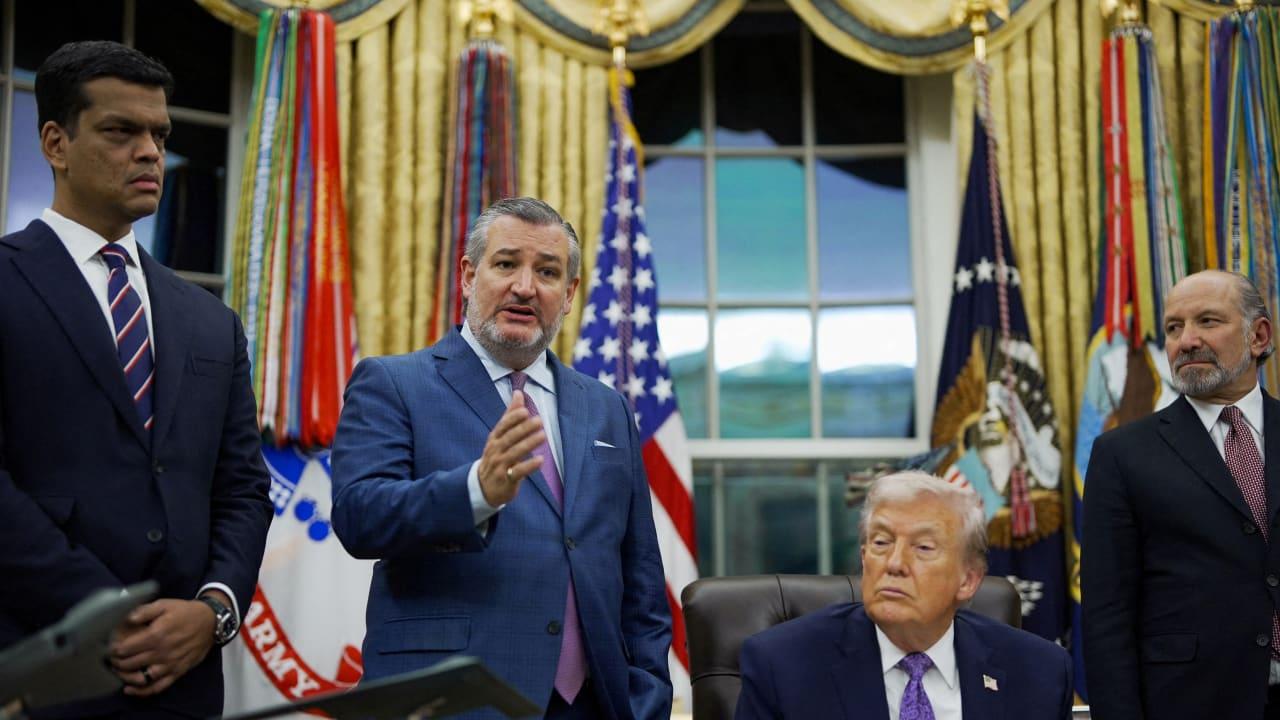
Sriram Krishnan (L), next to US Senator Ted Cruz and Donald Trump. A top White House artificial intelligence policy adviser on Saturday said he will leave his position at the end of June, marking the exit of a leading figure helping craft policies for frontier technologies. "This journey has been the privilege of a lifetime," the adviser, Sriram Krishnan, posted on the social media platform X. Krishnan did not give a reason for leaving, but wrote in the post that he intends to help "tackle some of the large challenges facing America" related to AI. Krishnan has been involved in the Trump administration's efforts to create a national framework for regulating developments in AI. His departure comes as the president looks at the possibility of the US government acquiring stakes in AI firms. "There's something very interesting about it, where it almost becomes a partnership with the American public," Trump told reporters aboard Air Force One on Friday, adding that he planned to meet with AI executives as soon as next week. Embrace of AI complicated by security concerns of Trump admin Trump's embrace of AI has at times been complicated by security concerns about the technology within his own administration. Fears over AI's unknowns in national security contributed to a months-long standoff between the Trump administration and AI firm Anthropic. The Pentagon blacklisted Anthropic earlier this year after the tech company refused to allow the US military to use its models for domestic surveillance and fully autonomous weapons systems. After a White House meeting with the CEO of Anthropic, which is preparing to go public, tensions have appeared to thaw. The White House, in a Tuesday executive order, directed federal agencies to ask leading AI developers to voluntarily submit their most capable models for government cybersecurity tests before releasing them to the public. Some populists in the president's orbit warn that AI presents a political risk, as proposals to build data centers to power these companies have stirred intense backlash. In his State of the Union speech in February, Trump said he told big tech companies to build their own power plants. Tech CEOs later agreed to tackle new electricity generation and efficiency measures.
[9]
The Chennai-born architect behind Trump's AI push is leaving the White House
In a noteworthy development, Sriram Krishnan, an influential strategist behind Donald Trump's AI agenda, will be leaving his position at the White House. His next endeavor aims to confront critical artificial intelligence issues that impact America and its allies. Chennai-born technology executive Sriram Krishnan, one of the key figures shaping US President Donald Trump's artificial intelligence agenda, has announced that he will step down from his role as Senior Policy Adviser for Artificial Intelligence at the White House later this month. Krishnan, 42, confirmed his departure in a post on X on Saturday, marking the end of an 18-month stint during which he played a central role in drafting the administration's AI strategy. Also Read: Trump faces new Republican resistance in Congress as midterm pressures build "I'll be leaving my role at the White House at the end of this month. After a break I'll be working on helping tackle some of the large challenges facing America on AI (more on that later)," Krishnan said. During his tenure, Krishnan helped shape the Trump administration's "AI Action Plan", which aimed to accelerate the development of artificial intelligence infrastructure in the US while easing regulatory barriers around the emerging technology. He was also involved in crafting an executive order that restricted states from independently regulating AI systems. "It is hard to express how big a privilege it has been to serve the American people and how grateful I am to have had the opportunity to do so. First and foremost, it has been an honour to serve under President Donald Trump. Without his leadership, we would not be leading in the AI race," Krishnan said. His exit comes at a time when artificial intelligence policy has become a major focus area for the Trump administration, particularly around data centres, energy requirements and global competition in AI technologies. Also Read: Obama casts a long shadow as a hefty Iran bill lands on Trump's desk David Sacks, co-chair of the President's Council of Advisers on Science & Technology and a close associate of Krishnan, praised his contribution in a post on X. "Your skills are genuinely unique: a rare combination of deep technical fluency in AI, sharp policy instincts, exceptional strategic thinking, and true diplomatic talent," Sacks said. Krishnan said his work at the White House included contributing to the American AI Action Plan, the National AI Policy Framework and AI acceleration partnerships involving US allies. "The past 18 months have given me a front row seat to this critical moment on AI facing America and our allies. Whether it is energy, data centres or a clear path for Americans to experience the benefits of AI, there are many tough issues we all need to navigate together," Krishnan said. "I plan on building institutions that help tackle some of those challenges for America and its allies," he added. Before joining the White House, Krishnan worked as a general partner at venture capital firm Andreessen Horowitz and held roles at Microsoft, Facebook and Twitter. He was also closely associated with Elon Musk and advised him during the 2022 acquisition of Twitter, later rebranded as X. Born in Chennai in 1984, Krishnan graduated in Information Technology from SRM University in 2005 before moving to the United States to join Microsoft in 2007. Krishnan's appointment to the White House had earlier triggered criticism from sections of Trump's right-wing support base, including activist Laura Loomer, over his reported views on easing pathways for skilled foreign workers and green card caps, positions viewed by critics as inconsistent with Trump's "Make America Great Again" agenda.
[10]
Krishnan steps down as White House AI adviser after 18 months By Investing.com
Investing.com - Sriram Krishnan is leaving his position as a top White House adviser on artificial intelligence at the end of June 2026, according to a social media post he made on Saturday. Krishnan, a former partner at Andreessen Horowitz, was appointed by President Donald Trump to help shape AI policy during his second term. He worked closely with White House AI and crypto czar David Sacks over the past 18 months on policy initiatives and international diplomacy as part of efforts to ensure "American AI dominance," Sacks said in a social post. Krishnan's work included co-authoring the American AI Action Plan, developing AI Acceleration Partnerships to position the American AI stack globally, and contributing to the National AI Policy Framework executive order. He also represented American interests at AI summits in France and India and participated in state visits to the UK and the Middle East. Krishnan said he plans to build institutions that help tackle challenges facing America and its allies on AI issues including energy, data centers, and ensuring Americans experience the benefits of AI. He will continue to work with the administration as an outside adviser, according to Sacks. Trump signed an executive order on Tuesday outlining a hands-off approach to cybersecurity threats raised by artificial intelligence, calling on developers to give the US government voluntary access to AI models. On Friday, Trump told US national security agencies to prioritize working with more than one AI provider, following a feud between the Pentagon and Anthropic PBC. This article was generated with the support of AI and reviewed by an editor. For more information see our T&C.
[11]
White House AI policy adviser Krishnan to leave position
June 6 (Reuters) - White House artificial intelligence policy adviser Sriram Krishnan on Saturday said he will leave his position at the end of June, marking the exit of a leading figure helping craft policies for frontier technologies. "This journey has been the privilege of a lifetime," Krishnan posted on social media platform X. He did not give a reason for leaving. Krishnan has been involved in Trump administration efforts to create a national framework for regulating developments in AI, as security fears in Washington have mounted over powerful new systems. Anthropic's Mythos, for example, has reportedly demonstrated the ability to expose cybersecurity weaknesses in computer systems such as at banks. The White House on Tuesday released an executive order that directs federal agencies to ask leading AI developers to voluntarily submit their most capable models for government cybersecurity tests before ?releasing them to the public. (Reporting by Anusha Shah in Bengaluru and Jason Lange in WashingtonEditing by Rod Nickel and Franklin Paul)
Share
Copy Link
Sriram Krishnan is leaving his role as senior White House AI advisor at the end of June after helping shape the Trump administration's AI Action Plan. The former Andreessen Horowitz partner, who worked closely with AI czar David Sacks, plans to start an outside institution focused on AI policy while continuing to advise the administration on America's path to AI dominance.
Sriram Krishnan, the senior White House adviser on artificial intelligence, announced his departure from the Trump administration at the end of June, marking a significant shift in the team shaping US AI policy
1
. The former tech executive and venture capitalist expressed gratitude for the opportunity to serve, stating in a post on X that "it has been an honor to serve under President [Donald Trump]. Without his leadership, we would not be leading in the AI race"1
. Krishnan did not specify a reason for leaving but described the journey as "the privilege of a lifetime"3
.
Source: Reuters
Krishnan played a central role in developing the administration's AI Action Plan, which prioritized data centers construction over regulation and safety
1
. The former Andreessen Horowitz partner brought a unique combination of technical expertise and policy acumen to the role, having previously led product teams at Microsoft, Twitter, Yahoo, Facebook, and Snap1
. David Sacks, the AI and crypto czar who became co-chair of the President's Council of Advisors on Science and Technology, praised Krishnan's "deep technical fluency in AI, sharp policy instincts, exceptional strategic thinking, and true diplomatic talent"5
. Krishnan noted that Sacks was the person he "worked [most] closely with over the last 18 months"1
.Krishnan has been involved in creating a national framework for AI regulation as security concerns have mounted over powerful new systems
3
. In May, he helped broker an agreement with Google, Microsoft, and xAI to give the US government early access to their AI models before public release, establishing a 30-day review window for AI model testing4
. This arrangement allows the government to assess capabilities and address security concerns before models reach the public. The White House recently released an executive order directing federal agencies to ask leading AI developers to voluntarily submit their most capable models for government cybersecurity testing3
. The order reduced the testing period from 90 days amid industry concerns that such a timeline could benefit competitors in the fast-paced AI development landscape5
.
Source: Benzinga
Since the AI Action Plan, Trump has signed several executive orders around AI, including one that seeks to challenge state-level AI regulations and another focused on oversight that was delayed and narrowed after industry pushback
1
. Trump has also endorsed the idea that the government could take an equity stake in major AI companies1
. Krishnan co-authored the administration's AI action plan and was involved in the national AI policy framework used in Congress5
. The administration's approach has prioritized AI dominance and pro-industry policies over stricter regulatory measures.Related Stories
According to The Washington Post, Krishnan plans to start an outside institution that will still give him a role in influencing Trump's AI policy
1
. Krishnan has discussed starting a policy institution staffed with engineers to support the Trump administration's AI plans2
. "After a break, I'll be working on helping tackle some of the large challenges facing America on AI," he wrote on X4
. He emphasized that "whether it is energy, data centers or a clear path for Americans to experience the benefits of AI, there are many tough issues we all need to navigate together"1
. Krishnan will continue to work with the White House as an outside adviser5
.
Source: Jerusalem Post
Krishnan's exit raises questions about Andreessen Horowitz's influence on AI policy
4
. The firm, whose founders supported Trump during the 2024 election, has been a significant force in shaping the administration's approach to AI . Whether Krishnan's new institution maintains that pipeline remains to be seen. White House spokesperson Kush Desai called him "a critical asset for President Trump's push to cement American dominance in technology and innovation" . The departure comes as the administration tackles threats posed by AI, including cybersecurity vulnerabilities and job displacement, with systems like Anthropic's Mythos reportedly demonstrating the ability to expose weaknesses in computer systems at banks3
.Summarized by
Navi
27 Mar 2026•Policy and Regulation

06 Feb 2025•Policy and Regulation

12 Dec 2025•Policy and Regulation

1
Technology

2
Business and Economy

3
Health