10 Sources
[1]
Starbucks abandons its AI inventory tool after only nine months - Engadget
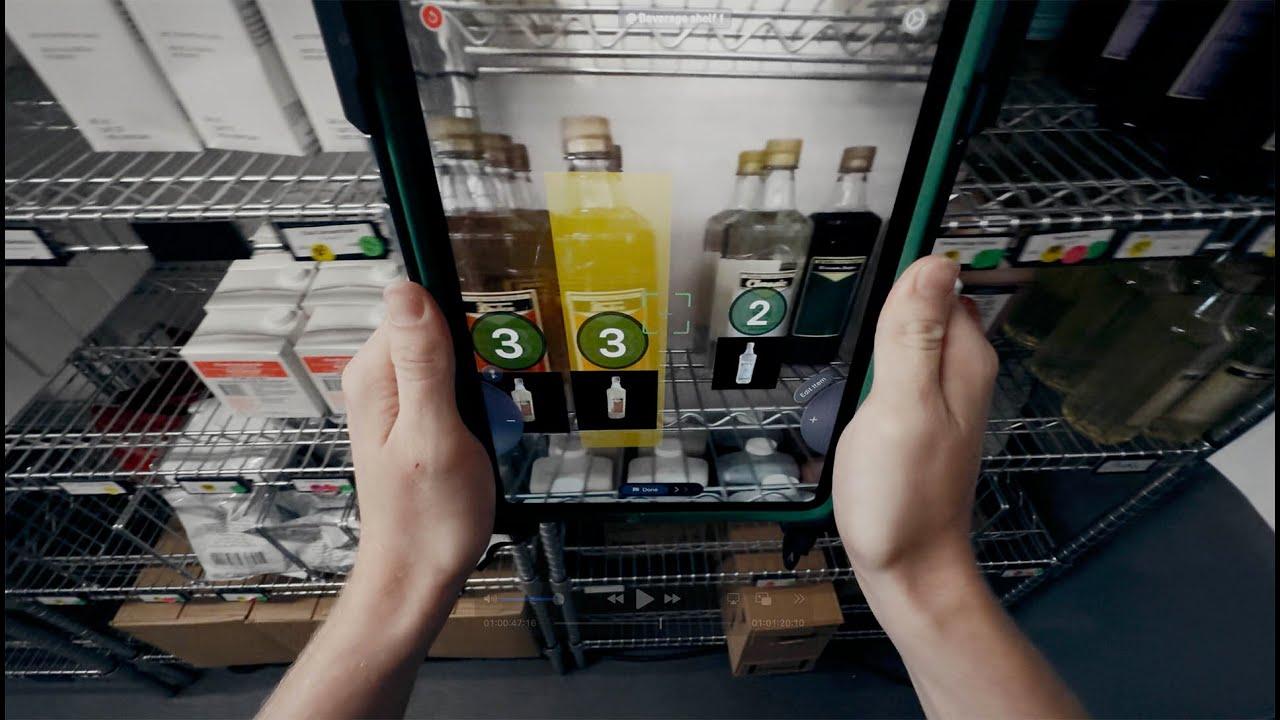
Looks like manual inventory management is back on the menu, boys. Sometimes, AI helps you fine-tune weather forecasts or improve the lives of people with disabilities. Other times, well, it loses a fight with a bottle of peppermint syrup. That's the situation Starbucks CEO Brian Niccol finds himself in after the coffee chain reportedly told staff that it's scrapping an AI inventory program after only nine months. Starbucks rolled out the "Automated Counting" software to its North American stores in September 2025. Developed in partnership with NomadGo, the AI-powered tool was supposed to speed up inventory tracking. Employees (likely fearing that they were holding their replacements) would use mobile devices to scan items on shelves. The idea was simple: Automate the tedious task of counting milks and syrups, increase accuracy, and optimize the supply chain. Welcome to the AI revolution, baby. A since-deleted September blog post by CTO Deb Hall Lefevre laid on the hype as thick as the whipped cream on a mocha Frappuccino: "With a quick scan using a handheld tablet, partners can instantly see what's in stock -- ensuring cold foam, oat milk, or caramel drizzle are always available," it read. "Customers can enjoy beverages their way, every time -- and partners spend less time in the backroom and more time crafting and connecting." ("Partners" is Starbucks' term for its employees.) Well, things didn't quite turn out that way. Reuters reports that the tool frequently mislabeled and miscounted items. It was known to mix up similar milk types or skip them altogether. The video above, embedded in Starbucks' September blog post, foreshadowed the tool's struggles. The clip inadvertently showed the system missing a bottle of peppermint syrup as a worker scanned the shelf. (Did Starbucks deploy a half-baked AI video editor, too?) So, Starbucks "partners" will now go back to the good ol' days of manually counting inventory. "Beverage components and milk will now be counted the same way you count other inventory categories in your coffeehouse," an internal company newsletter, viewed by Reuters, said. Apparently, workers won't miss it much. "Thanks for discontinuing Automatic Counting!" one employee reportedly wrote in response to the change. "The thought behind it was great, but the execution was proving difficult."
[2]
Starbucks pulls its AI inventory tool nine months in, after it kept confusing the milks
The chain is reverting to manual counts across North America, ending one of CEO Brian Niccol's more visible technology bets and adding another data point to the file marked "enterprise AI pilots that did not survive contact with the real store." Starbucks has retired the AI-powered inventory tool it rolled out across its North American stores last September, according to an internal newsletter reviewed by Reuters and confirmed by the company. "Starting today, Automated Counting will be retired," the Monday memo read. "Beverage components and milk will now be counted the same way you count other inventory categories in your coffeehouse." In other words, by hand. The tool, built by Seattle-based NomadGo, used tablet-mounted cameras and LiDAR to scan shelves of syrups, milks and other beverage components and produce automatic counts, replacing manual stock-takes for selected categories. It had been in development for several years and was expanded nationwide after Brian Niccol took over as chief executive in September 2024, as part of his "Back to Starbucks" turnaround. The problem, according to Reuters' February reporting and the company's own internal materials, was that the tool struggled with the everyday job of telling one white liquid from another. The app frequently miscounted or mislabelled items, particularly similar-looking products such as oat milk and dairy. A promotional video Starbucks itself released at launch showed the system failing to register a bottle of peppermint syrup sitting on the shelf as it counted the bottles next to it, which is the kind of thing that tends to look worse in hindsight than at the time. In a statement to Reuters on Thursday, Starbucks framed the move as a standardisation exercise rather than a retreat. The decision came from "a decision to standardise how inventory is counted across coffeehouses as we continue to focus on consistency and execution at scale," the company said, adding that it is moving toward more frequent daily replenishments and continued supply chain improvements. An internal note shared by the company quoted an employee thanking the team for ending the programme: "The thought behind it was great, but the execution was proving difficult." The decision matters because inventory was supposed to be the easy bit. Four Starbucks CEOs over five years have blamed lost sales on the company's struggle to keep stores reliably stocked. In early 2024, by the company's own admission, fewer than a third of deliveries to Starbucks distribution centres arrived on time and in full. Automated Counting was meant to give the chain the live store-level visibility it had been missing, and was one of Niccol's headline operational fixes. It also lands at a moment when the wider record on enterprise AI is starting to look less generous than the pitch decks. MIT's NANDA initiative found last year that 95% of enterprise generative-AI pilots delivered no measurable impact on the P&L, despite roughly $30 to $40bn in spend, with only 5% reaching production. The Starbucks tool was not generative AI, but the shape of the failure is familiar: a deeply integrated, store-level workflow proved harder to automate reliably than the demo suggested. The financial backdrop is mixed enough that the decision will be read both ways. Starbucks posted its strongest quarterly sales growth in two and a half years last month, and the stock is up 24% so far in 2026, but operating margins in its core North American market have fallen to 9.9%, down from 18% two years earlier. Niccol has continued to invest in other technology bets, including AI tools to sequence orders and assist baristas during peaks. NomadGo, for its part, told Reuters it is "continuously learning from customer and user feedback" to improve its products. The next test is whether daily replenishments and manual counts can do what the algorithm could not, which is keep peppermint syrup on the shelf.
[3]
Starbucks Abandons Borked AI Inventory Tool That Couldn't Count: Report
Starbucks has stopped using an AI-powered inventory tool after just nine months because it made the most basic of errors, according to a report from Reuters. The news comes after other AI tools have reportedly made serious mistakes, such as the case of a Pizza Hut franchisee who sued the pizza chain's parent company after a system meant to make things more efficient allegedly cost $100 million in lost revenue. "Starting today, Automated Counting will be retired," an internal Starbucks newsletter from this week read, according to Reuters. "Beverage components and milk will now be counted the same way you count other inventory categories in your coffeehouse." The AI tool was reportedly an effort spearheaded by CEO Brian Niccol, who joined Starbucks from Chipotle in 2024, to address what he said were inventory shortages that were harming sales. Reached for comment, a Starbucks spokesperson told Gizmodo, "We test ideas in our coffeehouses, listen closely to partner feedback, and make changes to deliver a better, more consistent experience." When the tool, provided by NomadGo, was first rolled out in Sept. 2025, it was billed by Chief Technology Officer Deb Hall Lefevre as a solution for automating the inventory process and generally making it more efficient. But it sounds like the opposite happened. NomadGo CEO David Greschler described it in a press release as a “unique synthesis of on-device 3D spatial intelligence, computer vision, and augmented reality.†A YouTube video from the company shows how the NomadGo Inventory AI works: The video advertises the product as having 99% accuracy. But according to Reuters, the tool was "frequently" miscounting and mislabeling items. “Since the dawn of time, inventory has been a manual, tedious, and inaccurate task. We’ve transformed it to be automated, intelligent, and fun with a company mission to count everything of value in the world. With NomadGo Inventory AI, employees can instantaneously scan a shelf filled with items in less than 30 seconds," said Greschler. Starbucks has been testing various tools for inventory management and positioned the changes to Gizmodo as a way to deliver a consistent process across all of its stores in North America. The coffee retailer has experimented with AI tools like Green Dot Assist, a virtual assistant aimed at helping in-store staff, like baristas, who need to remember the ingredients for a seasonal beverage that may be new. The company also touts a technology called Smart Queue, which it says "intelligently sequences orders across café, drive thru, mobile and delivery." And it has tested a customer-facing ChatGPT-powered app that gives recommendations on what to order. The app was launched on April 15, though it's so far unclear how many people are actually asking ChatGPT for drink recommendations. "We’ve enhanced discovery in the Starbucks app with a trending beverage category and a secret menu, harnessing the power of customization that occurs every day in social media and with our baristas," the company said in announcing the app. "And now, in ChatGPT, we are using AI to support something very human: helping you discover a drink you’ll love." NomadGo didn't respond to emailed questions about the report from Reuters but told the news outlet it was "continuously learning from customer and user feedback." Gizmodo will update this article if we hear back.
[4]
Starbucks kills AI manager tool because it wasn't doing as good a job as a human
The system reportedly struggled with miscounts, mislabeled products, and store-level execution issues. For the last two years, tech companies have aggressively pushed the idea that AI is ready to replace huge chunks of repetitive human work. Meanwhile, Starbucks just discovered that accurately identifying milk cartons inside a coffee shop is apparently still harder than Silicon Valley promised. The company is officially scrapping its AI-powered inventory counting system across North America just nine months after deployment, according to a Reuters report. The tool, designed to automate stock counting and reduce in-store shortages, reportedly struggled with frequent miscounts and labeling errors, including confusing similar milk types or missing products entirely. Starbucks' AI inventory system: More headaches than solutions? The automated counting system used cameras and LIDAR-equipped tablets to scan beverage inventory and ingredient stock across stores. It was part of CEO Brian Niccol's larger "Back to Starbucks" turnaround strategy aimed at improving product availability and operational efficiency. But despite Starbucks previously claiming that the system improved inventory visibility, employees reportedly continued to struggle with inaccurate counts and unreliable product recognition. Internal messages reviewed by Reuters even showed workers openly celebrating the tool's removal. Starbucks says it will now return to manual inventory counting while focusing on more standardized replenishment systems and daily restocking improvements instead. AI keeps failing at the boring stuff companies said it would solve first The funny thing is that inventory counting is exactly the kind of structured, repetitive task AI companies constantly claim should be easy to automate. And yet, once these systems leave polished demos and enter messy real-world environments with lighting changes, similar packaging, and busy workers, things start falling apart surprisingly fast. Recommended Videos What makes this especially awkward is how aggressively corporations are currently chasing AI adoption. Companies everywhere are laying off workers, restructuring teams, and pouring billions into automation strategies while many AI systems still struggle with basic reliability in practical workflows. Starbucks accidentally becoming the latest example of "humans still needed" feels both hilarious and deeply predictable. Maybe the bigger lesson here is that replacing people turns out to be much harder than replacing PowerPoint presentations with AI-generated buzzwords.
[5]
Starbucks Scraps Disastrous AI Tool
Can't-miss innovations from the bleeding edge of science and tech Hold onto your pumpkin spice lattes, because Starbucks is canning its AI tool after it turned out to be a total disaster, Reuters reports, less than year after it debuted. The tool, which was deployed across its North American stores, was designed to automate inventory management with the goal of providing accurate real-time information that could help Starbucks address ingredient shortages at its locations. But according to previous Reuters reporting, the error-prone AI frequently miscounted and mislabeled items, confusing different types of milk and sometimes forgetting to count them altogether. Now, it's getting the axe. "Starting today, Automated Counting will be retired," read an internal company newsletter from Monday obtained by the news agency. "Beverage components and milk will now be counted the same way you count other inventory categories in your coffeehouse." Having lasted just nine months, the AI experiment stuck around longer than some of the coffee chain's seasonal drink offerings, but didn't approach anywhere near the level of permanent revolutionary impact the tech promises, or indeed the company was hoping for. You also have to wonder if a human employee who couldn't do the bare minimum of counting stuff would be shown anywhere near the same amount of leeway the AI got at the chain infamous for its union busting. In any case, it's a quick reversal from Starbucks. It was only in February that it told Reuters that the AI already helped improve product availability. On Thursday, it only explained that the AI program's termination was part of a decision to "standardize how inventory is counted across coffeehouses as we continue to focus on consistency and execution at scale." The tool, built by NomadGo, was intended to allow employees to "count everything in your inventory... with just a wave of a smartphone or tablet," its website claims. In practice, employees held up a company tablet in front of shelves stocked with ingredients like syrups and milks, and the app scanned it with lidar and a camera, per Reuters. Also in practice: it didn't always work. In an embarrassing augury of things to come, it failed to recognize a peppermint syrup bottle in an official video Starbucks uploaded when the collaboration was announced. This is only the latest questionable example of restaurants, an industry far-removed from tech, trying to embrace AI that ultimately backfires. Earlier this week, one of Pizza Hut's largest franchisees sued the pie-slinging chain over its mandatory deployment of an AI-powered kitchen management system, alleging that it dramatically slowed down delivery times and caused over $100 million in losses. This also isn't Starbucks first foray with the tech. Last month, it collaborated with OpenAI to allow customers to place orders through ChatGPT, a feature that quickly became a laughingstock online.
[6]
Starbucks abandons AI stock-counting tool after nine months
Starbucks will discontinue its AI inventory management program after nine months of operation. The "Automated Counting" software, launched in September 2025 for North American stores, was intended to enhance inventory tracking efficiency. The program, developed in collaboration with NomadGo, allowed employees to use mobile devices to scan items on shelves and automate the counting process for products such as milks and syrups. However, the tool reportedly struggled with accuracy, frequently mislabeling and miscounting items, including confusing similar types of milk and missing them altogether. A video embedded in a blog post from September showed the system failing to recognize a bottle of peppermint syrup during a test scan, indicating serious operational flaws. Chief Technology Officer Deb Hall Lefevre had previously promoted the tool in the same post, claiming it would improve stock visibility and enhance customer service. The blog was later deleted. As a result of the discontinuation, employees, referred to as "partners" at Starbucks, will revert to manual inventory counting for beverage components and milk. An internal company newsletter announced the return to manual processes, with employees expressing relief at the change. One employee commented, "Thanks for discontinuing Automatic Counting! The thought behind it was great, but the execution was proving difficult."
[7]
Starbucks Scraps AI Inventory Tool That Miscounted Items, Made Errors
NEW YORK, May 21 - Starbucks terminated an AI program workers used for automating certain inventory counts this week, nine months after deploying it across its North American stores, according to an internal newsletter reviewed by Reuters and two people with direct knowledge of the situation. The tool was part of CEO Brian Niccol's efforts to fix the coffee chain's persistent product shortages that he has blamed for hurting sales. The app - designed to improve Starbucks' visibility into shortages at stores - frequently miscounted and mislabeled items, such as confusing similar milk types or missing them altogether, Reuters reported in February. "Starting today, Automated Counting will be retired," read an internal company newsletter dated Monday that Reuters reviewed and verified with two employees. "Beverage components and milk will now be counted the same way you count other inventory categories in your coffeehouse." In February, Starbucks told Reuters that adoption of the tool had improved product availability in stores - one of Niccol's primary store-level measures of progress in his corporate turnaround campaign. In a statement to Reuters on Thursday, Starbucks said the termination of the program - which covered milk and other beverage products - came from a decision to "standardize how inventory is counted across coffeehouses as we continue to focus on consistency and execution at scale." The coffee chain also said it is working towards more frequent, daily replenishments to stores and continued supply chain improvements. "Our goal is simple - if it's on the menu, customers should be able to order it," the company said. The company shared screenshots it said showed employees sharing internal feedback praising the change. "Thanks for discontinuing Automatic Counting! The thought behind it was great, but the execution was proving difficult," read one. Starbucks rapidly rolled the tool out to North American stores in September, the company announced at the time. The AI-powered app aimed to replace hand counts of some products with automated ones that were expected to be faster and more accurate. Cafe workers hold a computer tablet up to shelves for syrups, milks and other beverage products, which the app scanned with LIDAR and camera data. That announcement, since deleted from the company website, said the technology would set the stage for "smarter supply chain optimization." A video uploaded by Starbucks at that time showed the tool failing to recognize a peppermint syrup bottle on the shelf as it counted adjacent bottles. Niccol, who took over in late 2024, has also hired logistics executives as he works to repair a supply chain that current and former employees have described to Reuters as fragmented and hampered by outdated systems. Analysts at Morningstar wrote last month that they believed restaurant-level margins would improve in the long-term based "on technology initiatives aimed at saving labor hours and waste, such as AI inventory tracking, and operating leverage." Niccol has leaned on technology in his operations-focused turnaround called "Back to Starbucks," including new AI-driven tools to sequence orders and assist baristas. The CEO, known for pushing through turnarounds at Chipotle and Taco Bell, is under pressure from investors to sustain recent sales growth and improve profits that have sagged under his hefty investments in additional staffing. Shares struggled early in his tenure, but the stock is up 24% so far in 2026. Starbucks posted its strongest quarterly sales growth in 2-1/2 years last month, but operating margins in its core North American market have fallen to 9.9% from 18% two years earlier, before Niccol took the helm. The automated counting program had been in testing in the years before Niccol inherited it and deployed it nationwide. The app's provider, NomadGo, said in a statement to Reuters on Thursday that it is "continuously learning from customer and user feedback" to improve its products. (Reporting by Waylon Cunningham, Edited by Lisa Jucca and David Gaffen)
[8]
Starbucks Dumps AI-Powered Inventory Tool Due to Counting Errors | PYMNTS.com
By completing this form, you agree to receive marketing communications from PYMNTS and to the sharing of your information with our sponsor, if applicable, in accordance with our Privacy Policy and Terms and Conditions. The coffeehouse chain deployed the Automated Counting app across its North American stores in September as part of a broader adoption of AI tools and other technology, according to the report. The app was installed on tablets and used LIDAR and camera data to scan products when employees held the tablet up to shelves, the report said. Starbucks aimed to use the app to help solve product shortages but found that it confused product names or missed items altogether when performing inventory counts. Reuters reported in February that employees and managers had said the app frequently made errors in its counts. Starbucks said at the time that the app had improved product availability in its stores. The coffeehouse chain told Reuters in the Thursday report that it decided to end its use of the app to "standardize how inventory is counted across coffeehouses as we continue to focus on consistency and execution at scale." The supplier of the app, NomadGo, said it is "continuously learning from customer and user feedback" to improve its products, per the report. When announcing Starbucks' deployment of the app in September, NomadGo said in a press release that its Inventory AI technology performs inventory counts up to eight times faster than manual efforts and with 99% accuracy. NomadGo said in a January post on LinkedIn that across the quick-service restaurants (QSRs) that used Inventory AI, the technology counted more than 186 million items in more than 11,000 locations in 2025. Starbucks has deleted from its news blog a Sept. 3 post about automated counting. Starbucks Chairman and CEO Brian Niccol said during a January earnings call that digital platforms will play an important role in the next stage of the company's turnaround strategy. Niccol said there are opportunities to gain efficiencies with technology solutions, both in the coffeehouses and in its support centers around the world. "A key piece of our path forward is technology," Niccol said.
[9]
Starbucks scraps AI inventory tool across North America
NEW YORK, May 21 - Starbucks terminated a worker-facing AI program for automating inventory counts this week, nine months after deploying it across its North American stores, according to an internal newsletter reviewed by Reuters and two people with direct knowledge of the situation. The tool was part of CEO Brian Niccol's efforts to fix the coffee chain's persistent product shortages that he has blamed for hurting sales. "Starting today, Automated Counting will be retired," read an internal company newsletter from Monday that Reuters reviewed and verified with two employees. "Beverage components and milk will now be counted the same way you count other inventory categories in your coffeehouse." The automated counting app - designed to improve Starbucks' visibility into shortages at stores - frequently miscounted and mislabeled items, such as confusing similar milk types or missing them altogether, Reuters reported in February. A video uploaded by Starbucks showed the tool failing to recognize a peppermint syrup bottle on the shelf as it counted adjacent bottles. At the time, Starbucks told Reuters that adoption of the tool had improved product availability in stores - one of Niccol's primary store-level measures of progress in his corporate turnaround campaign. In a statement to Reuters on Thursday, Starbucks said the termination of the program - which covered milk and other beverage products - came from a decision to "standardize how inventory is counted across coffeehouses as we continue to focus on consistency and execution at scale." The coffee chain also said it is working towards more frequent, daily replenishments to stores and continued supply chain improvements. (Reporting by Waylon Cunningham, Edited by Lisa Jucca and David Gaffen)
[10]
AI got fired from its job? This coffee brand now heading back to humans for its operations
Staff had to recheck counts manually, adding more work instead of saving time. Technology leaders around the globe continue to say AI will improve productivity and create new opportunities, while many believe that AI will take away their jobs. However, recent events at Starbucks tell a different story. The coffee chain introduced an AI-based inventory system across stores in North America, but it has reportedly ended it after just nine months. Starbucks introduced this technology in hope of making the inventory checks faster for workers. Instead, the system struggled with basic tasks such as identifying products correctly. The incident has now become another example of how AI still faces limits when used in real-world business operations where accuracy matters every day. Starbucks introduced the AI-powered system as part of CEO Brian Niccol's efforts to improve store operations and reduce supply issues. Workers were given tablets connected to cameras and LIDAR technology that could scan shelves and count inventory automatically. Starbucks wanted an artificial intelligence to count things like milk packs' components, beverages' components, and other supplies faster and more accurately than workers doing it manually. Also read: Xiaomi 17T India launch date confirmed: Here is what it may offer According to multiple sources, the problem is that the tool couldn't operate adequately in shops. As per the reports, it failed to count certain products correctly, labelled others wrongly and even failed to distinguish types of milk. Moreover, there have been cases when the system didn't detect products at all. It resulted in additional work for people to count things manually and check how accurate the AI's calculations were. Thus, instead of saving efforts, the tool became just one more thing to deal with for staff members. In general, this case represents a problem associated with the use of technology in business environments. Although AI tools can analyse lots of data quickly, they need training and the context of operation. Something obvious to people might become problematic for the machine, especially if used in coffee shops. Also read: Samsung Electronics offers huge bonuses to semiconductor employees to avoid 18-day strike: All details Starbucks has now decided to return to manual inventory counting methods, completely retracting from its earlier stance. The news that the automated counter would be retiring and beverage components and milk would once again be counted manually has been reportedly provided to the workers via an internal company newsletter.
Share
Copy Link
Starbucks has retired its AI-powered inventory management tool just nine months after rolling it out across North American stores. The system, developed by NomadGo, frequently miscounted and mislabeled items, confusing similar milk types and missing products entirely. Employees are now returning to manual inventory counting, marking another high-profile setback for enterprise AI adoption.
Starbucks has officially retired its AI inventory tool across North America just nine months after deployment, according to internal company communications reviewed by Reuters
1
2
. The coffee chain rolled out the "Automated Counting" software to its stores in September 2025, but the system struggled with basic accuracy issues that ultimately led to its discontinuation3
."Starting today, Automated Counting will be retired," an internal Starbucks newsletter from Monday stated. "Beverage components and milk will now be counted the same way you count other inventory categories in your coffeehouse"
2
. The decision marks a significant reversal for CEO Brian Niccol, who championed the technology as part of his "Back to Starbucks" turnaround strategy aimed at addressing persistent inventory shortages that had been blamed for lost sales4
.
Source: HuffPost
Developed in partnership with Seattle-based NomadGo, the AI-powered inventory management tool used tablet-mounted cameras and LiDAR technology to scan shelves stocked with syrups, milks, and other beverage components
2
. NomadGo CEO David Greschler described it as a "unique synthesis of on-device 3D spatial intelligence, computer vision, and augmented reality," claiming 99% accuracy [3](https://gizmodo.com/starbucks-abando ns-borked-ai-inventory-tool-that-couldnt-count-report-2000762252).The reality proved far different. The tool frequently miscounted items and mislabeled products, particularly struggling to distinguish between similar-looking items such as oat milk and dairy
2
. In an embarrassing preview of the AI tool failure to come, a promotional video Starbucks released at launch inadvertently showed the system missing a bottle of peppermint syrup sitting directly on the shelf as it counted adjacent bottles1
5
.
Source: Engadget
The timing of this decision to discontinue AI tool carries broader implications for the enterprise AI sector. Research from MIT's NANDA initiative found that 95% of enterprise generative-AI pilots delivered no measurable impact on financial performance, despite approximately $30 to $40 billion in spending, with only 5% reaching production
2
. While Starbucks' Automated Counting system wasn't generative AI, the pattern of failure follows a familiar trajectory: deeply integrated, store-level workflows proved harder to automate reliably than demonstrations suggested2
.Inventory management was supposed to represent the straightforward application of AI to repetitive tasks. Four Starbucks CEOs over five years have attributed lost sales to the company's struggle to maintain reliable stock levels. In early 2024, fewer than one-third of deliveries to Starbucks distribution centers arrived on time and in full
2
. The automated system was meant to provide the live store-level visibility the chain had been missing.Employee response to the change has been notably positive. "Thanks for discontinuing Automatic Counting!" one worker wrote in response to the announcement. "The thought behind it was great, but the execution was proving difficult"
1
.Related Stories
Starbucks framed the decision as a standardization effort rather than an admission of failure. The company told Reuters it made "a decision to standardize how inventory is counted across coffeehouses as we continue to focus on consistency and execution at scale," adding that it is moving toward more frequent daily replenishments and continued supply chain improvements
2
.The coffee retailer continues to invest in other AI initiatives despite this setback. The company operates Green Dot Assist, a virtual assistant designed to help baristas remember ingredients for seasonal beverages, and Smart Queue, which sequences orders across café, drive-thru, mobile, and delivery channels [3](https://gizmodo.com/starbucks-abando ns-borked-ai-inventory-tool-that-couldnt-count-report-2000762252). Last month, Starbucks also launched a ChatGPT-powered app that provides drink recommendations to customers
3
.
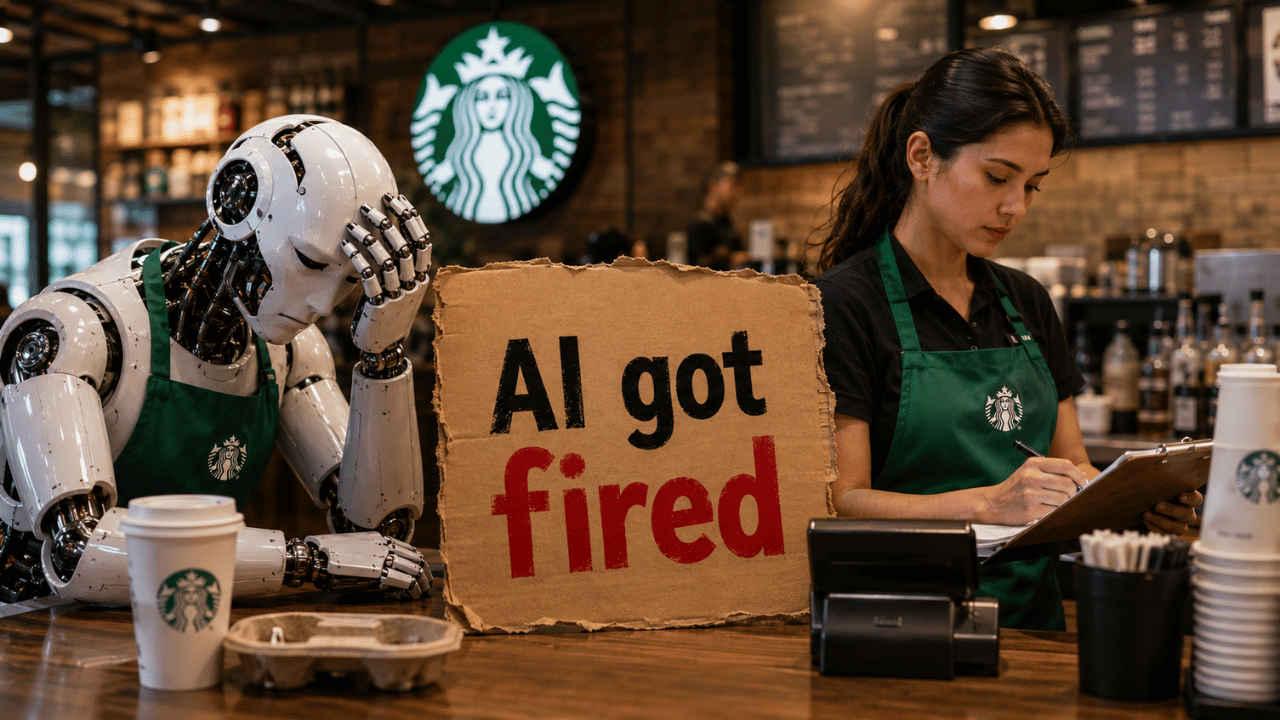
Source: Digit
The restaurant industry more broadly has struggled with AI adoption. Earlier this week, one of Pizza Hut's largest franchisees sued the chain over mandatory deployment of an AI-powered kitchen management system, alleging it dramatically slowed delivery times and caused over $100 million in losses
5
. NomadGo told Reuters it is "continuously learning from customer and user feedback" to improve its products3
.The financial backdrop adds complexity to the decision. Starbucks posted its strongest quarterly sales growth in two and a half years last month, with stock up 24% so far in 2026. However, operating margins in North America have fallen to 9.9%, down from 18% two years earlier
2
. The question now is whether daily replenishments and human involvement in manual inventory counting can accomplish what the algorithm could not.Summarized by
Navi
[2]
[5]
04 Sept 2025•Technology

11 Jun 2025•Business and Economy

21 Oct 2025•Business and Economy
1
Technology

2
Business and Economy

3
Health