4 Sources
[1]
Starcloud raises $250 million for orbital data centers as launch options dry up
Starcloud, a startup developing satellites that can perform AI inference in orbit, told TechCrunch that it has added a $250 million extension to its March $170 million Series A funding round. The extension values the company at $2.3 billion. The additional capital will allow the company to open a larger manufacturing facility and advance its largest orbital data center spacecraft, Starcloud-3, which is intended to fly on SpaceX's forthcoming Starship rocket. CEO Philip Johnston is also amassing capital to ensure that he can launch his satellites as the market for rocket transportation tightens up. "We can see what's coming -- we're going to need to book an enormous amount of launch," Johnston told TechCrunch. Starcloud has already requested permission from the FCC to operate 88,000 spacecraft. "As soon as we can, we want to get under contract with things like Starship," Johnston said. "One of the biggest costs is now on securing your launch capacity....launch is pretty constrained right now because [SpaceX's] Falcon 9 program is scheduled to end in 2028." Launch costs were already one of the biggest challenges for orbital data center startups, to the point that one startup has decided to build its own rockets. SpaceX is now planning to phase out its workhorse vehicle and bring the much larger, but still unproven, Starship rocket online, making planning more difficult for satellite operators. That's especially true while competing rockets, like Blue Origin's New Glenn and ULA's Vulcan, are not flying regularly, and new vehicles like Rocket Lab's Neutron are not yet on the pad. For now, Starcloud is focused on launching two of the company's new generation of 8 kw compute satellites (dubbed Starcloud-2) on rideshare flights in 2027. These will perform orbital inference tasks for customers including US government agencies. Starcloud is considering buying a dedicated Falcon 9 launch to launch more spacecraft and signing contracts with other providers, as well, to support future missions. Still, Starcloud is ultimately built around the potential of SpaceX's Starship to drive down launch costs enough to build out an orbital inference layer that can compete with terrestrial data centers. Johnston says he remains confident in SpaceX's ability to demonstrate that the world's most powerful rocket can be reused quickly and often. This week, SpaceX CEO Elon Musk said his company will delay an attempt to catch a returning Starship rocket for a few months, and will attempt to re-fly the vehicle for the first time at the end of the year or early 2027. "Obviously if we can't book any SpaceX launch capacity in 2029, that will be that will be challenging for us," Johnston said. Starcloud's funding extension was led by Manhattan West Ventures and included participation from Nvidia and Cisco; a person familiar with the deal said Nvidia ponied up $25 million to back Starcloud. Other participants included Benchmark, EQT, Soma, NFX, 776, Cedar Capital, Goanna Capital, and Standard Capital. Johnston points to the Nvidia investment as a key signal of Starcloud's advantages in the nascent space compute sector. Starcloud is the only company (that we know of) currently operating a Nvidia H100 terrestrial data center GPU in orbit, and the first to train a model using it; most other space GPUs are designed for edge processing. Starcloud is sharing those learnings with Nvidia as the chipmaker develops its first purpose-built GPU for space, the Vera Rubin Space-1 chip. "The reason they've chosen to do this investment now is because of all of this data that we got from Starcloud One," he told TechCrunch. "They, more than any other VC, did way more technical duty on this than anybody else." The space-ready chip hasn't even been built yet, but Starcloud hopes to fly it into orbit sometime in late 2028. Johnston says his engineers are tracking a few key design choices: the relationship between the running temperature of the chip and the size of the radiators that dispel that heat, the placement of radiation shielding, and the ruggedizing required for the chips to survive the violence of a rocket launch. The company, currently 25 employees strong and growing, is developing production lines at a 100,000 square foot facility in Woodinville, Washington, near where SpaceX and Amazon build satellites for their communications networks.
[2]
Starcloud raises $250M to support the creation of data center satellite network in league with Nvidia
Starcloud says it has raised $250 million in new funding to support the creation of a constellation of data center satellites powered by Nvidia's next-generation AI chips. The Series A extension funding round was led by Manhattan West, with participation from existing investors including Benchmark, EQT, Soma, NFX and 776. Among the new investors joining for this round are Nvidia, Cisco Investments, Cedar Capital, Goanna Capital and Standard Capital. Founded in 2024, Starcloud is headquartered in Redmond, Wash., and is building production lines for its Starcloud-3 spacecraft at a new 100,000-square-foot manufacturing facility in Woodinville, Wash. The newly announced round brings the startup's total capital raised to $450 million, with a post-money valuation of $2.3 billion. Nvidia's participation in the funding round brings Starcloud's collaboration with the computer-chip titan to a new level. In November 2025, Starcloud flew Nvidia's H100 GPU to orbit for the first time. It used the chip to train a large language model called NanoGPT -- marking a milestone in space-based AI data processing. Starcloud plans to equip future satellites with Nvidia's Space-1 Vera Rubin Module, which Nvidia says will deliver 25 times as much in-space compute capability as the H100. Starcloud's satellites will serve as an early flight platform for the space-rated chips. "This fresh capital empowers us to build the infrastructure to launch many more of Nvidia's most advanced GPUs into space," Starcloud co-founder and CEO Philip Johnston said today in a news release. Starcloud says the new investment will fund the continued buildout of manufacturing capacity, engineering work in collaboration with Nvidia and the procurement of future launch slots. Manhattan West's Lauren Selig will join Starcloud's team as a board observer. Starcloud has filed an application with the Federal Communications Commission to operate as many as 88,000 satellites as orbital data centers for AI and other applications. It's not the only company targeting the market for orbital data centers. Most notably, SpaceX has filed its own plans to put up to a million data center satellites in space, for a project called Starmind. The push to move AI infrastructure into space is driven by growing terrestrial bottlenecks surrounding land, power and water consumption -- and by the political controversies those bottlenecks have sparked.
[3]
Starcloud raised $250mn for orbital AI data centres
Starcloud has raised $250mn at a $2.3bn valuation to run AI inference in orbit, and part of the money is set aside for launch capacity it has not secured. Falcon 9 retires in 2028, and Starship has not yet flown twice. Starcloud has raised $250mn to put AI compute in orbit, and a large part of the money is earmarked for rockets it cannot yet book. The Series A extension values the company at $2.3bn post-money, the company said. Its total raised now stands at $450mn. Starcloud was founded in 2024, and its March round valued it at $1.1bn. Manhattan West led. Nvidia and Cisco Investments joined as new backers, alongside Cedar Capital, Goanna Capital and Standard Capital. Benchmark, EQT, Soma, NFX and 776 all returned. The release says the capital will fund manufacturing, engineering work with Nvidia, and "procurement of future launch allocation". That third item is the difficult one. Starcloud can build the satellites. Getting them off the ground is somebody else's business. What Starcloud has actually flown The company is further along than most orbital compute startups, which is why the round is not speculative. Starcloud-1 launched in November 2025 carrying an Nvidia H100. That was the first data centre-grade GPU to reach orbit. Starcloud says it offered roughly 100 times the GPU compute previously available up there. Since then the company says it has trained the first AI model in space. It also says it ran a version of Google's Gemini in orbit, and demonstrated inference and fine-tuning on flight hardware. Most other chips sent to orbit are edge processors. Starcloud is running the same silicon that fills terrestrial data centres. The plan is 88,000 satellites Starcloud wants a constellation of 88,000 satellites delivering 20 gigawatts of orbital compute. It has already asked the US Federal Communications Commission for permission to operate that many spacecraft. The near-term plan is smaller by several orders of magnitude. The company has booked two Starcloud-2 satellites, of 8 kilowatts each, on rideshare flights in 2027. They will run inference for customers including US government agencies. That is 16 kilowatts against a 20 gigawatt target. The company has 25 employees. It is moving into a 100,000 square foot facility in Woodinville, Washington. Chief executive Philip Johnston said on LinkedIn that Starcloud intends to ramp production to 100 satellites a week. The launch problem Johnston was direct with TechCrunch about what worries him. "One of the biggest costs is now on securing your launch capacity," he said. "Launch is pretty constrained right now because Falcon 9 is scheduled to end in 2028." SpaceX intends to replace Falcon 9 with Starship. Starship is larger, and nobody has yet flown one twice. This week Musk said SpaceX will delay its attempt to catch a returning Starship by a few months. It will try to re-fly one at the end of this year or early in 2027. TNW reported on 5 August that the company aimed to catch a Starship that month. The alternatives are thin. Blue Origin still does not know why New Glenn exploded, ULA's Vulcan is not flying regularly, and Rocket Lab's Neutron has not reached the pad. "Obviously if we can't book any SpaceX launch capacity in 2029, that will be challenging for us," Johnston said. What Nvidia is getting Nvidia put in $25mn, a person familiar with the deal told TechCrunch. The two companies are developing the Nvidia Space-1 Vera Rubin Module, a version of Nvidia's current architecture built for orbit. Nvidia said in July that Vera Rubin was shipping in full production for terrestrial customers. The space part does not exist yet. Starcloud hopes to fly it in late 2028. Johnston said his engineers are working through three questions. How hot the chip runs sets how large the radiators must be. Where to place the radiation shielding is the second. The third is how to make the hardware survive a launch. Johnston said Nvidia invested because of the flight data from Starcloud-1, and that it did more technical diligence than any venture investor. The case for orbit Starcloud describes itself as solving the AI energy bottleneck. In orbit there is continuous sunlight and no grid connection to wait for. That constraint is real on the ground. TNW reported this week that 63% of Europe's new capacity is going outside the five established hubs, pushed there by grid queues and land. Cooling in orbit is the harder half. There is no air, so heat leaves only by radiating away, which is why radiator size drives the design. Not everyone is convinced Masayoshi Son dismissed space data centres in June as a bet on the AI race rather than a business. TechCrunch has called the economics of orbital AI brutal, and reported in May that one rival concluded there were not enough rockets and raised $275mn to build its own. Starcloud has hedged differently. In May it signed a deal to fit SpaceX Starlink mini laser terminals to its satellites. The contract covers more than 50 terminals across more than 25 spacecraft, giving intersatellite links of up to 25 gigabits per second. What is not established Nothing at constellation scale exists. Two satellites fly next year, on rideshares, and the chip the plan depends on has not been manufactured. The $25mn Nvidia figure comes from one unnamed person and neither company has confirmed it. Nvidia is not quoted in the announcement. The 88,000 figure is an FCC filing rather than an approval. Starcloud has not said what a launch contract would cost, or whether it holds one beyond the 2027 rideshares. The company distributed the announcement over a newswire rather than having it independently reported. Its claimed firsts are its own, and nobody has verified them from outside. Johnston also has to hope somebody else solves his hardest problem. Starcloud can build satellites at 100 a week and still not fly them.
[4]
Starcloud Raises $250 Million in Series A With Nvidia Backing
Starcloud said it raised $250 million in a series A funding round that saw Nvidia join as a new investor, giving the data center-focused startup a $2.3 billion valuation. The round, led by Manhattan West, also saw participation from existing investors including Benchmark and EQT, along with newcomers such as Cisco Investments and Cedar Capital. Starcloud has now raised $450 million since its founding in 2024. The company is working to deploy data centers into space. The backing from Nvidia comes after Starcloud flew the chipmaker's H100 GPU to orbit on its Starcloud-1 satellite in November 2025. The companies are now working together on Nvidia's Space-1 Vera Rubin Module, an AI hardware system built for the extreme conditions in space. Cooling will be performed by large radiators and components must withstand radiation exposure, they said.
Share
Copy Link
Starcloud secured $250 million in Series A extension funding at a $2.3 billion valuation to build orbital data centers with Nvidia backing. The startup plans to deploy 88,000 satellites but faces mounting challenges as SpaceX phases out Falcon 9 by 2028 and Starship remains unproven for repeat flights.
Starcloud raises $250 million in a Series A funding extension that values the orbital data centers startup at $2.3 billion
1
2
. The round, led by Manhattan West, brings Starcloud's total capital raised to $450 million since its 2024 founding4
. Nvidia joined as a new investor with a $25 million commitment, alongside Cisco Investments, Cedar Capital, Goanna Capital and Standard Capital1
. Existing backers Benchmark, EQT, Soma, NFX and 776 participated in the extension2
.CEO Philip Johnston told TechCrunch that securing launch capacity has become one of the biggest costs facing the company. "Launch is pretty constrained right now because Falcon 9 is scheduled to end in 2028," Johnston explained
1
. SpaceX plans to phase out its workhorse vehicle and transition to the much larger Starship rocket, which has not yet flown twice3
. This creates planning difficulties for satellite operators, especially as competing rockets like Blue Origin's New Glenn and ULA's Vulcan are not flying regularly, and new vehicles like Rocket Lab's Neutron have not reached the pad1
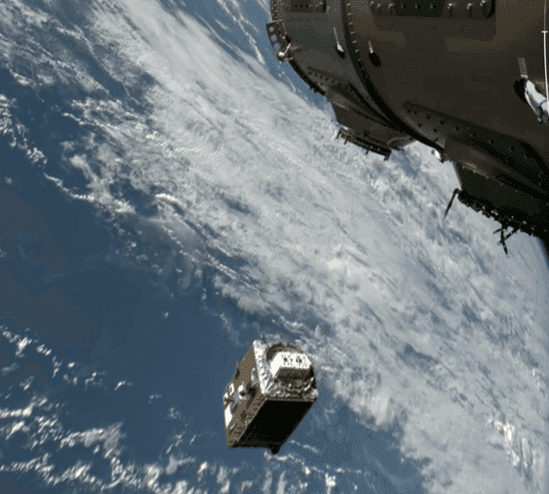
.The Nvidia investment signals growing confidence in Starcloud's approach to orbital AI inference. Starcloud is currently the only company operating a Nvidia H100 GPU in orbit, having launched it aboard Starcloud-1 in November 2025
1
2
. The company became the first to train an AI model in space using this data center-grade hardware, running a version of NanoGPT and demonstrating inference and fine-tuning capabilities with Google's Gemini2
3
. The Nvidia H100 GPU delivered roughly 100 times the compute power previously available in orbit, as most other space chips are designed for edge processing rather than data center workloads3
.
Source: GeekWire
Johnston emphasized that Nvidia conducted more technical diligence than any venture investor, driven by flight data from Starcloud-1
3
. The two companies are collaborating on the Nvidia Space-1 Vera Rubin Module, a purpose-built AI hardware system designed for the extreme conditions of space2
4
. Nvidia claims the Vera Rubin Module will deliver 25 times as much in-space compute capability as the H1002
. Starcloud hopes to fly this next-generation chip in late 2028, though it has not been built yet1
.Starcloud's engineers are tracking three critical design challenges for the space-rated chips. The relationship between running temperature and radiator size is paramount, since cooling in orbit occurs only through radiation with no air present
1
3
. Teams are also determining optimal placement of radiation shielding and ruggedizing components to survive the violence of rocket launches1
4
.The 25-employee company is building production lines at a new 100,000 square foot facility in Woodinville, Washington, near where SpaceX and Amazon manufacture satellites for their communications networks
1
3
. Johnston stated on LinkedIn that Starcloud intends to ramp production to 100 satellites per week3
. The company has filed an FCC application to operate 88,000 satellites as orbital data centers targeting 20 gigawatts of compute capacity1
3
.Related Stories
For now, Starcloud is focused on launching two Starcloud-2 satellites, each providing 8 kilowatts of compute, on rideshare flights in 2027
1
3
. These spacecraft will perform orbital AI inference tasks for customers including US government agencies1
. That represents 16 kilowatts against the 20 gigawatt target—a gap of several orders of magnitude3
. The company is considering purchasing a dedicated Falcon 9 launch to deploy additional spacecraft and signing contracts with other providers to support future missions1
.The additional capital will enable Starcloud to advance its largest spacecraft, Starcloud-3, intended to fly on SpaceX's forthcoming Starship rocket
1
. Johnston emphasized the urgency of securing launch contracts: "As soon as we can, we want to get under contract with things like Starship. Obviously if we can't book any SpaceX launch capacity in 2029, that will be challenging for us"1
3
. This week, SpaceX CEO Elon Musk announced the company will delay its attempt to catch a returning Starship for a few months and will try to re-fly the vehicle for the first time at the end of 2026 or early 20271
.Starcloud positions itself as solving the AI energy bottleneck by leveraging continuous sunlight in orbit with no grid connection delays
3
. Terrestrial constraints around land, power and water consumption are driving political controversies and infrastructure bottlenecks2
. Recent reporting indicates that 63% of Europe's new data center capacity is moving outside the five established hubs due to grid queues and land availability issues3
.
Source: TechCrunch
Starcloud is not alone in pursuing this market. SpaceX has filed plans for up to one million data center satellites under a project called Starmind
2
. However, skepticism remains about the business case. SoftBank CEO Masayoshi Son dismissed space data centers in June as a bet on the AI race rather than a viable business3
. TechCrunch has called the economics of orbital AI "brutal," and reported that one rival concluded there were not enough rockets available and raised $275 million to build its own launch vehicles3
. Launch costs were already among the biggest challenges for orbital data center startups before SpaceX's transition plans added uncertainty1
.Summarized by
Navi
[2]
[3]
[4]
30 Mar 2026•Startups

09 Jun 2026•Technology

04 Nov 2025•Technology

1
Technology

2
Technology

3
Technology