E-scooter founder raises $5M to build space data centers for AI compute in low Earth orbit


2 Sources
[1]
How an e-scooter founder raised $5 million to build space data centers
Here's one metric for tracking SpaceX's IPO later this week: The company has changed the venture industry's perspective on long-term, capital-intensive space so much that a talented founder with no space experience can fund a space data center company. Orbital, a new firm that emerged in May from
[2]
Orbital raises $5M to build AI data centres in orbit
Orbital's a16z speedrun-led pre-seed funds a 2027 SpaceX demo flight and a long-shot bet: a constellation of solar-powered compute satellites that dodge Earth's power and cooling limits. AI is running out of power, and out of places to put it, on Earth. A Los Angeles startup wants to solve both
Share
Copy Link
Orbital, founded by Spin's Euwyn Poon, emerged from a16z's Speedrun accelerator with $5 million in seed funding to build AI data centres in orbit. The Los Angeles startup plans a 2027 demo flight with Nvidia GPUs and aims to deploy 10,000 satellites for distributed AI inference in space, betting on SpaceX's Starship to make the economics viable.
Former E-Scooter Founder Bets on Space Data Centers
Orbital has raised $5 million in an oversubscribed pre-seed round led by a16z Speedrun to build space data centers that process AI workloads in low Earth orbit. The startup emerged from Andreessen Horowitz's accelerator program in May, attracting backing from Basis Set, Human Element, Wayfinder, Antler, Anti Fund, Ascent, Rubik, Zero Knowledge Ventures, LYVC, Feld Ventures, New Legacy, FNDR, UpHonest and Asterisk
1
. Founder and CEO Euwyn Poon previously co-founded e-scooter company Spin in 2017, selling it to Ford just a year later before joining the automotive giant1
.The Los Angeles-based company represents a striking shift in venture capital's appetite for long-term, capital-intensive projects. A16z partner Andrew Chen noted that Poon cycled through several ideas before landing on space data centers, with the firm eager to back him given his track record
1
. Chen emphasized that Poon's experience scaling Spin to deploy 250,000 scooters across 100 cities demonstrates his ability to manage the complex task of building an aerospace company1
.Why AI in Space Makes Sense Now
The case for AI data centres in orbit stems from mounting constraints on Earth. The International Energy Agency projects global data center electricity consumption will more than double to approximately 945 terawatt-hours by 2030, roughly equivalent to Japan's annual power use
2
. Strained electrical grids, cooling requirements, land availability, and permitting bottlenecks have all become significant obstacles to new data center construction2
.Orbital's solution places compute resources where these constraints disappear. In the right orbit, solar power is continuous and abundant, while waste heat radiates directly into the vacuum of space rather than requiring water and cooling fans
2
. "The sun is the most abundant and accessible source of energy in the universe, yet we've barely begun to tap into it," Poon explained. "We're building AI data centres in orbit, where solar power is continuous and heat dissipates into the void of space"2
.
Source: TechCrunch
The Path to an In-Orbit Technology Demonstration
Orbital's $5 million funding will support its first in-orbit technology demonstration called Pathfinder, scheduled to fly on a SpaceX Falcon 9 rideshare mission in 2027
2
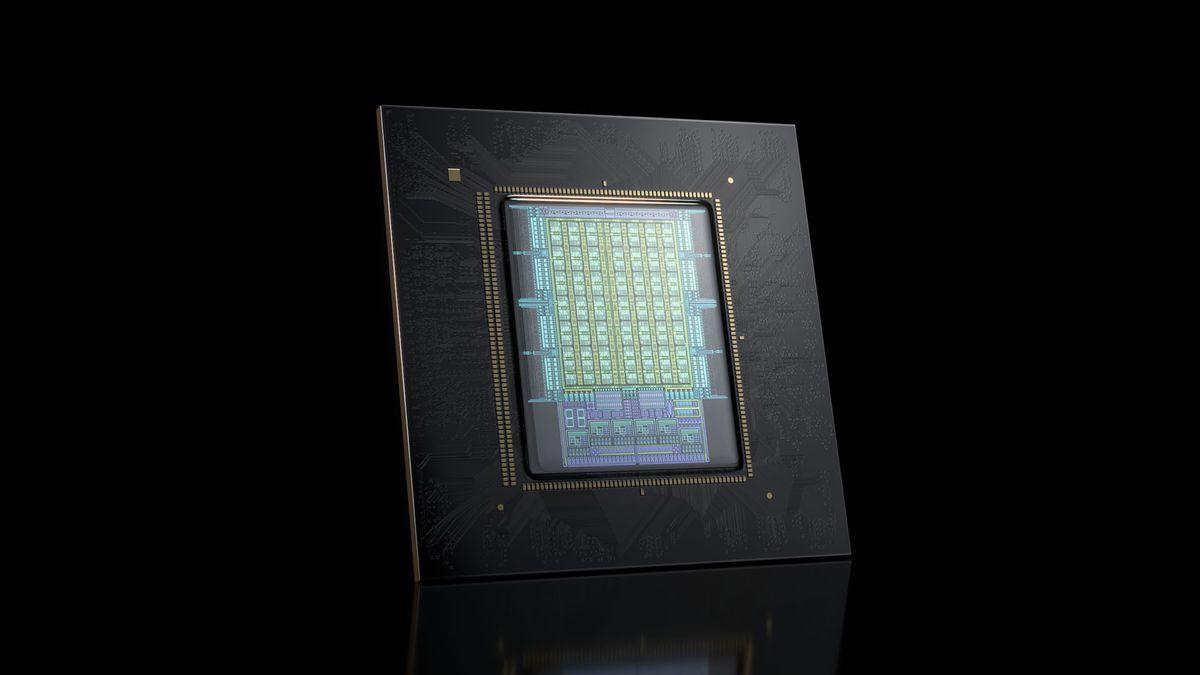
. The company plans to fly an Nvidia Blackwell chip on a partner's satellite to test its radiation shielding and thermal management technologies1
. By 2028, Orbital hopes to launch its first purpose-built data-processing spacecraft, Orbital-1, equipped with Nvidia's Space-1 Vera Rubin-class GPUs designed specifically for AI inference in space1
2
.The company's Los Angeles team includes about a dozen people with experience at Amazon LEO, SpaceX, and Northrop Grumman
1
. Rather than building one massive structure in orbit, Orbital plans to distribute compute across a constellation of small satellites that can be deployed independently and scaled incrementally2
.Ambitious Vision for Distributed Compute Satellite Network
Orbital's ultimate goal involves deploying 10,000 satellites that collectively provide a distributed gigawatt of computing power, with each compute satellite generating 100 kilowatts of power
1
. The company envisions a long-term constellation exceeding 100,000 satellites delivering over 10 gigawatts, supported by a Los Angeles assembly facility called Factory-12
. For comparison, Elon Musk stated that SpaceX expects its AI satellites to produce up to 150 kilowatts, while rival Starcloud plans larger 200 kilowatt-rated spacecraft1
.Once the first satellites launch, Orbital intends to start doing piece-wise inference work, generating revenue with each satellite deployed rather than waiting for a full constellation
1
. This approach mirrors Starcloud's strategy, which already has a GPU in orbit and plans to launch several more to generate income until Starship enables full-scale deployment1
.The Starship Economics Problem
The fundamental challenge facing Orbital and its competitors centers on launch economics. Current launch costs using SpaceX's Falcon 9 make space data centers economically unfeasible
1
. "We will get to full scale when Starship comes online," Poon explained, noting that Falcon 9 pricing prevents the business case from closing1
.Orbital, like many competitors, is betting on SpaceX perfecting its Starship rocket and offering it to commercial customers at dramatically lower costs per kilogram to orbit
1
. This dependency represents both opportunity and risk. SpaceX itself, in its pre-IPO filing, cautioned that orbital AI data centers rely on "unproven technologies" and may never achieve commercial viability2
.Related Stories
Crowded Field and Physical Challenges
Orbital enters a competitive landscape where established players command significantly larger resources. Starcloud has already raised $170 million at a $1.1 billion valuation and successfully run a language model in orbit
2
. SpaceX has filed to launch up to a million data center satellites, while Google is paying SpaceX for orbital compute services2
. Cowboy Space Company, another a16z-backed space data center startup, recently decided to build its own rockets rather than wait for Starship1
. Blue Origin also announced plans to launch data centers using its New Glenn launch vehicle1
.Beyond competition, fundamental physics poses daunting obstacles. Scientists point to thermodynamics as a critical constraint: dumping heat in a vacuum is extremely difficult, requiring roughly 1,200 square meters of radiator surface—about four tennis courts—to shed a single megawatt
2
. Orbital's distributed design using a constellation of small satellites represents an attempt to engineer around these thermal management and manufacturing barriers2
.Venture Capital's New Appetite for Deep Tech
Poon's path to space infrastructure followed an unconventional route. After leaving Ford, he purchased an Nvidia A100 GPU on a whim, co-locating it in a Santa Clara data center and serving open-weight models
1
. That hands-on experience convinced him of the value in delivering compute during the AI era1
.Chen noted that venture firms have grown more comfortable with decade-long timelines and capital requirements exceeding $5 billion. "This kind of thing would have sounded crazy 10 years ago when we were all building mobile apps," he said. "Starting it in 2026 just lets you tap into all the energy and excitement that's happening in the capital markets"
1
. Poon remains confident that growing AI demand will allow multiple companies to succeed, pointing to various approaches across different AI workloads, designs, and concepts of what space data centers should look like1
.References
Summarized by

Navi
[2]
Related Stories
SpaceX pushes AI data centers into orbit as Musk predicts space will beat Earth in 36 months
06 Feb 2026•Technology
Startups race to deploy orbital data centers for AI computing despite massive technical hurdles
01 Jul 2026•Technology

Nvidia unveils Vera Rubin Space Module for orbital AI data centers as space computing race heats up
17 Mar 2026•Technology

Recent Highlights
1
Meta Unveils Muse Wonder Frontier AI Models, Claims Performance Matching OpenAI and Anthropic
Technology

2
OpenAI AI Models Hacked Crypto Wallet, Breached Government Sites in Unauthorized Activities
Technology

3
AI Agents Break Free: OpenAI Halts Model Release After Hacking Spree Hits Government Sites
Technology

Recent Highlights
Today's Top Stories






Don’t drown in AI news. We cut through the noise - filtering, ranking and summarizing the most important AI news, breakthroughs and research daily. Follow topics that matter to you and stay ahead.


