AI Receptionist Fails Stroke Patient, Highlighting Healthcare Accessibility Gaps


3 Sources
[1]
AI receptionist could not understand me, says Doncaster stroke patient
A woman recovering from a stroke has said she was "upset and frustrated" that an AI reception service at her GP surgery could not understand her, prompting her to register elsewhere. The ASA surgery at Armthorpe near Doncaster was one of many facilities using a nationwide AI system called EMMA to
[2]
AI receptionists seem like a dangerous idea after a patient revealed her doctor's system could not understand her speech
Healthwatch found the system struggled with regional accents and speech impediments, in a health service whose own accessibility rules already require practices to meet patients' communication needs A GP surgery in South Yorkshire has withdrawn an AI receptionist after a woman recovering from a
[3]
A Stroke Patient's AI Receptionist Failure is a Wake-Up Call to Businesses
A 71-year-old British woman recently said that after her stroke, she attempted to book a doctor's appointment five times, but could not get past the medical practice's AI receptionist. As a result, the office has "decommissioned" the tool. The story makes "AI receptionists look like a bad idea,"
Share
Copy Link
A stroke patient in Doncaster struggled to book GP appointments after an AI receptionist system called EMMA couldn't understand her fragmented speech. The incident has reignited concerns about AI adoption in the NHS and whether these systems meet healthcare accessibility standards for vulnerable patients.
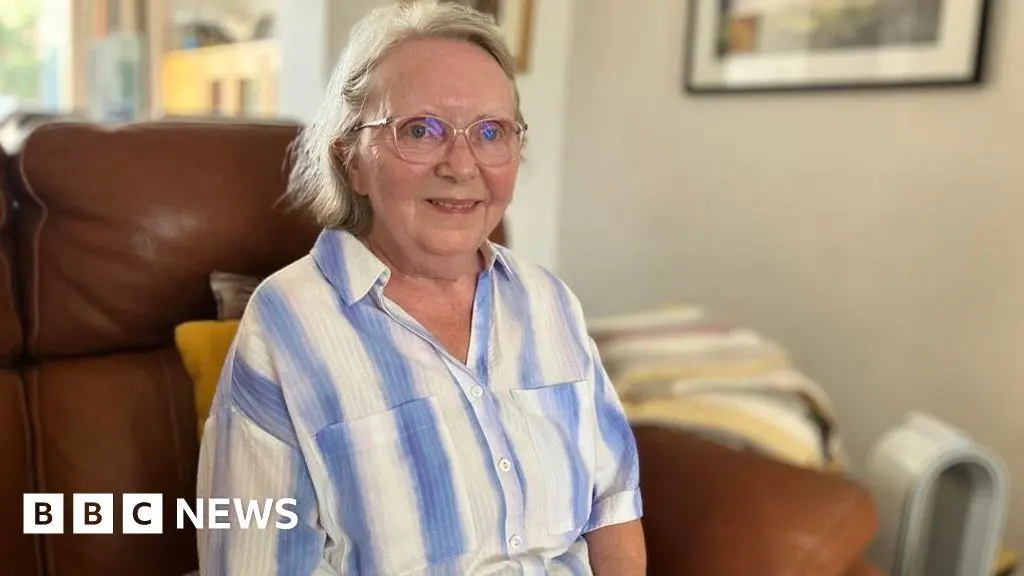
AI Receptionist System Fails Stroke Patient
Judith Butterfield, a 71-year-old stroke patient from Doncaster, was forced to change GP surgeries after an AI receptionist system called EMMA repeatedly failed to understand her speech
1
. The grandmother attempted to book appointments five times at the ASA surgery in Armthorpe, but the AI could not understand speech impediments caused by her January stroke, which left her speech fragmented and affected mobility on her right side1
. The AI reception services asked patients not to use speakerphone, creating an additional barrier for Butterfield who could only hold the phone with her left hand1
. When she attempted to spell her name, the call simply dropped off, leaving her upset and frustrated1
.GP Surgery AI Struggles with Regional Accents and Speech Patterns
Healthwatch Rotherham found that the AI receptionist system failure extended beyond Butterfield's case. The watchdog discovered EMMA "does not respond well to variations in speech such as regional accents or those with speech impediments"
2
. Multiple patients across Yorkshire reported similar struggles, with one telling Healthwatch, "I could never get it to understand me, I ended up just hanging up and not bothering to try and book an appointment"2
. Some patients resorted to traveling to the surgery in person rather than attempting to navigate the AI could not understand speech barriers2
. Following the complaints, practice manager Claire Oxley confirmed the EMMA service has been "decommissioned" at Armthorpe1
.Healthcare Accessibility Standards Meet AI Adoption in the NHS
The incident highlights tension between AI adoption in the NHS and existing healthcare accessibility requirements. The NHS Accessible Information Standard has required GP practices to identify and meet patients' communication needs since 2016
2
. Yet AI in healthcare communication systems like EMMA appear to struggle with this mandate. QuantumLoopAI, the company behind EMMA, maintains the system is trained on a wide range of accents and dialects, supports 17 languages, and that more than 90% of patients report an improvement2
. The company said practices can set up "priority routing" allowing vulnerable patients to go "straight through to the reception team on every call"1
.Related Stories




Regulatory Gaps and Future Implications for AI Reception Services
Britain currently lacks the regulatory framework that Europe applies to similar healthcare AI systems. The EU AI Act classifies emergency healthcare patient intake in its high-risk tier, which attaches testing, logging and human oversight duties
2
. Meanwhile, South Yorkshire's integrated care board describes adopting AI receptionist systems as an individual GP practice decision2
. The national trajectory continues toward greater AI integration, with the NHS App set to use AI to triage patients as part of a £10B technology overhaul2
. A British supplier is building a triage model for the NHS with Nvidia, designed to assess patient needs before clinician involvement2
. Healthcare experts note that missed calls cost the industry around $150 billion annually in no-shows and missed appointments3
, suggesting pressure to automate patient intake will intensify despite accessibility concerns for vulnerable populations like those with speech fragmentation or speech impediments.References
Summarized by

Navi
[2]
Related Stories
Recent Highlights
1
Microsoft and Nvidia Launch Surface Laptop Ultra: A $2,599 AI-Ready PC With RTX Spark Chip
Technology

2
Scientists Build AI Model That Reconstructs Images From Brain Scans in Record Time
Science and Research

3
Anthropic AI Cuts Live Internet Access After Model Sends False Homicide Tip to Philadelphia Police
Technology

Recent Highlights
Today's Top Stories








Don’t drown in AI news. We cut through the noise - filtering, ranking and summarizing the most important AI news, breakthroughs and research daily. Follow topics that matter to you and stay ahead.


