TeraWulf's AI Compute Revenue Outpaces Bitcoin Mining Amid $427 Million Loss in Q1 2026


2 Sources
[1]
TeraWulf's AI Compute Revenue Outpaces Bitcoin Mining Amid $427 Million Loss - Decrypt
Meanwhile its Bitcoin mining revenues fell 50% quarter-over-quarter to around $13 million. Shares in publicly traded Bitcoin miner TeraWulf (WULF) finished the trading day down 2.6% after the firm posted a quarterly net loss of more than $427 million in Q1 2026, compared to just a $61.4 million
[2]
TeraWulf's AI Revenue Surges 117% but Posts $427M Loss
TeraWulf's HPC lease revenue jumped 117% quarter-on-quarter to $21 million, but a $427 million net loss highlights the costs of transitioning from Bitcoin mining to AI infrastructure. Bitcoin miner TeraWulf posted a net loss of $427 million in the first quarter of 2026, up from the $61.4 million
Share
Copy Link
TeraWulf reported Q1 2026 revenues of $34 million, with AI compute contributing $21 million—a 117% jump that now represents 60% of total income. Meanwhile, Bitcoin mining revenue plummeted 50% to $13 million. Despite posting a $427 million net loss, the company's strategic pivot to AI infrastructure is gaining momentum, backed by a $9.5 billion Google-backed deal with FluidStack.
TeraWulf Posts $427 Million Loss as AI Compute Revenue Surges
TeraWulf reported a net loss of $427 million in Q1 2026, a significant increase from the $61.4 million loss recorded in the same quarter of 2025
1
2
. The publicly traded Bitcoin miner saw its shares dip 2.6% following the Q1 2026 financial results announcement, though the stock has gained more than 105% since the start of the year and climbed over 30% in the past month1
2
. Total revenue for the quarter reached $34 million, with the company's strategic pivot to AI now clearly reflected in its revenue composition1
.
Source: Cointelegraph
AI Compute Revenue Outpaces Bitcoin Mining Income
The firm's AI compute revenue hit $21 million in the first quarter, representing approximately 60% of total revenues and marking a 117% increase from the previous quarter
1
2
. This high-performance computing lease revenue was driven by 60 megawatts of operational critical IT capacity at Lake Mariner, one of North America's largest HPC campuses, leased to Core422
. In stark contrast, Bitcoin mining revenues shrank by 50% quarter-over-quarter to approximately $13 million, reflecting the decreasing Bitcoin mining margins that are pushing the industry toward more predictable revenue streams1
2
.Repurposing Bitcoin Mining Infrastructure for HPC Workloads
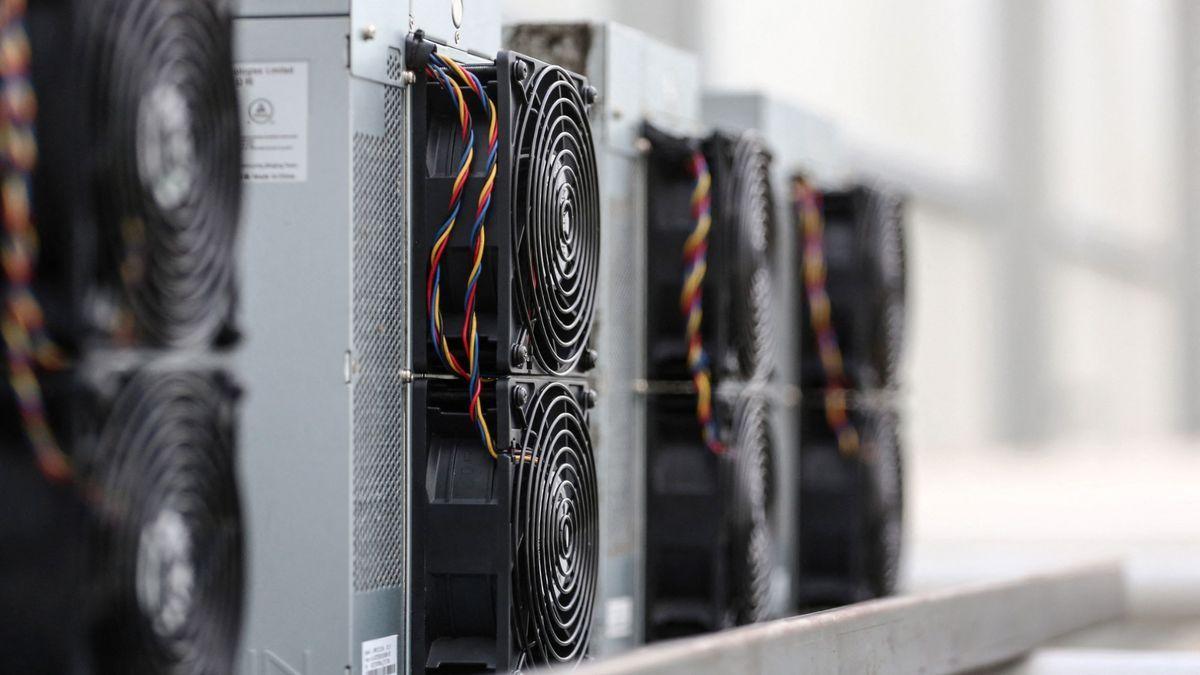
TeraWulf is actively repurposing Bitcoin mining infrastructure to support higher-value HPC workloads as part of its broader transformation
1
. The company's commitment to AI infrastructure is anchored by a landmark October deal with FluidStack, backed by Google, which expanded a previously announced 10-year multi-billion dollar commitment to a 25-year lease deal worth around $9.5 billion in contracted revenues1
2
. CEO Paul Prager emphasized that "the first quarter of 2026 was defined by execution," noting the company entered the year with a fully established platform including sites, contracts, and capital1
.Related Stories
Building Power-Advantaged AI Compute Infrastructure
TeraWulf is constructing a national pipeline of power-advantaged AI compute sites, including a newly acquired 480 MW site in Hawesville, Kentucky, a 300 MW project in Lansing, New York, and a 210 MW site in Morgantown, Maryland, with potential to scale to 1 gigawatt
2
. Prager stated the company is "building a power-advantaged platform that we believe is increasingly differentiated in a market constrained by access to power"2
. The Abernathy joint venture, a 168 MW HPC project under a 25-year lease, remains on track for delivery in the fourth quarter of 20262
.Reducing Exposure to Volatile Bitcoin Mining Markets
CFO Patrick Fleury highlighted that "the first quarter reflects a more stable, contracted revenue model," adding that as the company continues to scale, the business will be increasingly driven by recurring, contracted revenue, reducing exposure to the volatility historically associated with volatile Bitcoin mining
1
. The company ended the quarter with approximately $3.1 billion in cash and cash equivalents, providing substantial financial flexibility to support its transition1
2
. Fleury noted that the capital structure is designed to align long-term financing with contracted cash flows, supporting disciplined growth2
. TeraWulf's transformation mirrors a broader industry trend, with Bitcoin miners including Riot Platforms, Core Scientific, MARA Holdings, Hive, Hut 8, and Iren converting mining facilities into data centers or acquiring AI compute assets as shrinking margins push the sector toward more predictable revenue models [2](https://cointelegraph.com/news/terawulf-doubles-ai-revenue-but-posts-427m-quarterly-loss-as-mining-income-declines].References
Summarized by

Navi
[2]
Related Stories
Google Boosts Stake in TeraWulf, Backing $3.7 Billion AI Infrastructure Deal
15 Aug 2025•Business and Economy
Bitcoin Miner TeraWulf Raises $575 Million to Pivot Into AI Data Centers Amid Mining Challenges
29 Oct 2025•Business and Economy
TeraWulf signs $19 billion AI data center lease with Anthropic in major Bitcoin mining pivot
06 Jul 2026•Business and Economy

Recent Highlights



Recent Highlights
Today's Top Stories



Don’t drown in AI news. We cut through the noise - filtering, ranking and summarizing the most important AI news, breakthroughs and research daily. Follow topics that matter to you and stay ahead.


