7 Sources
[1]
Tesla's robotaxis are moving in reverse
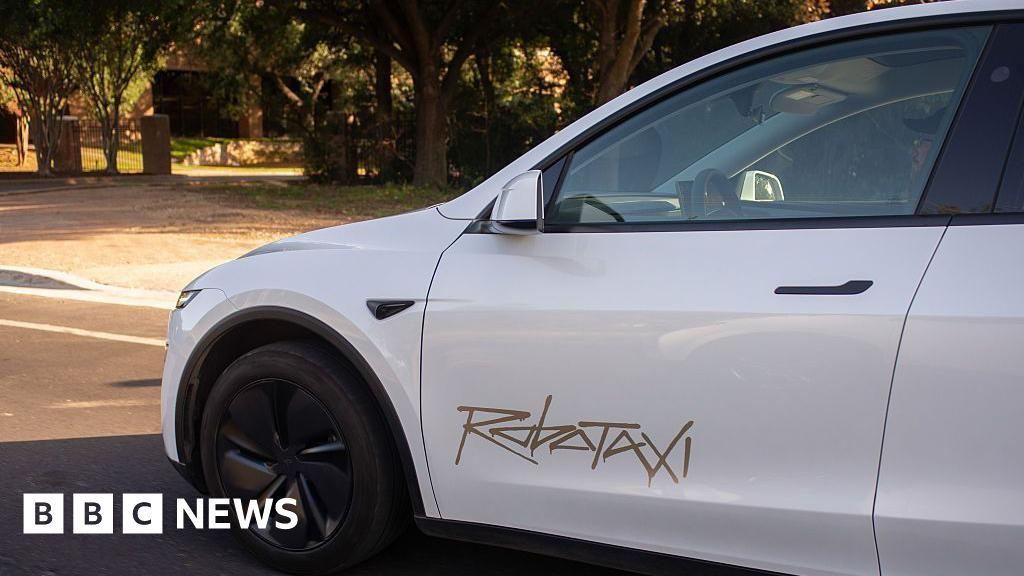
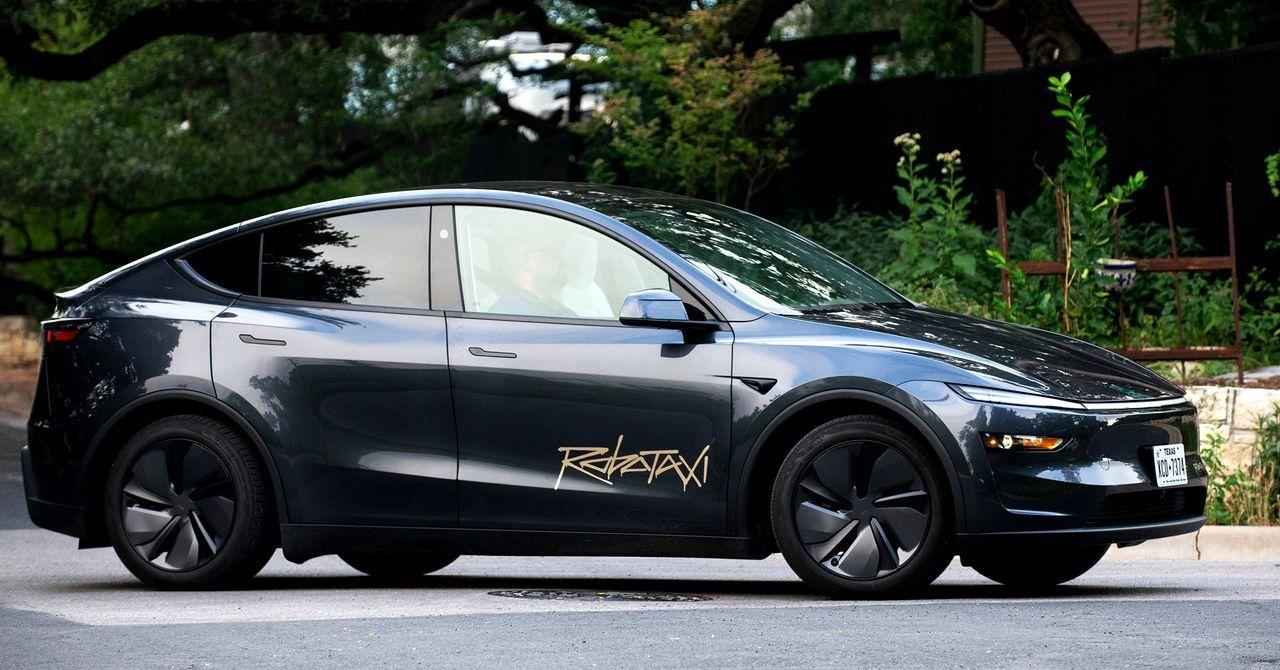
Tesla's budding "Robotaxi" network drove fewer miles for paying customers in the second quarter than it did in the first, according to a chart the company released on Wednesday. The quarter-over-quarter decline runs counter to Tesla's rhetoric and actions in the past year. Tesla has staked much of its future on the idea of a massive, low-cost, cash-generating Robotaxi fleet -- or going "balls to the wall for autonomy," as CEO Elon Musk framed it in 2024. The quarterly step-down in Robotaxi miles also comes amid weakening profits in Tesla's core businesses, which underperformed Wall Street's expectations, according to figures released Wednesday. Tesla's stock plunged more than 13% in early trading on Thursday. At a passing glance, the chart appears to show steady growth in paid Robotaxi rides between August 2025 and June 2026. But the numbers displayed are cumulative, and when broken down by quarter, they show that Tesla's Robotaxi fleet of Model Y SUVs carrying paying passengers covered around 1.1 million miles in the first quarter. That fell to roughly 700,000 miles in the second quarter, a decline of about 36%. That's despite the fact that the company has expanded its nascent operation to six cities across Texas and Florida, with a mix of unsupervised and supervised vehicles. It's likely Tesla is counting the paid miles driven in the San Francisco Bay Area, too, even though these branded Robotaxis don't have the state-required permits to operate autonomously and also have a safety driver behind the wheel. Tesla has referred to that operation as part of its "Robotaxi coverage." The decline in miles driven also comes as Tesla made a striking admission on a conference call Wednesday about its second-quarter results. In response to a question about how slowly Tesla is scaling the Robotaxi service, Musk said the company needs to "accumulate driving data that is specific to the Cybercab" -- the company's gold, purpose-built, two-seater sedan that is expected to make up the bulk of its autonomous vehicle fleet -- "before we can put a lot of them on the road." "Unlike, say, Model 3, Model Y, and our other vehicles where we've got a lot of vehicles on the road, millions of vehicles on the road, we don't have that for Cybercab. So we actually have to accumulate miles with Cybercabs that are retrofitted with steering wheels and acceleration and braking pedals, that kind of thing, to calibrate to the Cybercab chassis," he said. "As we are confident about that, the number of Cybercabs in cities will increase dramatically." This represents something of a break from claims the company has made for years about how its fleet of nearly 10 million customer cars has been silently collecting data in the background to train future robotaxis (in addition to training the driver assistance software for consumers, which Tesla calls Full Self-Driving). On the call, Tesla executives framed the slow progress as a matter of being cautious about safety. "Our goals are very ambitious for Robotaxi, but we do need to be cautious about causing any accidents or causing any harm to anyone," Musk said. He then said he doesn't want Tesla Robotaxis causing accidents because he thinks bad media coverage could lead to a regulatory crackdown. "Although there are, I think, 30 to 40,000 automotive deaths per year in the United States alone, most of those do not generate any press, you don't really read about almost any of those. But if we injure even one person, it will be worldwide headline news, and regulators will immediately clamp down on our activities," he said. Ashok Elluswamy, Tesla's VP of AI, boasted that Tesla's Robotaxis have had "zero notable incidents" while driving "more than 380,000 miles" without a safety operator onboard. He did not define what the company considers "notable incidents," though he claimed that "any reports have been of other actors impacting us when we were stationary." Tesla has reported 22 crashes to the National Highway Safety Administration in the year since it started trialing its Robotaxi service. While most of them involve other cars crashing into Tesla's Robotaxis, the company has reported three crashes caused by its teleoperators moving the vehicles remotely, and multiple instances of the cars hitting objects at low speeds including curbs, utility poles, and a tow truck's bed. This represents another narrative change for the company. Tesla spent years claiming that the largest hurdle to full-scale Robotaxi deployment was regulatory in nature -- though the company never really specified what those prohibitive regulations were. Now the company says proving safety is all that's holding Robotaxis back. And although it is still in the very early stages, Tesla still chose this moment to take a victory lap about its decision to build an autonomy stack that doesn't use radar or lidar sensors, like industry leader Waymo. "Historically, the so-called experts have always claimed that you need lidars, radars, HD maps, and the entire kitchen sink to drive safely. Here, we show that such is not true. You can have safe, comfortable, and affordable autonomy with just cameras," Elluswamy said. Both Musk and Elluswamy also promised growth is coming. They noted that the number of unsupervised miles traveled has grown roughly 10% every week since Tesla started offering them at the end of last year. "We'll continue to scale, I think, very, very rapidly," Musk said.
[2]
Tesla's robotaxi promises are clashing with reality
In an earnings call yesterday, Tesla CEO Elon Musk did his best to paint a positive portrait of the company's robotaxi program. New cities are being added, more miles are being driven, and more people are experiencing Tesla's unsupervised vehicles. But Musk's typical bullishness seemed to be absent from the call, as the occasional trillionaire sought to temper expectations about the program's future. "We're going as fast as humanly possible in scaling Robotaxi," Musk said, "while trying to ensure that we do not harm anyone at all and ideally do not even run over a pet." Musk's insistence that Tesla's robotaxi service was growing is clashing with the reality of the situation: Mileage is basically flat, the number of vehicles appears to be shrinking, and despite the Tesla executive team's claims of "zero notable incidents," the safety of the company's technology appears to be an open question. Tesla did it's best to frame the situation as headed in the right direction. Ashok Elluswamy, the company's head of AI, said that Tesla's unsupervised robotaxis have driven 380,000 miles across six cities in two different states. And according to Musk, that was increasing at a rate of 10 percent a week in terms of miles driven. Elluswamy couldn't help but take a swipe at Tesla's competitors who use lidar sensors, as opposed to Tesla's camera-0nly approach. "Historically, the so-called experts have always claimed that you need lidars, radars, HD maps, and the entire kitchen sink to drive safely," he said. "Here we show that such is not true. You can have safe, comfortable, and affordable autonomy with just cameras. This record should be a huge validation of Tesla's entire AI approach." But even the numbers that Tesla reported seem to betray that message. Waymo, which uses lidar sensors and radar as redundant sensors in addition to cameras, typically drives around four million miles a week. Tesla's total mileage, a year into its robotaxi program, is less than 10 percent of that figure. This reality is starting to spook investors, with BNP Paribas Equity Research senior analyst James Picariello calling it "an alarming decline" in a research note to clients. Tesla uses a mix of unsupervised and supervised vehicles as part of its fleet, but that ratio appears to be in a constant state of flux. According to the crowdsourced Robotaxi Tracker, the company currently only has 16 unsupervised vehicles in Austin, four in Dallas, and one in Houston. During the earnings call, Elluswamy was asked what was preventing Tesla from flooding the zone in Austin, where it first launched its robotaxis a year ago, as opposed to dropping a small number of vehicles in new cities. "The reason we have been expanding across different cities, instead of just doubling down on a single city, is that we want to make sure that our stack is a very general one," Elluswamy said. "It is a general one. We just want to like, you know, both prove to ourselves and to other folks that it is working across a lot of different cities without too much effort per city." Another limiting factor is state regulations. New Jersey is considering a bill that would essentially ban robotaxis without multiple sensors, like radar and lidar. Morgan Stanley analyst Andrew Percoco flagged this on the call, noting "there seems to be some evolving regulations at the state level, potentially around sensor requirements." To which Tesla's vice president of vehicle engineering Lars Morvay acknowledged "obviously the stuff in New Jersey, you know, is a little bit disheartening." A more restrictive regulatory environment could limit the total addressable market for Tesla robotaxis, which would clash with the company's message about a more generalized service that can drive anywhere, under any conditions. Safety is another obstacle. Musk's comment about wanting to avoid running over anyone's pet appeared to be a subtle swipe at Waymo, which has hit and killed a number of animals over the past several years. But Tesla's safety record is a mixed bag. We don't have a lot of great insight into Tesla's robotaxi crashes because the company tends to redact a lot of the important details. According to the Robotaxi Tracker, the company's fleet has been involved in approximately 18 incidents, 56 percent of which were the fault of another driver. And Tesla's Full Self-Driving is under investigation by the National Highway Traffic Safety Administration, with the potential for a future recall. Tesla's robotaxis are currently running version 15 of FSD, as compared to version 14.3.6 on its customer vehicles. Tesla is asking investors, supporters, and customers to look past these shortcomings as it continues to push the message that it's robotaxi program is growing. But the company continues to run into a reality that contradicts that message.
[3]
Tesla's once-bullish tone on robotaxis shifts
LOS ANGELES, July 23 (Reuters) - A year ago, Tesla (TSLA.O), opens new tab CEO Elon Musk said the company's robotaxi network would expand at a "hyper-exponential rate" and be available to half the population of the U.S. by the end of 2025. On Wednesday's earnings call, Musk and his executive team struck a more guarded tone as they fielded analysts' questions about a slower-than-expected rollout. Since launching a small robotaxi pilot in Austin in June 2025, Tesla has expanded to only a handful of other cities, in Texas and Florida, with service often limited to outlying areas. Tesla said paying customers have traveled 2.5 million miles in its robotaxi service, including 380,000 miles in rides without an in-vehicle safety monitor. Tesla's unsupervised robotaxi miles remain well below the more than 220 million autonomous miles driven by Waymo through the end of March, underscoring the lead Alphabet's self-driving unit holds in commercial deployment, Forrester analyst Paul Miller said. Barclays analysts wrote earlier this month that Tesla's perceived advantage in robotaxis is its "ability to scale more rapidly," but instead it "has been seen by many investors as somewhat 'slow.'" Investors have valued Tesla on the promise that robotaxis and its Optimus humanoid robots will one day become its primary revenue drivers. The stock trades at more than 166 times forward earnings estimates, far above the multiples of traditional automakers and Big Tech companies. The stock, which has fallen nearly 17% this year as of last close, was down about 4% in premarket trading. WHY THE ROLLOUT IS SLOWER Before the Austin launch last year, Musk talked about how Tesla's technology is "a general solution that works anywhere," in contrast to the more deliberate, city-by-city approach of Alphabet's (GOOGL.O), opens new tab Waymo, the U.S. leader in driverless taxis. On Wednesday, Musk and other executives delved into the specific details of scaling up robotaxi service in individual cities. "Regulatory situations are different city by city," said Lars Moravy, Tesla's vice president of vehicle engineering. "The reason we're expanding city by city is to make sure that we're meeting all of those one at a time." CFO Vaibhav Taneja added "there are different kinks ... not just on the software front, but on the operations front, that we're trying to tackle." He said the company wants to "sort these things out in a smaller fleet in a controlled manner" before going "really high in terms of deployment." Wells Fargo analyst Colin Langan asked why the number of vehicles is still "in the dozens as opposed to hundreds." What is the "roadblock to start adding more vehicles on the ground?" he asked. Tesla Vice President of AI Ashok Elluswamy said that even with a few vehicles, "you can get a lot of miles out of them." He said the growth in robotaxi miles driven is "literally exponential. Just it's in the early part of the exponential. That's why it's hard for others to comprehend." Musk on Wednesday's call reiterated that Tesla is balancing the pace of the expansion with safety. "We want to grow as fast as possible with robotaxi, without harm to anyone." In an investor presentation in January, Tesla said that its robotaxis would expand to seven metro areas by the end of June: Dallas, Houston, Phoenix, Miami, Orlando, Tampa and Las Vegas. Up until Tuesday, Tesla had only launched in three of those cities: Dallas, Houston and Miami, with service limited to outlying sections of Houston and Miami. The company announced on Tuesday that it was "now in Tampa & Orlando," following several analyst reports ahead of earnings that mentioned the slow expansion. But the service areas in those cities, like Miami and Houston, were limited to less-trafficked neighborhoods outside the city centers. Reuters tested out the robotaxi service in the weeks after the Dallas and Houston launches and found long wait times, with sometimes no availability at all. Reporting by Chris Kirkham in Los Angeles and Akash Sriram in Bengaluru; Editing by Mike Colias and Saumyadeb Chakrabarty Our Standards: The Thomson Reuters Trust Principles., opens new tab * Suggested Topics: * Autos & Transportation * ADAS, AV & Safety * Sustainable & EV Supply Chain * Financial Results Chris Kirkham Thomson Reuters Chris Kirkham is a business reporter in Los Angeles who writes about Tesla, electric vehicles and the wider automotive industry. He previously worked at The Wall Street Journal and the Los Angeles Times, and has covered topics including tobacco, worker safety, gambling, and the economy over a two-decade career. Contact him at [email protected] or on Signal at chris_kirkham.51 Akash Sriram Thomson Reuters Akash reports on technology companies in the United States, electric vehicle companies, and the space industry. His reporting usually appears in the Autos & Transportation and Technology sections. He has a postgraduate degree in Conflict, Development, and Security from the University of Leeds. Akash's interests include music, football (soccer), and Formula 1.
[4]
Tesla expands robotaxi service to Orlando, Tampa ahead of earnings
July 21 (Reuters) - Tesla (TSLA.O), opens new tab on Tuesday expanded its robotaxi service to Orlando and Tampa, as the electric-vehicle maker races to prove that it can scale its autonomous ride-hailing business beyond its initial launch markets. The move comes a day before Tesla reports second-quarter earnings, with Wall Street closely watching the progress on robotaxis, which underpin much of the company's valuation as CEO Elon Musk shifts focus toward artificial intelligence, autonomous driving and humanoid robots. Tesla launched its robotaxi service in Austin in June last year and expanded to Dallas and Houston earlier this year and Miami this month. The company has also been conducting supervised testing in California's San Francisco Bay Area. Investors have questioned the pace of the rollout after Tesla missed several expansion targets. In response, Musk has said the company was deliberately taking a cautious approach, and that rigorous safety testing was the main constraint to faster deployment of the service. Unlike rivals such as Alphabet-owned (GOOGL.O), opens new tab Waymo, which relies on lidar sensors, Tesla's robotaxi system uses cameras and AI-based software to navigate. Tesla plans to eventually deploy its purpose-built Cybercab vehicle, which does not have pedals or a steering wheel. Reporting by Akash Sriram in Bengaluru; Editing by Shinjini Ganguli Our Standards: The Thomson Reuters Trust Principles., opens new tab * Suggested Topics: * Autos & Transportation * ADAS, AV & Safety * Sustainable & EV Supply Chain
[5]
Willrobotaxi be the nextbigtrigger for Tesla? Here's what ElonMusksaid
Tesla is accelerating the rollout of its unsupervised robotaxi service in the US, with CEO Elon Musk outlining ambitious expansion plans while stressing safety as the company's top priority. Musk also reiterated that humanoid robot Optimus could become Tesla's biggest product as the EV maker doubles down on AI and robotics. Electric vehicle-maker Tesla is expanding its unsupervised robotaxi services in the US, with the company's CEO Elon Musk laying out the automaker's ambitious plans to scale up the segment. The world's richest person, during the Q2 earnings call with analysts, highlighted that while Tesla has ambitious goals for its robotaxi, they need to be cautious about causing any accidents or causing any harm to anyone. He noted that there are up to 40,000 automotive deaths per year in the United States alone, most of which do not generate any media attention. "But if we injure even one person, it will be worldwide headline news," he said. US MarketsPowered By As on 23 Jul 2026, 01:30 AM IST S&P 500 Top Gainers Super Micro Computer30.56(19.84%) Westinghouse Air Brake290.00(10.04%) Dell Technologies441.80(9.32%) EQT54.01(8.45%) Gainers" S&P 500 Top Losers GE Vernova985.03(-8.69%) Coterra Energy32.56(-8.62%) ServiceNow95.46(-6.47%) PTC113.11(-6.34%) Losers" Musk claimed that any injury caused by Tesla's robotaxi will lead to regulators immediately clamping down on its business, and the EV maker also doesn't wish to harm anyone. "So we are going as fast as possible in scaling Robotaxi while trying to ensure that we do not harm anyone at all and ideally do not even run over a pet. So that is really the constraint: we want to go as fast as possible with Robotaxi without harming anyone," he said. Also read | Tesla earnings disappoint Wall Street as Elon Musk's AI push, pivot beyond cars hurt profits What will be Tesla's biggest product ever? Tesla is planning to scale up robotaxi operations at a very high compound growth rate, Musk said. For its robotic humanoid Optimus, he feels it will be the biggest product ever. "But it is a very complex problem to solve," he noted, explaining that making an autonomous humanoid robot that can do tasks is very hard. The company aims to make the robot capable of doing a task without any programming. "No one has ever achieved this. But there are many challenges in the electromechanical design of the robot to achieve sufficient dexterity and also be very reliable and have a long wear and tear," he said. He concluded by saying that the Tesla team is excited about its autonomy and robotics roadmap, with "awesome stuff" lined up for launch. Tesla Q2 earnings Tesla's Q2 earnings failed to meet profit estimates for the first time in more than two years, with the company reporting a negative free cash flow as the company accelerated its AI spending and robotics ambitions. Tesla shares dropped more than 4% in extended trading hours after the profit miss and cash burn spooked investors, despite record vehicle deliveries, as higher oil prices due to the raging conflict in the Middle East increased demand for electric vehicles. World's richest man and Tesla CEO Elon Musk plans to spend more than $25 billion this year, which is almost triple what it spent last year, as he bet on Tesla's AI-powered self-driving technology, robotaxis and humanoid robots over its core revenue generator, the auto business. Tesla's profitability was hurt by higher operating expenses due to AI, lower average selling prices and weaker regulatory credit revenue despite a rise in vehicle deliveries, the company said on Wednesday. Also read | Alphabet's quarterly earnings beat Wall Street estimates, but here's what is spooking investors (Disclaimer: Recommendations, suggestions, views and opinions given by the experts are their own. These do not represent the views of The Economic Times)
[6]
Tesla expands robotaxi service to Orlando, Tampa ahead of earnings
Tesla has expanded its robotaxi service to Orlando and Tampa this week. This move aims to prove the company can scale its autonomous ride-hailing business. The expansion comes as Tesla prepares to report its second-quarter earnings to investors. Tesla's robotaxi system uses cameras and AI software, unlike rivals using lidar sensors. The company plans to eventually deploy its purpose-built Cybercab vehicle without pedals or a steering wheel. Tesla on Tuesday expanded its robotaxi service to Orlando and Tampa, as the electric-vehicle maker races to prove that it can scale its autonomous ride-hailing business beyond its initial launch markets. The move comes a day before Tesla reports second-quarter earnings, with Wall Street closely watching the progress on robotaxis, which underpin much of the company's valuation as CEO Elon Musk shifts focus toward artificial intelligence, autonomous driving and humanoid robots. Tesla launched its robotaxi service in Austin in June last year and expanded to Dallas and Houston earlier this year and Miami this month. The company has also been conducting supervised testing in California's San Francisco Bay Area. Investors have questioned the pace of the rollout after Tesla missed several expansion targets. In response, Musk has said the company was deliberately taking a cautious approach, and that rigorous safety testing was the main constraint to faster deployment of the service. Unlike rivals such as Alphabet-owned Waymo, which relies on lidar sensors, Tesla's robotaxi system uses cameras and AI-based software to navigate. Tesla plans to eventually deploy its purpose-built Cybercab vehicle, which does not have pedals or a steering wheel.
[7]
Tesla expands robotaxi service to Orlando and Tampa By Investing.com
Investing.com -- Tesla expanded its robotaxi service to Orlando and Tampa on Tuesday, marking the electric-vehicle maker's continued effort to scale its autonomous ride-hailing business beyond its initial launch markets. The expansion occurred one day before Tesla was scheduled to report its second-quarter earnings. Wall Street has been monitoring the robotaxi progress closely, as the service forms a key part of the company's valuation while CEO Elon Musk shifts focus toward artificial intelligence, autonomous driving and humanoid robots. Tesla first launched its robotaxi service in Austin in June of last year. The company expanded to Dallas and Houston earlier this year and added Miami this month. Tesla has also been conducting supervised testing in California's San Francisco Bay Area. The pace of the rollout has drawn questions from investors after Tesla missed several expansion targets. Musk has stated the company was taking a cautious approach and that rigorous safety testing was the main constraint to faster deployment of the service. This article was generated with the support of AI and reviewed by an editor. For more information see our T&C.
Share
Copy Link
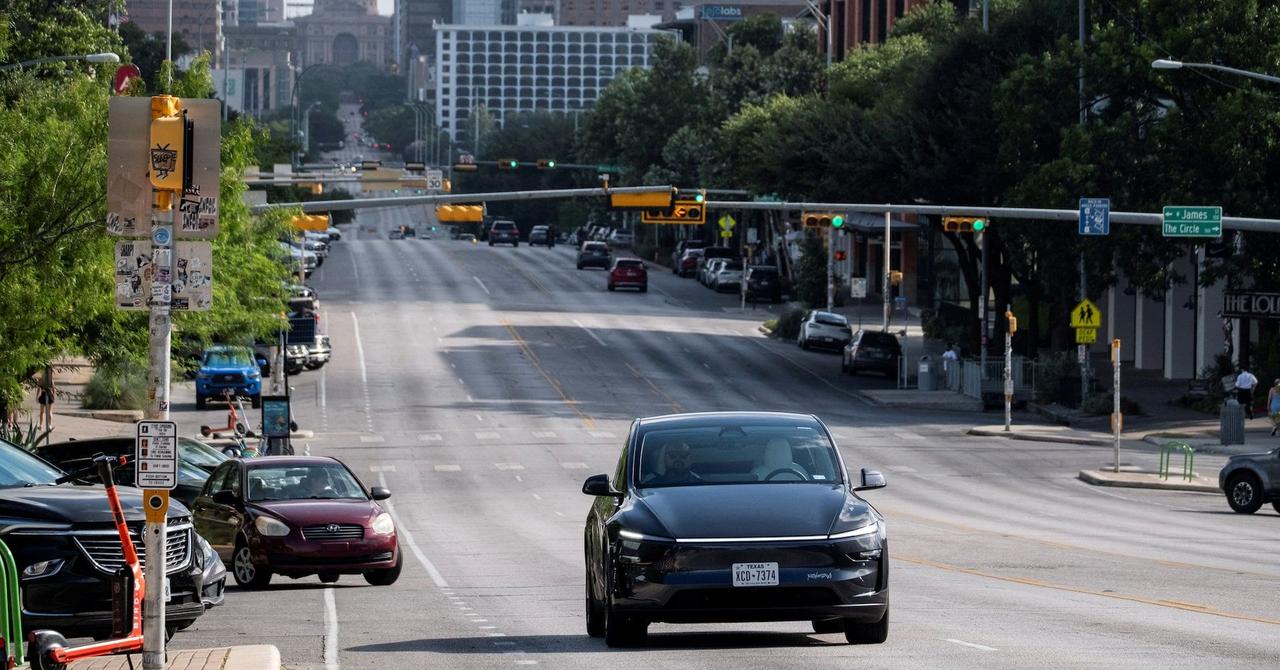
Tesla's robotaxi service drove 700,000 miles in Q2 2026, down from 1.1 million in Q1—a 36% decline despite expanding to six cities across Texas and Florida. CEO Elon Musk admitted the company needs to collect Cybercab-specific data before scaling, marking a shift from years of claims that millions of customer vehicles were training the system. The slowdown raises questions about Tesla's ability to compete with Waymo's four million weekly miles.
Tesla's autonomous ride-hailing rollout hit an unexpected snag in the second quarter of 2026, with the Tesla robotaxi fleet driving approximately 700,000 miles for paying customers—down from 1.1 million miles in the first quarter, representing a 36% decline
1
. The quarter-over-quarter drop contradicts the company's ambitious rhetoric about building a massive, cash-generating autonomous vehicles fleet, which CEO Elon Musk once described as going "balls to the wall for autonomy"1
. This development comes as Tesla expanded its nascent operation to six cities across Texas and Florida, mixing unsupervised robotaxi operations with supervised vehicles, and potentially including paid miles driven in the San Francisco Bay Area where branded robotaxis operate with safety drivers behind the wheel1
.
Source: Reuters
The mileage decline emerged from data Tesla released Wednesday during its second-quarter earnings call, where the company's stock subsequently plunged more than 13% in early trading Thursday
1
. At first glance, Tesla's cumulative chart appeared to show steady growth in paid rides between August 2025 and June 2026, but breaking down the numbers by quarter revealed the troubling trend in scaling autonomous driving business1
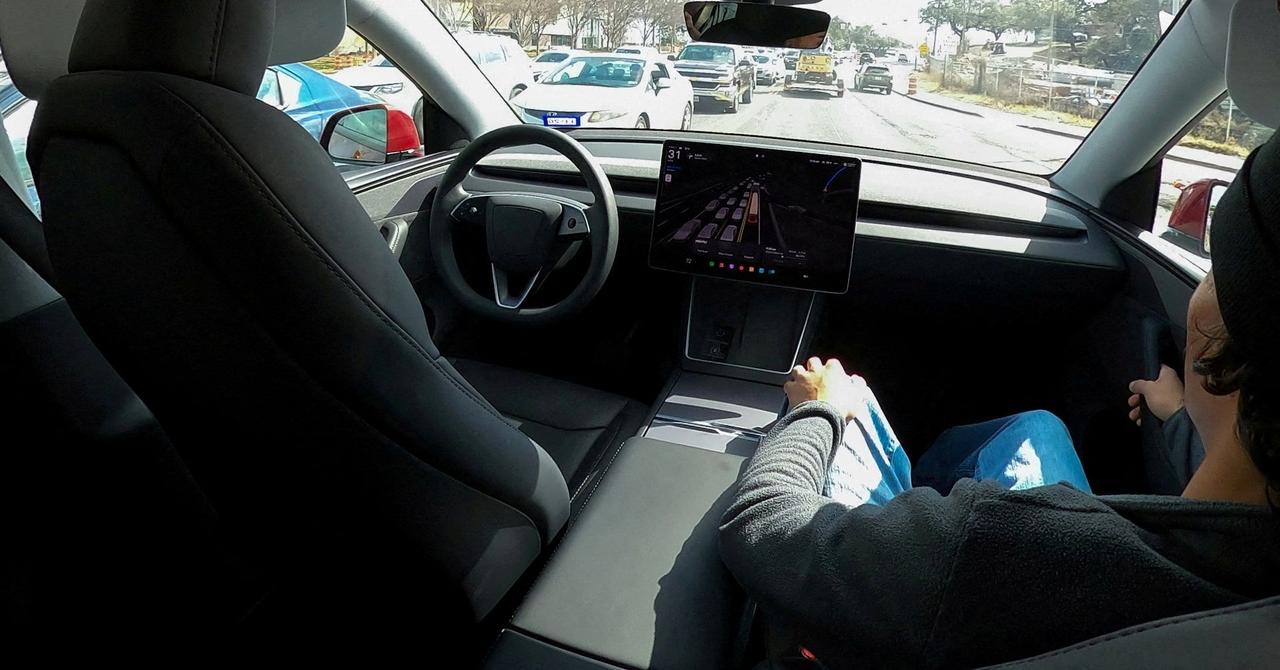
.During the earnings call, Elon Musk made a striking admission that represents a significant departure from Tesla's longstanding narrative about its AI-driven autonomy advantage. When questioned about the slow pace of the autonomous ride-hailing rollout, Musk explained that Tesla needs to "accumulate driving data that is specific to the Cybercab"—the company's purpose-built, two-seater autonomous vehicle expected to form the bulk of its fleet—"before we can put a lot of them on the road"
1
. He elaborated that unlike Model 3 and Model Y vehicles, which number in the millions on the road, Tesla doesn't have that data foundation for Cybercab1
."We actually have to accumulate miles with Cybercabs that are retrofitted with steering wheels and acceleration and braking pedals, that kind of thing, to calibrate to the Cybercab chassis," Musk said, adding that "as we are confident about that, the number of Cybercabs in cities will increase dramatically"
1
. This admission breaks from years of claims that Tesla's fleet of nearly 10 million customer cars has been silently collecting data in the background to train future robotaxis, in addition to training the Full Self-Driving driver assistance software for consumers1
.Tesla executives framed the slow progress as a deliberate focus on safety concerns during the earnings call. Musk emphasized that while there are 30,000 to 40,000 automotive deaths per year in the United States alone that generate minimal press coverage, "if we injure even one person, it will be worldwide headline news, and regulators will immediately clamp down on our activities"
1
5
. He stated Tesla is "going as fast as humanly possible in scaling Robotaxi while trying to ensure that we do not harm anyone at all and ideally do not even run over a pet"2
.
Source: Reuters
Ashok Elluswamy, Tesla's VP of AI, boasted that Tesla's robotaxis have had "zero notable incidents" while driving "more than 380,000 miles" without a safety operator onboard
1
. However, Tesla has reported 22 crashes to the National Highway Safety Administration in the year since it started trialing its service, including three crashes caused by teleoperators moving vehicles remotely and multiple instances of cars hitting objects at low speeds including curbs, utility poles, and a tow truck's bed1
.Regulatory risks are mounting as well. Tesla's vice president of vehicle engineering Lars Moravy acknowledged that "the stuff in New Jersey, you know, is a little bit disheartening," referring to a bill under consideration that would essentially ban robotaxis without multiple sensors like radar and lidar
2
. CFO Vaibhav Taneja added that "regulatory situations are different city by city" and "there are different kinks...not just on the software front, but on the operations front" that Tesla is trying to tackle3
.Related Stories
The reality of Tesla's AI-driven autonomous vehicle initiative stands in stark contrast to industry leader Waymo, which drives around four million miles per week
2
. Tesla's total mileage after a year of operation is less than 10 percent of that figure, with paying customers having traveled just 2.5 million cumulative miles, including 380,000 miles in rides without an in-vehicle safety monitor3
. Tesla's unsupervised robotaxi miles remain well below the more than 220 million autonomous miles driven by Waymo through the end of March, underscoring the significant lead Alphabet's self-driving unit holds in commercial deployment, according to Forrester analyst Paul Miller3
.
Source: TechCrunch
According to the crowdsourced Robotaxi Tracker, Tesla currently has only 16 unsupervised vehicles in Austin, four in Dallas, and one in Houston
2
. When asked why Tesla wasn't flooding the zone in Austin where it first launched robotaxis a year ago, Elluswamy explained that "the reason we have been expanding across different cities, instead of just doubling down on a single city, is that we want to make sure that our stack is a very general one"2
.Despite the challenges, Elluswamy defended Tesla's camera-only AI approach against competitors using lidar sensors. "Historically, the so-called experts have always claimed that you need lidars, radars, HD maps, and the entire kitchen sink to drive safely," he said. "Here we show that such is not true. You can have safe, comfortable, and affordable autonomy stack with just cameras"
2
.The slow autonomous ride-hailing rollout is spooked investor concerns, with BNP Paribas Equity Research senior analyst James Picariello calling it "an alarming decline" in a research note to clients
2
. Tesla announced just before the earnings call that it was expanding to Tampa and Orlando3
4
, but service areas in these cities, like Miami and Houston, remain limited to less-trafficked neighborhoods outside city centers3
.A year ago, Musk said the robotaxi network would expand at a "hyper-exponential rate" and be available to half the U.S. population by the end of 2025
3
. In an investor presentation in January, Tesla said its robotaxis would expand to seven metro areas by the end of June: Dallas, Houston, Phoenix, Miami, Orlando, Tampa and Las Vegas. Up until Tuesday, Tesla had only launched in three of those cities3
.Investors have valued Tesla on the promise that robotaxis and its Optimus robot will one day become its primary revenue drivers. The stock trades at more than 166 times forward earnings estimates, far above the multiples of traditional automakers and Big Tech companies
3
. The stock has fallen nearly 17% this year as of the last close3
. Tesla's Q2 earnings failed to meet profit estimates for the first time in more than two years, with negative free cash flow as the company accelerated its AI spending and robotics ambitions5
.Summarized by
Navi
[1]
[2]
1
Technology

2
Policy and Regulation

3
Science and Research