Tesla FSD v14.3 delivers 20% faster reaction time with complete AI compiler rewrite


2 Sources
[1]
Tesla rolls out FSD v14.3 update with quicker reaction time and other improvements
Twenty percent faster, substantially smarter, and significantly less likely to double-stop at a sign, FSD v14.3 marks a genuine leap forward for Tesla autonomy. Tesla's Full Self-Driving system just got a significant upgrade. The company began pushing FSD Supervised v14.3 to Early Access Program
[2]
Tesla FSD v14.3 rolls out with MLIR rewrite, 20% faster reactions
Tesla has started rolling out Full Self-Driving (Supervised) v14.3 to HW4 vehicles, and the headline change is under the hood: Tesla rewrote the AI compiler and runtime from scratch on MLIR, which the automaker says delivers a 20% faster reaction time. The update, shipping as software version
Share
Copy Link
Tesla began rolling out Full Self-Driving v14.3 to Hardware 4 vehicles with a groundbreaking AI compiler rewrite using MLIR technology. The update delivers 20% faster reaction time, improved parking behavior, and better handling of emergency vehicles and rare edge cases. Chris Lattner, who created MLIR and briefly led Tesla Autopilot in 2017, endorsed the breakthrough as potentially pivotal for robotaxi development.
Tesla FSD v14.3 Launches with Major AI Compiler Rewrite
Tesla has started deploying Full Self-Driving (Supervised) v14.3 to Hardware 4 vehicles through its Early Access Program, marking what many observers consider a pivotal upgrade to the company's autonomous driving system
1
2
. The update, shipping as software version 2026.2.9.6, centers on a complete rewrite of Tesla's AI compiler and runtime using MLIR (Multi-Level Intermediate Representation), delivering a 20% faster reaction time that could significantly impact the self-driving experience2
.The Tesla FSD system's latency reduction represents more than just a minor performance tweak. This 20% improvement means the gap between cameras detecting an object and the vehicle responding shrinks considerably, enabling the car to brake earlier, swerve sooner, and handle edge cases that previously arrived at the decision-making system too late
2
. Chris Lattner, the engineer who created MLIR and briefly led Tesla Autopilot in 2017, weighed in on the update, stating it's "quite likely that a modern compiler and runtime implementation the break-through that robotaxi and FSD have been waiting for"2
.Enhanced Neural Network Training and Vision Capabilities
Beyond the compiler improvements, FSD v14.3 upgrades the reinforcement learning stage of neural network training, including enhancements to the vision encoder
1
. These changes improve awareness in low-visibility conditions and enhance 3D spatial understanding of surroundings, along with better traffic sign recognition1
. The MLIR infrastructure, developed under the LLVM Foundation, not only benefits current models but also accelerates how quickly future updates can be deployed1
.Real-World Improvements for Tesla Drivers
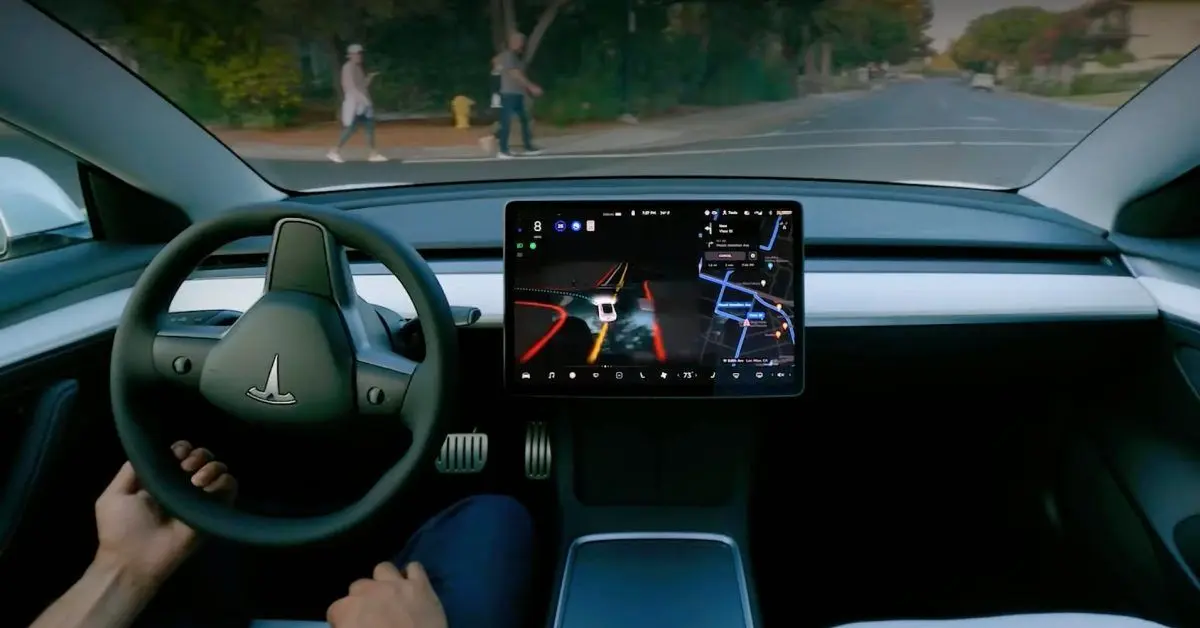
For everyday drivers, FSD v14.3 addresses multiple frustrating behaviors. The system now handles yellow lights with more accuracy, especially at complex intersections, and stops correctly at stop signs without the notorious double-stopping issue
1
. A new parking spot pin on the map, combined with increased decisiveness in parking spot selection and maneuvering, tackles the hesitation behavior where vehicles would roll into a lot and waver between spaces2
.
Source: Electrek
The enhanced responses to emergency vehicles, school buses, right-of-way violators, and other rare vehicles come from mining fleet data for uncommon scenarios
2
. Improved handling of small animals and unusual objects on the road should provide more appropriate and intuitive responses1
. The update also addresses temporary system degradations, allowing recovery without driver intervention—previously these fleeting camera or compute hiccups triggered unnecessary disengagements2
.Related Stories

What's Coming Next and What to Watch
Tesla lists three upcoming improvements not yet in this build: pothole avoidance, smarter driver monitoring, and additional refinements
1
2
. The wide release is currently limited to Hardware 4 vehicles, with no HW3 support mentioned, indicating AI4 remains the only hardware path forward for Full Self-Driving updates2
.While the latency reduction represents a significant infrastructure upgrade, it's important to understand what it doesn't accomplish. This is an inference-latency improvement on existing hardware, not a capability leap that transforms FSD from supervised to unsupervised operation
2
. It doesn't close the gap with Waymo, which operates a genuinely driverless commercial service in multiple cities, while Tesla continues shipping a Level 2 system requiring an attentive driver2
. The hard part of autonomy remains the behavior the neural network produces, not just how fast it runs. Still, with unnecessary lane-hugging and mild tailgating behaviors toned down, drivers should notice a safer, more confident autonomous driving system1
.References
Summarized by

Navi
[1]
Related Stories
Tesla Cybertruck Receives Full Self-Driving Update, Marking a Milestone in Autonomous Vehicle Technology
30 Sept 2024

Tesla says millions need Full Self-Driving hardware upgrades after promising they didn't
23 Apr 2026•Technology
Tesla FSD to remember parking preferences as Musk tackles biggest intervention trigger
18 Jun 2026•Technology
Recent Highlights
1
Meta Unveils Muse Wonder Frontier AI Models, Claims Performance Matching OpenAI and Anthropic
Technology

2
IMF Report Warns AI Market Correction Could Spark Global Financial Crisis With $1.4T at Risk
Business and Economy

3
OpenAI Releases 722 AI-Generated Math Solutions, Triggering Existential Crisis in Mathematics
Technology

Recent Highlights
Today's Top Stories







Don’t drown in AI news. We cut through the noise - filtering, ranking and summarizing the most important AI news, breakthroughs and research daily. Follow topics that matter to you and stay ahead.


