Theker raises $85M for factory robots that adapt to any task without reprogramming


3 Sources
[1]
Theker just raised $85M to build the factory robot that doesn't specialize in anything
Humanoids aren't quite ready to replace factory workers, but the industry can't wait. Faced with labor shortages, manufacturers have shown growing interest in startups that promise faster automation without the usual tradeoffs. That's the bet behind Theker, an AI robotics startup that aims to go
[2]
Barcelona's THEKER raises €73M to deploy AI-native factory robots that learn on the job
Barcelona's THEKER raised €73M led by CRV with Samsung and LVMH for AI-native factory robots. It's Samsung and LVMH's first Spanish startup investment. THEKER, the Barcelona-based AI robotics company, has raised €73 million ($85 million) in a Series A to scale its generalist factory robots across
[3]
AI robotics company Theker raises $85 million from investors including LVMH
Theker, an AI robotics firm from Barcelona, has secured $85 million in new funding. This investment was led by CRV and included major players like Samsung and LVMH. Theker develops AI-powered robots for industrial tasks. This funding highlights the growing tech scene in Spain, following Amazon's
Share
Copy Link
Barcelona-based Theker secured $85 million in Series A funding led by CRV, with backing from Samsung and LVMH, to scale its AI-native factory robots. Unlike traditional industrial robots, Theker's machines reconfigure themselves for different tasks and learn continuously in production environments. The investment marks Samsung and LVMH's first bet on a Spanish startup.
Theker Secures Europe's Largest Robotics Series A
Theker, a Barcelona-based AI robotics startup, has raised $85 million in what the company calls Europe's largest ever robotics Series A
1
. The round was led by venture capital firm CRV, with participation from Samsung, LVMH, Cathay Innovation, 20VC, Henkel Ventures, Korelya, and Bright Pixel Capital2
. The Series A funding arrives less than a year after Theker closed Spain's largest-ever seed round at €18 million, signaling rapid commercial momentum for the young company2
.
Source: TechCrunch
AI-Native Factory Robots That Learn on the Job
Unlike traditional industrial robots trained for single, repetitive tasks, Theker builds generalist factory robots designed for the messier reality of modern manufacturing. Co-founder Carla Gómez Cano explained the limitation of conventional systems: "If you always have to put the same cookie in the same box, that works perfectly, but most processes aren't like that"
1
. Theker's AI-powered robots for industrial tasks are built to be reconfigured, with hands, arms, and overall form that can be swapped out or resized depending on whether they're sorting packages, packing clothing, or handling bottles and cans in a warehouse1
.
Source: ET
The company integrates advanced vision, control systems, and large language models into robots that operate without pre-programmed instructions
2
. These AI-native factory robots adapt in real time to changing environments, mixed SKUs, irregular shapes, and operational variability without manual reprogramming2
. Theker says its systems deploy in days and continuously learn in production, helping operators increase throughput, reduce downtime, and address persistent labor shortages2
.Strategic Backing from Samsung and LVMH Signals Industrial Ambitions
The robotics funding round carries significant strategic weight. It marks Samsung's first-ever investment in a Spanish company and LVMH's first bet on the Spanish startup ecosystem
2
. The investment came through Aglaé Ventures, the investment vehicle tied to LVMH chairman Bernard Arnault1
. While Samsung is not yet a client, Gómez Cano said the two are in advanced discussions, and Theker would welcome having the Korean company as a customer, supplier, and investor simultaneously1
.Inditex, Zara's parent company, signed on as an early backer, signaling where Theker's ambitions start
1
. But the company's broader goal is to move beyond retail into heavier industrial settings like manufacturing, where the complexity and scale of manual tasks is even greater1
. The robots are already operating inside live production environments across Europe, targeting manufacturing, logistics, and retail2
.Related Stories

Skipping Pilots to Focus on Real Deployment
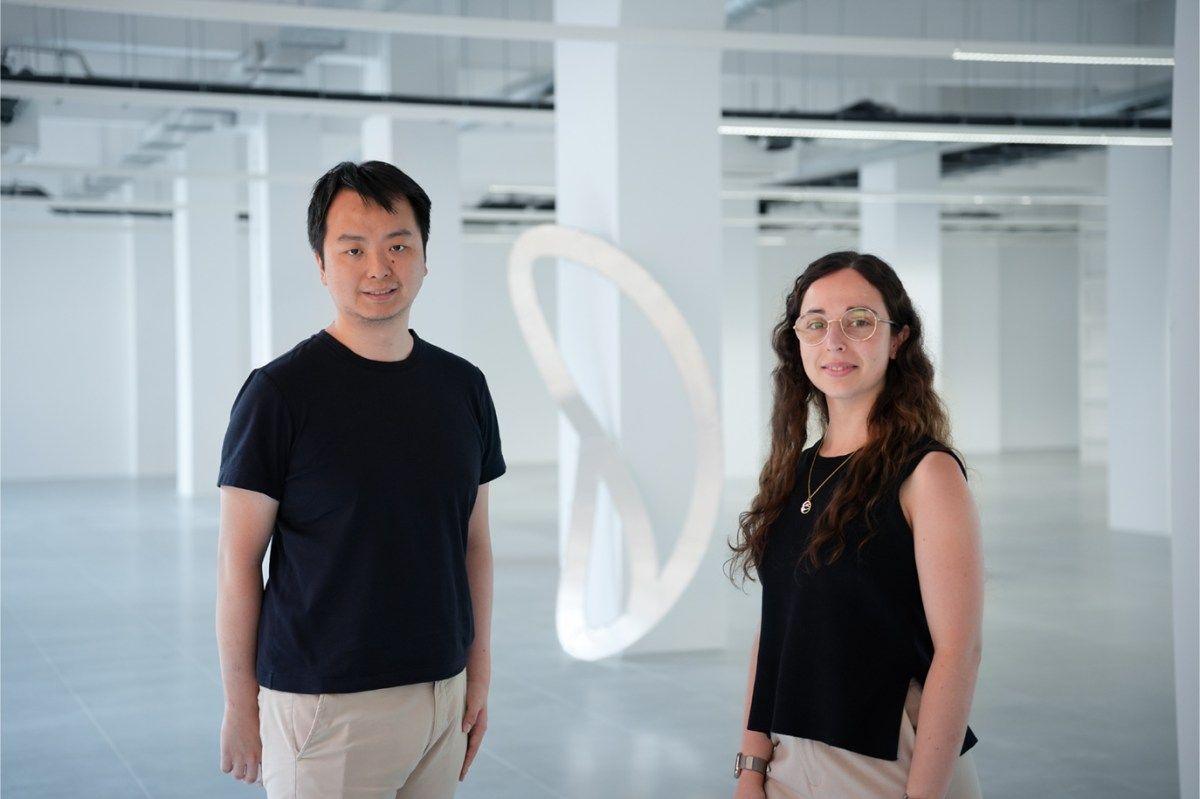
Founded by Gómez Cano and Jiaqiang Ye Zhu, the AI robotics startup takes a deliberate approach to commercialization. "We didn't build Theker to run pilots," Gómez Cano said, explaining that the team skips innovation departments entirely and goes straight to logistics or operations, where deals are real and timelines are shorter
1
. To demonstrate the company can actually deliver, Theker has a showroom in central Barcelona and plans to open others as it expands across Europe, the U.S., and Asia1
.Reid Christian, general partner at CRV, praised the team's execution: "What Carla, Jiaqiang and the team have built is exceptionally rare, a deeply technical platform paired with real commercial deployment momentum. We believe Theker has the potential to become one of the defining robotics companies of this generation"
2
.Barcelona Emerges as European Robotics Hub
The Series A funding will go toward deepening Theker's proprietary AI and robotics stack and expanding the team across software, electronics, mechanical engineering, and deployments
2
. Gómez Cano said the company has already received 15,000 job applications and estimated the team could grow from dozens to up to 120 people by the end of the year1
. That Theker managed to raise twice its initial target of $30 to $40 million reinforces the startup's conviction in keeping its headquarters in Barcelona, a growing robotics ecosystem, and in Europe's tech ecosystem more broadly1
.The raise sits alongside a wave of European robotics funding in 2026. Germany's RobCo closed €100 million for modular AI-driven automation systems, Stuttgart-based Sereact raised €93 million to scale its physical AI platform into the U.S., and NEURA Robotics raised up to $1.4 billion in the largest full-stack robotics round ever
2
. The funding for Theker comes months after Amazon announced it would invest €18 billion in Spain to expand its data centers and boost AI innovation3
. Whether these generalist factory robots perform as advertised at scale, across industries and geographies, remains the critical question the $85 million is designed to answer.References
Summarized by

Navi
[1]
[2]
Related Stories
Former F1 Aerodynamicist Raises $55M to Solve Robot Training Crisis With Human Footage
16 Jul 2026•Startups

London's Humanoid raises $152M Series A, hits unicorn status with Bosch manufacturing deal
21 Jul 2026•Business and Economy
Sereact Secures €25M for AI-Powered Robotics Expansion
21 Jan 2025•Technology

Recent Highlights



Recent Highlights
Today's Top Stories







Don’t drown in AI news. We cut through the noise - filtering, ranking and summarizing the most important AI news, breakthroughs and research daily. Follow topics that matter to you and stay ahead.


