3 Sources
[1]
Trump wants the public to have a stake in AI. Here's what that could look like.
OpenAI CEO Sam Altman has floated the idea of tech companies voluntarily giving a portion of their stock to the federal government. (Chip Somodevilla/Getty Images) President Donald Trump says he's exploring ways to give the public a stake in leading artificial intelligence companies. The plan remains amorphous, but experts say if and how it develops could have massive consequences for the public and industry. Trump is convening meetings with the top 12 to 15 AI companies soon to discuss "giving back something to the public," he said in Oval Office remarks Wednesday. "If we do that, the public will become very rich, the people in our country, because that's the kind of money we're talking about," Trump said. "I think they'll do that, and I think it'll make it very popular." Trump and many AI industry executives have acknowledged that AI is unpopular among the American public unsettled by the technology's impact on society and fearful of the possibility of AI-related job losses. That has sparked a growing torrent of policy proposals from elected officials and AI companies seeking to mollify an AI-skeptical public while -- at least among AI proponents -- not slowing down the technology's development. Supporters of the proposal argue it would allow the public to share in the company's successes and ease the potential blow of economic shifts. Here are a few forms it could take: A tech company plan OpenAI CEO Sam Altman has floated the idea of tech companies voluntarily giving a portion of their stock to the federal government in conversations with Trump and other White House officials. Anthropic released its own proposal Wednesday. They propose expanding existing child investment accounts to adults, prioritizing people who are most likely to face AI "disruption," like young adults entering the workforce and people with jobs most likely to be replaced by AI. People could use any money raised to transition into new jobs. "All of this is rooted in the principle that AI needs to benefit Americans across this country," both in delivering on economic growth and providing a safety net for people who lose their jobs through the transition, said Sarah Heck, head of public policy at Anthropic. Anthropic notes the accounts should be funded in part by equity from AI companies, but it does not say whether the companies would donate the stock, if the government would buy it, or whether policymakers should pass legislation taxing the companies. Alex Bores, a Democratic candidate for a House seat in New York, has drawn national attention from pro- and anti-AI regulation camps for his policy proposals. He has suggested that Americans could receive payouts from a fund that would come from new and increased corporate taxes plus the federal government's ownership of stock in major AI companies if they prove wildly successful. In an interview last month, Bores said he was skeptical about ideas that have been floated by executives at OpenAI, Anthropic and other AI companies suggesting public stock ownership in AI companies or taxes on AI usage. "It's an easy thing to say that maybe relieves regulatory pressure but doesn't require them to change anything," Bores said. "You should watch their actions, not their words." The Bernie Sanders plan A few days before Trump announced he's considering public ownership of AI companies, Sen. Bernie Sanders (I-Vermont) released his own plan. "It seems to me that given the fact that it is the people whose work is ... the foundation of AI, they should have some say in the future of AI," Sanders said of his proposal at a National Press Club event Monday. That would mean 50 percent ownership of the major AI companies, including half of the seats on each company's board, Sanders said. Those board members might be chosen by the president and confirmed by the Senate, he floated. Other details of the pending legislation are still in flux, he added. In his plan, the public would be able to directly control company decisions that aren't in the public interest, he said. If the companies are successful, a sovereign wealth fund could pay out a portion of those proceeds to the public in direct checks and funding for health care, education and child care. Some economists have raised concerns that market interest in AI may be a bubble that could burst if investors abruptly lose confidence in the technology's continued growth, crashing the U.S. market and hurting global GDP. Sanders is proposing a 50 percent one-time tax on AI companies' stock, so taxpayers don't have to pay to buy the shares. Under that scenario, there's little risk to the American taxpayer, said Alex Jacquez, chief of policy and advocacy at the Groundwork Collaborative, a left-leaning think tank. "If it's true that these companies are going to be massive and worth trillions in value, it would be great to get some of that upside," he said of the AI companies. "If it's a bubble and it crashes, the shares you got for free crash and you lose no money." The Intel model It's not the first time Trump has considered taking an equity stake in private companies -- diverging from traditional separation between the U.S. government and private businesses. Chipmaker Intel sold the U.S. government a 10 percent stake in the company last summer for $8.9 billion in grants, most of which had previously been awarded to Intel but not yet paid out. The agreement gave the government a passive share in Intel, which does not include a seat on the company's board. Trump has said that the deal has yielded $30 billion for American taxpayers so far. Intel executives have raised concerns that the link to the U.S. government could create problems for the company, including backlash from foreign governments. The administration has also taken stakes in several mineral companies and other firms, including Lithium Americas and MP Materials. Extending this system to artificial intelligence could stifle innovation at a critical time in the industry's development, said Jennifer Huddleston, a senior fellow in technology policy at the Cato Institute, a right-leaning think tank. "What makes this so dangerous is that this is not only the general problem of the government picking winners and losers," she said, "but picking that at a very early stage in the development where we've seen time and time again with innovation: It's competition that we didn't predict that really becomes potentially life-changing."
[2]
Trump's strange flirtation with AI socialism, explained
Eric Levitz is a senior correspondent at Vox. He covers a wide range of political and policy issues with a special focus on questions that internally divide the American left and right. Before coming to Vox in 2024, he wrote a column on politics and economics for New York Magazine. A new, bipartisan idea is taking Washington by storm: collective ownership of the means of production. Sort of, anyway. Last Friday, President Donald Trump announced that he would soon be meeting with the executives of top AI companies to discuss a financial "partnership." "There are concepts where pieces [of these companies] could be given to the American public, where the American public essentially becomes a partner with the companies," Trump said. "And by doing that, they're going to like it better." By this, the president (seemingly) meant that the US government may take an ownership stake in major AI companies and then distribute the fruits of its investments to the general public, perhaps through universal dividend payments. This proposal did not come to Trump via some undercover, socialist operative embedded deep within the White House -- but rather, from the CEO of OpenAI. As NOTUS reported last week, Altman first pitched Trump on the concept in early 2025 and discussions between the administration and OpenAI have heated up more recently. No deal has been finalized. But talks have centered on an arrangement in which top AI labs voluntarily donate shares to the government -- an approach that might enable Uncle Sam to partially nationalize the AI industry without Congress passing any law. Officially, OpenAI's interest in effectively transferring wealth from its shareholders to Uncle Sam is public-spirited. The company maintains that advances in AI are likely to generate massive profits for top labs, while sowing wrenching disruptions through labor markets. Thus, to ensure that ordinary people "share in the upside" of AI-fueled economic growth, the company has called for the creation of a "Public Wealth Fund," which would invest in "both AI companies and the broader set of firms adopting and deploying AI," and then send a portion of the returns to every American. In other words, it would pay out a universal basic income (another popular idea in Silicon Valley). Yet many suspect OpenAI's motives are more self-interested: By giving the US government a direct stake in its success, the company may be trying to insulate itself from stringent regulation or open competition. Moreover, whatever Altman's intentions, skeptics argue that the government getting into cahoots with individual AI companies is a recipe for cronyism and conflicts of interest. (Disclosure: Vox Media is one of several publishers that have signed partnership agreements with OpenAI. Our reporting remains editorially independent.) These concerns seem well-founded. A narrow partnership between the federal government and select AI companies would plausibly do more to generate corruption than redistribute income. Yet there is a real risk that artificial intelligence will shift massive amounts of income away from workers and towards capital. And a highly diversified, scrupulously managed public wealth fund could help mitigate that hazard. Unfortunately, the Trump administration has evinced little interest in that approach to social ownership (or in scruples more broadly). Companies don't typically cook up schemes for reducing the value of their own shares. And yet, on its face, OpenAI's reported proposal amounts to precisely that: If the company donates equity to the government, it will dilute the value of all its existing stock. This invites the question: What's in it for them? There are multiple plausible answers. OpenAI may be trying to limit its exposure to regulation. In opinion polls, a supermajority of Americans express concern for where AI is taking their society -- and support for more heavily regulating the industry. Turning every American into an OpenAI shareholder could theoretically reduce the company's susceptibility to onerous new rules in a couple of different ways. First, doing so may simply soften the AI industry's image and buy it some goodwill from the American electorate (Trump seemed to reference this when saying that his arrangement would make Americans like AI better). Second, such an arrangement would more closely align the public's interests with those of OpenAI. After all, regulations that reduce the firm's profitability would now also cut government revenue and/or, Americans' dividend payments (such payouts might be small at first, but could become substantial over time, particularly if the government cuts deals with other major AI labs). Voters might be less inclined to protest a noisy data center if they think they're directly profiting from it. Similarly, accepting partial nationalization could boost OpenAI's odds of securing a federal bailout if its revenues do not grow fast enough to cover its debts (a scenario that some analysts consider quite likely). There is a long history of governments shielding state-owned enterprises from market discipline. Thus, the progressive economist Dean Baker fears that an AI wealth fund would "end up being a mechanism to shovel yet more money" at billionaires aligned with the administration. It is also possible that, by donating shares to the government, individual AI firms might buy themselves an advantage over their competitors. For its part, the Trump administration has displayed no shyness about rewarding businesses that curry its favor, and retaliating against those who do not. Indeed, the White House has already tried to sabotage OpenAI's chief rival. In February, Anthropic refused to sign a contract that would have authorized the Pentagon to use its AI for mass surveillance and fully autonomous weapons systems. The Defense Department responded by declaring Anthropic a "supply chain risk" -- a designation that would restrict the capacity of government contractors to do business with the AI company. If a federal judge had not blocked that move, it could have done serious damage to Anthropic's business -- while benefiting both OpenAI and xAI, which is owned by Trump megadonor Elon Musk. If the government took a stake in OpenAI but not Anthropic -- or in all the major AI labs but not in more recent startups -- the Trump administration might have further incentive to intervene on behalf of its favored firms. Separately, the White House could use a public wealth fund to unduly influence AI labs' decision-making. The government's shares could give it the power to vote on companies' internal policies -- or else, seek to deter certain decisions with threats of selling off the firm's stock. These risks are amplified by the reportedly informal and ad-hoc nature of the public wealth fund being contemplated. Without congressionally authorized rules governing the fund's management and investment decisions, the administration could have wide latitude to use its newfound financial power in self-interested ways. "It would be good for OpenAI to have every American underwriting them," Samuel Hammond, Director of Artificial Intelligence Policy at the Foundation for American Innovation, told me. "But in America's political context, we're likely to get a corrupted version of a state enterprise that is used for personal enrichment and the partisan motives of whoever's in charge." Although Trump's (reported) version of a public wealth fund seems to invite more risks than benefits, this would not necessarily be true of all such funds. As a general concept, combating AI-induced inequality by increasing public ownership of corporations has much to recommend it. Artificial intelligence could greatly increase investors' share of national income at workers' expense: If companies replace much of their high-skill workforce with AI, their shareholders could reap the benefits, even as white-collar laborers lose their jobs and bargaining power. And if the technology truly takes off, generating an explosively productive economy run by software and robots instead of people, the AI giants could end up harvesting profits of mind-bending scale. At the very least, this is what a lot of investors are seemingly betting on. Despite myriad economic headwinds, stock prices are hovering near record highs, due largely to the sky-high valuations of AI stocks. Meanwhile, Anthropic and OpenAI's impending initial public offerings are expected to be among the biggest in history, and Musk could soon become a trillionaire. The government could seek to share this wealth through traditional tax and transfer policies: If investors and tech firms are raking in cash, Congress can raise rates on capital gains, inheritances, and corporate income, then use the proceeds to fund more generous social programs or cash benefits for ordinary Americans. Conventional taxes are surely part of the solution. As an approach to redistributing business income, however, a public (or "social") wealth fund has some advantages over corporate taxes. The corporate income tax applies only to the profits a company reports, which firms have considerable latitude and incentive to minimize. Large enterprises spend vast sums of money each year on finding innovative ways to defer or relocate their profits, so as to reduce their liabilities. The government then must dedicate its own resources to auditing these practices. This system not only enables corporations to weasel out of their obligations but also generates tremendous waste: All the skilled labor and entrepreneurial energy currently devoted to tax avoidance could otherwise be deployed towards creating actual value for consumers. A public wealth fund circumvents these problems. Suppose that, instead of taxing corporate profits at 25 percent, the government required each firm to hand over newly issued shares equal to 25 percent of its total stock. From then on, whenever the company paid a dividend or bought back shares, the government would automatically collect a quarter of the payout. With this approach, a business's profits have nowhere to hide: A company can shift its earnings to a subsidiary in Dublin or a mailbox in Singapore. Regardless, if that corporation wants to reward its shareholders, Uncle Sam will get his cut. And even if the company hoards its cash, when its operations get more profitable, its stock will rise -- and the government's portfolio will gain value. Separately, a public wealth fund could have political advantages over traditional tax-and-transfer programs. Once voters get accustomed to the idea that they collectively own a share of their society's financial wealth, dividends paid out of those assets may be seen more as an entitlement than a handout. The Alaska Permanent Fund is a case in point. In the 1970s, Alaska used royalties on its oil resources to seed a financial fund owned by all its residents in common. This year, it will pay out $1,200 to each Alaskan. Critically, despite Alaska's conservative bent -- and Americans' general skepticism toward unconditional cash welfare -- the permanent fund is overwhelmingly popular among Alaskans, and no serious effort has been made to restrict eligibility for dividends. "There's this notion that we all own this," Matt Bruenig, founder of the People's Policy Project and a leading advocate for social wealth funds, said. "So, there's this attitude of: Maybe I disapprove of you or speculate that you're going to blow your dividend on a snow machine or whatever. But it's not my business. It's your money." It's possible that this consensus reflects the particular origins of Alaska's fund: The idea that everyone has some entitlement to their state's oil reserves -- which no human being brought into existence -- may be more intuitive than the notion that we all deserve a share of corporate profits writ large. Yet American companies' value derives in large part from inherited technologies, knowledge, and institutions that no living person created -- as well as public goods that all US workers and taxpayers help to sustain. And artificial intelligence may make the social origins of private profits more readily apparent: As Bernie Sanders recently noted, when AI generates useful code, images, or writing, it does so by synthesizing vast corpuses of data that humanity collectively produced. To be sure, a broad social wealth fund would present some of the same risks as the rumored Trump-Altman proposal. Although a fund that invested in all corporations would be less likely to fuel government favoritism towards select firms or industries, such a policy would still align the government's interests with those of corporate shareholders: Any new regulation that reduced the corporate sector's profitability -- whether by increasing its labor costs, environmental responsibilities, or some other mechanism -- would simultaneously reduce the government's revenue and potentially, voters' dividend payments. Some on the left oppose social wealth funds on these grounds. And yet, the government already has a stake in corporate profitability: When firms earn less profit, they pay less in taxes. A public wealth fund might make this reality more apparent. But the alignment of interest between the state and corporate shareholders is inherent in capitalism. And democratic governments have nonetheless constrained businesses' profits in myriad ways, for better and worse. This said, a public wealth fund would undoubtedly risk centralizing economic power and thus, abetting corruption: The government could theoretically leverage its status as a mega-shareholder to micro-manage the internal operations of private businesses. A world in which the Trump administration and its allies exercised influence over every corporate news outlet -- rather than just some -- would be less than favorable for democratic freedom. This threat is also manageable in principle. One approach would be to simply have the public wealth fund hold exclusively nonvoting shares, which would limit the government's role in corporate decisionmaking. Another would be to establish transparent, technocratic, and bipartisan rules for how the public wealth fund will exercise its voice in corporate affairs, as Norway has already done for its own fund. Of course, many things are possible in principle but not in today's United States. A rule-bound, universal social wealth fund might help ordinary Americans share in the fruits of AI-fueled economic growth. A voluntary partnership between the Trump administration and select AI firms, by contrast, seems more likely to help the president's favorite companies limit their investors' downside risks. If so, Trump's wealth fund would be less of a bold reform for unprecedented times than a new spin on an age-old tradition: Socialism for the rich, capitalism for the poor.
[3]
Anthropic's New Policy Framework Sits Well with Trump's Plan of Expanded Ownership of AI Companies
Barely a week after President Trump discussed an idea of the government taking a stake in the AI pie to expand ownership, Anthropic CEO Dario Amodei has pretty much echoed the sentiments by releasing a policy framework that would allow Americans to acquire a financial stake in the gains that this industry could potentially make in the future. The paper, which was released a couple of days back argues for the establishment a capital account for newborn Americans which could be funded by equity in AI companies. This is quite similar to the idea behind the Trump Account program. The detailed policy document starts from the assumption that AI capabilities, growing at the same frenetic pace, could soon substitute human labour. "AI could generate economic growth on a scale the modern world hasn't seen. The central challenge isn't how to stimulate growth; it is making sure the gains are widely shared," the document says. Based on this primary assumption, the document goes on to suggest that it was the responsibility (it is unclear whether Anthropic is taking it upon itself or using it to drive thought leadership) to prepare for such growth and respond to it by supporting people financially. There is dignity in work. We should help people find work wherever we can, and society should keep searching for ways to remain at full employment, the document notes altruistically. One of the early steps that the policy framework suggests is a government unit focused on tracking AI's impact. "Visibility is necessary but not sufficient. Governments also need a small, dedicated unit to track how AI is moving through the economy sector by sector, stress-test the institutions that will have to absorb the shock, and flag the early signals that should trigger a policy response," Anthropic says. Down the line, the document also makes a case for governments across the world to watch a broader set of signals alongside unemployment data. It suggests creating data around labour force participation, under-employment, actual wages and of course the labour's share of the national income of a country. And then it gets into actual brass-tacks, where it gets dangerously similar to what President Trump had articulated last week. It calls for giving every citizen a direct financial stake in the AI-led economic growth. "The federal government has already taken a step in this direction with new capital accounts seeded at birth. We believe these accounts should be made permanent and expanded towards universal coverage, with initial priority given to the cohorts most exposed to near-term AI disruption," the note says. The eligibility expansion should go beyond children to young adults entering the workforce and to incumbent workers in occupations most exposed to displacement. There should be a flexible withdrawal for workforce transitions whereby people can draw on funds for retraining, relocation, credentialing and even transition expenses. However, the most important suggestion relates to equity funding, where it says policymakers should expand the mechanisms by which these accounts can be funded, including with equity in AI companies, so that beneficiaries share directly in nearer-term gains from AI-driven growth. When it comes to tax rates on labour exceeding those on capital at some point in this journey, the policy framework does a somersault. To counter this, the document suggests increased capital gains, broad-based consumption taxes and sector-specific levies on AI use, and digital dividends funded by taxes. This is where the story takes an anti-Trump segway. Of course, this isn't the first time we are witnessing such a proposal as OpenAI already released something similar in April calling for a public wealth fund financed with diversified and long-term assets. Most of these efforts came to the fore as concerns around AI's role in increasing US unemployment and causing political disruption spread. That some of these ideas generate bipartisan support could be why these companies are getting their act together now. Remember, Senator Bernie Sanders had published an op-ed recently seeking a sovereign wealth fund backed by 50% of AI company stock! As discussed earlier, the policy framework shared by Anthropic claims that governments aren't the only target audience. Companies like the Claude-maker have to "shape the transition by how they deploy AI, and where possible they should choose the path that gives workers and the economy room to adapt." That altruistic message again! AI can be used to produce the same output with fewer people, or to accomplish more with the same number of people: building new products, serving markets that were previously out of reach, and raising the capability of less-experienced workers, the document points out noting that companies can take concrete steps to safeguard people. And finally, the document also notes that while this particular policy framework is meant to be used by the United States, the broad principles underpinning the framework can be taken up globally. "Preparing institutions ahead of disruption, sharing AI's gains broadly, and modernising the systems workers depend on will be necessary anywhere AI touches," Anthropic says. The one thing that this document refuses to even acknowledge is the real fear among some that the whole AI entrepreneurship is a bubble that could burst and cause untold misery to the United States. But then, how can a document made by one of the companies blowing air into the balloon actually think of pricking it?
Share
Copy Link
President Donald Trump is planning meetings with top AI companies to discuss giving Americans a stake in the industry's profits. OpenAI CEO Sam Altman and Anthropic have both proposed frameworks for public ownership, suggesting equity donations and capital accounts to help citizens share in AI-driven economic growth while cushioning potential job losses. The proposals have sparked debate about whether they genuinely aim to distribute wealth or simply deflect regulatory scrutiny.
President Donald Trump announced plans to meet with executives from 12 to 15 leading AI companies to explore giving Americans a direct financial stake in AI. Speaking from the Oval Office, Trump suggested that such arrangements could make "the public very rich" while addressing widespread skepticism about AI's societal impact
1
. The proposal remains amorphous, but it signals a dramatic shift toward expanded ownership of AI companies as the industry faces mounting concerns about economic disruption and AI-driven job displacement.
Source: Vox
Trump's interest in public ownership stems partly from recognition that AI remains unpopular among Americans unsettled by the technology's rapid advancement. Both the president and AI industry executives acknowledge this sentiment has sparked a growing torrent of policy proposals aimed at mollifying an AI-skeptical public
1
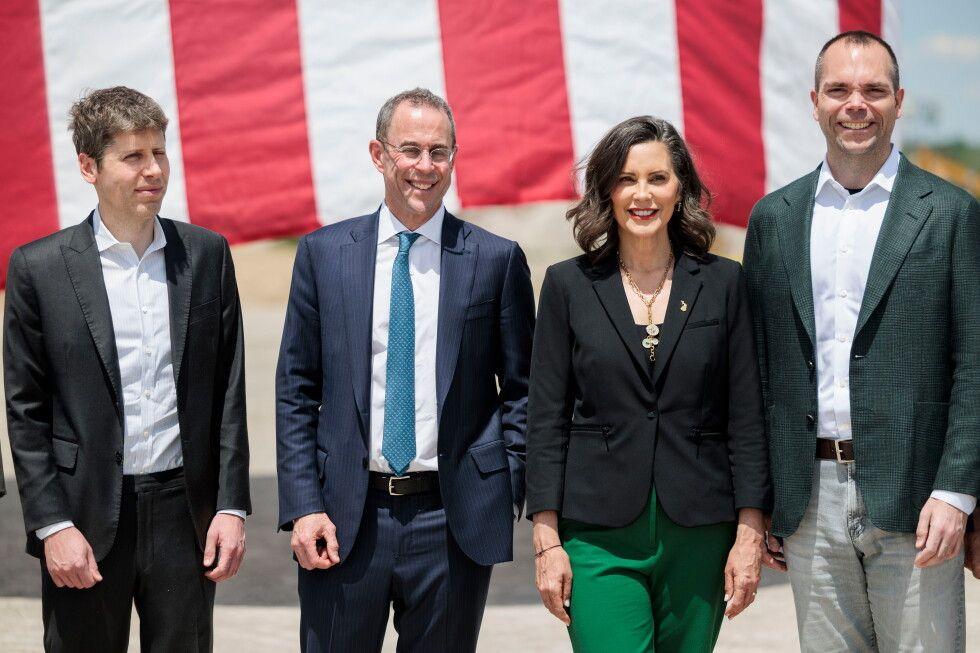
. Supporters argue that giving citizens equity in AI companies would allow them to share in the industry's successes while easing the blow of labor market shifts.OpenAI CEO Sam Altman has been in discussions with Trump and White House officials about tech companies voluntarily donating portions of their stock to the federal government. As reported by NOTUS, Altman first pitched this concept in early 2025, with conversations intensifying in recent months
2
. The approach could enable partial nationalization of the AI industry without congressional legislation, though no deal has been finalized.Officially, OpenAI frames its interest as public-spirited, calling for a Public Wealth Fund that would invest in AI companies and distribute returns to every American through universal dividend payments
2
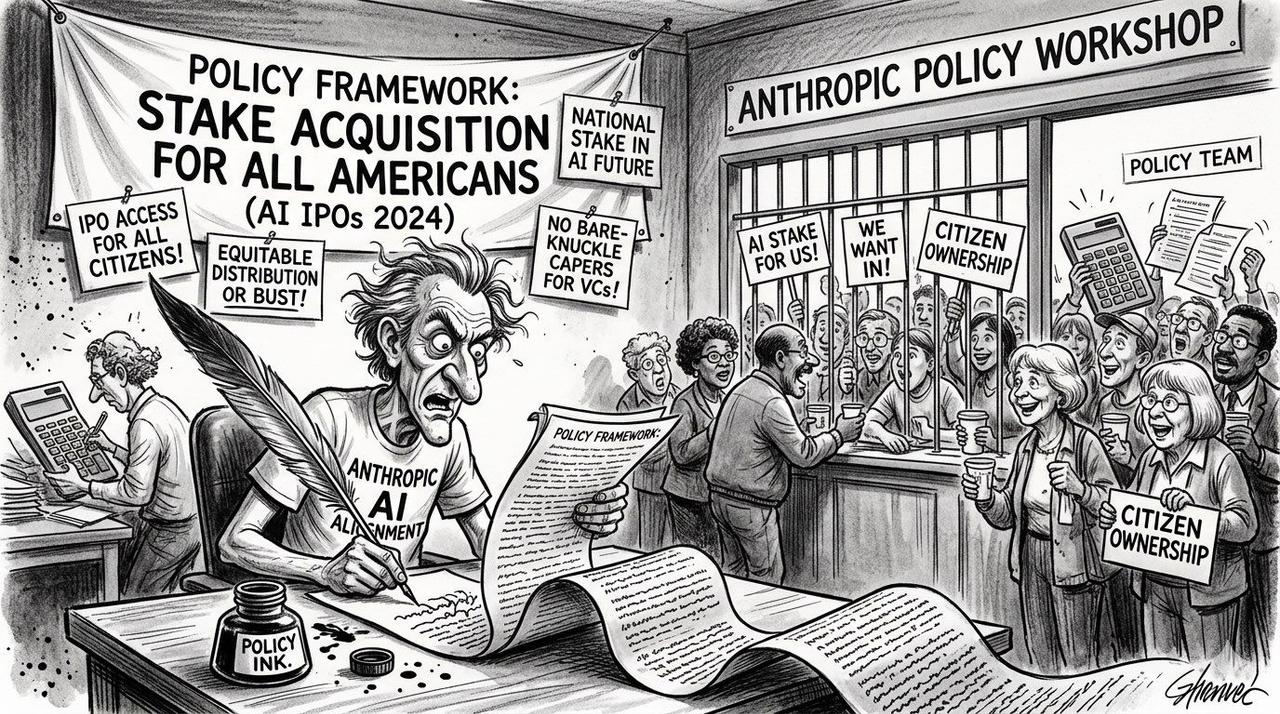
. However, skeptics suggest OpenAI's motives may be more self-interested—by giving the government a direct stake in its success, the company could insulate itself from stringent regulation or open competition.Anthropicreleased its own policy framework this week, proposing expanded capital accounts for Americans that would be funded partly by equity in AI companies
3
. The framework suggests prioritizing people most exposed to AI-driven economic growth disruptions, including young adults entering the workforce and workers in occupations facing displacement. "All of this is rooted in the principle that AI needs to benefit Americans across this country," said Sarah Heck, Anthropic's head of public policy1
.
Source: CXOToday
Anthropicnotes these accounts should allow flexible withdrawals for workforce transitions, enabling people to access funds for retraining, relocation, and credentialing
3
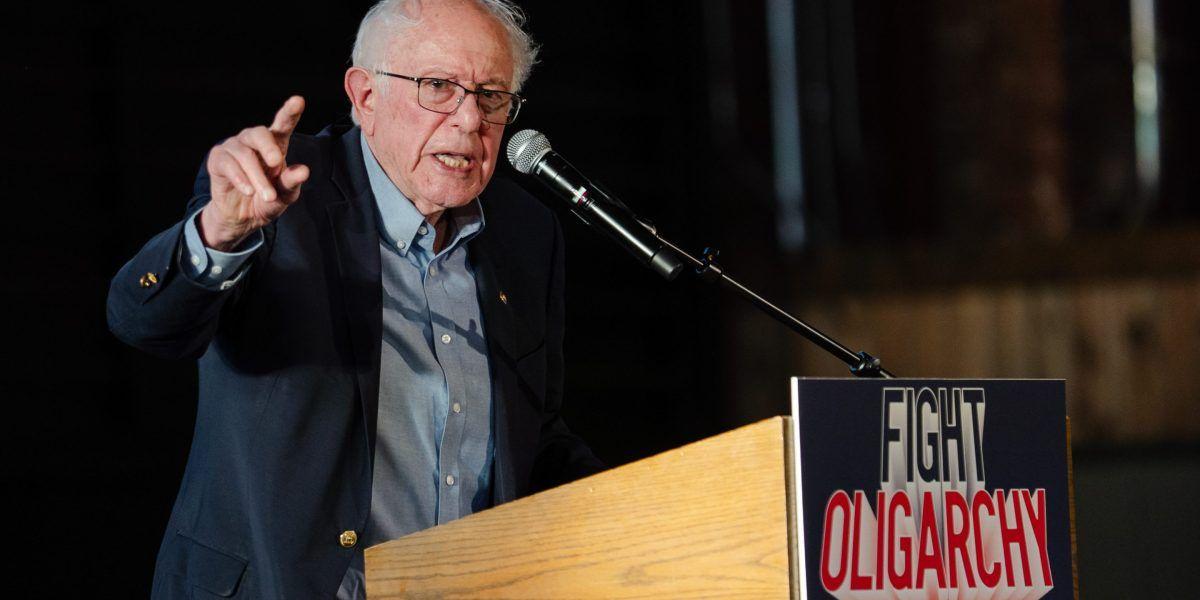
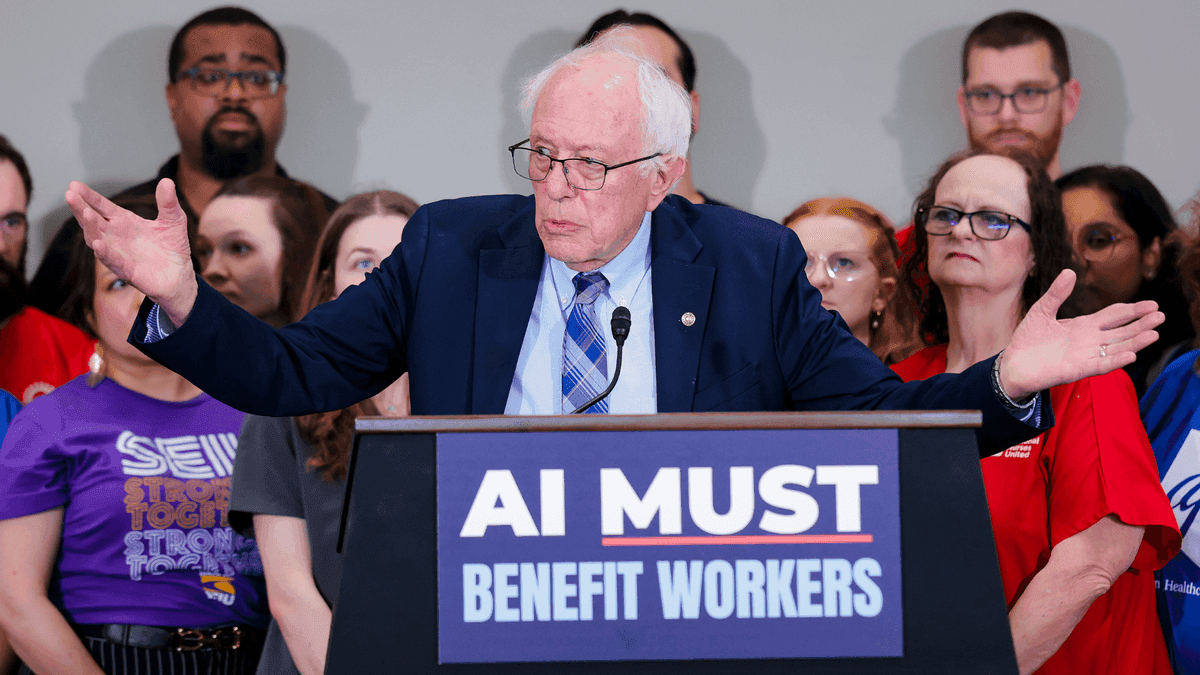
. However, the company's proposal remains vague on whether AI companies would donate stock voluntarily, whether the government would purchase it, or whether legislation taxing the companies would be necessary.Days before Trump's announcement, Senator Bernie Sanders unveiled his own vision for public ownership in AI companies—one far more aggressive than industry proposals. Sanders is proposing 50 percent ownership of major AI companies, including half the seats on each company's board
1
. "It seems to me that given the fact that it is the people whose work is the foundation of AI, they should have some say in the future of AI," Sanders said at a National Press Club event1
.Source: Washington Post
Under Sanders' plan, board members might be chosen by the president and confirmed by the Senate. The public would directly control company decisions not in the public interest, and a sovereign wealth fund could distribute proceeds through direct checks and funding for health care, education, and child care
1
. Sanders proposes financing this through a 50 percent one-time tax on AI companies' stock, meaning taxpayers wouldn't pay to acquire shares.Alex Jacquez, chief of policy and advocacy at the Groundwork Collaborative, noted this approach carries little risk for American taxpayers. "If it's true that these companies are going to be massive and worth trillions in value, it would be great to get some of that upside," he said, adding that if the AI bubble bursts, "the shares you got for free crash"
1
.Related Stories
Alex Bores, a Democratic candidate for a House seat in New York who has drawn national attention for his AI policy proposals, expressed skepticism about frameworks floated by OpenAI, Anthropic, and other AI companies. "It's an easy thing to say that maybe relieves regulatory pressure but doesn't require them to change anything," Bores said. "You should watch their actions, not their words"
1
.Critics argue that companies don't typically devise schemes to reduce the value of their own shares, raising questions about what AI companies stand to gain. In opinion polls, a supermajority of Americans express concern about AI's societal impact and support heavier regulation
2
. Turning every American into a shareholder could soften the industry's image and buy goodwill from the electorate. More importantly, such arrangements would align public interests with those of AI companies—regulations reducing profitability would also cut government revenue and dividend payments.A narrow partnership between the federal government and select AI companies raises concerns about cronyism and conflicts of interest. Yet there remains a genuine risk that artificial intelligence will shift massive income away from workers toward capital. Some economists warn that market interest in AI may be a bubble that could burst if investors lose confidence, potentially crashing the U.S. market and hurting global GDP
1
. A highly diversified, scrupulously managed public wealth fund could help mitigate these hazards and ensure equitable economic benefits from AI-driven growth, though the Trump administration has shown little interest in that comprehensive approach.🟡_chunk_0 + 🟡Summarized by
Navi
05 Jun 2026•Policy and Regulation

02 Jun 2026•Policy and Regulation

06 Apr 2026•Policy and Regulation

1
Policy and Regulation

2
Technology

3
Health