Sanders proposes 50% public ownership of AI firms as Trump backs government stake in US AI giants


5 Sources
[1]
Bernie Sanders files bill proposing 50% public ownership of US AI firms and giving out $1,000 dividends -- VP Vance says Trump supports giving the American people a stake in AI companies, prefers 'pre-distribution' over giving away cash
Sen. Bernie Sanders (I-Vt.) has introduced the American AI Sovereign Wealth Fund Act to the U.S. Senate, which aims to gain 50% ownership of U.S. AI firms through a sovereign wealth fund. According to the Senator's webpage, the first thing this would do is establish the Independent Commission for
[2]
Sanders' AI bill would hand the public half of OpenAI
The senator has introduced the first federal legislation to give the public a stake in AI: a one-time 50% tax on the biggest labs' stock, a roughly $7tn sovereign wealth fund, and a yearly cheque of more than $1,000 to every American. It goes far further than anything the White House or the labs
[3]
'It would make 'em rich': Trump looks to secure government stake in US AI giants
* Trump is talking to AI leaders about investing in their companies * POTUS believes "the American people will like [AI] better" as a result * AI firms might end up donating some equity into a Public Wealth Fund The US government has reportedly been liaising with ChatGPT maker OpenAI on holding
[4]
Trump eyes AI riches with government stakes in top firms
President Trump is considering a plan that would give the U.S. government direct stakes in leading AI companies, putting him in unusual alignment with some of his fiercest critics. The president confirmed earlier this month he is considering "concepts where pieces could be given to the American
[5]

Three ways Trump could get a stake in AI firms for the US
President Donald Trump is actively investigating how to ensure that the American public can benefit from the lucrative advancements within the AI industry. Suggested strategies encompass government equity shares in AI companies, specialized tax reforms, and potential stock-based remuneration.
Share
Copy Link
Sen. Bernie Sanders introduced legislation seeking 50% public ownership of major AI firms through a sovereign wealth fund, estimated at $7 trillion, with annual $1,000 dividends for Americans. President Trump supports giving the American people a stake in AI companies but prefers a 'pre-distribution' model over cash payments, creating an unlikely political alignment on AI wealth redistribution.
Sanders Introduces Radical AI Ownership Legislation
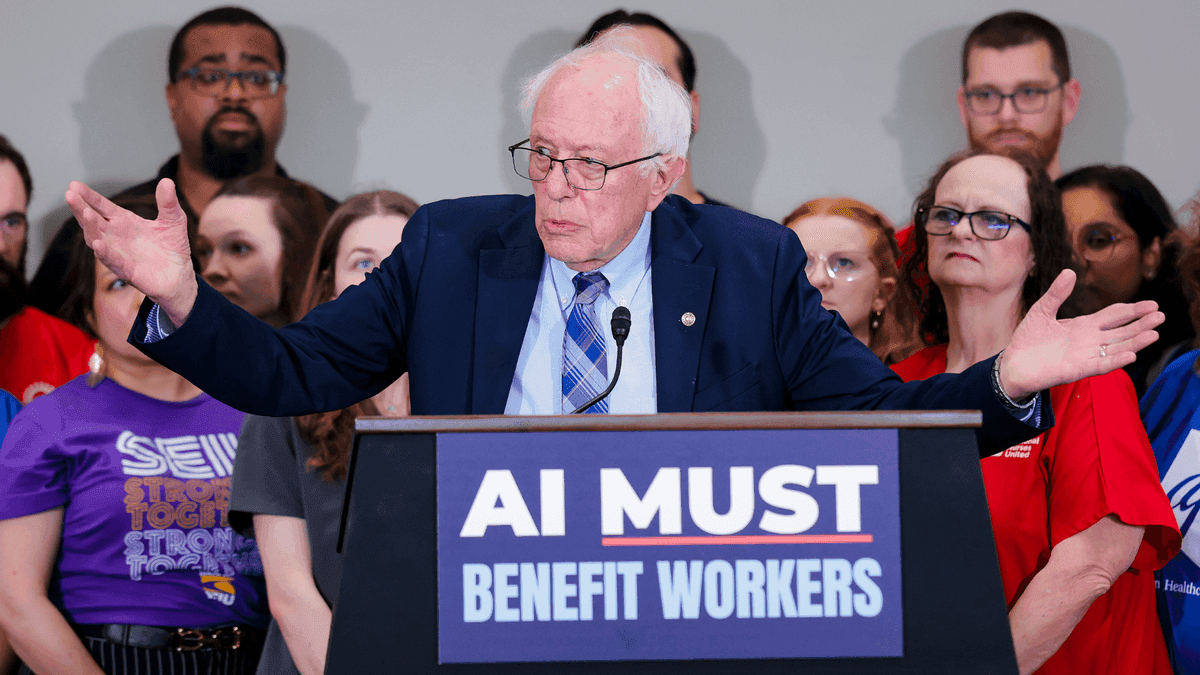
Sen. Bernie Sanders has filed the American AI Sovereign Wealth Fund Act, proposing an unprecedented 50% public ownership of AI firms operating in the United States
1
. The legislation would impose a one-time 50% tax on the largest AI companies, paid in shares rather than cash, effectively handing the American public a half-stake in US AI giants like OpenAI, Anthropic, and xAI2
. Sanders' office estimates this sovereign wealth fund would be valued at approximately $7 trillion at current company valuations1
.
Source: Tom's Hardware
The bill would establish an Independent Commission for Democratic AI, comprising seven bipartisan members nominated by the President and confirmed by the Senate
1
. This body would control 50% of voting shares in American AI tech companies, granting it authority to block decisions deemed harmful to the public and advocate for beneficial policies. The tax would apply to any AI firm generating more than $200 million in annual AI sales2
.Democratize AI's Economic Benefits Through Annual Dividends
The proposed public wealth fund would be required to pay out a 5% annual dividend, which Sanders estimates would deliver more than $1,000 per year to every American
2
. Any surplus dividends beyond these payments would fund healthcare, education, and housing initiatives2
. The legislation frames AI as derived from "humanity's collective intelligence," listing books, songs, art, journalism, code, and research that models trained on2
. Sanders argues that "a small number of oligarchs have essentially stolen the creative work of hundreds of millions of people," positioning AI wealth redistribution as a moral imperative rather than merely a fiscal policy2
.This approach follows the oil-and-minerals model, where if value is extracted from a public resource, the public should share the returns
2
. Sanders has been skeptical about AI development, previously calling for a complete halt on data center construction to ensure technology benefits everyone "not just the 1%"1
.Trump Administration Backs Government Stake with Different Approach
In a surprising political alignment, President Donald Trump confirmed his administration is exploring options to give the public a stake in leading AI companies
4
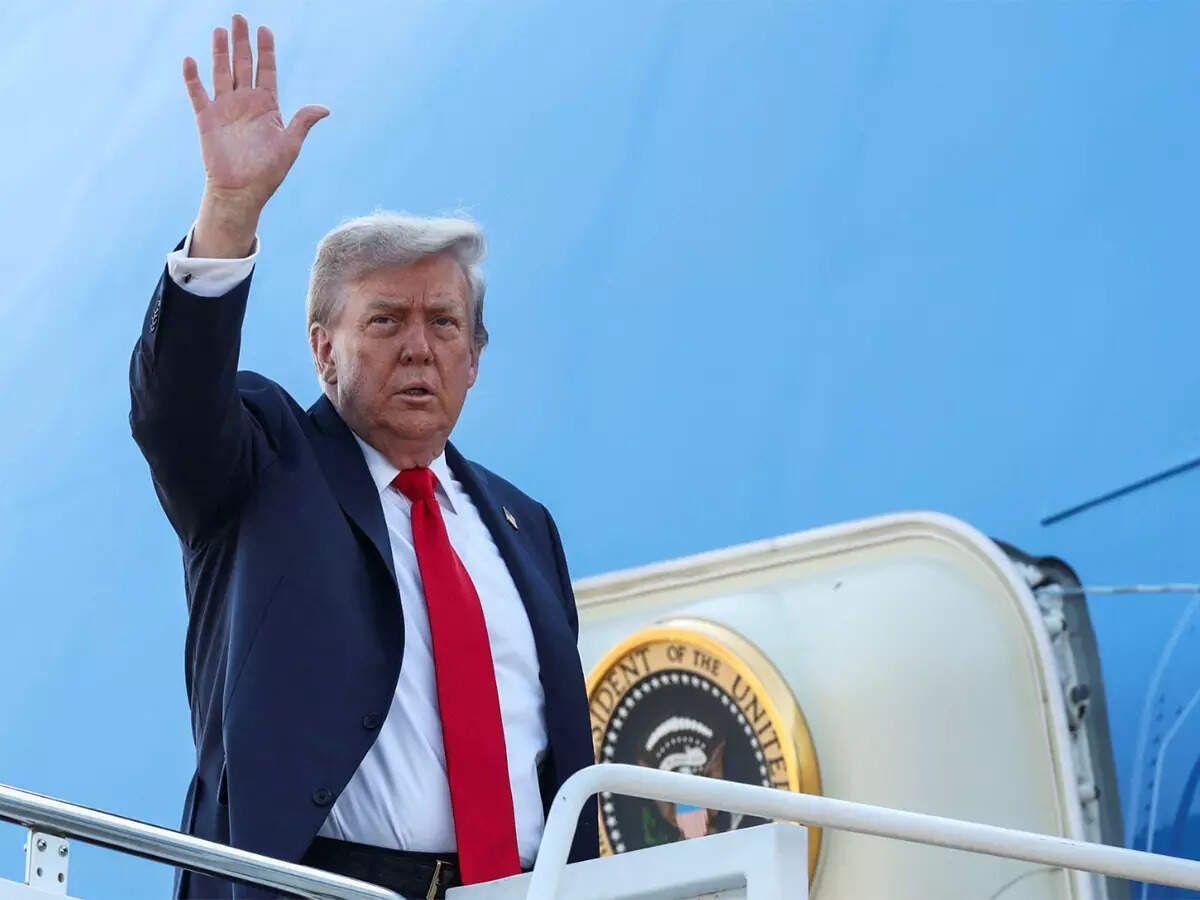
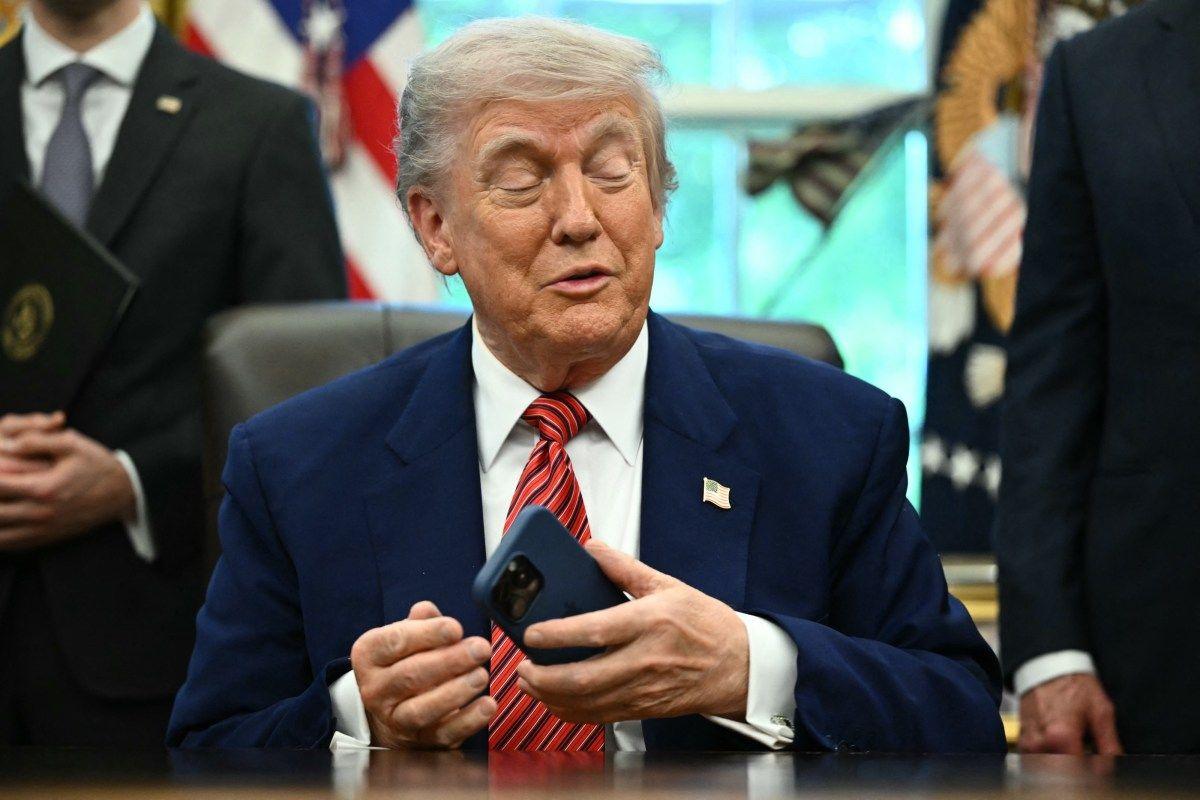
. Speaking on Air Force One, Trump said discussions are underway about "concepts where pieces could be given to the American public, where the American public essentially becomes a partner"3
. The President declared it would be "a beautiful thing" that "would make 'em rich"3
.
Source: ET
Vice President JD Vance articulated the administration's reasoning, drawing parallels to the industrial revolution. "Rich people got way richer. And that led to, in Europe, fascism and communism," Vance explained, arguing that wealth concentration rather than joblessness drove civil strife
1
. However, Vance rejected Sanders' cash redistribution model, stating it would "turn the poor people into effectively subservients of the rich people"1
. Instead, the administration favors "pre-distribution"—giving the American people a stake in AI companies through collective bargaining power rather than direct payments.Related Stories
Multiple Pathways for Giving the American People a Stake in AI Companies
Several mechanisms have emerged for implementing government stake arrangements. One approach mirrors the Intel deal, where the government took a 10% stake in exchange for billions in funding to expand domestic manufacturing
5
. Another model involves equity stakes in exchange for federal loan guarantees for chip plants and data centers. Tax reforms represent a third pathway, with proposals for taxes payable in stock rather than cash, effectively transferring equity stakes without requiring public investment5
.OpenAI proposed creating a public wealth fund in April to "provide every citizen—including those not invested in financial markets—with a stake in AI-driven economic growth"
4
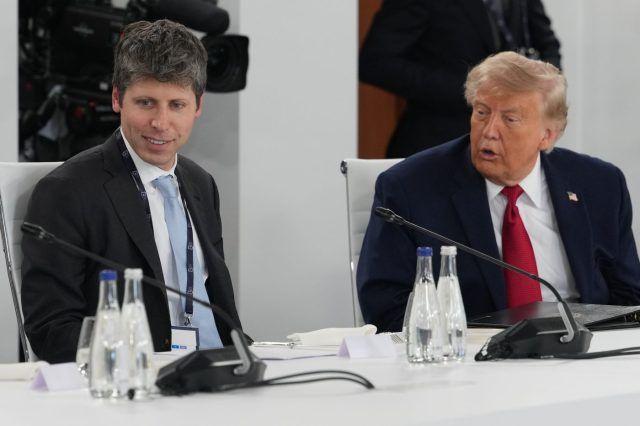
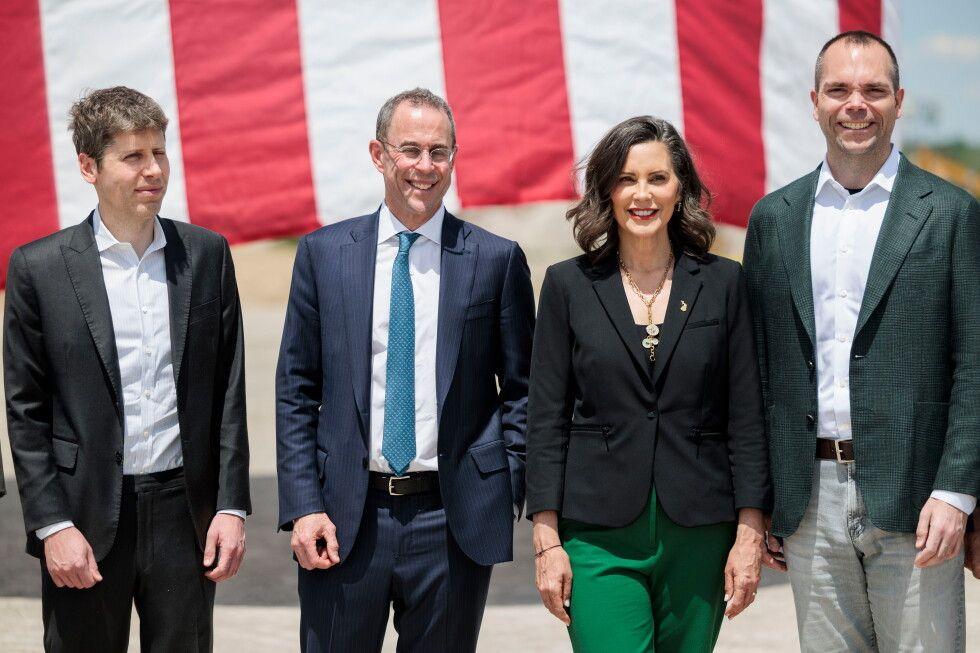
. Sam Altman, OpenAI's CEO, met with Sanders but the two remained "far apart" after Sanders dismissed a voluntary "5% of our profits" offer as buying off the public2
. Anthropic has explored a "digital dividend" concept, defined as payments to Americans funded by taxes on the AI sector5
. Anthropic co-founder Jack Clark stated the company is "in daily conversations with the US government" and finding ways to support national security3
.
Source: The Hill
Political Realities and Societal Impact
Sanders' legislation faces steep odds in a Republican-controlled Congress broadly supportive of industry. Former AI czar David Sacks called the plan "straight up confiscation of property," while a clause forcing companies to split AI and non-AI businesses would disrupt Elon Musk's merger of xAI into SpaceX
2
. Sanders acknowledged he doesn't expect passage, instead planting a flag for midterm elections where AI anxiety is becoming a campaign issue. Recent polling shows 53% of Americans worry someone in their household will lose a job due to AI, while 71% oppose data center construction in their communities.The debate reflects growing concern over how AI might worsen inequality, particularly as it drives massive growth in public markets where typical Americans have limited investment compared to wealthier counterparts. Trump's transactional approach represents a notable shift for Republicans who traditionally advocate smaller government roles in private industry. "With Trump, it's about deals," said Tad DeHaven of the Cato Institute, noting the President "is transactional, he is deal-based". Whether through Sanders' aggressive seizure or Trump's negotiated partnerships, Washington has moved beyond debating whether the public should share in economic gains from AI—the question now centers on how much and through what mechanisms.
References
Summarized by

Navi
[2]
Related Stories
Trump Administration Eyes Equity Stake in OpenAI as Public Wealth Fund Takes Shape
05 Jun 2026•Policy and Regulation
Bernie Sanders proposes 50% public ownership in AI giants as Trump backs wealth-sharing plans
02 Jun 2026•Policy and Regulation
OpenAI proposes giving US government 5% stake worth $42.6 billion amid regulatory pressure
02 Jul 2026•Policy and Regulation
Recent Highlights
1
Microsoft and Nvidia Launch Surface Laptop Ultra: A $2,599 AI-Ready PC With RTX Spark Chip
Technology

2
OpenAI Releases 722 AI-Generated Math Papers on GitHub, Igniting Fury Among Mathematicians
Science and Research

3
Trump Consulted Grok AI Before Ordering Venezuela Invasion and Capture of Nicolás Maduro
Policy and Regulation

Recent Highlights
Today's Top Stories









Don’t drown in AI news. We cut through the noise - filtering, ranking and summarizing the most important AI news, breakthroughs and research daily. Follow topics that matter to you and stay ahead.


