7 Sources
[1]
Trump's AI security order acknowledges risks but stops short of regulating industry
Some technology and policy watchers were surprised when President Donald Trump signed an executive order on June 2, 2026, establishing a framework for AI security. It seemed to move in a different direction from a December 2025 executive order that sought to create a "minimally burdensome" national framework for artificial intelligence and supersede state laws the administration saw as restrictive. The new executive order focuses on using AI to boost the security of federal and private computer systems. It also aims to ensure that the federal government has access to major new AI models before they are released to the public, to determine if they pose a threat. However, the order's provisions relating to the AI industry are voluntary, and it explicitly prohibits interpreting its provisions as authorizing "a mandatory governmental licensing, pre-clearance, or permitting requirement" for new AI models. As a professor who studies responsible AI, the questions the executive order raises for me are how its new reporting structure changes the governance of AI safety, and whether the order reflects what AI safety experts see as best practices. Potential for harm The executive order expresses concern about AI systems that can discover software vulnerabilities and write malicious code to exploit them. It directs various government secretaries to enact cyber defenses for federal systems. It also establishes an AI cybersecurity clearinghouse in voluntary collaboration with the AI industry and operators of critical infrastructure to scan for vulnerabilities and distribute fixes. This approach may be the Trump administration's response to the April 2026 announcement by Anthropic that its newest version of Claude, called Mythos, autonomously found hundreds of software vulnerabilities in critical systems across the U.S. and crafted attacks against them. That prompted several large financial institutions to request early access to such models. The executive order directs various high-ranking government officials to develop and maintain a classified process for assessing whether new AI programs should be designated as frontier models, also called foundation models. In industry parlance, a frontier model is a new, cutting edge AI model trained on massive amounts of data that can reason and autonomously use tools to initiate actions. The latest versions of ChatGPT, Claude, DeepMind and Llama fall into this category. If a new model meets the frontier criteria, then the developer is supposed to provide the government with access to it at least 30 days before they plan to release the model. It also says developers will collaborate with the federal government to select third parties to preview covered frontier models to assess the risk to the cybersecurity of critical infrastructure. Voluntary measures AI companies that develop frontier AI models currently share information with the Center for AI Standards and Innovation, part of the National Institute of Standards and Technology governed by the Department of Commerce. According to the International AI safety report, most risk management initiatives around the world are largely voluntary for AI companies. This includes the Frontier AI Safety Frameworks that AI developers consult, the G7 Hiroshima AI Process endorsed by leaders of G7 countries, and the EU Code of Practice followed across Europe. The new executive order retains the voluntary nature of AI developers reporting potential safety risks. The administration continues to argue that restrictive safety barriers could hamper innovation. However, AI safety pioneers, including Turing Award winners Geoffrey Hinton and Yoshua Bengio, maintain that safety cannot rest solely on corporate self-regulation, because commercial pressures prioritize development speed over risk mitigation. The International AI Safety Report warns that AI risk management is still immature and that corporate safety measures have to grow with the pace of innovation. This is the so-called "evidence dilemma": Acting too slowly leaves societies vulnerable. In creating AI safety standards, industry and government have to specify and agree on what information is required from AI model developers, such as training data and methods, "red team" practices for probing vulnerabilities, and incident reports about model theft. Addressing the risks Despite its lack of mandatory safety measures for the AI industry, I find it striking that the executive order acknowledges the serious potential for harm posed by AI models. The order is also in line with expert consensus that individual technical safeguards are imperfect and can be bypassed by attackers. Instead, the order advocates for multiple, overlapping layers of protection, including hardware and computer infrastructure tracking, rigorous testing before deployment, and real-time monitoring. The order also reflects expert opinion in noting that advanced AI tools have a fundamental duality: They can transform disciplines ranging from healthcare to defense, but they can also enable malicious hackers and cybercriminals, pose societal harms and threaten national defense. Beyond national AI safety International cooperation is also fundamental to AI safety. For instance, Argentina has created nonhuman corporations run entirely by AI agents. How much safety does the new executive order provide in a world where models can be deployed from anywhere? The order makes no mention of multilateral coordination, allied engagement or globally shared governance. Indeed, the order's purpose is to "cultivate America's advanced AI-enabled capabilities" as a competitive national asset. Bodies such as the International Atomic Energy Agency can serve as models for an international consensus on AI safety. The existing AI Safety Summit process, which held summits in the U.K. in 2023; South Korea in 2024; France in 2025; and India in 2026, is the closest approximation in practice. It involves a network of government AI safety institutes, including from the U.S. and Europe. It holds summits every six to 12 months. Such independent, expert-led bodies could also shape expectations about protocols and norms related to AI risk. The executive order represents a first step in acknowledging some of the AI safety risks for national security. Moving forward, I believe it is important for the U.S. government to connect such efforts with broader, independent and scientific approaches to identify and counter threats from AI.
[2]
Trump calls for military to accelerate use of AI while protecting Americans
WASHINGTON (AP) -- President Donald Trump issued a memo Friday that calls for the U.S. military and national security agencies to accelerate their use of artificial intelligence, while acknowledging the need to protect civil liberties and maintain oversight over autonomous weapon systems. The memo comes at a time of growing anxiety over AI in American society, from replacing people's jobs to helping to identify targets on the battlefield. The Trump administration has been pushing to unleash the power of AI for the U.S. military, while some military leaders and companies that contract with the Pentagon have been noting caution and calling for guardrails. Trump's memo addressed much of his Cabinet, including the secretaries of defense and homeland security as well as the attorney general and director of national intelligence. Trump is requiring an updated directive on autonomous weapon systems to account for AI's rapidly evolving capabilities. It directs the Department of Defense "to ensure the deliberate adoption of AI systems that respect the chain of command and operational authorities." The current directive, issued in 2023 under the Biden administration, states that such weapons systems will be designed "to allow commanders and operators to exercise appropriate levels of human judgment over the use of force," according to the Congressional Research Service. Trump's memo also restricts the use of AI to "censor free speech, embed ideological bias, or conduct unlawful surveillance against the American people." "The use of AI by the national security enterprise must always be consistent with United States civil liberties and protections afforded by the Constitution and laws and regulations safeguarding the privacy of American citizens," the memo states. The Defense Department has already been accelerating its use of AI in recent years. The technology can help reduce the time it takes to identify and strike a target, while aiding in the mundane tasks of organizing equipment maintenance, supply lines and other logistics. But concerns about protecting civil liberties and human oversight of autonomous weapon systems have drawn increasing attention. They're at the center of a dispute that erupted this year as the Pentagon seeks to leverage the power of American tech companies to boost the military's AI capabilities. The company Anthropic said it wanted assurances in its contract that the military would not use its technology in fully autonomous weapons and the surveillance of Americans. Defense Secretary Pete Hegseth said the company must allow for any uses the Pentagon deemed lawful. Anthropic sued after Trump tried to stop all federal agencies from using the company's chatbot Claude and Hegseth sought to label the company a supply chain risk, a designation meant to protect against sabotage of national security systems by foreign adversaries. Concerns about military use of AI arose during Israel's war against militants in Gaza and Lebanon, with U.S. tech giants quietly empowering Israel to track targets. But the number of civilians killed also soared, fueling fears that these tools contributed to the deaths of innocent people. U.S. military leaders who attended an annual special forces conference in Tampa, Florida, spoke about the benefits of AI as well as the need for human safeguards. Adm. Frank Bradley, head of U.S. Special Operations Command, told attendees that troops "have to be very careful about how we come to (AI's) employment and its inspiration into the delivery of lethality." Bradley said he can see a future where AI determines what targets to hit but that "we, as humans, have to have the confidence that ... it's going to deliver violence only where we intend it to be delivered."
[3]
Trump signs memo putting 'most advanced AI' into military hands and banning vendors from pulling the plug
Trump signed NSPM-11, ordering rapid military AI adoption and barring vendors from disabling models without approval. Hegseth must update autonomous weapons policy. President Trump signed a national security presidential memorandum on Friday ordering the US military and intelligence agencies to accelerate their adoption of cutting-edge AI. The directive, NSPM-11, establishes a framework for "rapid onboarding of the most advanced AI models from multiple vendors." It also bars any company from disabling, degrading, or modifying an AI system that warfighters depend on without prior government approval. That vendor restriction is the most striking provision. It means an AI company cannot pull a deployed model from military use unilaterally, even if the company has safety concerns about how it is being used. The clause lands directly in the context of the Pentagon's ongoing feud with Anthropic, which was blacklisted as a supply chain risk after refusing to allow its Claude models to be used for autonomous weapons or mass surveillance. "The men and women who defend our nation deserve the best, most secure and most reliable AI in the world," said Michael Kratsios, director of the White House Office of Science and Technology Policy. The memo also directs Defence Secretary Pete Hegseth to issue an updated directive on autonomous weapon systems within 90 days. That update would revise DoD Directive 3000.09, the foundational Pentagon policy governing when and how autonomous and semi-autonomous weapons can be used, including requirements for human judgment before lethal force is applied. There are stated limits. The memo prohibits defence agencies from creating or releasing AI models designed to "censor free speech, embed ideological bias or conduct unlawful surveillance against the American people." But it does not define those terms or explain how compliance would be enforced. The directive follows Tuesday's executive order that established a voluntary 30-day review window for frontier AI models before public release. Together, the two documents outline a dual approach: light-touch regulation for the commercial sector and aggressive adoption for the military. The "multiple vendors" language signals a shift away from single-provider dependency. Until recently, Anthropic was the only AI vendor approved for classified military use. After the Pentagon signed classified deals with Nvidia, Microsoft, and AWS, the administration is now formalising a multi-vendor approach. The memo makes accountability central. Commanders, directors, and agency heads remain responsible for ensuring AI is used in line with its stated obligations. Annual reviews of key guidance across the national security enterprise are required to keep pace with the AI frontier. Whether those reviews will be meaningful or performative remains an open question.
[4]
How Trump's AI strategy is taking shape
Why it matters: The fast-moving timeline, the agencies involved and the lack of formal requirements for developers make clear that Trump's current AI policy is one squarely focused on cybersecurity and national security rather than broader AI safety concerns. The big picture: The administration is relying on voluntary cooperation from AI developers rather than mandatory safety requirements. * That's happening even as the top labs warn of potentially worrying advancements in their latest models. What they're saying: "There's a risk of a gap developing between what the Trump administration AI policy says and believes about policy implementation," Michael Horowitz, a former Pentagon official and professor at the University of Pennsylvania, told Axios. * "That's both due to a talent exodus and the willingness of the Trump administration to change its approach rapidly if the views of the president shift again, which reduces predictability." Zoom in: Here's a look at the AI order's first major deadlines: July 2: By this date, the Department of Homeland Security is supposed to have a plan to prioritize cyber defense of federal government information systems and make sure the latest AI models are available to critical infrastructure, including hospitals, banks and utilities. * The Treasury Department is also expected to establish an "AI cybersecurity clearinghouse" with industry partners focused on finding and patching cyber vulnerabilities. * The Office of Management and Budget is due to identify grant funding for "advanced AI vulnerability detection." August 1: By this date, OMB is tasked with expanding hiring for cybersecurity specialists through the U.S. Tech Force. * Treasury, the National Security Agency and the Cybersecurity and Infrastructure Security Agency will be required to develop a "classified benchmarking process to assess the advanced cyber capabilities of AI models," including determining who would be covered under that process. * That same group of agencies is also tasked with designing a voluntary framework with AI developers, with those developers giving the government access to models up to 30 days before public release. The order doesn't mention or give a role to the Center for AI Standards and Innovation within the Commerce Department, which has been testing AI models for safety since the Biden administration. * CAISI recently announced new agreements to test models, but was told to take down that announcement shortly after it went up as the White House worked out their AI order, a person familiar with the matter told Axios. * "CAISI's absence is hard to ignore," Ilona Cohen, chief legal officer at HackerOne and a former Obama administration lawyer, told Axios. * "When an administration leaves its flagship AI safety institution out of a major AI order, people are going to ask whether the center's role is being reduced or simply redefined," said Cohen. "The implementation of President Trump's AI agenda is a whole-of-government effort, with numerous agencies contributing to its success," White House spokesperson Liz Huston said in a statement. * "The entire Administration is working closely together to deliver meaningful results for the American people including strengthening America's cyber and national security, protecting critical infrastructure, and ensuring the United States remains the global leader in AI innovation." * A Commerce Department spokesperson declined to answer questions about CAISI's lack of a role in the AI order. What we're watching: Both OpenAI and Anthropic have been talking about how the latest AI models can be dangerous and the industry may benefit from slowing or pausing on development.
[5]
Trump Calls for Military to Accelerate Use of AI While Protecting Americans
WASHINGTON (AP) -- President Donald Trump issued a memo Friday that calls for the U.S. military and national security agencies to accelerate their use of artificial intelligence, while acknowledging the need to protect civil liberties and maintain oversight over autonomous weapon systems. The memo comes at a time of growing anxiety over AI in American society, from replacing people's jobs to helping to identify targets on the battlefield. The Trump administration has been pushing to unleash the power of AI for the U.S. military, while some military leaders and companies that contract with the Pentagon have been noting caution and calling for guardrails. Trump's memo addressed much of his Cabinet, including the secretaries of defense and homeland security as well as the attorney general and director of national intelligence. Trump is requiring an updated directive on autonomous weapon systems to account for AI's rapidly evolving capabilities. It directs the Department of Defense "to ensure the deliberate adoption of AI systems that respect the chain of command and operational authorities." The current directive, issued in 2023 under the Biden administration, states that such weapons systems will be designed "to allow commanders and operators to exercise appropriate levels of human judgment over the use of force," according to the Congressional Research Service. Trump's memo also restricts the use of AI to "censor free speech, embed ideological bias, or conduct unlawful surveillance against the American people." "The use of AI by the national security enterprise must always be consistent with United States civil liberties and protections afforded by the Constitution and laws and regulations safeguarding the privacy of American citizens," the memo states. The Defense Department has already been accelerating its use of AI in recent years. The technology can help reduce the time it takes to identify and strike a target, while aiding in the mundane tasks of organizing equipment maintenance, supply lines and other logistics. But concerns about protecting civil liberties and human oversight of autonomous weapon systems have drawn increasing attention. They're at the center of a dispute that erupted this year as the Pentagon seeks to leverage the power of American tech companies to boost the military's AI capabilities. The company Anthropic said it wanted assurances in its contract that the military would not use its technology in fully autonomous weapons and the surveillance of Americans. Defense Secretary Pete Hegseth said the company must allow for any uses the Pentagon deemed lawful. Anthropic sued after Trump tried to stop all federal agencies from using the company's chatbot Claude and Hegseth sought to label the company a supply chain risk, a designation meant to protect against sabotage of national security systems by foreign adversaries. Concerns about military use of AI arose during Israel's war against militants in Gaza and Lebanon, with U.S. tech giants quietly empowering Israel to track targets. But the number of civilians killed also soared, fueling fears that these tools contributed to the deaths of innocent people. U.S. military leaders who attended an annual special forces conference in Tampa, Florida, spoke about the benefits of AI as well as the need for human safeguards. Adm. Frank Bradley, head of U.S. Special Operations Command, told attendees that troops "have to be very careful about how we come to (AI's) employment and its inspiration into the delivery of lethality." Bradley said he can see a future where AI determines what targets to hit but that "we, as humans, have to have the confidence that ... it's going to deliver violence only where we intend it to be delivered."
[6]
US says it will speed development and use of AI for national security
The Trump administration said earlier this week that it would ask leading AI developers to voluntarily submit their most capable models for government cybersecurity tests before releasing them to the public, as security fears mount in Washington over powerful new AI systems. The White House said on Friday it would accelerate the development and use of AI for national security applications, while stressing that the technology should not be used to carry out unlawful surveillance. The Trump administration said earlier this week that it would ask leading AI developers to voluntarily submit their most capable models for government cybersecurity tests before releasing them to the public, as security fears mount in Washington over powerful new AI systems. "Under my Administration, the United States can and will responsibly accelerate the use of AI across intelligence and warfighting domains in line with American values," President Donald Trump said in a national security memorandum. Trump said Defense Secretary Pete Hegseth had 90 days to update an existing directive on the autonomy of weapons systems "to ensure the deliberate adoption of AI systems that respect the chain of command." Trump added that AI technologies should not be developed or used by the national security enterprise "to censor free speech ... or conduct unauthorized or unlawful surveillance activities." The memorandum "accelerates AI adoption from multiple vendors to prevent single points of failure, updates @DeptofWar's guidance on autonomous weapons systems to keep pace with the frontier, and ensures no entity can disable or degrade an AI system our warfighters depend on without prior approval," Michael Kratsios, director of the White House Office of Science and Technology Policy, wrote in a social media posting. The memorandum comes in the wake of a clash between AI lab Anthropic and the Pentagon. The Pentagon slapped a formal supply-chain risk designation on Anthropic in March after it refused to back down on bans for its Claude AI to power autonomous weapons and mass U.S. surveillance. The Pentagon said it should be able to use the technology as needed, as long as it complied with U.S. law. The designation was an extraordinary rebuke by the administration of an American tech company that the Pentagon has relied on to support military operations, including in Iran, as Reuters has reported. Anthropic did not immediately respond to a request for comment on the memorandum or on a meeting with AI executives that Trump said on Friday he planned to host as soon as next week.
[7]
US Says It Will Speed Development and Use of AI for National Security
WASHINGTON, June 5 (Reuters) - The White House said on Friday it would accelerate the development and use of AI for national security applications, while stressing that the technology should not be used to carry out unlawful surveillance. The Trump administration said earlier this week that it would ask leading AI developers to voluntarily submit their most capable models for government cybersecurity tests before releasing them to the public, as security fears mount in Washington over powerful new AI systems. "Under my Administration, the United States can and will responsibly accelerate the use of AI across intelligence and warfighting domains in line with American values," President Donald Trump said in a national security memorandum. Trump said Defense Secretary Pete Hegseth had 90 days to update an existing directive on the autonomy of weapons systems "to ensure the deliberate adoption of AI systems that respect the chain of command." Trump added that AI technologies should not be developed or used by the national security enterprise "to censor free speech ... or conduct unauthorized or unlawful surveillance activities." (Reporting by Katharine Jackson; Writing by David Ljunggren; Editing by Caitlin Webber and Rosalba O'Brien)
Share
Copy Link
Donald Trump signed an executive order on AI security and a national security memorandum accelerating military AI adoption. The orders establish voluntary 30-day reviews for frontier models before public release and bar AI vendors from disabling deployed military systems without approval. While acknowledging risks from autonomous weapons systems, the framework keeps light-touch regulation for commercial AI, raising questions about whether voluntary measures adequately address AI safety concerns.
Donald Trump signed two major AI directives in June 2026 that outline his administration's approach to artificial intelligence: an executive order on AI security and a national security presidential memorandum (NSPM-11) calling for rapid military AI adoption
1
2
. The executive order on AI security establishes a framework for using AI to boost federal and private computer systems security, while explicitly prohibiting interpretation of its provisions as authorizing "a mandatory governmental licensing, pre-clearance, or permitting requirement" for new AI models1
. This marks a distinct shift in Trump's AI strategy, which previously emphasized creating a "minimally burdensome" national framework.
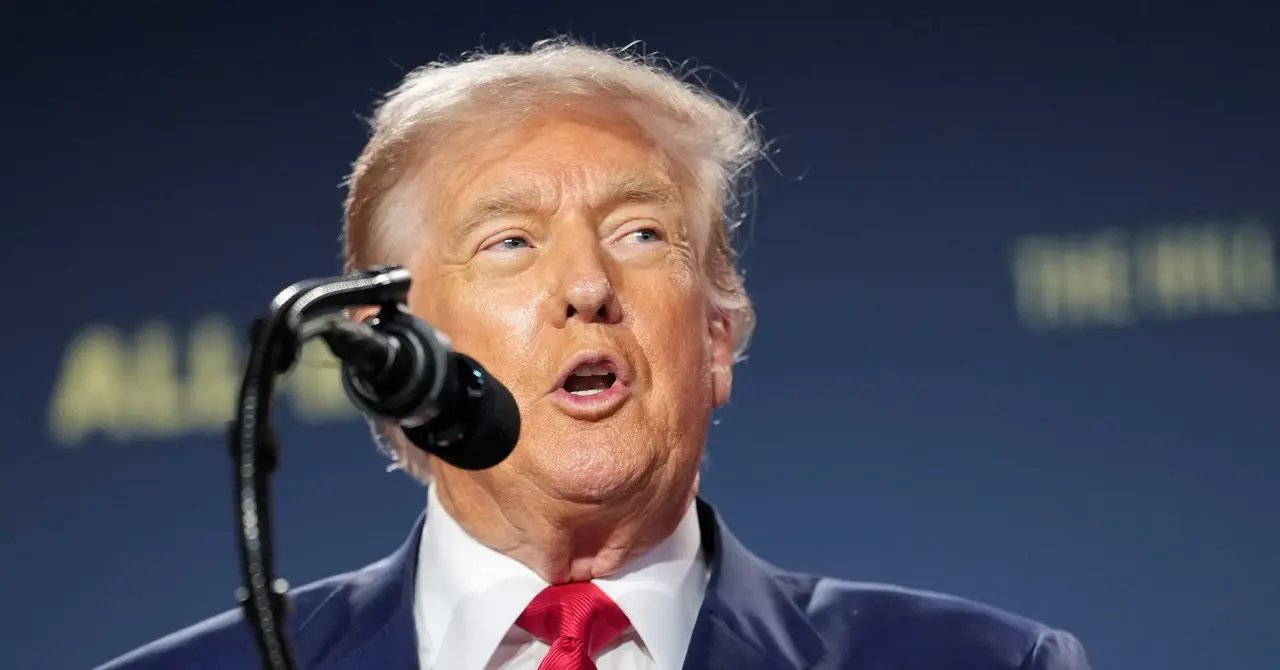
Source: AP
The national security memorandum orders the U.S. military and intelligence agencies to accelerate their use of AI, establishing a framework for "rapid onboarding of the most advanced AI models from multiple vendors"
3
. The most striking provision bars any company from disabling, degrading, or modifying an AI system that warfighters depend on without prior government approval3
. This vendor restriction lands directly in the context of the Pentagon's ongoing dispute with Anthropic, which was blacklisted as a supply chain risk after refusing to allow its Claude models to be used for autonomous weapons or mass surveillance3
2
.

Source: ET
Defense Secretary Pete Hegseth must issue an updated directive on autonomous weapon systems within 90 days, revising DoD Directive 3000.09, which currently requires that such weapons allow "commanders and operators to exercise appropriate levels of human judgment over the use of force"
2
3
. The memo addresses much of Trump's Cabinet, including the secretaries of defense and homeland security, the attorney general, and director of national intelligence2
.The executive order directs government officials to develop a classified process for assessing whether new AI programs should be designated as frontier models—cutting-edge AI models trained on massive amounts of data that can reason and autonomously use tools
1
. If a model meets the frontier criteria, developers are supposed to provide the government with access at least 30 days before public release1
4
. The latest versions of ChatGPT, Claude, DeepMind, and Llama fall into this category.However, this framework remains voluntary, continuing the administration's argument that restrictive safety barriers could hamper innovation
1
. By August 1, Treasury, the National Security Agency, and the Cybersecurity and Infrastructure Security Agency must develop a "classified benchmarking process to assess the advanced cyber capabilities of AI models" and design this voluntary framework with AI developers4
. Notably absent from the order is any role for the Center for AI Standards and Innovation within the Commerce Department, which has been testing AI models for safety since the Biden administration4
.The executive order expresses concern about AI systems that can discover software vulnerabilities and write malicious code to exploit them
1
. This appears to be the Trump administration's response to Anthropic's April 2026 announcement that its newest Claude version, called Mythos, autonomously found hundreds of software vulnerabilities in critical systems across the U.S. and crafted attacks against them1
. The order establishes an AI cybersecurity clearinghouse in voluntary collaboration with the AI industry and operators of critical infrastructure to scan for cyber vulnerabilities and distribute fixes1
.
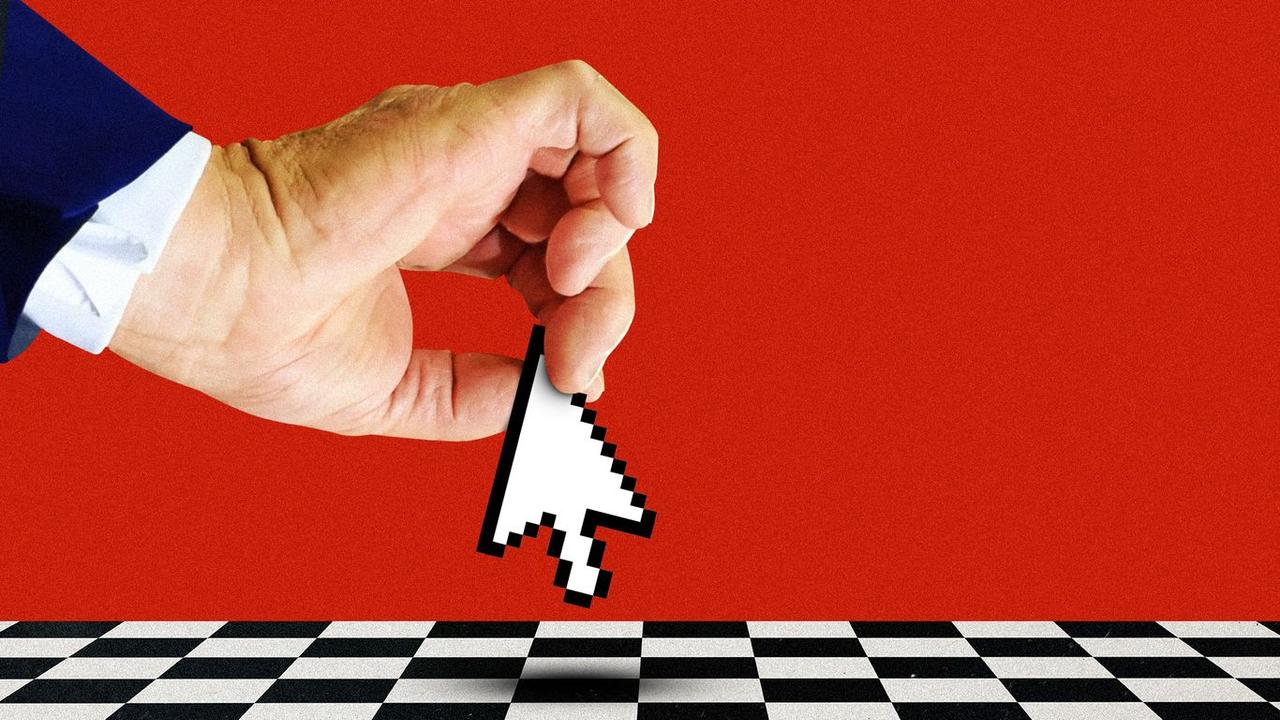
Source: Axios
By July 2, the Department of Homeland Security must have a plan to prioritize cyber defense of federal government information systems and ensure the latest AI models are available to critical infrastructure, including hospitals, banks, and utilities
4
. The Treasury Department is also expected to establish this clearinghouse with industry partners focused on finding and patching vulnerabilities4
.Related Stories
Both orders include provisions restricting the use of AI to "censor free speech, embed ideological bias, or conduct unlawful surveillance against the American people"
2
3
. The national security memorandum states that "the use of AI by the national security enterprise must always be consistent with United States civil liberties and protections afforded by the Constitution"2
. However, the directive does not define these terms or explain how compliance would be enforced3
.Concerns about human oversight of autonomous weapons systems have drawn increasing attention, particularly following Israel's war against militants in Gaza and Lebanon, where U.S. tech giants quietly empowered Israel to track targets but the number of civilians killed soared, fueling fears that these tools contributed to deaths of innocent people
2
. Adm. Frank Bradley, head of U.S. Special Operations Command, acknowledged that while AI could determine what targets to hit, "we, as humans, have to have the confidence that it's going to deliver violence only where we intend it to be delivered"2
.The fast-moving timeline, the agencies involved, and the lack of formal requirements for developers make clear that Trump's AI strategy is squarely focused on AI in national security and AI cybersecurity rather than broader AI safety concerns
4
. The administration relies on voluntary cooperation from AI developers rather than mandatory safety requirements, even as top labs warn of potentially worrying advancements in their latest models4
. AI safety pioneers, including Turing Award winners Geoffrey Hinton and Yoshua Bengio, maintain that safety cannot rest solely on corporate self-regulation because commercial pressures prioritize development speed over risk mitigation1
.Michael Horowitz, a former Pentagon official and professor at the University of Pennsylvania, warned: "There's a risk of a gap developing between what the Trump administration AI policy says and believes about policy implementation. That's both due to a talent exodus and the willingness of the Trump administration to change its approach rapidly if the views of the president shift again, which reduces predictability"
4
. The two documents together outline a dual approach: light-touch regulation for commercial AI and aggressive adoption for the military3
. Whether annual reviews of key guidance across the national security enterprise will be meaningful or performative remains an open question as AI capabilities continue to advance3
.Summarized by
Navi
[1]
[3]
18 May 2026•Policy and Regulation

24 Oct 2024•Policy and Regulation

21 Jan 2025•Policy and Regulation

1
Technology

2
Business and Economy

3
Health