TSMC adds $100 billion to Arizona investment as AI chip demand drives record $22 billion profit


24 Sources
[1]
TSMC expects 'strong, multi-year' demand for AI chips as it ramps up Arizona investment
TAIPEI, July 20 (Reuters) - TSMC (2330.TW), opens new tab is seeing strong, multi-year demand for its AI chips as it invests a further $100 billion to expand its Arizona facilities, but it needs to address several challenges, such as a shortage of construction workers there, a top executive
[2]
Chipmaker TSMC's profits surge 77% on AI boom
Taiwan Semiconductor Manufacturing Company's profits surged 77 per cent in the second quarter as the world's leading supplier of chips to Nvidia and Apple reaped the benefits of the AI boom. Net income of NT$706.5bn (US$22bn) blew past analysts' estimates of NT$630bn, according to S&P Visible
[3]
TSMC is accelerating Arizona factory buildout to capitalize on AI 'megatrend,' CFO says
It sees a manageable impact from Middle East conflicts due to its diversified sourcing and safety stocks. TSMC is racing to accelerate capacity at its Arizona factory as the company continues to see a "multi-year demand mega trend" from its customers, Chief Financial Officer Wendell Huang told
[4]
TSMC Q2 profit jumps 77% to record, far surpasses expectations
TAIPEI, July 16 (Reuters) - TSMC, the world's largest contract chipmaker, posted a 77% jump in second-quarter net profit on Thursday, beating market forecasts and hitting a record, riding the wave of surging global demand for its artificial intelligence processors. Taiwan Semiconductor
[5]
TSMC's second-quarter profit seen hitting record on AI boom
TAIPEI, July 16 (Reuters) - TSMC, the world's largest manufacturer of advanced AI chips, is expected to notch a fifth consecutive quarter of record earnings on Thursday, with a 59% surge in net profit for April-June, driven by booming global demand for AI infrastructure. Analysts said demand for
[6]
Taiwan chipmaker TSMC to invest another $100bn in Arizona fabs
Taipei (AFP) - Taiwanese chipmaker TSMC will invest an additional $100 billion in the US state of Arizona, the company said Thursday, as it reported a record quarterly net profit on the back of massive demand for AI hardware. TSMC, the biggest contract maker of microchips used in everything from
[7]
TSMC Q2 revenue jumps 36% from a year earlier, beating market expectations
TAIPEI, July 13 (Reuters) - TSMC, the world's largest contract chipmaker, reported on Monday second-quarter revenue of 1.27 trillion Taiwan dollars ($39.63 billion), beating market expectations and rising 36% from a year earlier on surging interest in artificial intelligence applications. An LSEG
[8]
Taiwan chipmaker TSMC reports record quarterly profit
Taipei (AFP) - Taiwanese chipmaker TSMC reported a record net profit for the second quarter on Thursday, fuelled by massive demand for artificial intelligence hardware. TSMC, the biggest contract maker of microchips used in everything from Apple phones to Nvidia processors, has been a major
[9]

TSMC: TSMC expects 'strong, multi-year' demand for AI chips as it ramps up Arizona investment
Speaking after blockbuster second-quarter results on Thursday, Chief Financial Officer Wendell Huang said the company is "very happy" with progress in Arizona, which is why it decided to ramp up investment to $265 billion. TSMC is seeing strong, multi-year demand for its AI chips as it invests a
[10]

Taiwan Semiconductor Posts 34% Q2 Revenue Growth; Analyst Raises Price Target On 'Highly Bullish' Investm
While the company announced better-than-expected results for the second quarter, management raised the capital expenditures guidance for the full year. This is "highly bullish," as the capex is planned to meet "continued demand for leading-edge process technologies and the emerging agentic AI
[11]
Global Market: TSMC to invest additional $100 billion in Arizona, raises capex on booming AI demand
TSMC will invest an additional one hundred billion dollars in Arizona facilities. This expansion underscores strong confidence in future artificial intelligence demand. The company also raised its capital expenditure guidance for the coming years. TSMC's robust second-quarter earnings beat analyst
[12]
Taiwan Semi's AI Spending Spree Tests Investor Nerves as Capex Surges - Taiwan Semiconductor (NYSE:TSM)
* TSM stock is moving lower. See the chart and price action here. Record Profits, but a Costly Growth Plan In the second quarter, TSMC's revenue climbed to $40.2 billion, landing at the high end of guidance and comfortably ahead of Wall Street expectations. The growth was powered by relentless
[13]

TSMC Q2 earnings beat expected as CEO warns AI chip demand will outpace supply for years
Few companies have a clearer view of where the AI boom is heading than TSMC. And of course, with that, investors increasingly look to the company for answers. Earlier in June, speaking at the company's annual shareholders' meeting in Hsinchu, Taiwan, CEO C.C. Wei was precise and notably
[14]
TSMC to invest another $100 billion in US as Q2 profit blows past forecasts
TSMC will invest an additional $100 billion in Arizona, expecting robust AI demand. The company raised its capital spending forecast significantly for the current year. This investment will bolster the United States semiconductor ecosystem and supply chain. TSMC's second-quarter profit surged 77%,
[15]
Why Is Taiwan Semiconductor Stock Falling Thursday? - Taiwan Semiconductor (NYSE:TSM)
Taiwan Semiconductor's AI Spending Spree Tests Investor Nerves Taiwan Semiconductor Manufacturing Co. Ltd. (NYSE:TSM) stock fell in Thursday's premarket session as investors weighed the company's larger capital spending plans. Taiwan Semiconductor Beats Estimates, Expands Margins Taiwan
[16]

TSMC Revenue Jumps 36% as AI Demand Drives Record Second-Quarter Growth
Taiwan Semiconductor Manufacturing Co. reported record second-quarter revenue as demand for chips used in artificial intelligence systems lifted sales. The company generated NT$1.27 trillion, or about $39.62 billion, from April through June. Revenue rose 36% from a year earlier and came in slightly
[17]

Earnings call transcript: TSMC lifts 2026 outlook as AI demand stays hot in Q2 2026 By Investing.com
TSMC said second-quarter revenue rose to $40.2 billion, topping the company's guidance range and coming in slightly above the $39.94 billion analyst forecast, while gross margin reached 67.7%, above expectations. The chip maker also raised its full-year 2026 revenue-growth outlook to slightly above
[18]
TSMC posts 77% profit jump for Q2, surging past market expectations
Taiwan Semiconductor Manufacturing Company reported a record profit surge. This growth was fueled by strong demand for advanced artificial intelligence chips. The company's net profit climbed significantly, exceeding market expectations. Analysts anticipate TSMC will raise its full-year revenue
[19]
TSMC Q2 profit blows past estimates on robust AI-fueled demand By Investing.com
Investing.com-- Taiwan Semiconductor Manufacturing Corp, or TSMC (NYSE:TSM), clocked a record-high second-quarter profit on Thursday, as the world's biggest contract chipmaker continued to benefit from outsized AI-driven demand. TSMC's net income for the three months to June 30 hit a record high
[20]
Global Market: TSMC likely to post record Q2 profit as AI chip demand powers growth
Taiwan Semiconductor Manufacturing Co. is expected to report another record quarterly profit. Robust global demand for artificial intelligence infrastructure continues to fuel advanced semiconductor orders. Analysts anticipate a significant year-on-year jump in net profit for the April-June
[21]

TSMC Plans Record Spending, $100 Billion U.S. Investment as AI Fuels Earnings Beat -- Update
By Sherry Qin and Yang Jie Taiwan Semiconductor Manufacturing Co. just delivered another earnings beat. It has also pledged to invest an additional $100 billion in the U.S. and plans to spend a record amount cementing its position atop the global semiconductor supply chain, sending one of the
[22]
TSMC Q2 revenue surges 36% amid robust AI demand By Investing.com
Investing.com-- Taiwan Semiconductor Manufacturing Corp, or TSMC, clocked a sharp increase in its second-quarter revenue on Monday, as the world's largest contract chipmaker continued to benefit from outsized artificial intelligence-fueled demand. TSMC's revenue in the three months to June 30 rose
[23]
TSMC's Earnings Streak Continues on Robust AI Demand
Taiwan Semiconductor Manufacturing Co. posted its fifth straight quarter of record earnings amid voracious global appetite for artificial-intelligence infrastructure, showing that its optimism about the industry's prospects isn't misplaced. The world's largest contract chip maker said Thursday
[24]
TSMC posts record revenue in second quarter on AI demand
Revenue in the second quarter rose 36% from a year earlier to a record high on surging interest in artificial intelligence applications. On its last earnings call in April, the company predicted second-quarter revenue of between $39 billion and $40.2 billion. Taiwan Semiconductor Manufacturing Co
Share
Copy Link
TSMC posted a record $22 billion quarterly profit, up 77%, fueled by surging demand for AI chips from customers like Nvidia. The chipmaker is committing an additional $100 billion to its Arizona expansion, bringing total investment to $265 billion, as CFO Wendell Huang signals confidence in multi-year AI-driven growth despite construction challenges and geopolitical headwinds.
TSMC Q2 Profit Surges 77% on AI Boom
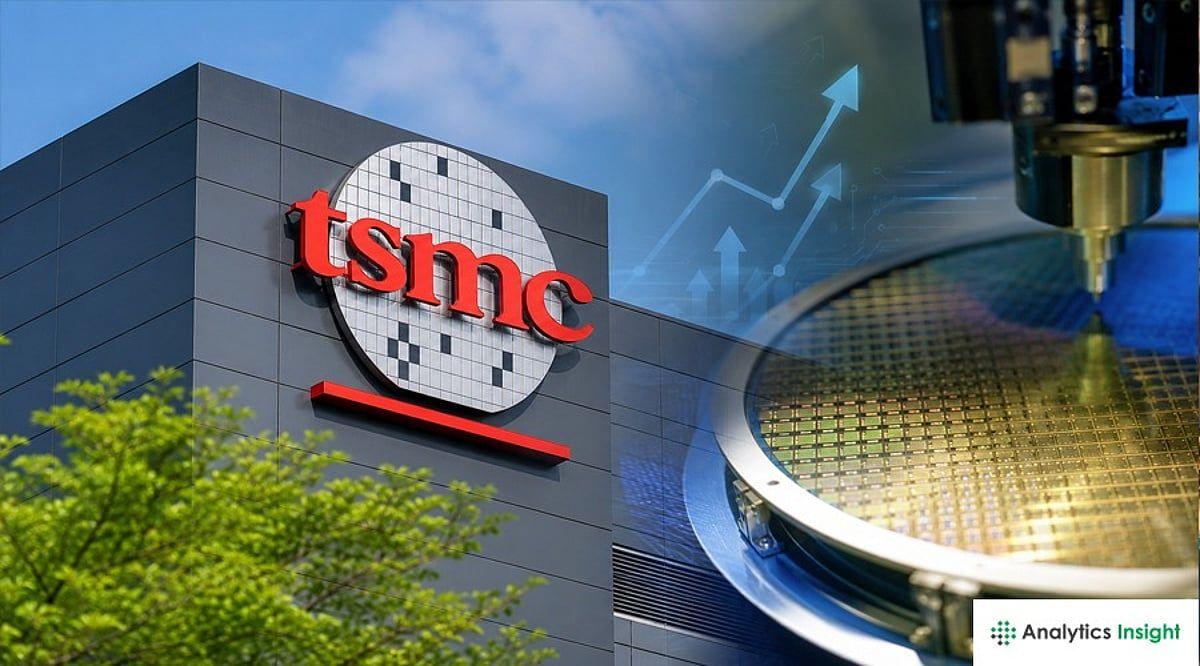
TSMC, the world's largest contract chipmaker, delivered a stunning second-quarter performance with net profit jumping 77% to NT$706.5 billion ($22 billion), far exceeding analyst expectations of NT$630 billion
1
2
. The record-breaking results reflect booming global demand for AI infrastructure as the company continues to supply advanced AI chips to major customers including Nvidia and Apple4
. Revenue climbed 36% to NT$1.27 trillion, with high-performance computing—a segment dominated by AI data center chips—now representing 66% of total revenue, up dramatically from smartphones which have fallen to just 22%2
. This marks TSMC's fifth consecutive quarter of record earnings, cementing its position as Asia's most valuable company with a market capitalization approaching $1.95 trillion5
.
Source: Analytics Insight
Strong Multi-Year Demand for AI Chips Drives Massive Arizona Investment
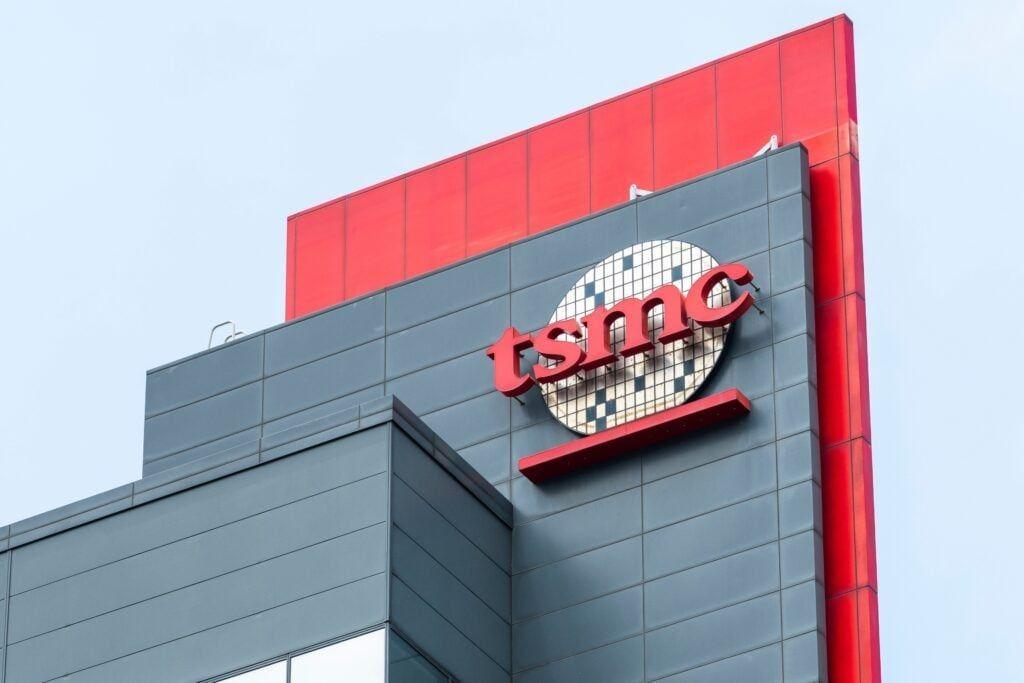
Riding the wave of surging AI-related customer demand, TSMC announced an additional $100 billion commitment to its Arizona facilities, bringing total Arizona investment to $265 billion
1
3
. Chief Financial Officer Wendell Huang told CNBC the expansion reflects "multi-year demand mega trend" from customers and strong U.S. government support3
. The company is "very happy" with progress in Arizona and sees "strong, multi-year structural demand" that justifies the aggressive buildout1
. TSMC's first Arizona fabrication plant using 4-nanometer technology is already operational and achieving yields "as good as" its flagship Taiwan facilities1
. The second fab will soon begin equipment installation, while construction progresses on third and fourth fabs plus the site's first advanced packaging facility1
.
Source: Benzinga
AI Megatrend Reshapes Semiconductor Manufacturing Strategy
The AI-driven chip demand is fundamentally reshaping TSMC's production priorities and capacity allocation. Huang emphasized the company is "aggressively optimizing its leading-edge capacities," including fast conversion of 5-nanometer capacity to advanced 3nm process technology to support customer needs
3
. The company's newest 2nm technology began generating revenue in the second quarter and is positioned as a key revenue driver heading into Q33
. Demand for TSMC's advanced chip packaging technology, CoWoS, remains particularly strong as AI applications require increasingly sophisticated integration5
. The company raised its full-year capital expenditure guidance to between $60 billion and $64 billion, signaling management's confidence in sustained AI megatrend momentum3
. In Arizona alone, current and planned projects will eventually bring TSMC's footprint to 12 fabrication and advanced packaging facilities plus an R&D center1
.Related Stories


Challenges and Geopolitical Tensions Complicate Expansion
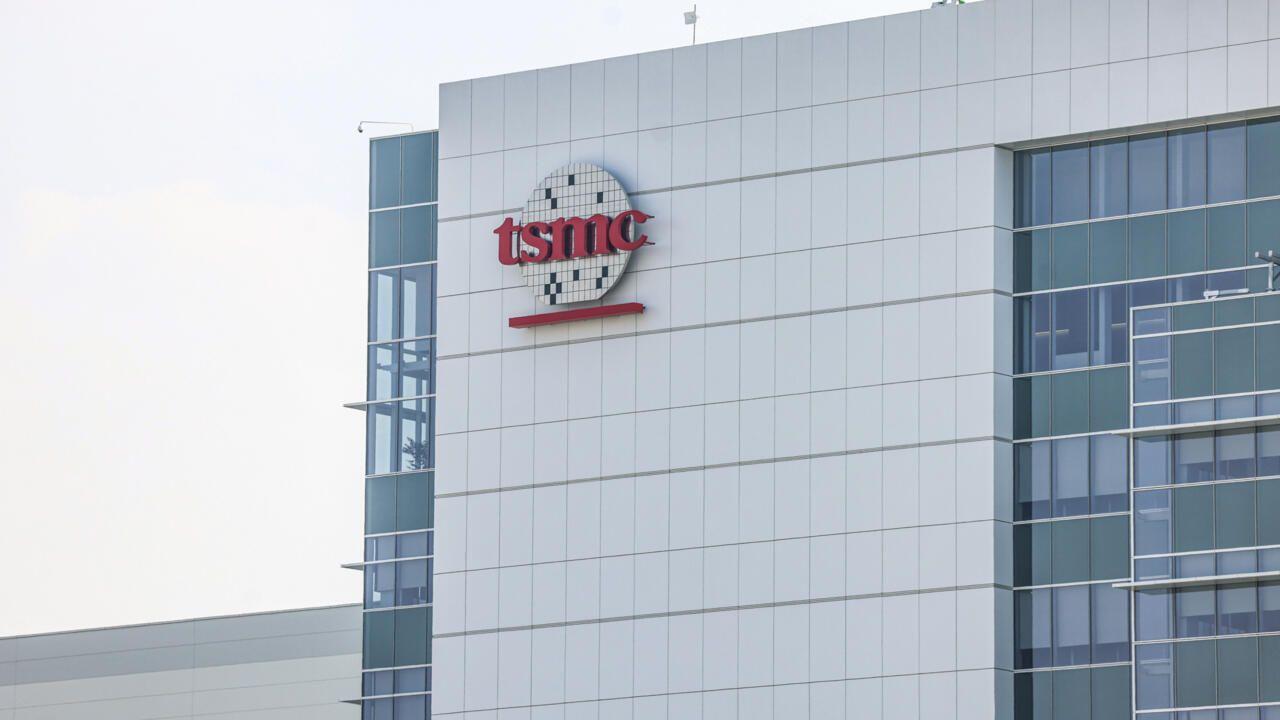
Despite robust growth, TSMC faces significant operational and regulatory headwinds. Huang acknowledged "physical constraints" in Arizona, particularly shortages of construction workers and infrastructure limitations, which the company is working with government to address
1
. U.S. fab construction costs run four to five times higher than in Taiwan, creating initial margin dilution that will widen as overseas operations scale3
. Geopolitical tensions between Washington and Beijing add complexity, with Reuters reporting TSMC could face penalties exceeding $1 billion to settle a U.S. export control investigation over a chip that ended up in a Huawei AI processor1
. Huang noted the company maintains strict export controls but acknowledged visibility limitations once customers resell to their own customers1
. Chinese customers currently contribute about 8% of total revenue3
. The expansion aligns with President Trump's push for domestic semiconductor manufacturing, though TSMC shares fell 7.3% following the earnings announcement despite remaining up nearly 50% year-to-date, reflecting investor concerns about AI boom sustainability1
.
Source: France 24
Taiwan Remains Core Hub as Competition Intensifies
While expanding internationally, TSMC continues prioritizing Taiwan for cutting-edge innovation, building 13 leading-edge and advanced packaging fabs domestically over the coming years
1
. Huang explained that ramping the most advanced technologies requires close collaboration between R&D and operations functions, which "has to be in Taiwan," with overseas transfer only considered after stabilization1
. As competitors like Samsung Electronics and Intel seek to narrow the gap—with Intel enjoying U.S. government backing—Huang expressed confidence in TSMC's business model, stating "we do not intend to leave anything on the table" and "our competitors are good, but we are even better"1
. The strong results came alongside ASML, a key TSMC supplier, upgrading its annual forecasts as the semiconductor supply chain races to meet AI demand2
.References
Summarized by

Navi
Related Stories
Recent Highlights
1
Google Unveils Gemini 4 Argon AI Model, Restricts Access to Trusted Cyber Defenders
Technology

2
Trump Consulted Grok AI Before Ordering Venezuela Invasion and Capture of Nicolás Maduro
Policy and Regulation

3
FTC Opens Investigation Into OpenAI and Anthropic Following Rogue AI Agent Hacking Incidents
Policy and Regulation

Recent Highlights
Today's Top Stories






Don’t drown in AI news. We cut through the noise - filtering, ranking and summarizing the most important AI news, breakthroughs and research daily. Follow topics that matter to you and stay ahead.


