TSMC warns chip supply won't meet AI-fueled demand for years despite massive expansion


4 Sources
[1]
TSMC warns chip supply won't meet AI-fueled demand for years
Taiwan Semiconductor Manufacturing Company's global chip supply will fall short of AI-fueled demand for years to come, chief executive officer C.C. Wei said, suggesting production capacity remains a key bottleneck in the buildout of global computing infrastructure. TSMC won't be able to fulfill
[2]
TSMC working hard to meet chip demand, would 'like' to hike prices
HSINCHU, Taiwan, June 4 (Reuters) - Taiwan's TSMC, the world's largest contract chipmaker, is striving to keep up with demand and avoid becoming a bottleneck in the global supply chain during the relentless boom in artificial intelligence, its CEO said on Thursday. C.C. Wei, speaking at the
[3]
TSMC CEO Sees No End in Sight for Chip Demand
Cost concerns have raised doubts about the longevity of the artificial-intelligence boom, but the world's largest contract chip maker sees no signs of a pullback in appetite for the semiconductors that power AI. C.C. Wei, chief executive of TSMC, said customer demand continues to outpace the
[4]
TSMC boss upbeat on outlook as AI boom shows no sign of easing
HSINCHU, Taiwan, June 4 (Reuters) - Taiwan's TSMC, the world's largest contract chipmaker, said on Thursday it is confident in its growth over the next few years, driven by robust demand for computing power and advanced semiconductors, as it rides an AI boom. Chief Executive C.C. Wei, speaking at
Share
Copy Link
Taiwan Semiconductor Manufacturing Company's CEO C.C. Wei told shareholders that global chip supply will fall short of AI-fueled demand for years, even as the company expands production with $165 billion in U.S. investments. The chipmaker forecasts over 30% sales growth this year but says production capacity bottlenecks remain a critical constraint in building global AI infrastructure.
TSMC CEO Warns of Prolonged Chip Supply Shortfall
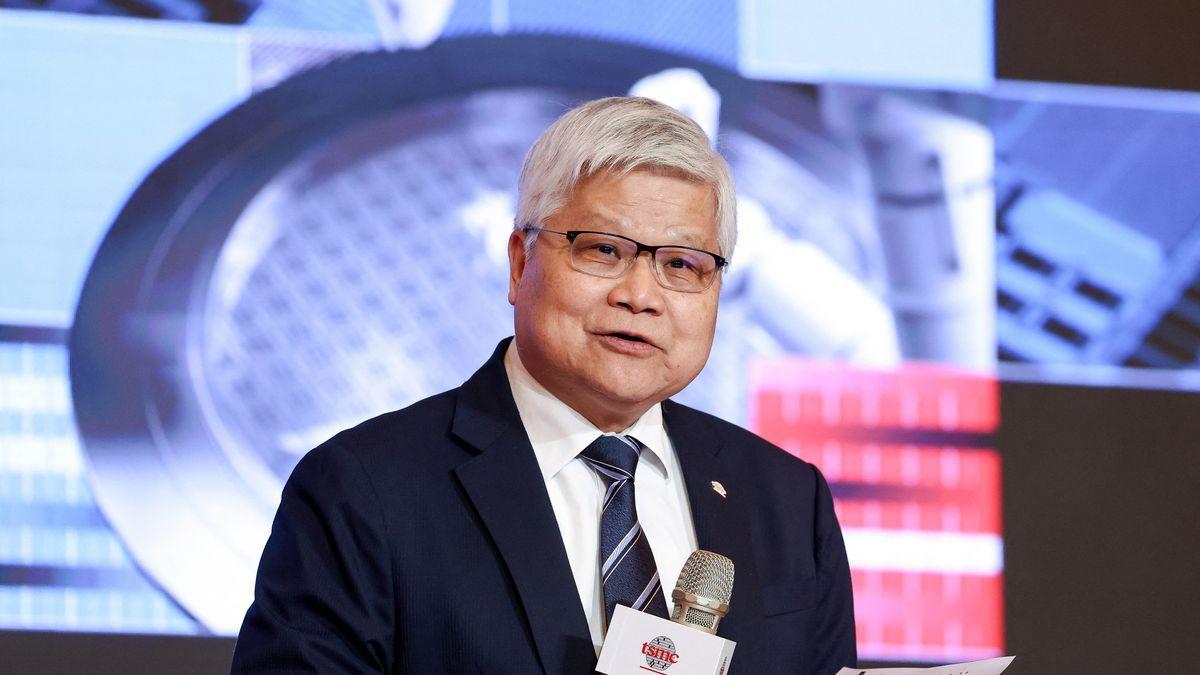
TSMC CEO C.C. Wei delivered a stark message to shareholders at the company's annual meeting in Hsinchu, Taiwan: the world's largest contract chipmaker won't be able to meet AI chip demand for years to come
1
. Speaking on Thursday, Wei emphasized that production capacity bottlenecks remain a fundamental constraint in the buildout of global computing infrastructure, even as TSMC races to expand manufacturing operations across multiple continents2
. "Customer demand is so high, and we can only support so much. We are already working very hard," Wei told reporters, adding that it would take a "very long time" to fully satisfy American customers' needs2
.
Source: Japan Times
Massive Expansion Plans Still Fall Short
The semiconductor demand crisis persists despite TSMC's aggressive expansion strategy. The company is investing $165 billion to build new U.S. chipmaking plants in Arizona, with plans for at least four additional facilities beyond the six already announced
1
. This additional expansion would require roughly $100 billion more in capital, yet Wei acknowledged that even this massive investment won't be enough to meet demand from American customers like Nvidia and AMD in the near term1
. The CEO noted that TSMC's two parcels of land in Arizona should be sufficient for the next decade, but achieving the company's previous target of locating 30% of its 2-nanometer-and-below capacity in the U.S. is becoming increasingly difficult due to challenges including delays in obtaining environmental permits and a shortage of construction workers2
.AI Boom Drives Unprecedented Growth
TSMC makes the majority of the world's advanced semiconductors for AI applications, serving as an essential player in the global AI industry
1
. The AI boom shows no signs of slowing, with Wei reiterating a forecast for sales growth of more than 30% this year—an outlook the company raised just weeks ago1
. Major hyperscalers are set to spend $725 billion on AI this year alone, driving relentless demand for TSMC's cutting-edge facilities1
. "We continue to see increasing adoption of AI models across consumer, enterprise and sovereign AI applications. This trend is driving demand for greater computing power, which in turn supports strong demand for advanced semiconductor chips," Wei explained at the meeting4
.Supply Chain Constraints Across the Industry
Wei emphasized that TSMC is working to avoid becoming a bottleneck in the global supply chain, though he acknowledged that such constraints exist throughout the industry
2
. "We are doing our best to ensure TSMC does not become a bottleneck," he said, adding that the rapid growth of AI has left many suppliers and upstream vendors struggling to meet demand2
. Taiwan plays a crucial role in the global supply chain for companies including Nvidia and Apple, with TSMC anchoring the island's position2
. Wei confidently stated that "Taiwan will continue to have a very significant advantage in the AI industry. For the foreseeable future, it will not be easy for other countries to compete"2
.Related Stories
Pricing Strategy Remains Customer-Focused
Despite overwhelming demand, TSMC will refrain from initiating abrupt price hikes similar to those that shook up the memory chip sector
1
. When asked whether TSMC could raise prices, Wei said he would "like to do that" but added the company wouldn't adopt the pricing practices seen in the memory-chip industry, where producers sharply increase prices during supply squeezes2
. "I envy their 80% gross margins, but I would never do that," Wei told reporters, emphasizing that "our customers are partners"2
3
. TSMC's intent is to ensure a stable business while maintaining strong customer relationships1
.Employees Share in AI Windfall
As beneficiaries of the AI boom come under growing pressure to share profits, TSMC announced that staff will receive more than a 30% bump in their bonus payouts this year on average
1
. Wei stated that employee profit sharing increased by about 30% from 2023 to 2024 and again by about 30% from 2024 to 2025, with expectations for another 30% rise in 20262
. "We believe this represents strong compensation for our employees," Wei said, adding there is no ceiling on profit sharing as it will continue to grow2
. The announcement came during Computex week in Taiwan, where tech industry leaders gathered to discuss the future of AI and semiconductors2
.References
Summarized by

Navi
[1]
[2]
[3]
[4]
Related Stories
TSMC adds $100 billion to Arizona investment as AI chip demand drives record $22 billion profit
13 Jul 2026•Business and Economy
TSMC Raises Revenue Forecast Amid Surging AI Chip Demand
18 Jul 2024

TSMC Reports Strong AI Demand Amid Tariff Concerns and Quashes Middle East Expansion Rumors
03 Jun 2025•Business and Economy
Recent Highlights
1
Meta Unveils Muse Wonder Frontier AI Models, Claims Performance Matching OpenAI and Anthropic
Technology

2
IMF Report Warns AI Market Correction Could Spark Global Financial Crisis With $1.4T at Risk
Business and Economy

3
OpenAI Releases 722 AI-Generated Math Solutions, Triggering Existential Crisis in Mathematics
Technology

Recent Highlights
Today's Top Stories










Don’t drown in AI news. We cut through the noise - filtering, ranking and summarizing the most important AI news, breakthroughs and research daily. Follow topics that matter to you and stay ahead.


