Ubuntu's AI launcher is now real software, and you can try it in January


2 Sources
[1]
Ubuntu shows off an early version of its AI-powered launcher as it plans to integrate LLMs into the OS
* Ubuntu previews an optional AI-powered launcher that centralizes AI tools into one hub. * LLM features are opt-in, run locally, avoid huge installer downloads, and respect privacy. * Security-focused design includes sandboxing; community testing is expected in January. LLM usage has been one
[2]
Canonical Develops AI Launcher for Ubuntu Linux Desktop
Canonical is developing an AI-powered Ubuntu launcher with optional voice and text commands. The feature will prioritize privacy and local AI processing, with a public testing version planned. Canonical is developing an AI-powered launcher for its Ubuntu Linux desktop that will allow users to open
Share
Copy Link
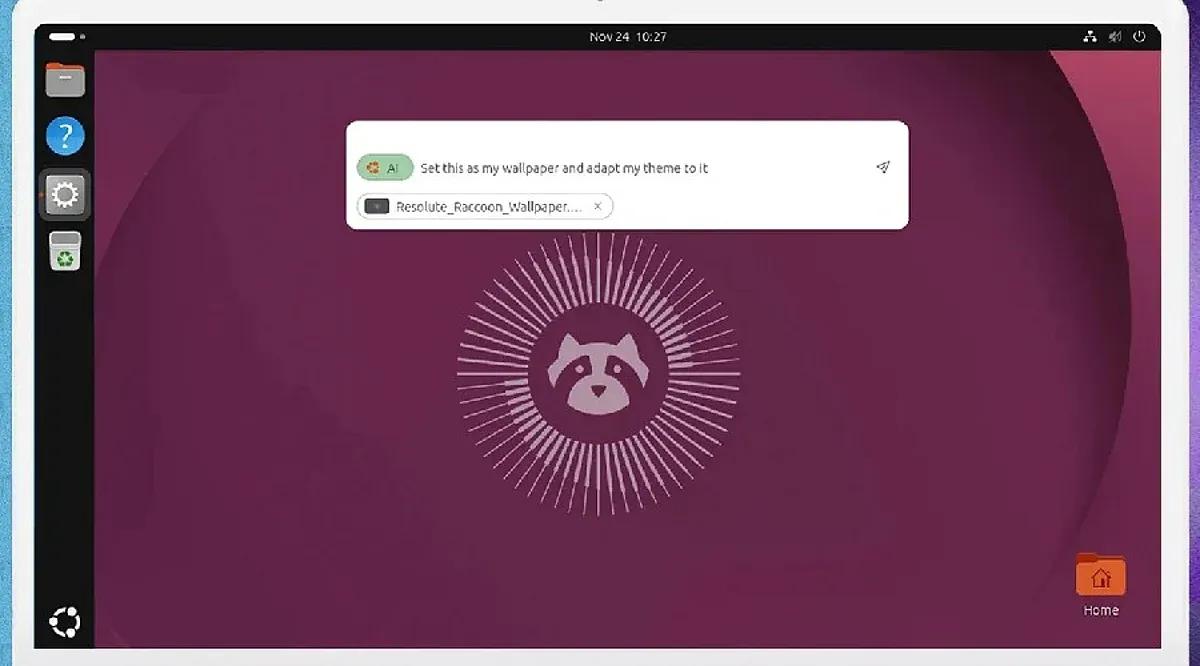
Canonical's Ubuntu Desktop team has shown an early working version of an AI-powered launcher for the Ubuntu desktop, posted by engineer Didier Roche-Tolomelli on Ubuntu Discourse
1
. That makes this the project's first genuinely functional preview, after an October demo that only simulated what AI could do1
.One hub for AI
Roche-Tolomelli pitches it as a new way to interact with the desktop, one that gathers AI tools in a single place instead of leaving them scattered across it
2
. Users can prompt it directly, and future AI features will land there rather than arriving as separate utilities1
.
Source: Analytics Insight
In practice that means typing a request to open applications, search files or perform tasks, with voice commands still planned. Voice input could draw on Myna, a voice-to-text tool Ubuntu already ships
2
.The privacy design
The design choices read as the project's answer to the objections that have met AI in Linux distributions. The AI features are opt-in, run locally on the user's own machine rather than in the cloud, and will not add gigabytes of AI data to the Ubuntu installer. There is a sandboxing architecture as well, which keeps the AI components separated from the rest of the system
1
,2
.Users who prefer a traditional desktop can keep using the launcher as they do now. AI activates only when specifically requested, per Canonical, so users can still open apps and find files without any AI suggestions
2
.Related Stories

How the project got here
The October preview, called "warty-prototype", was an automated interface simulation uploaded to the Snap Store. It showed simulated tasks, such as building a calendar schedule from clipboard history, but had no fully functional AI features
1
,2
.Per one report, Ubuntu put its position on record months earlier: in April 2026 it declared itself pro-AI, saying it was more interested in AI features for accessibility than in using AI because it can
1
. The Linux community has been split on the subject in 2026, per that report: some distributions welcome AI features while others have banned contributions written with large language models1
.The next step is a public one. Roche-Tolomelli hopes to have something ready for community testing in January, when Canonical also plans to share technical design details and release an installable public-test version
1
,2
. Canonical says feedback from that testing will help shape the launcher's final direction2
.References
Summarized by

Navi
[1]
[2]
Related Stories
Canonical reveals AI roadmap for Ubuntu: local inference and user control, not forced integration
27 Apr 2026•Technology

Cyanogen Co-Founder Unveils Kora OS, An AI-First Operating System Built to Challenge Windows
10 Nov 2026•Technology

GNOME's Newelle: A Customizable AI Assistant for Linux Users
06 Aug 2025•Technology

Recent Highlights
1
Anthropic mathematician says Claude helped him prove math's most famous problem
Science and Research

2
Two states sue SpaceX, saying weak Grok safeguards were no accident
Policy and Regulation

3
Jensen Huang is back at Nvidia 11 days after quitting, and the scrutiny came back with him
Business and Economy

Recent Highlights
Today's Top Stories









Don’t drown in AI news. We cut through the noise - filtering, ranking and summarizing the most important AI news, breakthroughs and research daily. Follow topics that matter to you and stay ahead.


