University of Lincoln AI and robotics win Silver Gilt medal at Chelsea Flower Show


2 Sources
[1]
University of Lincoln AI stand wins award at Chelsea Flower Show
An exhibition featuring a health scan for plants has won an award at the Chelsea Flower Show. Created by the University of Lincoln, the RoboCrops: Plant Selection, Beyond the Visible display includes a combination of robotics, plant science and artificial intelligence. The project monitors a
[2]
A caring robot just won a silver medal at one of the world's biggest flower shows
When you think of the Chelsea Flower Show, robots are probably the last thing on your mind. Yet, the University of Lincoln showed up with exactly that and walked away with a Silver Gilt medal. The exhibit, RoboCrops: Plant Selection, Beyond the Visible, was put together by the University's Lincoln
Share
Copy Link
The University of Lincoln earned a Silver Gilt medal at the Chelsea Flower Show for its RoboCrops exhibit, which uses AI and robotics to scan plant health. The system detects stress and disease invisible to the human eye, offering new solutions for global food security challenges.
University of Lincoln brings AI and robotics to Chelsea Flower Show
The University of Lincoln secured a Silver Gilt medal at the Chelsea Flower Show with an unexpected entry that merged technology with traditional horticulture. The RoboCrops: Plant Selection, Beyond the Visible exhibit, presented by the university's Lincoln Institute for Agri-Food Technology, demonstrated how AI and robotics can transform plant science and address pressing global food security challenges
1
2
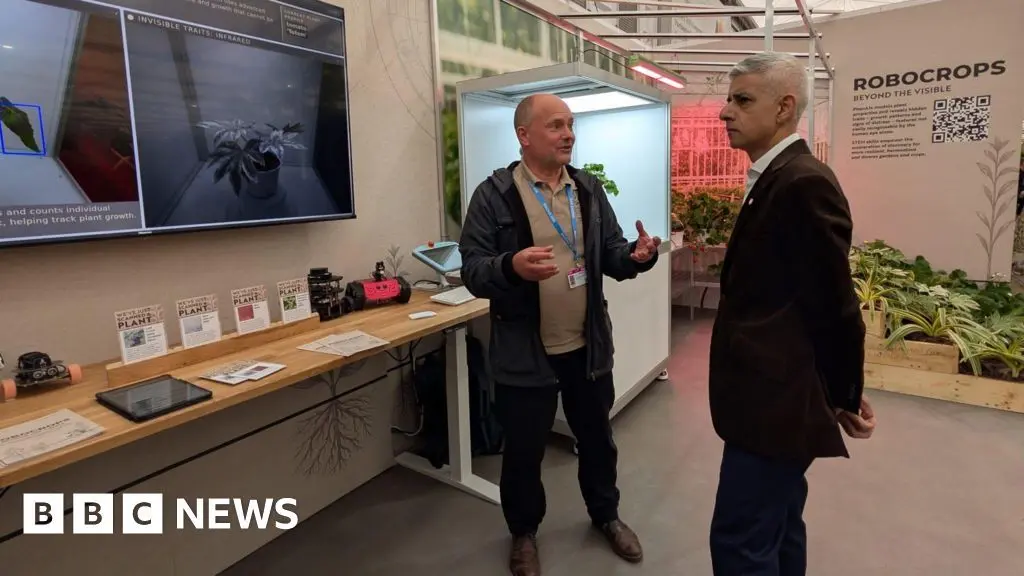
.Positioned in the show's GreenSTEM zone, a section dedicated to exploring the intersection of horticulture, science, technology, and the environment, the exhibit attracted significant attention from visitors. London Mayor Sadiq Khan stopped by to discuss the future potential of the technology, engaging with researchers about how such innovations could scale to tackle wider food production challenges
1
2
.
Source: BBC
PhenAIx system can detect plant stress invisible to human eyes
At the heart of the exhibit was PhenAIx, a robotic system that functions as a health scan for plants. Using advanced imaging and artificial intelligence, the technology monitors a plant's growth, structure, and health while identifying subtle signs of stress, disease risk, and performance issues that remain invisible to the human eye
1
2
.The system operates like an X-ray or MRI machine for crops, enabling plant breeders to identify resilient crops far more quickly than traditional methods allow. This capability matters significantly as the agricultural sector faces mounting pressure from climate change. Resilient plant varieties that can handle increased heat, survive drought conditions, and thrive with fewer resources are becoming essential for maintaining stable food production in a warming world .
Related Stories


Robotics in agriculture sparks curiosity among young visitors
Prof Simon Pearson, founding director of the Lincoln Institute for Agri-Food Technology, highlighted the engagement from visitors as one of the most rewarding aspects of the exhibition. He noted particular curiosity from young people about how robotics, AI, and plant science can work together to address major challenges facing horticulture and food production
1
.The University of Lincoln aims to inspire young visitors, especially those from rural and agricultural backgrounds who might not naturally envision themselves working in AI or robotics. By showcasing collaboration across STEM disciplines, the exhibit demonstrates practical applications of emerging technologies in solving real-world problems. Watch for increased adoption of similar systems as plant breeders and agricultural researchers seek faster, more accurate methods to develop crops capable of withstanding the pressures of climate change and meeting growing global food demands.
References
Summarized by

Navi
Related Stories
Recent Highlights
1
Microsoft and Nvidia Launch Surface Laptop Ultra: A $2,599 AI-Ready PC With RTX Spark Chip
Technology

2
OpenAI Releases 722 AI-Generated Math Papers on GitHub, Igniting Fury Among Mathematicians
Science and Research

3
Trump Consulted Grok AI Before Ordering Venezuela Invasion and Capture of Nicolás Maduro
Policy and Regulation

Recent Highlights
Today's Top Stories












Don’t drown in AI news. We cut through the noise - filtering, ranking and summarizing the most important AI news, breakthroughs and research daily. Follow topics that matter to you and stay ahead.


