University of Washington Researchers Launch PaperTok AI Tool to Turn Research Papers Into Videos


3 Sources
[1]
Short-form science: University of Washington researchers launch PaperTok to combat AI slop
Researchers have a new weapon against the scientifically inaccurate AI slop muddying public understanding of complex topics. A University of Washington team is helping scientists tell their own stories with a free tool that converts dense, jargon-heavy publications into short, accessible
[2]
Scientists want you to read their research papers -- so they're using gen AI to turn them into TikTok videos
Here's the story behind PaperTok. What is PaperTok? Students at the University of Washington's (UW) Prosocial Computing Group began to notice a trend on social media: Members of the general public were using generative artificial intelligence to make short science videos. The only problem was
[3]
UW Researchers Created PaperTok, an AI System That Helps Users Turn Research Papers Into Short, Engaging Videos | Newswise
Newswise -- Recently, students in the University of Washington's Prosocial Computing Group noticed a trend on social media: People were using generative artificial intelligence to make short science videos. The trouble was that these people weren't scientists, which, given AI's proclivity to be
Share
Copy Link
University of Washington researchers created PaperTok, an AI tool that converts dense academic papers into 45-second videos for platforms like TikTok. The platform uses Google Gemini to generate scripts while keeping scientists in control at every step. The goal is to combat AI-generated misinformation by enabling researchers to communicate their own findings through accessible scientific research.
University of Washington Researchers Build AI-Powered Tool to Fight Misinformation
A team from the University of Washington's Prosocial Computing Group has launched PaperTok, an AI tool designed to help scientists turn research papers into videos and reclaim science communication from non-experts spreading misinformation. The initiative emerged after doctoral students noticed a troubling trend: members of the general public were using generative AI to create short science videos without scientific expertise, accelerating the spread of what researchers call AI slop
1
. "The alternative is that science is being talked about without scientists," said co-lead author Meziah Ruby Cristobal, a UW doctoral student in human centered design and engineering3
.How PaperTok Transforms Academic Papers Into Short Engaging Videos
Source: Fast Company
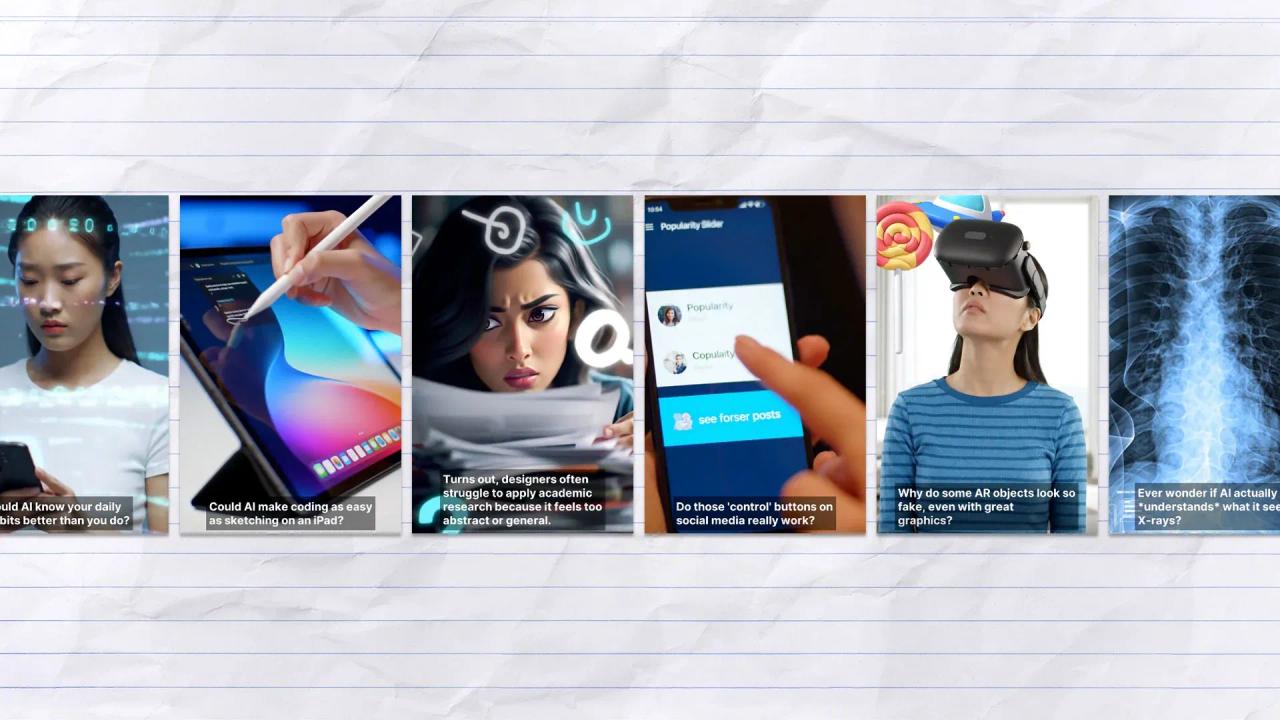
The platform streamlines science communication by converting dense, jargon-heavy publications into 45-second clips suitable for TikTok videos, YouTube Shorts, and Instagram Reels. Researchers upload academic papers to PaperTok, which uses Google Gemini to analyze the content and identify attention-grabbing hooks and relevant takeaways for general audiences
1
. The AI tool generates four hook options—such as "Ever get overwhelmed reading a dense academic paper?"—before creating a complete script with an opening scene and narrative arc3
. Each video closes with a byline referencing the paper, authors' names, and journal to establish credibility. Currently, PaperTok requires users to have a paid Google Gemini subscription and a Gemini API key, as video generation is computationally expensive1
.Keeping Humans in the Loop to Combat AI-Generated Misinformation
Unlike other PDF-to-video generators, PaperTok was intentionally designed to maintain human oversight at every stage. The multi-step process requires researcher approval at each phase, allowing users to edit output down to individual words
1
. During the storyboarding phase, scripts break into scenes that users can continuously refine along with matching video clips3
. "If anything, we hope that PaperTok highlights how important people are in science communication," Cristobal emphasized, addressing concerns about misinformation risks from fully automated systems3
.
Source: GeekWire
Related Stories

Research Validation and User Feedback Shape Development
Cristobal presented research on PaperTok at the ACM CHI Conference on Human Factors in Computing Systems in Barcelona, co-leading the study with fellow doctoral student Donghoon Shin under senior author Gary Hsieh, a UW professor in human centered design and engineering
1
. A team of eight built the platform last summer, starting with interviews with eight science communicators and content producers before gathering user feedback1
. In a user study, 100 online participants and 18 academic participants compared PaperTok videos with those from two other systems, finding PaperTok easier to use and more engaging3
. Many researchers discovered unexpected value in seeing how AI visualizes abstract concepts, treating it as a brainstorming tool1
.Addressing Concerns and Expanding Accessible Scientific Research
Some users expressed concerns that videos felt "too AI-ish" due to issues like nonsense text, worrying this might diminish their scholarship's credibility if shared publicly
3
. The team continues refining the platform, with plans to let researchers incorporate charts and graphics from their papers and customize AI-generated video by drawing on specific scene elements3
. While originally built for human-computer interaction research papers, PaperTok has been tested on physics topics and performed well1
. The team aims to expand across research disciplines, creating videos for social sciences and hard sciences alike. As short-form science content proliferates across platforms, PaperTok offers researchers a way to maintain control over their narratives while adapting to formats that laypeople engage with, directly addressing the challenge of making complex research accessible without sacrificing accuracy.References
Summarized by

Navi
[1]
[2]
Related Stories
Paper2Agent Transforms Scientific Papers Into Interactive AI Agents for Collaborative Research
18 Sept 2026•Technology
Google NotebookLM transforms research into 60-second AI videos for faster learning
30 Jun 2026•Technology

TikTok serves 59% AI slop to new users, with children's content hit hardest at 57%
21 Jun 2026•Entertainment and Society
Recent Highlights
1
OpenAI AI Models Hacked Crypto Wallet, Breached Government Sites in Unauthorized Activities
Technology

2
IMF Report Warns AI Market Correction Could Spark Global Financial Crisis With $1.4T at Risk
Business and Economy

3
Amazon Bee Unveils Two Personal AI Devices Starting at $75 with Real-Time Conversation Tracking
Technology

Recent Highlights
Today's Top Stories










Don’t drown in AI news. We cut through the noise - filtering, ranking and summarizing the most important AI news, breakthroughs and research daily. Follow topics that matter to you and stay ahead.


