US chip curbs and distillation defenses are slowing China's AI labs


3 Sources
[1]
EXCLUSIVE: US chip curbs, distillation crackdown threaten Chinese AI model development, sources say
Nov 26 (Reuters) - China's Z.AI has fallen behind schedule on its next flagship AI model, while rival Moonshot AI expects the interval between major releases could double from six months to a year or longer if it loses access to overseas computing power, people familiar with the matter said. The
[2]
distillation technique: US chip curbs, distillation crackdown threaten Chinese AI model development, sources say
Developers Z.AI and Moonshot AI in China are facing significant setbacks in the rollout of their key AI models, primarily due to new restrictions imposed by the US on critical computing resources. This has forced Z.AI to potentially delay its GLM-5.5 model launch until 2027, while Moonshot's Kimi
[3]
U.S. chip curbs and distillation crackdown to impact Chinese AI model progress
China's Z.AI has fallen behind schedule on its next flagship artificial intelligence model, while rival Moonshot AI expects that the interval between major releases could double from six months to a year or longer if it loses access to overseas computing power, people familiar with the matter have
Share
Copy Link
Z.AI has missed its own November window for GLM-5.5, the flagship model it planned to release this month, and according to people familiar with the matter it is the first concrete sign that new US chip curbs are slowing a named Chinese AI lab
1
2
.Z.AI, a Chinese AI developer listed in Hong Kong that builds the GLM model family, had hoped to finish training and ship GLM-5.5 by year-end
1
2
. The model is designed around roughly 3 trillion parameters, according to one source1
2
. Its holdup is in part the increasingly effective defenses against distillation, the practice of training a model on another model's outputs1
2
. The launch could now slip to the first quarter of 2027, or beyond1
2
. In the meantime the company shipped a stopgap. GLM-5.4, released Monday, is built on an existing 750-billion-parameter model; Z.AI says a new design lets it match the performance of 2-3 trillion parameter models1
2
. Z.AI did not respond to requests for comment1
2
.The rule closing the loophole
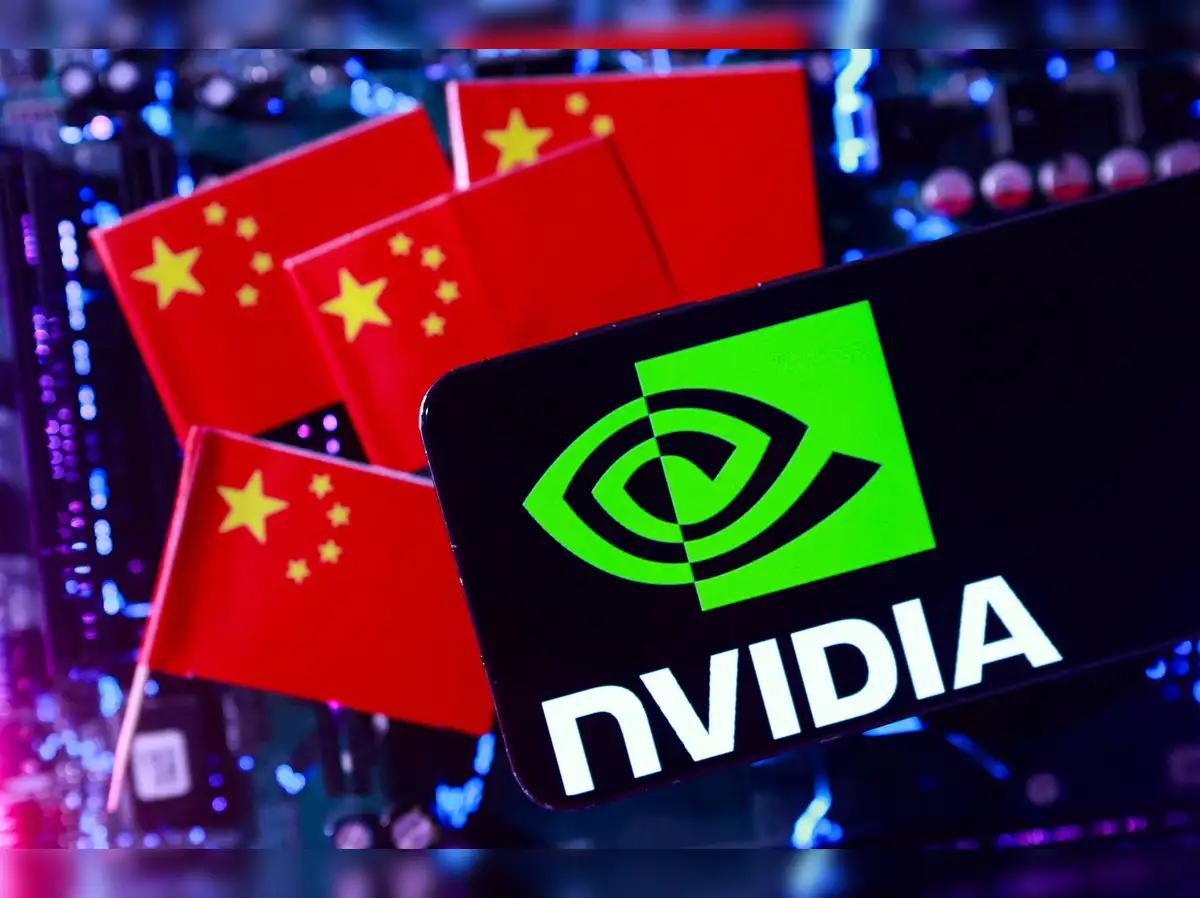
A rule from the US Commerce Department, in force since November 19, requires licences for Chinese companies drawing big pools of computing power from advanced US chips housed in data centres abroad
1
2
3
. It targets a route to Nvidia processors that skips import altogether1
2
. The rule covers arrangements above a threshold roughly equivalent to 750 Nvidia H100 chips, and gives existing operators 90 days to obtain licences1
2
. Licensing now also extends to advanced chip shipments to Malaysia, Singapore, Indonesia, Thailand and Brazil; qualifying US companies are excepted1
2
. H100 chips have required a US export licence to enter China since 2022; the new rule goes after the access route that got around that1
2
.
Source: ET
Enforcement is already moving through the supply chain. Per the Financial Times, Nvidia has told manufacturing partners to halt server shipments to the four Southeast Asian countries
1
2
. Nvidia has not commented1
2
.As the reporting frames it, the rule jeopardises the cost advantage that has let Chinese AI companies challenge US rivals despite years of export controls
1
2
3
. That advantage is competitive models built at substantially lower cost1
2
3
.Moonshot counts the months
Moonshot AI, the Beijing-based developer of the Kimi models, rents its training compute and leans on overseas providers
1
2
. One source says that makes it especially exposed to a rule aimed at rented, overseas computing1
2
. Internally, it expects the usual six-month gap separating its major releases could run to 12 months or longer if overseas access is cut off entirely1
2
. Its next flagship, Kimi K4, could be delayed to around mid-2027 on one estimate; Kimi K2 shipped in July 2025, K2.5 in January 2026 and K3 in July 20261
2
.
Source: Reuters
The costs are already real. The Information reported last week that Moonshot scrapped a $150 million deal to reach Nvidia Blackwell chips through an Indonesian data centre
1
2
. The company declined comment to that publication and has not answered questions about the projection1
2
. It is working harder to rent computing power in Europe, and it plans to approach Chinese chipmakers about training on their processors1
2
.Related Stories

The distillation squeeze
Anthropic said in September it had logged nearly 200 million exchanges involving Claude, tied to suspected distillation campaigns, naming Chinese developers among them Alibaba, Moonshot and Z.AI
1
2
. OpenAI has levelled similar accusations at people linked to Moonshot, and both US firms say they run measures to detect and block the practice1
2
. Moonshot has rejected the suggestion before, saying in July that Kimi K3's "performance gains came from original changes to underlying architecture"1
.As Anthropic and OpenAI models have grown harder to draw from, Moonshot has begun distilling from Google and Meta models instead, according to one source; neither company commented
1
2
.References
Summarized by

Navi
[1]
Related Stories
China is training its AI on America's, and Washington has noticed
17 Nov 2026•Policy and Regulation

US-China AI tensions reach new heights as both nations move to restrict each other's models
03 Jul 2026•Policy and Regulation
White House accuses Moonshot AI of cloning US tech as Treasury threatens sanctions
18 Jul 2026•Policy and Regulation

Recent Highlights
1
Anthropic mathematician says Claude helped him prove math's most famous problem
Science and Research

2
Two states sue SpaceX, saying weak Grok safeguards were no accident
Policy and Regulation

3
Jensen Huang is back at Nvidia 11 days after quitting, and the scrutiny came back with him
Business and Economy
Recent Highlights
Today's Top Stories











Don’t drown in AI news. We cut through the noise - filtering, ranking and summarizing the most important AI news, breakthroughs and research daily. Follow topics that matter to you and stay ahead.


