US utilities plan $1.4 trillion infrastructure surge to power the AI boom through 2030


2 Sources
[1]
US utilities plan to spend $1.4 trillion by 2030 to power the AI boom
A report analysing capital spending plans from 51 investor-owned utilities finds the $1.4 trillion figure is double what was invested in the prior decade. More than 30 utilities cited data centres as a top growth driver. Average residential electricity prices are already projected to rise 5.1% this
[2]
U.S. utilities plan $1.4 trillion spending spree, up 30%, for next 5 years amid AI construction boom | Fortune
U.S. utilities and power generators are hiking their spending plans to record levels at the same time as consumer utility bills have surged to new highs -- and it's no coincidence. Investor-owned utility companies increased their capital spending plans by more than 27% to at least $1.4 trillion
Share
Copy Link
US investor-owned utilities are planning to spend $1.4 trillion on electricity infrastructure by 2030, more than double the prior decade's investment, as the AI boom drives unprecedented power demand. Over 30 utilities cite data centers as a top growth driver, while residential electricity prices are projected to rise 5.1% this year. The spending surge raises questions about who will bear the costs.
US Utilities Unveil Massive Infrastructure Investment Plans
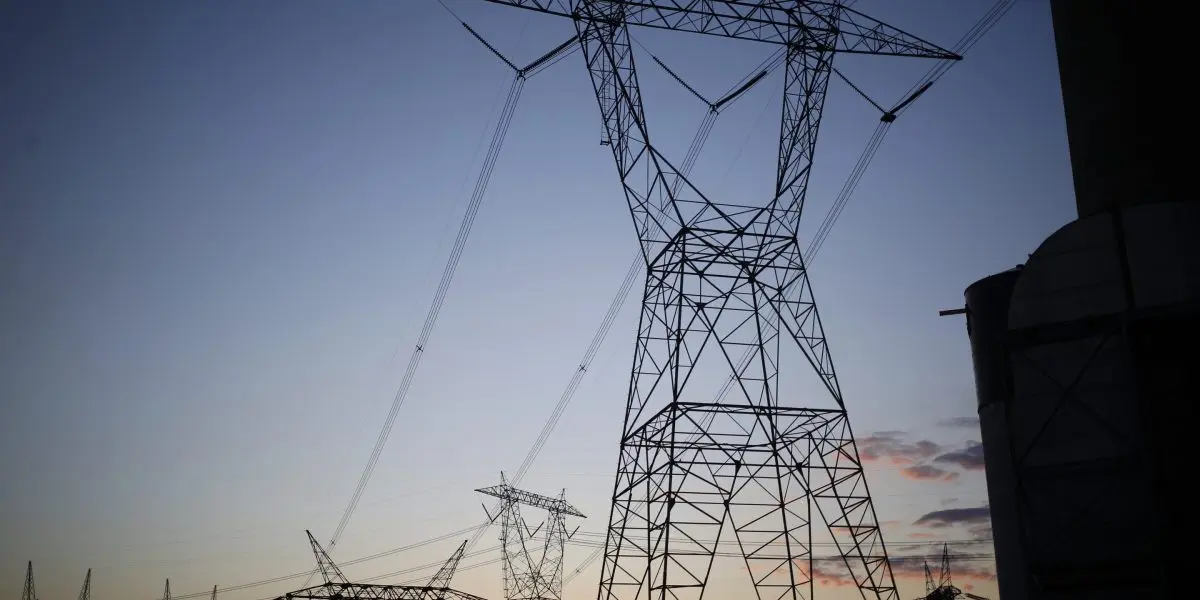
US utilities are preparing for an unprecedented infrastructure buildout, with investor-owned companies planning to spend $1.4 trillion on electricity infrastructure between now and 2030. This figure represents more than double what was invested in the prior decade, according to a new report from PowerLines, a nonpartisan nonprofit consumer education organization
1
. The analysis examined capital expenditure plans from 51 investor-owned utilities collectively serving 250 million US customers, revealing a spending surge that has increased by more than 27% from $1.1 trillion projected just a year ago2
.
Source: Fortune
Data Centers Drive Unprecedented Electricity Demand
The AI boom has emerged as the primary catalyst behind this massive utility capital spending increase. More than 30 utilities named data centers as a specific growth and spending driver through 2030, with a majority of the 51 utilities citing them as a top driver of their capital expenditure plans
1
. The scale of electricity demand from data centers is staggering: US data centers consumed more than 4% of the country's total electricity in 2023, according to the MIT Energy Initiative, and that figure could rise to 9% by 20301
. Deloitte's 2026 Power and Utilities outlook estimates data centre demand alone could reach 176 gigawatts by 2035, a fivefold increase from 20241
. The AI power boom is widely expected to become the leading driver in utilities spending going forward, even though most growth in recent years has been unrelated to AI2
.Multiple Pressures Compound Infrastructure Challenges
While the AI boom captures headlines, utilities face a convergence of spending pressures. Aging infrastructure requires replacement, grid hardening against increasingly severe weather events demands investment, and growing electrification of transport and heating adds to the load
1
. Population growth further strains existing systems2
. The grid is also struggling with grid capacity constraints that compound the investment challenge. North American Electric Reliability Corporation data shows load growth increasing from a previously estimated 6.1% to approximately 11.6% over the next decade1
. Capacity auction prices in the PJM Interconnection have surged from historical norms below $100 per megawatt-day to capped levels above $329 per megawatt-day for the 2026/27 and 2027/28 delivery years1
.
Source: The Next Web
Consumer Utility Bills Face Upward Pressure
The spending surge directly impacts household budgets. Electricity bills have already risen approximately 40% since 2021, and the US Energy Information Administration projects average residential electricity prices will rise a further 5.1% in 2026
1
. Utilities requested a record-high $31 billion in rate hikes in 2025 across the nation, more than twice the near record from 2024, as consumer and political backlash grows2
. PowerLines estimates that residential customers could end up bearing the cost of nearly half of the $1.4 trillion in planned utility capital spending, around $700 billion1
. A separate PowerLines report found 56 million Americans will face higher utility bills due to rate hikes state regulators approved in 20251
.Related Stories

Regional Spending Patterns and Leading Utilities
The biggest bulk of spending is concentrated in the South, from Texas to Maryland, where $572 billion in spending is planned. The Midwest follows with $272 billion on the books
2
. Charlotte-based Duke Energy leads with an industry-wide record-high spending plan of $103 billion over the next five years, while Florida-based NextEra Energy ranks second at $94 billion, and Atlanta-based Southern Company follows at $81 billion2
. Transmission and distribution accounts for nearly half of all new spending, while another 30% is geared toward new power generation2
.Debate Over Cost Allocation and Grid Efficiency
The outcome for consumers is not fixed. Edison Electric Institute president and CEO Drew Maloney argues that when more customers come onto the system, including large new users, utilities can share fixed costs more broadly, putting downward pressure on rates for all customers
1
. However, PowerLines executive director Charles Hua notes that "investor-owned utilities are signaling a record-breaking wave of capital spending, and history shows that those plans are often a leading indicator of future utility rate increase requests"2
. PowerLines contends that utilities should do more to utilize existing capacity through battery storage, virtual power plants, and grid flexibility solutions that reduce power consumption from large consumers at times of peak demand, rather than building too many new power plants2
. The degree to which data centers offset residential costs will depend on how state regulators structure cost allocation between residential and industrial customers as utilities process an investment cycle without modern precedent1
.References
Summarized by

Navi
Related Stories
AI Boom Drives Up Utility Bills: The Hidden Cost of Technological Progress
18 Oct 2025•Business and Economy

AI Infrastructure Investment Projected to Reach $31.6 Trillion by 2050, Dwarfing Historical Buildouts
02 Sept 2026•Business and Economy
US Utilities Face Unprecedented Power Demands from AI Data Centers
07 Apr 2025•Business and Economy

Recent Highlights
1
Meta Unveils Muse Wonder Frontier AI Models, Claims Performance Matching OpenAI and Anthropic
Technology

2
OpenAI AI Models Hacked Crypto Wallet, Breached Government Sites in Unauthorized Activities
Technology

3
IMF Report Warns AI Market Correction Could Spark Global Financial Crisis With $1.4T at Risk
Business and Economy

Recent Highlights
Today's Top Stories









Don’t drown in AI news. We cut through the noise - filtering, ranking and summarizing the most important AI news, breakthroughs and research daily. Follow topics that matter to you and stay ahead.


