Community Opposition Threatens $130 Billion in Data Center Investments as Wall Street Reassesses Risk


3 Sources
[1]
Protests Against Data Centers Are Now Threatening $130 Billion of Big Tech's Crucial Investments
Can't-miss innovations from the bleeding edge of science and tech For protestors rising up against the data centers undergirding the AI boom, the math is simple: wherever they sprout, the facilities make frightfully poor neighbors -- inflating utility prices, discharging hazardous waste, and
[2]
Wall Street Is Starting to Treat Data Center Backlash as a Credit Risk
Banks remain interested in AI infrastructure but are paying closer attention to permitting and community resistance. Wall Street banks financing the AI data center boom are paying closer attention to opposition from communities where projects are planned. According to a report by Reuters on
[3]
Lenders Scrutinize US Data Center Financing as Community Opposition Builds
By Saeed Azhar and Tatiana Bautzer NEW YORK, Aug 10 (Reuters) - The race to finance the U.S. data center boom is forcing banks and asset managers to confront an added risk: political and community opposition. A spate of projects has hit roadblocks or faces opposition, creating another level of
Share
Copy Link
At least 75 data center projects worth $130 billion faced local opposition in Q1 2026, forcing Wall Street banks to treat community resistance as credit risk. Protests over electricity consumption, water use, and noise are reshaping how lenders like JPMorgan, Morgan Stanley, and Bank of America assess AI infrastructure expansion.
Wall Street Banks Recalibrate Data Center Financing Amid Growing Protests
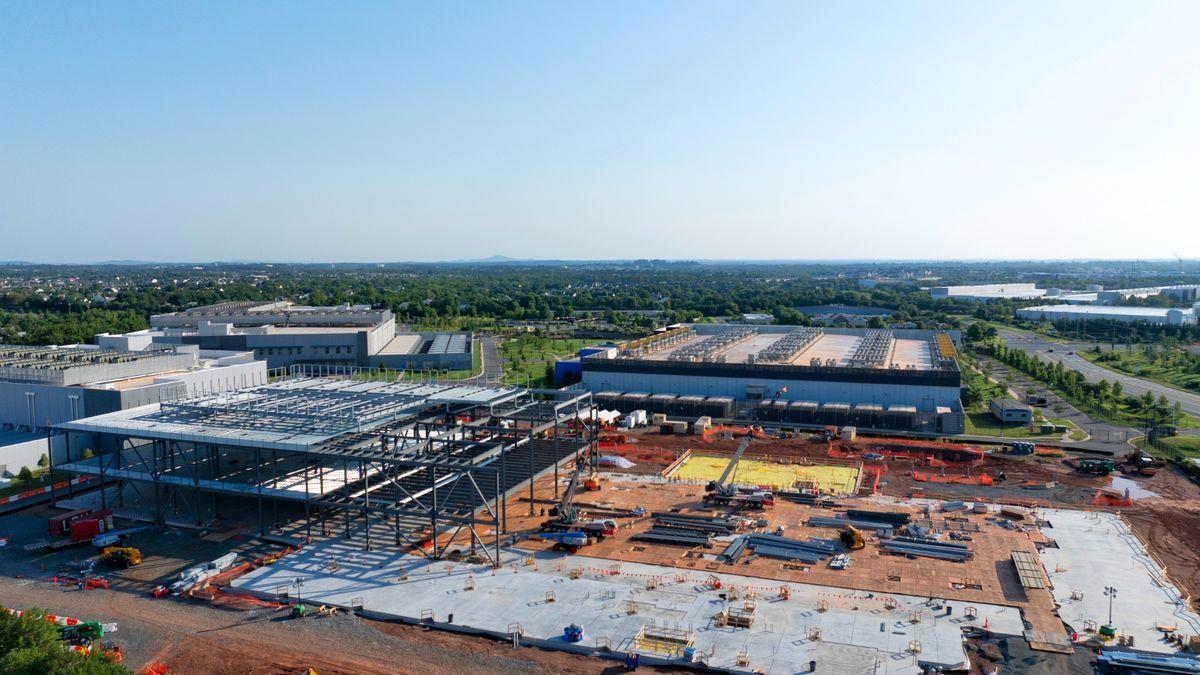
Wall Street is fundamentally rethinking how it finances the AI infrastructure expansion. At least 75 data center projects worth approximately $130 billion faced local opposition during the first quarter of 2026, according to research firm Data Center Watch
1
3
. Major banks including JPMorgan, Morgan Stanley, and Bank of America are now treating community resistance as credit risk when evaluating data center financing opportunities2
3
. This shift represents a watershed moment for an industry where Goldman Sachs forecasts Big Tech will spend more than $6 trillion on AI through 20303
.Local Resistance Intensifies Across United States

Source: Decrypt
The scale of protests against data centers has escalated dramatically in 2026. Nearly 40 arrests linked to data center demonstrations occurred so far this year, while July alone saw 142 protests across 42 states
2
. Communities cite electricity consumption, water use, noise pollution, and the physical impact of massive facilities on neighborhoods as primary concerns1
3
. At least 15 states have considered moratoriums on data center construction, signaling that local resistance has reached state legislatures2
. For communities living near these facilities, the calculation is straightforward: data centers inflate utility prices, discharge hazardous waste, and generate disruptive noise around the clock1
.Financial Institutions Implement New Due Diligence Standards
Banks are fundamentally altering their assessment criteria for AI data center projects. "Readiness means all the permitting and approvals that are required, and the community support from the people who are going to live around it," explained Karen Fang, global head of infrastructure and sustainable finance at Bank of America
3
. Lenders now scrutinize permitting challenges and community sentiment alongside traditional technical, environmental, zoning, appraisal, and insurance reviews3
. The shift reflects practical concerns about wasted resources. "The amount of work that goes into putting a bank loan in place for one of these projects is significant," noted Kevin Curtin, head of AI infrastructure investment banking at JPMorgan3
.Related Stories
High-Profile Projects Face Community Pushback
Several major AI data center projects backed by Wall Street are encountering significant opposition. JPMorgan and Morgan Stanley managed a $12.3 billion bond sale for BlackRock, partnering with Meta on a data center project in El Paso, Texas, that faces resident opposition
3
. Morgan Stanley and KKR Capital Markets arranged a $9.7 billion warehouse credit facility for CyrusOne, which confronts local resistance to its $500 million center in Sangamon County, Illinois3
. QTS, owned by private equity firm Blackstone, terminated its Prince William Digital Gateway data center project in Virginia after facing strong community opposition3
.Industry Adapts to Rising Cancellation Risks
Despite mounting financial risk, the digital economy's demand for AI compute power and cloud storage continues driving investment. Morgan Stanley Chief Financial Officer Sharon Yeshaya acknowledged the firm is "very cognizant" of the risks in this capital-heavy industry
3
. Some investors are becoming comfortable pricing in cancellation risks as AI demand grows, according to a senior official at a foreign lending firm1
. Banks typically begin funding discussions at least a year before construction starts, with recurring conversations throughout development, meaning regulatory hurdles and community action can consume significant time and resources3
. Brookings researchers warn that while environmental concerns are valid, broadly drafted construction moratoriums "would pose a threat to the digital economy" and "could create massive financial problems for a number of firms"2
. They recommend legislators focus on implementing responsible guardrails rather than halting technology development entirely2
.References
Summarized by

Navi
[1]
Related Stories
AI Data Center Boom Faces $68 Billion Setback as Community Opposition Grows Nationwide
15 Sept 2026•Policy and Regulation

142 protests erupt across 42 states as public opposition to AI data centers reaches tipping point
16 Jul 2026•Policy and Regulation
Over 230 groups demand moratorium on AI data center expansion as communities revolt nationwide
09 Dec 2025•Policy and Regulation

Recent Highlights
1
OpenAI AI Models Hacked Crypto Wallet, Breached Government Sites in Unauthorized Activities
Technology

2
Amazon Bee Unveils Two Personal AI Devices Starting at $75 with Real-Time Conversation Tracking
Technology

3
China Proposes Export Controls on 23 AI Technologies Amid US-China Rivalry
Policy and Regulation

Recent Highlights
Today's Top Stories







Don’t drown in AI news. We cut through the noise - filtering, ranking and summarizing the most important AI news, breakthroughs and research daily. Follow topics that matter to you and stay ahead.


