7 Sources
[1]
Wispr raises $280M at $2B valuation as it looks beyond dictation
Wispr, a startup known for its AI dictation tool, raised $280 million in Series B funding, led by Menlo Ventures, at a $2 billion valuation, the company announced on Monday. The funds will allow Wispr to increase its footprint as it ventures into new areas, such as meetings, with its newly released note-taker tool. With this latest round, the company has raised $361 million to date. Its last round was less than 10 months ago. The new capital comes at a time when there is increased competition in the dictation space from apps like Willow, Monolouge, Aqua, and Superwhisper, among others. In addition, several developers are creating free or lower-priced tools for prosumers. Existing investors, including Notable Capital, NEA, Neo Ventures, 8VC, and MVP Ventures, doubled down in the latest round. The company also gained new investors such as Acrew, Forerunner, Goodwater, Peak XV, Together Fund, and PLUS Capital. Alongside the funding news, Wispr announced it's launching a new model to improve the quality of speech understanding. For the last few weeks, several users have complained about a quality dip in Wispr Flow's dictation output. The company said its new model, called Canto, will reduce error rates from 30% to less than 10%. Since last November, Wispr has released its dictation app on Android and has scaled its go-to-market teams in regions like India and the U.K. It's also partnering with hardware makers, like the Oasis ring, to let customers dictate on their devices without speaking loudly. Separately, with its meeting notetaker, it's taking on others in the space like Granola, Fireflies, and Read AI. While Wispr's notetaker can display summaries and action items, there is scope for it to integrate with other tools and make updates or create documents or email drafts. Last month, the startup announced Wispr Interface Labs under Ariya Rastrow, who was one of the people to work on Amazon Alexa in its early days. With this lab, Wispr aims to explore new interfaces for human-computer interaction.
[2]
Wispr Flow valued at $2 billion in latest funding round
Aug 17 (Reuters) - AI speech recognition and dictation startup Wispr Flow said on Monday it has raised $280 million in a funding round that valued it at $2 billion. The series B round was led by long-time investor â and partner Menlo Ventures and joined by existing investors Notable Capital, NEA, Neo Ventures, 8VC and MVP Ventures. New investors include Acrew, Forerunner and Goodwater. The round brings total capital raised to $361 million. The company also announced â a preview of its proprietary speech model, Canto. "We built this model for where people actually use Flow. â In the hardest conditions, with background noise, wind, heavy accents or music, error â rates fall from more than 30% of words to somewhere â between 5 and 10%," CEO Tanay Kothari said. Reporting by Pragyan Kalita in Bengaluru; Editing by Sahal Muhammed Our Standards: The Thomson Reuters Trust Principles., opens new tab
[3]
Wispr Series B hits $2bn as Menlo bets the text box dies
The Wispr Series B raised $280mn at a $2bn valuation, led by Menlo Ventures. The argument behind it is that AI's bottleneck has moved from the model to the interface. The dictation startup also previewed a new model, conceding its current one misses more than 30% of words in hard conditions. Wispr has raised $280mn at a $2bn valuation. Menlo Ventures led the round, having led the last one too. Total funding now stands at $361mn. The company makes Wispr Flow, a dictation app that turns speech into cleaned-up text in whatever application your cursor happens to be in. Reuters reports the previous round valued it at $700mn, in November. That is close to a tripling in nine months. The pitch is that the model layer is finished Menlo published its reasoning the same day, and it is unusually blunt. "The frontier labs have produced superhuman AI intelligences. They have not produced delightful and effective human interfaces," wrote partner Matt Kraning. He argues the bottleneck has moved from the model to the interface. He put the commercial version of that to Fortune more directly. "It isn't a dictation market. Dictation is how you get in the door," Kraning said. "The labs have mostly solved intelligence. Nobody has solved how a normal person tells it what they want." Menlo also calls this one of the largest AI investments it has made. It is not the only firm making that argument this week. In Aachen, a startup called amber raised âŹ7mn on the near-identical claim that the competition for models is more or less over, and that what matters now is the context you feed them. One round is forty times the other. The thesis is the same. The error rate in the announcement Wispr used the funding day to preview Canto, its first proprietary speech recognition model. The detail inside that announcement is worth reading slowly. "In the hardest conditions, with background noise, wind, heavy accents or music, error rates fall from more than 30% of words to somewhere between 5% and 10%," chief executive Tanay Kothari wrote. Read that backwards. In difficult conditions today, before Canto ships, the product gets more than three words in ten wrong. Users noticed. TechCrunch reported that several complained about a dip in output quality over recent weeks. Canto arrives as an answer to that as much as a milestone. The sceptical read, from someone who does this for a living Wispr says revenue has grown more than 150% in each of the last four quarters. Menlo puts it at over 30 times year on year. Michael Ashley Schulman, a partner at Cerity Partners, gave Reuters the caution that belongs next to those numbers. "Triple digit quarterly growth off a small base is the easiest number in venture capital to generate for a few quarters and the hardest one to keep producing once the early adopters stop being the entire customer base," he said. That is the whole question in one sentence, and Wispr is not the only company it applies to. Higgsfield raised $400mn yesterday on a run rate that went from $20mn to $700mn in a year. Both rounds price a trajectory rather than a business. Founders Tanay Kothari and Sahaj Garg met in a Stanford freshman dorm and started the company in 2021. They spent years on wearables and on silent speech, an interface for controlling a computer without making a sound. Neither worked. Flow arrived about two years ago. How many customers, exactly Here the published figures do not agree, and the gap is large. Fortune says 100,000 businesses. Menlo says tens of thousands of paying businesses. Reuters says more than 10,000 enterprises. Those may be three different definitions rather than three different counts, but nobody has reconciled them publicly. What is consistent: millions of consumer users, 162 countries, and more than 100 languages. The company's own site names Microsoft, Amazon, Notion, Klarna, Groupon, Rivian, Vercel, and Mercury among the employers where staff use it. The competition is everyone Apple, Google, Microsoft, Anthropic, and OpenAI are all working on voice input. Below them sit a crowd of smaller dictation apps including Willow, Monologue, Aqua, and Superwhisper, plus free tools aimed at the same users. Menlo answers that objection head on, which is a sign the firm expects it. Free dictation has existed for a decade and almost nobody uses it, Kraning argues, because a feature can transcribe but acting on intent takes a company. Wispr charges nothing for 2,000 words a week, then sells Pro, team, and enterprise tiers. It certifies to SOC 2 Type II, ISO 27001, and HIPAA, and says Privacy Mode keeps dictation out of its training data. Investors in the Wispr Series B include Notable Capital, NEA, Neo Ventures, 8VC, Acrew, Forerunner, Goodwater, Peak XV, Together Fund, and PLUS Capital. Fortune reports that the athletes Joe Burrow, Shaun White, Klay Thompson, and Paul George also took part. What it wants to be instead Dictation is not the endpoint anyone involved describes. In July the company opened a research lab under Ariya Rastrow, who worked on Amazon Alexa in its early years. Rastrow's diagnosis, as Menlo relays it, is that the previous generation of voice assistants failed on intelligence, and that the speech-to-text-then-model pipeline everyone still uses is now the wrong architecture. The lab is meant to replace it with something Menlo calls voice-to-outcome. Wispr has also shipped a meeting notetaker, which puts it against Granola, Fireflies, and Read AI. Co-founder Sahaj Garg framed the trust problem the product creates for itself. "Privacy and security aren't features for us: They're the foundation for earning ambient access to your life," he told Fortune. What would settle it Voice funding has been busy all year. Bland raised $50mn in June, and Fish Audio took $52mn in July. The furthest along is ElevenLabs, at roughly $600mn in revenue, which is the number Wispr is being priced against whether anyone says so or not. Two things decide whether this round looks cheap or silly in a year. The first is whether Canto actually closes the error gap the company just published, because a 30% miss rate in noisy conditions is not a product people build habits around. The second is Schulman's point: whether the growth holds once the customers are ordinary rather than enthusiastic.
[4]
Wispr talks its way to a $2 billion valuation. The company says dictation's only the beginning | Fortune
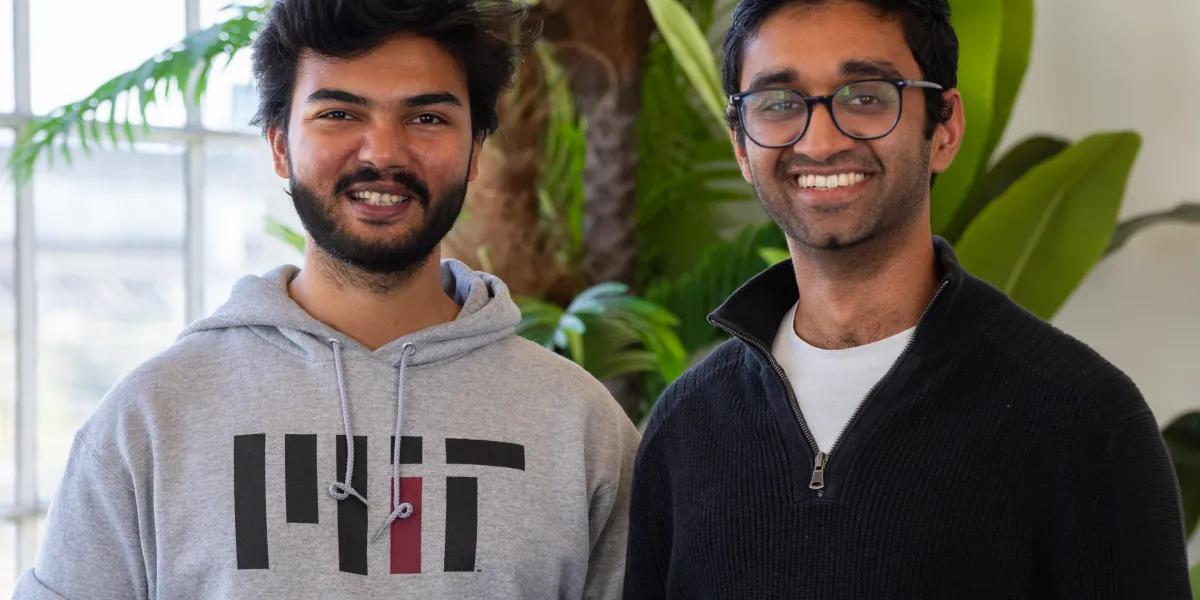
It was 2008 and he wasn't entranced with Tony Stark. It was chatty computer JARVIS that captured Kothari's imagination as the voice assistant managed Stark's sprawling home, maintained his Iron Man suit, and solved complex engineering problems. Kothari thought this could be possible in our universe, not just Marvel, at the time hacking together an early voice assistant. Years later, talking to Stanford classmate Sahaj Garg, he hadn't let it go. "When Sahaj and I were talking about the biggest problems we wanted to solve, one of the things that came up was what it means to have a world where AI is prevalent," said Kothari. "What does interacting with technology look and feel like? It brought me back to when I wanted to build JARVIS. It's less about what it looks like in the movies and more about a system that just gets you. It's with you 24/7 and you trust it to do things on your behalf. It seemed like we'd gotten to the point where it was both technically possible and the world might be ready." Kothari and Garg -- who met in a Stanford freshman dorm on their very first day of college -- cofounded dictation and voice AI startup Wispr in 2021. And for a while, they wandered the entrepreneurship wilderness, focusing on wearables that never quite clicked and "silent speech," an interface that allows computer control without audible sounds. Then, about two years ago, they landed on the product that sent their startup (and their lives) in a new direction: dictation software app Wispr Flow, which is now used by millions of consumers and 100,000 businesses. For the last four quarters in a row, Wispr says it's seen revenue jump north of 150%. Wispr raised capital just six months ago, but investors have already re-upped: The startup's now raised its $280 million Series B, valuing Wispr at $2 billion, Fortune has exclusively learned. Menlo Ventures led, with participation from existing investors like Notable Capital, NEA, Neo Ventures, and 8VC. New names have entered the mix too -- including venture firms like Acrew, Forerunner, Goodwater, Plus Capital, and Peak XV -- along with marquee athletes like Joe Burrow, Shaun White, Klay Thompson, and Paul George, and more. The company has now raised $361 million so far, and dictation isn't the end game. "It isn't a dictation market," said Matt Kraning, Menlo Ventures partner, via email. "Dictation is how you get in the door. What people pay for is not having to type, which puts you up against workflow tools, meeting tools, and eventually the text box in front of every AI model. The labs have mostly solved intelligence. Nobody has solved how a normal person tells it what they want." Wispr faces serious competition from the biggest names in tech -- Apple, Google, Microsoft, Anthropic, and OpenAI -- who've all been chasing dictation and voice in some form. And it makes sense, because the use cases are varied and endless: Kothari and Garg know of at least a few people who've written novels with Wispr, and have found that it's useful for those with everything from ADHD and dyslexia, to quadriplegia and blindness. "There's this whole class of people who are using Wispr to do things they wouldn't have been able to do otherwise," said Kothari. "I found out recently that my friend's dad, who's blind, has been using Wispr to send messages and do all sorts of things, because Siri would just make so many mistakes. He felt he could never trust any of those tools. It's democratizing technology for a group of people who've felt left out for decades." Kothari and Garg know that, from a privacy standpoint, this all sounds potentially invasive. But, as Garg said, trust is essential for their business to exist: "Everything about these tools is about trust," he told Fortune. "Privacy and security aren't features for us: They're the foundation for earning ambient access to your life." What's our relationship then, to this tech that increasingly looks set to entwine with our lives and psyches? To Garg, much must remain human. "These systems can consult for you, but you should still supply your intent," said Garg. "I don't want to be in the business of replacing people. I want to be in the business of helping people amplify their intent, allowing them to make their own decisions. It should be a system that manages you as much as you manage it. It's about the person, and preserving their decision-making -- but not making them have to think about how they do everything from scratch every time." See you tomorrow, Allie Garfinkle X: @agarfinks Email: [email protected] Submit a deal for the Term Sheet newsletter here. Joey Abrams curated the deals section of today's newsletter. Subscribe here. VENTURE CAPITAL - Sterling, an Auckland and Wellington, New Zealand-based developer of an AI autopilot designed for finance teams, raised $3.8 million (NZD) ($2.2 million USD) in funding. Blackbird led the round. PRIVATE EQUITY - Providence Equity Partners agreed to acquire Hometrack, a London, U.K.-based residential property data platform designed for financial services workers, investors, and insurers. Financial terms were not disclosed. - Wolf-Gordon, a portfolio company of Charger Investment Partners, acquired Andor Willow, a Toronto, Ontario-based wood wall panels and room dividers company, and Look Walls & Interiors, a Dallas, Texas-based designer and manufacturer of digitally printed wallcovering. Financial terms were not disclosed. OTHERS - Metaview acquired Reval, a San Francisco-based AI-powered recruiting firm. Financial terms were not disclosed.
[5]
Wispr raises $280M to power up natural speech-to-text using AI
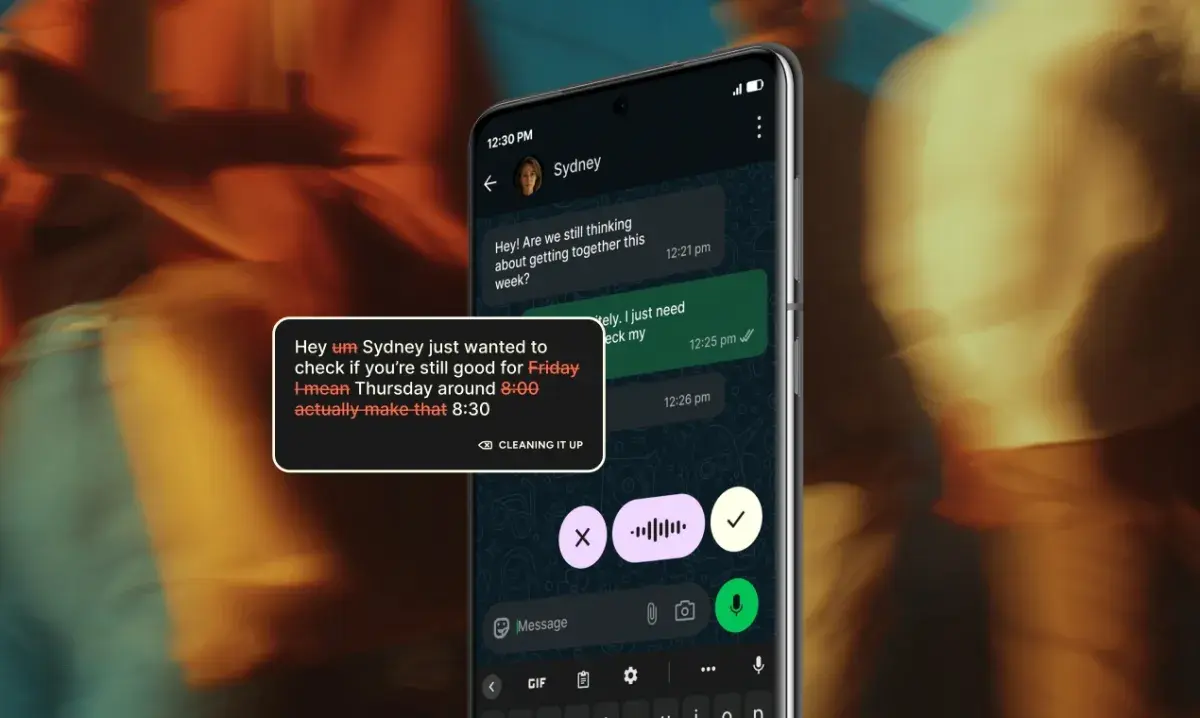
Wispr AI Inc., the developer of a cross-platform, AI-powered dictation platform, today announced it raised $280 million in Series B funding at a $2 billion valuation. Menlo Ventures led the round alongside existing investors Notable Capital, NEA, Neo Ventures, 8VC and MVP Ventures. New investors Acrew, Forerunner, Goodwater, Peak XV, Together Fund, and PLUS Capital also joined the investment, bringing the company's total raised to $361 million. Wispr's primary product is Flow, a text-to-speech product that integrates into applications and lets people speak naturally into any text field to dictate. It takes spoken language, fixes grammar, misspoken language, filler words such as "ums" and "ahs," and stumbles, and produces clean, readable prose for emails, memos and documents. This makes the tool extremely useful for mobile, desktop and other environments where someone might want to just sit down and talk to their computer instead of using a keyboard. Alongside the funding, the company is announcing a preview of its first proprietary AI model, Canto. Unlike most speech models, Canto was trained to detect speech across a wide variety of speech variances, in loud environments, with noise, interruptions, dogs barking, other voices, background noise and the sound of life happening in the background. The company said most voice models are trained on extremely clean voice assets to provide pure human vocal sounds. Canto was given examples that provide it with the ability to quickly isolate human voices from environmental noises - so that people can use their apps where they live, in their car, around traffic noise or in their office. When Canto is built into Flow, the company's dictation tool, Wispr said the error rate in noisy environments falls from 30% to nearly 5% - 10%. In a quiet room, most modern AI transcription can be extremely smooth, with minor errors cropping up. In a loud environment, it can be catastrophic. Over the past 10 years, most text-to-speech apps have been used on the go for simple tasks such as checking the weather, asking for the time, or simple web searches, because that's only a couple of words and very little can go wrong. With a system backed by Canto, it opens a whole new opportunity to sit in a car, even near a noisy venue, and talk about ideas and the model will get most of the words on digital paper. Something that, a year ago, a text-to-speech model would have struggled with. "I use Flow every day," said Domantas Sabonis, three-time NBA All-Star. "I grew up rotating between English, Spanish and Lithuanian, and it keeps up with me no matter which one I'm speaking." NBA players and business people aren't the only users of transcription apps who will benefit as the technology advances. The deaf and hard-of-hearing community also uses AI transcription on mobile devices, where multi-participant conversations and noisy environments lead to interesting errors in the transcribed text; although many rely primarily on on-device transcription, the evolution of cloud models drives the industry forward. Wispr said people have written more than 60 billion words on Flow. Its product has also been used by almost all the Fortune 500 companies and over 10,000 enterprises, proving its use case across industries.
[6]
Wispr Flow raises $280 million at $2 billion valuation, Peak XV joins new round
San Francisco-based voice AI startup Wispr Flow has raised $280 million at a $2 billion valuation, nearly tripling its valuation from its previous round. The funding takes its total capital raised to $361 million and will support speech-model development and product expansion. The company also unveiled a preview of its proprietary speech model, Canto. San Francisco-based voice AI startup Wispr Flow has raised $280 million in a funding round at a $2 billion valuation, nearly tripling its valuation from the previous round, as investors increase bets on voice-based AI interfaces.The round was led by existing investor Menlo Ventures, with participation from Notable Capital, NEA, Neo Ventures, 8VC, and MVP Ventures. New investors include Peak XV Partners, Activate, AAcrew, Forerunner, Goodwater,
[7]
Wispr Flow Raises $280 Million and Debuts Voice AI Model | PYMNTS.com
The company's Series B round, announced Monday (Aug. 17), comes as Wispr Flow is debuting its latest speech model to address changing needs around voice-to-text technology. "For most of the last decade, talking to a computer meant asking about the weather or setting a timer," Wispr Flow Tanay Kothari wrote on the company blog. "Our Chief Scientist Ariya Rastrow, who was a founding member of the team behind Alexa, has written about how little that list changed in 10 years. The bar was low, but so were the stakes, because nobody was doing anything that mattered to them by voice. If it misheard you, you said it again and moved on." But now, as voice becomes how people write critical messages and work documents, errors can cause them to lose their train of thought. "So accuracy isn't one feature among several for us," Kothari added. "It's what decides whether any of this becomes how people live and work, and it's where the first and largest part of this round is going." Beyond the funding, the company is previewing its first proprietary speech model, Canto, which is designed to be used in places where recordings might not be as clean, like in a car, a public space or an open office. "In the hardest conditions, with background noise, wind, heavy accents or music, error rates fall from more than 30% of words to somewhere between 5 and 10%," said Kothari. "Across everyday use, we expect it to reduce the number of dictations you need to edit by 30 to 35%." PYMNTS wrote last month about the evolution of AI voice assistants, from competing on whether they could understand what people said to whether AI can do something useful once it can grasp its instructions. "Many business processes already function like conversations, even when they occur through email threads, spreadsheets and enterprise platforms," that report said. "A warehouse supervisor can ask about inventory shortages while walking the floor. A field technician can diagnose equipment without stopping to type. A procurement manager can negotiate, retrieve supplier history and update an ERP system during the same conversation." For B2B companies, the implication is workflow compression, PYMNTS added. That means voice AI agents collapsing "multiple corporate interactions into a single conversation."
Share
Copy Link
AI speech recognition startup Wispr raised $280 million in Series B funding at a $2 billion valuation, led by Menlo Ventures. The company unveiled its proprietary AI model Canto, designed to reduce transcription error rates from over 30% to between 5-10% in challenging conditions with background noise and accents.
Wispr, an AI speech recognition startup, announced it has raised $280 million in Series B funding at a $2 billion valuation, with Menlo Ventures leading the round
1
2
. This marks a near tripling in valuation from approximately $700 million in November, achieved in just nine months3
. The dictation and voice AI startup has now raised $361 million in total funding, with the latest round coming less than 10 months after its previous raise1
.Existing investors Notable Capital, NEA, Neo Ventures, 8VC, and MVP Ventures participated in the round, alongside new backers including Acrew, Forerunner, Goodwater, Peak XV, Together Fund, and PLUS Capital
2
. Athletes Joe Burrow, Shaun White, Klay Thompson, and Paul George also joined as investors4
. Menlo Ventures partner Matt Kraning described this as one of the firm's largest AI investments, signaling strong conviction in Wispr's trajectory3
.Alongside the funding announcement, Wispr unveiled Canto, its first proprietary AI model designed to dramatically improve speech understanding in challenging conditions
1
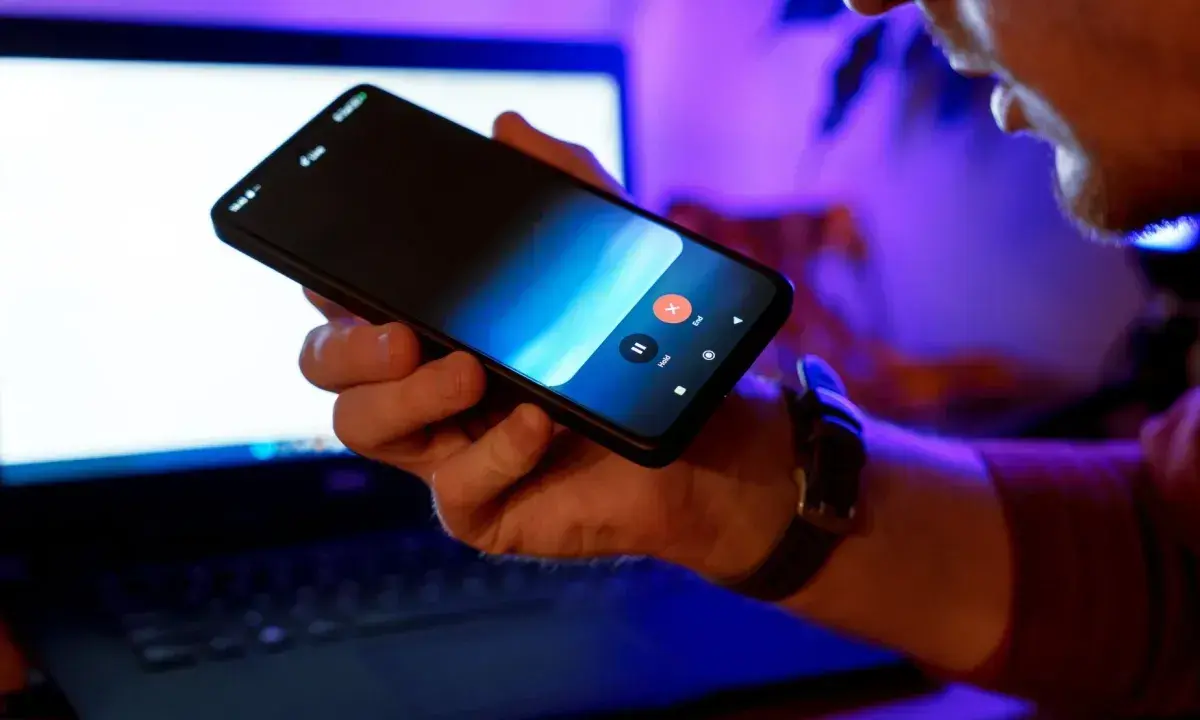
. CEO Tanay Kothari stated that in environments with background noise, wind, heavy accents, or music, transcription error rates will fall from more than 30% to between 5% and 10%2
5
.The timing of Canto's preview addresses recent user complaints about quality degradation in Wispr Flow's dictation output
1
. Unlike traditional speech models trained on clean audio, Canto was specifically trained to detect speech across varied conditions where life happensâdogs barking, traffic noise, office chatter, and multiple voices5
. This capability matters because it transforms natural speech-to-text from a quiet-room-only tool into something usable in real-world environments where professionals actually work.
Source: TechCrunch
Wispr reports revenue growth exceeding 150% in each of the last four quarters, with Menlo Ventures citing over 30 times year-on-year growth
3
4
. The AI-powered dictation platform serves millions of consumer users across 162 countries and supports over 100 languages3
. The company claims usage by 100,000 businesses, though published figures varyâsome sources cite tens of thousands of paying businesses or more than 10,000 enterprises3
4
.Users have written more than 60 billion words using Wispr Flow, with adoption spanning nearly all Fortune 500 companies
5
. Named customers include Microsoft, Amazon, Notion, Klarna, Groupon, Rivian, Vercel, and Mercury3
. However, Michael Ashley Schulman, partner at Cerity Partners, offered caution: "Triple digit quarterly growth off a small base is the easiest number in venture capital to generate for a few quarters and the hardest one to keep producing once the early adopters stop being the entire customer base"3
.Menlo Ventures' investment thesis centers on a provocative claim: the bottleneck in AI has shifted from models to interfaces. "The frontier labs have produced superhuman AI intelligences. They have not produced delightful and effective human interfaces," wrote partner Matt Kraning
3
. He told Fortune directly: "The labs have mostly solved intelligence. Nobody has solved how a normal person tells it what they want"4
.This positions Wispr Flow not as a dictation product but as an entry point to reimagining human-computer interaction
3
. Kraning clarified: "It isn't a dictation market. Dictation is how you get in the door. What people pay for is not having to type, which puts you up against workflow tools, meeting tools, and eventually the text box in front of every AI model"4
. Wispr has already launched a meeting notetaker competing with Granola, Fireflies, and Read AI, though integration with other tools remains limited1
.
Source: PYMNTS
Related Stories
Wispr's technology serves diverse accessibility needs, supporting users with ADHD, dyslexia, quadriplegia, and blindness
4
. Kothari shared that his friend's blind father uses Wispr because previous tools like Siri made too many mistakes: "It's democratizing technology for a group of people who've felt left out for decades"4
. NBA player Domantas Sabonis noted: "I use Flow every day. I grew up rotating between English, Spanish and Lithuanian, and it keeps up with me no matter which one I'm speaking"5
.On privacy, co-founder Sahaj Garg emphasized: "Everything about these tools is about trust. Privacy and security aren't features for us: They're the foundation for earning ambient access to your life"
4
. The company certifies to SOC 2 Type II, ISO 27001, and HIPAA standards, with Privacy Mode keeping dictation out of training data3
. Wispr offers 2,000 free words weekly before charging for Pro, team, and enterprise tiers3
.Wispr faces formidable competition from Apple, Google, Microsoft, Anthropic, and OpenAI, all pursuing voice input capabilities
3
4
. Smaller competitors include Willow, Monologue, Aqua, and Superwhisper, plus free tools targeting prosumers1
. Menlo's Kraning counters that free dictation has existed for a decade with minimal adoption because "a feature can transcribe but acting on intent takes a company"3
.Since November, Wispr expanded to Android and scaled go-to-market teams in India and the U.K.
1
. The company partners with hardware makers like the Oasis ring for discreet dictation1
. Last month, Wispr launched Interface Labs under Ariya Rastrow, an early Amazon Alexa contributor, to explore new interfaces for human-computer interaction1
. Founded by Stanford classmates Kothari and Garg in 2021, the company spent years on wearables and silent speech before landing on Flow about two years ago3
4
.
Source: Fortune
Summarized by
Navi
[3]
[5]
01 Jul 2025â˘Technology

13 Jan 2026â˘Startups

31 Jan 2025â˘Business and Economy

1
Technology

2
Technology

3
Policy and Regulation