Zhipu's founder champions open frontier AI as China considers restricting access to models


2 Sources
[1]
Zhipu's founder makes the case for open frontier AI
Tang Jie argues security comes from broad participation, not technological barriers, at the exact moment Beijing is weighing curbs on China's best open models The founder of China's most prominent AI lab has made an unambiguous case for openness. Frontier AI should stay broadly accessible rather
[2]
Zhipu founder backs open-source AI over restricted frontier models By Investing.com
Investing.com -- The founder of Chinese artificial intelligence startup Zhipu said frontier AI should remain openly accessible rather than restricted to a small group of developers, as debate intensifies over balancing innovation with national security concerns, according to Bloomberg. Tang Jie,
Share
Copy Link
Tang Jie, founder of Chinese AI lab Zhipu, argues frontier AI should remain openly accessible through broad participation rather than technological barriers. His stance comes as Beijing weighs restrictions on overseas access to China's most advanced open models, creating tension between commercial strategy and national policy in the global AI race.
Zhipu Founder Tang Jie Makes Bold Case for Openness
Zhipu founder Tang Jie has positioned himself at the center of a heated debate between open and closed AI by arguing that open frontier AI should remain broadly accessible rather than controlled by select developers. In an internal memo reviewed by Bloomberg, Tang inverts conventional security logic, stating that AI safety emerges from broad participation and transparency rather than technological barriers
1
. The Tsinghua University professor, who leads one of China's most prominent AI labs, backed his philosophy with action by releasing the GLM-5.2 model under an open-source license, allowing users to download, modify, and pursue commercialization freely2
.The timing of Tang's advocacy carries significant weight. His comments emerged shortly after Reuters reported that Beijing is considering limits on overseas access to China's most advanced open-source AI models, putting Zhipu AI squarely at odds with potential government policy
1
. This creates an unusual dynamic within China's tech landscape, where openness has served as a strategic advantage, helping Chinese developers like Alibaba's Qwen family accelerate global adoption and narrow the technology gap with US competitors.The Security Argument Behind Open-Source AI Models
Tang's position aligns with a growing contingent of security experts who argue that many independent eyes examining AI models identify flaws faster than small teams operating behind closed walls. When Washington restricted access to a frontier model, 100 cybersecurity experts signed an open letter arguing the ban hurt defenders more than attackers, since malicious actors will obtain capable AI models regardless while researchers and security teams get locked out
1
. This perspective on AI governance suggests that restricting access to frontier models may create a false sense of security while actually weakening defensive capabilities.However, the debate between open and closed AI remains unresolved. Critics of open-weight models point out that once downloaded, these systems cannot be recalled, patched, or switched off. Publishing frontier capabilities means making them available to everyone, including those developing bioweapons or industrial-scale cyberattacks, and safeguards trained into models can be stripped out by anyone with the weights and modest resources . Companies like Anthropic have already restricted access to some of their most advanced systems on national security grounds, reflecting this concern
2
.Geopolitical Implications and Investment Strategy
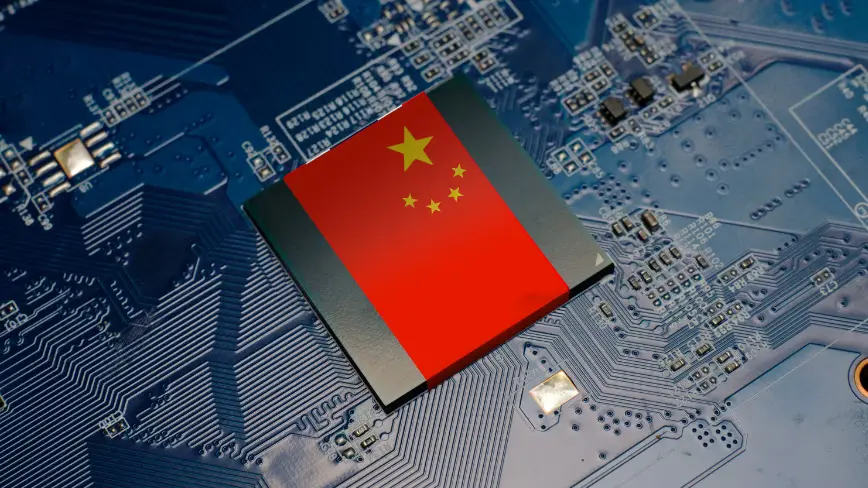
Source: The Next Web
The stakes extend beyond technical arguments. Zhipu AI has raised billions and recently announced a $4 billion share sale in Hong Kong with plans to pursue a listing in Shanghai, drawing heavy investor demand from those betting Chinese AI will fill gaps left by restricted US models
1
2
. The company's GLM-5 platform, designed for complex coding and agentic AI tasks, has been benchmarked against Anthropic's Claude Opus series, demonstrating China's advancing technical capabilities.Rather than chasing near-term commercial returns, Tang said Zhipu will prioritize technological development over the next two years, investing in long-horizon reasoning, autonomous AI agents, and self-training models
2
. This strategy reflects confidence that open-source license models can build market position through adoption rather than immediate monetization. Yet Tang's commercial interests are undeniable—Zhipu's models have spread globally precisely because they are free, and the company stands to benefit substantially from keeping that door open1
.Related Stories

What Happens If Both Superpowers Close Their Models
The geopolitical implications grow more serious as increasingly capable frontier models demonstrate abilities like identifying complex software vulnerabilities with limited human supervision, prompting governments to tighten safeguards
2
. If China restricts its open models while America maintains its own barriers, the world's main sources of free frontier-class AI close simultaneously. Tang is arguing against that outcome from inside the country most likely to cause it, though whether Beijing policymakers are listening remains uncertain1
. The investment implications are substantial, as the open-source ecosystem that has driven rapid AI advancement could fragment along geopolitical lines, forcing developers and companies to choose sides in an increasingly polarized technological landscape.References
Summarized by

Navi
[1]
Related Stories
US-China AI competition shifts as regulation clashes with China's cost-efficient model strategy
26 Jun 2026•Policy and Regulation

China's Open-Source AI Push Creates 'Death Zone' for US Models as Competition Shifts to Ecosystems
30 Jul 2026•Business and Economy

Chinese AI models close gap with US rivals as Kimi K3 sparks national security debate
13 Jul 2026•Policy and Regulation
Recent Highlights



Recent Highlights
Today's Top Stories






Don’t drown in AI news. We cut through the noise - filtering, ranking and summarizing the most important AI news, breakthroughs and research daily. Follow topics that matter to you and stay ahead.


